Loading...
Alexander the Great vs Emperor Wen of Sui
Alexander the Great leads by 4.9 pts · 2 figures compared
…
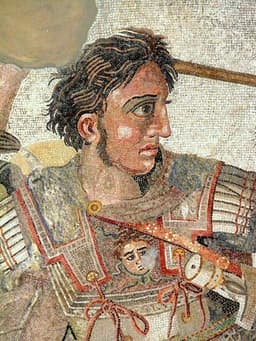
Alexander the Great
General · Ancient
85.2Total
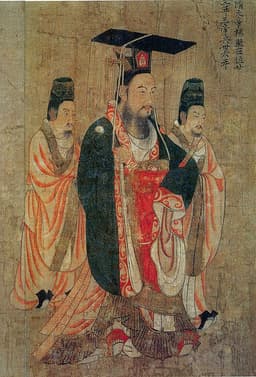
Emperor Wen of Sui
Emperor · Medieval
80.3Total
Basic Information
Born
-356
541
Died
-323
604
Era
Ancient
Medieval
Nationality
Macedon
China
Occupation
General
Emperor
Civilization
Western
Eastern
Score Comparison
Military (10%)
95.0
76.0
Political (20%)
60.0
75.0
Influence (20%)
92.0
88.0
Legacy (20%)
90.0
80.0
Leadership (15%)
80.0
80.0
Strategy (15%)
92.0
75.0
TOTAL
85.2
80.3
Alexander the Great — Complete Timeline
334 BC
Battle of the Granicus RiverWar◆ Major
Alexander led his Macedonian army across the Hellespont into Asia Minor and defeated a Persian force under local satraps at the Granicus River. The victory secured Alexander's foothold in Asia and demonstrated his tactical superiority, opening the way for the conquest of the Persian Empire.
Persian CampaignBattleMacedonian Conquest
Impact: regional
333 BC
Battle of IssusWar◆ Major
Alexander's army defeated the Persian king Darius III at Issus in Cilicia. Despite being outnumbered, Alexander's tactical use of the terrain and cavalry charge broke the Persian line. Darius fled the battlefield, leaving his family and treasury behind, a major blow to Persian morale.
Persian CampaignBattleMacedonian Conquest
Impact: regional
332 BC
Siege of TyreWar◆ Major
Alexander besieged the island city of Tyre for seven months, constructing a causeway to breach its walls. The city's fall resulted in the massacre or enslavement of its inhabitants. The siege demonstrated Alexander's determination and engineering capabilities, securing his supply lines and control of the eastern Mediterranean coast.
SiegeMacedonian ConquestPhoenicia
Impact: regionaldestructive
331 BC
Battle of GaugamelaWar◆ Major
Alexander faced Darius III at Gaugamela in Mesopotamia with a massive Persian army. Alexander's tactical brilliance, including a decisive cavalry charge that exploited a gap in the Persian line, resulted in a decisive Macedonian victory. Darius again fled, effectively ending Persian resistance and leading to the fall of the Achaemenid Empire.
Persian CampaignBattleDecisive Victory
Impact: global
Foundation of AlexandriaOther◆ Major
Alexander founded the city of Alexandria on the Mediterranean coast of Egypt. He personally selected the site and oversaw the initial planning. Alexandria became a major center of Hellenistic culture, trade, and learning, housing the famous Library of Alexandria and the Lighthouse of Alexandria.
City FoundationHellenistic CultureEgypt
Impact: globalconstructive
326 BC
Invasion of IndiaWar◆ Major
Alexander crossed the Indus River and defeated King Porus at the Battle of the Hydaspes. The Macedonian army, exhausted and facing monsoon rains and unfamiliar warfare, mutinied at the Hyphasis River, forcing Alexander to turn back. This campaign marked the easternmost extent of his conquests.
Indian CampaignBattleMutiny
Impact: regional
Emperor Wen of Sui — Complete Timeline
581 AD
Establishment of the Three Departments and Six Ministries SystemReform◆ Major
Emperor Wen established a centralized bureaucratic system with three departments (Secretariat, Chancellery, and Department of State Affairs) and six ministries. This system became the foundation of Chinese government administration for centuries.
Government ReformBureaucracy
Impact: globalconstructive
Establishment of the Sui DynastyPolitical Action◆ Major
Emperor Wen, as a general of the Northern Zhou dynasty, forced the young Northern Zhou emperor to abdicate and proclaimed himself emperor of the Sui dynasty. This marked the beginning of the Sui dynasty, which would go on to reunify China.
Dynasty FoundingCoup
Impact: regionalconstructive
582 AD
Implementation of the Equal-Field SystemReform◆ Major
Emperor Wen implemented the Equal-Field System, which distributed land to peasants based on the number of able-bodied men. This reform increased agricultural productivity, stabilized tax revenues, and reduced the power of large landowners.
Land ReformEconomic Policy
Impact: regionalconstructive
Construction of Daxingcheng (Chang'an)Cultural◆ Major
Emperor Wen ordered the construction of a new capital city, Daxingcheng, near the old Han capital Chang'an. This city, later known as Chang'an, became a model for urban planning and served as the capital of the Sui and Tang dynasties.
Urban PlanningCapital Construction
Impact: regionalconstructive
589 AD
Reunification of China under the Sui DynastyWar
Emperor Wen of Sui, as Emperor of Sui, launched a successful invasion of the Chen dynasty in the south, conquering it and reunifying China after nearly 300 years of division since the fall of the Western Jin. This ended the Northern and Southern Dynasties period.
UnificationConquest
Impact: globalconstructive
Expert Analysis
Origins
Alexander the Great was born in 356 BCE in Pella, Macedon, son of King Philip II and Queen Olympias. He was tutored by Aristotle and groomed for kingship from a young age. His father's assassination in 336 BCE thrust him onto the throne at age 20, inheriting a powerful army and a unified Greek city-states system. In contrast, Emperor Wen of Sui, born Yang Jian in 541 CE in Huayin, China, came from a prominent military family serving the Northern Zhou dynasty. He rose through the ranks, leveraging his daughter's marriage to the emperor, and eventually seized power through a coup in 581 CE. While Alexander inherited a ready-made kingdom, Wen built his power base through political maneuvering and familial connections.
Rise to Power
Alexander's rise was swift and dramatic. He immediately crushed rebellions in Thebes and Athens, then launched the Persian campaign in 334 BCE. Within a decade, he defeated the massive Persian Empire through a series of brilliant battles: Granicus, Issus, and Gaugamela. He toppled the Achaemenid dynasty, conquered Egypt, and advanced into India, stopping only at the Hyphasis River due to his troops' mutiny. His rise was fueled by personal bravery and tactical genius. Emperor Wen's rise was more methodical. He served as a general under Northern Zhou, then, after the emperor's death, he placed his young grandson on the throne as regent. In 581 CE, he forced the child emperor to abdicate, declaring himself emperor of the Sui dynasty. He then spent eight years consolidating power and preparing for the conquest of the Chen dynasty, which he achieved in 589 CE, reunifying China after nearly 400 years of division.
Leadership & Governance
Alexander led from the front, often charging into battle alongside his soldiers. He inspired fierce loyalty but also demanded absolute obedience. His governance was characterized by cultural fusion: he adopted Persian customs, appointed Persians to high offices, and encouraged intermarriage. However, his administration was largely ad hoc, relying on local satraps and military governors. He founded over 20 cities, most notably Alexandria in Egypt, which became centers of Hellenistic culture. Emperor Wen, by contrast, was a master administrator. He implemented the Equal-Field System to distribute land equitably, reducing the power of landed gentry. He established the Three Departments and Six Ministries system, a bureaucratic framework that influenced Chinese governance for centuries. He also reformed the legal code, reducing punishments and standardizing laws. Wen focused on infrastructure, building granaries and canals, including the early stages of the Grand Canal. His leadership was top-down, efficient, and focused on long-term stability rather than personal glory.
Triumph & Tragedy
Alexander's greatest triumphs were his military conquests: the defeat of the Persian Empire at Gaugamela (331 BCE), the capture of the Persian capital Persepolis, and his Indian campaign. His foundation of Alexandria was a lasting achievement. However, his tragedy was his early death at age 32 in Babylon, likely from disease or poisoning. His empire immediately fragmented among his generals (the Diadochi), and his dream of a unified Hellenistic world collapsed. Emperor Wen's triumph was the reunification of China after the Six Dynasties period, a feat that ended centuries of warfare. His administrative reforms laid the foundation for the Tang dynasty's golden age. His tragedy lies in his succession: he was reportedly killed by his son, Yang Guang (Emperor Yang), who reversed many of his policies and led the dynasty to ruin within two decades. Wen's careful work was undone by his successor's extravagance.
Character & Destiny
Alexander was impulsive, ambitious, and charismatic. He believed in his divine descent and sought to conquer the known world. His destiny was to achieve unprecedented military glory but die young, leaving a legacy of cultural diffusion (Hellenization) rather than political stability. Emperor Wen was cautious, pragmatic, and disciplined. He was a Confucian-style ruler who valued order and efficiency. His destiny was to restore unity to China and create institutions that would outlast his dynasty. While Alexander's greatness is measured by the scale of his conquests, Wen's is measured by the durability of his reforms.
Legacy
Alexander's legacy is immense: he spread Greek culture across the Near East, founded cities, and created the Hellenistic world, which influenced Rome and later Western civilization. His military tactics are still studied. However, his empire was ephemeral. Wen's legacy is more tangible: the Sui dynasty's institutions—the equal-field system, the three departments, the legal code—were adopted by the Tang and subsequent dynasties. The Grand Canal facilitated trade and unity. China's reunification under Wen set the stage for one of its golden ages. His impact on Chinese history is profound, though he is often overshadowed by the Tang emperors who followed.
Conclusion
In comparing Alexander the Great and Emperor Wen of Sui, we evaluate two different kinds of greatness. Alexander scores higher in military power (95 vs 76), influence (92 vs 88), and military leadership (90 vs 80). His conquests were more spectacular and his personal bravery legendary. However, Emperor Wen excels in political power (75 vs 60), and his administrative achievements had a more lasting impact on his civilization. Alexander's legacy is cultural and military; Wen's is institutional and political. Given the score gap of 4.9 in Alexander's favor, the data suggests Alexander is the greater historical figure by a narrow margin. Yet, if we consider the longevity of impact, Wen's reforms shaped China for centuries, while Alexander's empire collapsed immediately. Ultimately, Alexander's greatness is more iconic, but Wen's is more foundational. The verdict: Alexander the Great edges out Emperor Wen of Sui due to his unparalleled military achievements and cultural influence, but Wen's administrative genius should not be underestimated.
Rankings
🥇
Alexander the GreatLeader
Mil: 95.0Pol: 60.0Inf: 92.0
85.2
🥈
Emperor Wen of Sui
Mil: 76.0Pol: 75.0Inf: 88.0
80.3
+4.9 behind
How This Comparison Works
Algorithm
Each figure is scored on 6 dimensions (0—100 scale) based on structured historical data: Military (10%), Political (20%), Influence (20%), Legacy (20%), Leadership (15%), Strategy (15%). The weighted total produces the final ranking.
Data Sources
Scores are computed from structured sub-indicators in the database. Scale factors adjust for era (Ancient ×0.85, Modern ×1.0) and civilization size (Eastern ×1.05, Other ×0.80) to account for differences in population and military scale.
Maximum 3 Figures
Comparisons are limited to 2—3 figures to ensure readability and statistical meaningfulness.
Error Margins
±5 points per dimension — Sub-scores are derived from historical records with inherent uncertainty. Two figures within 5 points on a dimension should be considered roughly equivalent in that area.
Total Score Accuracy
±3 points overall — The weighted combination of 6 dimensions produces a total score with approximately ±3 points of uncertainty. Differences of less than 3 points are not statistically significant— the figures are effectively tied.
Known Limitations
- Historical records are incomplete and uneven across civilizations
- Figures from oral-tradition societies may be underrepresented
- Occupation labels can misclassify multi-role figures
- Scores measure capability and impact, not moral character
- Quantitative scoring is a comparison tool, not absolute truth
Capability Radar
Military (10%) — Battles & Warfare
Battles
98
75
Win Rate
99
80
Expansion
99
85
Political (20%) — Governance & Reform
Reform
75
95
Diplomacy
80
85
Economy
70
90
Influence (20%) — Cultural & Global Reach
Cultural
95
70
Global
95
65
Legacy (20%) — Historical Impact
Historical
98
85
Longevity
95
70
Leadership (15%) — Power & Stability
Tenure
60
80
Stability
55
75
Strategy (15%) — Tactics & Innovation
Strategy
98
85
Tactics
99
70
Reform
85
90
Similar Comparisons
Comments & Discussion
DeepScribe816/16/2026
亚历山大和隋文帝的比较很有意思,但西方中心论的味道有点重。亚历山大的军事分96分固然合理,但他的政治遗产只有65分,这在帝国缔造者里太低了。文帝的政治79分,我觉得还远远不够——他创立的科举制雏形、均田制、三省六部制,直接影响了中国一千多年的政治架构,而亚历山大死后帝国立马分崩离析。对比之下,亚历山大更像一个超级战神,而文帝才是真正的制度奠基人。西方史学通常低估东亚政治制度的复杂性和影响力,这个评分就是个典型例子。
Historian2236/16/2026
仔细看了评分矩阵,有几个数值需要推敲。亚历山大军事96分没问题,但政治65分和领导力82分之间差了17分,这种脱节在历史上罕见——一个领导力极强的人为何政治建设如此失败?反观文帝,政治79分但军事76分,只差3分,这更合理。但文帝的影响力77分是否偏低?他终结了三百年的南北朝分裂,这个成就放在世界史上堪比奥古斯都统一罗马,而奥古斯都影响力通常90分以上。如果按统一难度系数加权,文帝的综合分应该超过亚历山大,毕竟他从一个混乱碎片化的世界里重建帝国,而非从相对统一的马其顿出发。建议评分模型加入“初始条件系数”。