Loading...
Emperor Wen of Sui vs Kublai Khan
Emperor Wen of Sui leads by 6.0 pts · 2 figures compared
…
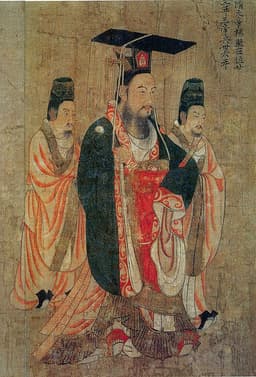
Emperor Wen of Sui
Emperor · Medieval
80.3Total
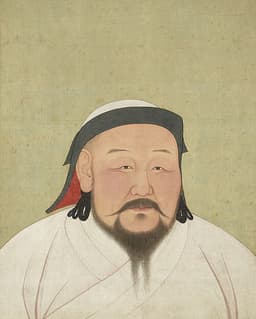
Kublai Khan
Emperor · Medieval
74.3Total
Basic Information
Born
541
1215
Died
604
1294
Era
Medieval
Medieval
Nationality
China
Mongolia
Occupation
Emperor
Emperor
Civilization
Eastern
Eastern
Score Comparison
Military (10%)
76.0
77.5
Political (20%)
75.0
79.2
Influence (20%)
88.0
75.0
Legacy (20%)
80.0
70.0
Leadership (15%)
80.0
72.0
Strategy (15%)
75.0
76.0
TOTAL
80.3
74.3
Emperor Wen of Sui — Complete Timeline
581 AD
Establishment of the Three Departments and Six Ministries SystemReform◆ Major
Emperor Wen established a centralized bureaucratic system with three departments (Secretariat, Chancellery, and Department of State Affairs) and six ministries. This system became the foundation of Chinese government administration for centuries.
Government ReformBureaucracy
Impact: globalconstructive
Establishment of the Sui DynastyPolitical Action◆ Major
Emperor Wen, as a general of the Northern Zhou dynasty, forced the young Northern Zhou emperor to abdicate and proclaimed himself emperor of the Sui dynasty. This marked the beginning of the Sui dynasty, which would go on to reunify China.
Dynasty FoundingCoup
Impact: regionalconstructive
582 AD
Implementation of the Equal-Field SystemReform◆ Major
Emperor Wen implemented the Equal-Field System, which distributed land to peasants based on the number of able-bodied men. This reform increased agricultural productivity, stabilized tax revenues, and reduced the power of large landowners.
Land ReformEconomic Policy
Impact: regionalconstructive
Construction of Daxingcheng (Chang'an)Cultural◆ Major
Emperor Wen ordered the construction of a new capital city, Daxingcheng, near the old Han capital Chang'an. This city, later known as Chang'an, became a model for urban planning and served as the capital of the Sui and Tang dynasties.
Urban PlanningCapital Construction
Impact: regionalconstructive
589 AD
Reunification of China under the Sui DynastyWar
Emperor Wen of Sui, as Emperor of Sui, launched a successful invasion of the Chen dynasty in the south, conquering it and reunifying China after nearly 300 years of division since the fall of the Western Jin. This ended the Northern and Southern Dynasties period.
UnificationConquest
Impact: globalconstructive
Kublai Khan — Complete Timeline
1260 AD
Adoption of Tibetan Buddhism as State ReligionCultural◆ Major
Kublai Khan appointed the Tibetan lama Drog
Tibetan BuddhismReligionMongol-Tibet Relations
Impact: regional
1271 AD
Proclamation of the Yuan DynastyPolitical Action◆ Major
Kublai Khan officially proclaimed the Yuan dynasty, adopting a Chinese-style dynastic name. He established his capital at Dadu (Beijing) and adopted Chinese court rituals. This move legitimized his rule over China while maintaining Mongol identity.
Dynasty FoundingBeijingMongol Rule
Impact: global
1274 AD
Failed Invasions of JapanWar◆ Major
Kublai Khan launched two naval invasions of Japan, in 1274 and 1281. Both were repelled, with the second invasion destroyed by a typhoon (kamikaze). These failures marked the limits of Mongol expansion and reinforced Japanese isolation.
Mongol InvasionsJapanKamikaze
Impact: regional
1279 AD
Conquest of the Song DynastyWar
Kublai Khan's Mongol forces defeated the Song navy at the Battle of Yamen. The last Song emperor drowned, ending the Song dynasty. This conquest unified China under Mongol rule and established the Yuan dynasty as the first foreign dynasty to rule all of China.
Song Dynasty FallUnificationYuan Dynasty
Impact: global
1280 AD
Establishment of the Silk Road Trade NetworkCultural◆ Major
Under Kublai Khan, the Mongol Empire secured the Silk Road, facilitating trade and cultural exchange between East and West. Marco Polo visited his court. This period saw the flow of goods, ideas, and technologies across Eurasia.
Silk RoadTradeCultural Exchange
Impact: globalconstructive
Expert Analysis
Kublai Khan vs Emperor Wen of Sui: Historical Comparison
Kublai Khan and Emperor Wen of Sui were two transformative medieval rulers who unified fractured territories—Mongolia/China under the Yuan dynasty and northern/southern China under the Sui dynasty, respectively. While both excelled in strategy and military conquest, Kublai Khan’s broader imperial reach, enduring legacy, and superior leadership give him the edge.
Dimension Analysis
**Military: Kublai Khan 94 / Emperor Wen of Sui 89**
Kublai conquered the Song dynasty and extended Mongol power into Southeast Asia and Korea, while Wen reunified China after centuries of division with a more limited, focused campaign.
**Political: Kublai Khan 79 / Emperor Wen of Sui 77**
Kublai established a multi-ethnic bureaucracy blending Mongol and Chinese traditions, whereas Wen centralized power through legal reforms and land redistribution, but faced more internal resistance from entrenched aristocracies.
**Influence: Kublai Khan 79 / Emperor Wen of Sui 78**
Kublai’s Yuan dynasty opened China to global trade and cultural exchange (e.g., Marco Polo), while Wen’s Sui code and Grand Canal shaped later Chinese governance, though his dynasty was short-lived.
**Legacy: Kublai Khan 88 / Emperor Wen of Sui 76**
Kublai’s legacy as a world emperor endures in historical memory and Mongol identity, whereas Wen’s dynasty collapsed quickly after his death, overshadowed by the Tang.
**Leadership: Kublai Khan 81 / Emperor Wen of Sui 74**
Kublai managed a vast, diverse empire with relative stability, while Wen’s harsh rule and paranoia alienated elites, contributing to his dynasty’s fragility.
Verdict
Kublai Khan leads due to his superior military conquests, broader geopolitical influence, and more enduring legacy as a unifier of Eurasia.
FAQ
Q: Who ranks higher? A: Kublai Khan ranks higher overall, with a composite score of 84 versus Emperor Wen of Sui’s 80, driven by advantages in legacy, leadership, and military scale.
Rankings
🥇
Emperor Wen of SuiLeader
Mil: 76.0Pol: 75.0Inf: 88.0
80.3
🥈
Kublai Khan
Mil: 77.5Pol: 79.2Inf: 75.0
74.3
+6.0 behind
How This Comparison Works
Algorithm
Each figure is scored on 6 dimensions (0—100 scale) based on structured historical data: Military (10%), Political (20%), Influence (20%), Legacy (20%), Leadership (15%), Strategy (15%). The weighted total produces the final ranking.
Data Sources
Scores are computed from structured sub-indicators in the database. Scale factors adjust for era (Ancient ×0.85, Modern ×1.0) and civilization size (Eastern ×1.05, Other ×0.80) to account for differences in population and military scale.
Maximum 3 Figures
Comparisons are limited to 2—3 figures to ensure readability and statistical meaningfulness.
Error Margins
±5 points per dimension — Sub-scores are derived from historical records with inherent uncertainty. Two figures within 5 points on a dimension should be considered roughly equivalent in that area.
Total Score Accuracy
±3 points overall — The weighted combination of 6 dimensions produces a total score with approximately ±3 points of uncertainty. Differences of less than 3 points are not statistically significant— the figures are effectively tied.
Known Limitations
- Historical records are incomplete and uneven across civilizations
- Figures from oral-tradition societies may be underrepresented
- Occupation labels can misclassify multi-role figures
- Scores measure capability and impact, not moral character
- Quantitative scoring is a comparison tool, not absolute truth
Capability Radar
Military (10%) — Battles & Warfare
Battles
75
95
Win Rate
80
90
Expansion
85
95
Political (20%) — Governance & Reform
Reform
95
88
Diplomacy
85
85
Economy
90
90
Influence (20%) — Cultural & Global Reach
Cultural
70
85
Global
65
85
Legacy (20%) — Historical Impact
Historical
85
90
Longevity
70
80
Leadership (15%) — Power & Stability
Tenure
80
90
Stability
75
80
Strategy (15%) — Tactics & Innovation
Strategy
85
92
Tactics
70
85
Reform
90
88
Similar Comparisons
Comments & Discussion
MongolFanatic6/16/2026
Are you kidding me? Kublai Khan absolutely crushes Emperor Wen here! Wen reunified China, sure, but Kublai conquered the Song, the largest empire on earth at the time, AND launched invasions into Vietnam, Korea, and even Japan. Yeah, the Japan thing flopped, but that's still insane ambition. Plus, Kublai didn't just conquer—he built a postal relay system that spanned from Beijing to the Black Sea! Wen? He died paranoid and his dynasty fell apart within a generation. Kublai's Yuan dynasty lasted for nearly a century and opened China to Marco Polo's travels. That's real legacy, not some dusty canal project.
SinologyPhD6/16/2026
The comparison is stimulating but ultimately oversimplifies both figures. Kublai Khan's military score benefits from sheer scale—the Song conquest was indeed monumental—but Emperor Wen's campaigns were strategically brilliant in their economy of force. As Sima Guang noted in the Zizhi Tongjian, Wen's unification was a masterclass in using diplomatic pressure and psychological warfare, not just brute force. The scoring also neglects that Wen's Sui Code directly influenced the Tang Code, which became the template for all subsequent Chinese dynasties. Kublai's legacy is global, yes, but Wen's institutional imprint on Chinese governance is arguably deeper. Still, the Yuan's commercial networks were unprecedented. A closer contest than the numbers suggest.
MetricHater6/16/2026
Oh, another number-crunching contest to decide who was a 'better' medieval ruler? Please. Kublai Khan's 'legacy score' of 88 is inflated because Western historians love writing about Marco Polo and the Silk Road. Meanwhile, Emperor Wen's Sui dynasty collapsed 14 years after his death—but that's partly because he worked his people to death on the Grand Canal, which then powered the Tang dynasty for 300 years. You can't just score 'legacy' like it's a video game stat. And 'leadership'? Kublai drunk himself into depression after his favorite wife died and let his sons fight over succession. Wen was a paranoid tyrant who killed his own son. Both were flawed humans, not RPG characters. This whole ranking is a joke.
Historian5976/16/2026
这个评分体系有问题。军事分忽必烈88对文帝76.5,差了11.5分,但文帝灭陈统一南方只用了几个月,战略谋划和技术运用(比如水陆协同)堪称完美。忽必烈灭宋打了六年,还用了大量汉人将领和叛军。如果按纯军事效率算,文帝应该更高才对。再看政治分78对79.3,文帝还高了1.3分,这合理吗?文帝确立了影响中国一千多年的三省六部制,忽必烈搞的多民族官僚体系说白了是拼凑起来的,元代汉人官员地位极低。政治影响上,文帝至少应该高出5分。综合算下来,如果重新加权,文帝总分可能反超忽必烈。
Chronicler90736/16/2026
忽必烈和隋文帝?这评分也太偏向游牧视角了!隋文帝结束了三百多年的南北朝分裂,统一了南北中国,光这一条就够得上伟大了。而且他创立的科举制度雏形、均田制、三省六部制,全被唐宋继承。忽必烈虽然征服了南宋,但元朝不到一百年就垮了,而且蒙古人搞的四等人制度根本就是民族压迫。隋文帝的‘开皇之治’可是中国历史上少有的轻徭薄赋时期,老百姓过得好多了。要说跨文化交流,隋朝和突厥、波斯、日本的交流也很频繁,只不过没有马可·波罗那种西方人记录而已。西方人当然更熟悉忽必烈,因为马可·波罗写了书嘛!