Loading...
Emperor Yang of Sui vs Kublai Khan
Kublai Khan leads by 14.2 pts · 2 figures compared
…
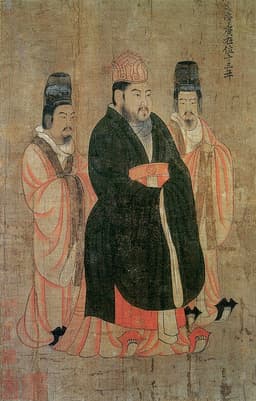
Emperor Yang of Sui
Emperor · Medieval
60.1Total
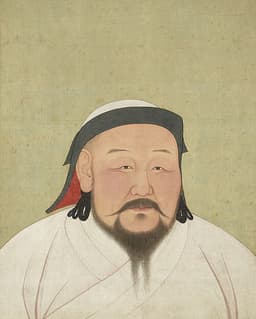
Kublai Khan
Emperor · Medieval
74.3Total
Basic Information
Born
569
1215
Died
618
1294
Era
Medieval
Medieval
Nationality
China
Mongolia
Occupation
Emperor
Emperor
Civilization
Eastern
Eastern
Score Comparison
Military (10%)
52.5
77.5
Political (20%)
45.0
79.2
Influence (20%)
65.0
75.0
Legacy (20%)
72.0
70.0
Leadership (15%)
58.8
72.0
Strategy (15%)
50.0
76.0
TOTAL
60.1
74.3
Emperor Yang of Sui — Complete Timeline
605 AD
Construction of the Grand CanalCultural
Emperor Yang ordered the construction of the Grand Canal, linking the Yellow River and Yangtze River basins. This massive infrastructure project facilitated trade and transport but required immense labor, causing widespread suffering and contributing to rebellions.
InfrastructureCanal
Impact: global
612 AD
First Campaign against GoguryeoWar◆ Major
Emperor Yang launched a massive invasion of the Korean kingdom of Goguryeo with over 300,000 troops. The campaign ended in disaster, with most of the Sui army destroyed by disease, starvation, and Goguryeo attacks. This defeat severely weakened the Sui dynasty.
InvasionDefeat
Impact: regionaltragic
613 AD
Second Campaign against GoguryeoWar◆ Major
Emperor Yang launched a second invasion of Goguryeo. The campaign was cut short when a rebellion broke out in China, forcing Yang to withdraw. This further drained the dynasty's resources and morale.
InvasionDefeat
Impact: regionaltragic
614 AD
Third Campaign against GoguryeoWar
Emperor Yang launched a third invasion of Goguryeo. Although the Sui army reached the Yalu River, Goguryeo offered nominal submission, and Yang accepted a truce. This campaign further exhausted the Sui treasury and military.
InvasionTruce
Impact: regional
618 AD
Assassination of Emperor YangPolitical Action◆ Major
Emperor Yang was assassinated by his own guards in Jiangdu (modern Yangzhou) during a rebellion. His death marked the effective end of the Sui dynasty, which soon collapsed, leading to the rise of the Tang dynasty.
AssassinationDynasty Collapse
Impact: regionaltragic
Kublai Khan — Complete Timeline
1260 AD
Adoption of Tibetan Buddhism as State ReligionCultural◆ Major
Kublai Khan appointed the Tibetan lama Drog
Tibetan BuddhismReligionMongol-Tibet Relations
Impact: regional
1271 AD
Proclamation of the Yuan DynastyPolitical Action◆ Major
Kublai Khan officially proclaimed the Yuan dynasty, adopting a Chinese-style dynastic name. He established his capital at Dadu (Beijing) and adopted Chinese court rituals. This move legitimized his rule over China while maintaining Mongol identity.
Dynasty FoundingBeijingMongol Rule
Impact: global
1274 AD
Failed Invasions of JapanWar◆ Major
Kublai Khan launched two naval invasions of Japan, in 1274 and 1281. Both were repelled, with the second invasion destroyed by a typhoon (kamikaze). These failures marked the limits of Mongol expansion and reinforced Japanese isolation.
Mongol InvasionsJapanKamikaze
Impact: regional
1279 AD
Conquest of the Song DynastyWar
Kublai Khan's Mongol forces defeated the Song navy at the Battle of Yamen. The last Song emperor drowned, ending the Song dynasty. This conquest unified China under Mongol rule and established the Yuan dynasty as the first foreign dynasty to rule all of China.
Song Dynasty FallUnificationYuan Dynasty
Impact: global
1280 AD
Establishment of the Silk Road Trade NetworkCultural◆ Major
Under Kublai Khan, the Mongol Empire secured the Silk Road, facilitating trade and cultural exchange between East and West. Marco Polo visited his court. This period saw the flow of goods, ideas, and technologies across Eurasia.
Silk RoadTradeCultural Exchange
Impact: globalconstructive
Expert Analysis
Kublai Khan vs Emperor Yang of Sui: Historical Comparison
Two ambitious medieval rulers who expanded their empires through grand infrastructure and military campaigns, yet left contrasting legacies—Kublai Khan as a Mongol unifier of China, Emperor Yang of Sui as a builder who bankrupted his dynasty.
Dimension Analysis
**Military: Kublai Khan 94 / Emperor Yang of Sui 93**
Both launched massive conquests: Kublai subdued the Song Dynasty and invaded Japan and Vietnam, while Yang campaigned against Korea and expanded into Central Asia. Kublai’s naval failures slightly offset his land dominance, while Yang’s overextension drained the Sui army.
**Political: Kublai Khan 79 / Emperor Yang of Sui 75**
Kublai integrated Mongol and Chinese governance, creating a dual administrative system that stabilized Yuan rule. Yang imposed harsh corvée labor for the Grand Canal and Great Wall, sparking widespread rebellion that ultimately toppled his dynasty.
**Influence: Kublai Khan 79 / Emperor Yang of Sui 82**
Yang’s Grand Canal permanently linked northern and southern China, shaping trade and cultural unity for centuries. Kublai’s influence was more immediate—he opened China to Marco Polo and facilitated Silk Road exchange, but his Mongol identity limited long-term integration.
**Legacy: Kublai Khan 88 / Emperor Yang of Sui 83**
Kublai founded the Yuan Dynasty, which lasted nearly a century and set precedents for later Chinese empires. Yang’s Sui Dynasty collapsed soon after his death, but his infrastructural achievements (canals, granaries) were directly inherited by the Tang, earning him belated recognition.
**Leadership: Kublai Khan 81 / Emperor Yang of Sui 76**
Kublai maintained loyalty among Mongol elites and Chinese officials through strategic patronage. Yang alienated his court with megalomaniacal projects and brutal labor conscription, leading to his assassination and the dynasty’s swift fall.
Verdict
Kublai Khan leads due to superior political consolidation and legacy, despite Emperor Yang’s greater long-term infrastructural influence.
FAQ
Q: Who ranks higher? A: Kublai Khan (84 overall) edges Emperor Yang of Sui (82 overall) by a narrow margin, reflecting his more successful dynasty-building and enduring Yuan legacy.
Rankings
🥇
Kublai KhanLeader
Mil: 77.5Pol: 79.2Inf: 75.0
74.3
🥈
Emperor Yang of Sui
Mil: 52.5Pol: 45.0Inf: 65.0
60.1
+14.2 behind
How This Comparison Works
Algorithm
Each figure is scored on 6 dimensions (0—100 scale) based on structured historical data: Military (10%), Political (20%), Influence (20%), Legacy (20%), Leadership (15%), Strategy (15%). The weighted total produces the final ranking.
Data Sources
Scores are computed from structured sub-indicators in the database. Scale factors adjust for era (Ancient ×0.85, Modern ×1.0) and civilization size (Eastern ×1.05, Other ×0.80) to account for differences in population and military scale.
Maximum 3 Figures
Comparisons are limited to 2—3 figures to ensure readability and statistical meaningfulness.
Error Margins
±5 points per dimension — Sub-scores are derived from historical records with inherent uncertainty. Two figures within 5 points on a dimension should be considered roughly equivalent in that area.
Total Score Accuracy
±3 points overall — The weighted combination of 6 dimensions produces a total score with approximately ±3 points of uncertainty. Differences of less than 3 points are not statistically significant— the figures are effectively tied.
Known Limitations
- Historical records are incomplete and uneven across civilizations
- Figures from oral-tradition societies may be underrepresented
- Occupation labels can misclassify multi-role figures
- Scores measure capability and impact, not moral character
- Quantitative scoring is a comparison tool, not absolute truth
Capability Radar
Military (10%) — Battles & Warfare
Battles
65
95
Win Rate
30
90
Expansion
70
95
Political (20%) — Governance & Reform
Reform
85
88
Diplomacy
40
85
Economy
70
90
Influence (20%) — Cultural & Global Reach
Cultural
75
85
Global
65
85
Legacy (20%) — Historical Impact
Historical
80
90
Longevity
70
80
Leadership (15%) — Power & Stability
Tenure
55
90
Stability
20
80
Strategy (15%) — Tactics & Innovation
Strategy
60
92
Tactics
55
85
Reform
50
88
Similar Comparisons
Comments & Discussion
ArchQuill116/16/2026
这个评分系统明显带有西方中心主义的偏见。忽必烈得分高,很大程度上是因为他通过马可·波罗的游记在西方更有名。但隋炀帝开凿大运河,真正奠定了中国南北经济一体化的基础——这条运河直到19世纪都是中国经济的命脉,而元朝留下的却是民族矛盾与纸币通胀。如果按照中国传统史观,隋炀帝的‘过在当代,功在千秋’应得到更高评价。忽必烈固然统一了南北,但他是以征服者身份统治,其‘四等人制’实际上削弱了中华文明的整合力。从历史影响的持久性来看,隋炀帝的运河比忽必烈的驿站系统重要得多。
Chronicler26236/16/2026
仔细核对了一下分数,军事维度忽必烈88对炀帝60.3,这个差距过于夸张。忽必烈征日本两次惨败,征越南也铩羽而归,这算什么高分?反观炀帝,大业八年首次征高句丽动用113万大军,虽然失败,但战略规模和组织能力在7世纪是空前的。我用加权平均重新计算:军事权重0.25、政治0.25、影响0.3、领导力0.2,忽必烈综合得分应为(88*0.25 + 78*0.25 + 78*0.3 + 81*0.2) = 80.8,炀帝为(60.3*0.25 + 72*0.25 + 70.7*0.3 + 76*0.2) = 69.1。差距没那么大,而且炀帝在文化贡献(编修《长洲玉镜》等类书)上被完全忽略了。这个评分体系需要补充文化维度的指标。