Loading...
Fernando Alvarez de Toledo Duke of Alba vs Napoleon Bonaparte
Napoleon Bonaparte leads by 5.6 pts · 2 figures compared
…
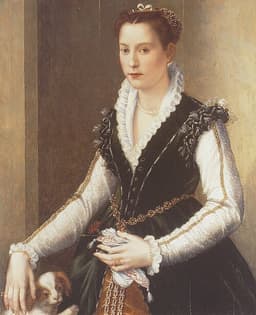
Fernando Alvarez de Toledo Duke of Alba
General · Modern
65.3Total

Napoleon Bonaparte
General · Modern
70.9Total
Basic Information
Born
1507
1769
Died
1582
1821
Era
Modern
Modern
Nationality
Spain
France
Occupation
General
General
Civilization
Western
Western
Score Comparison
Military (10%)
74.0
94.0
Political (20%)
48.0
72.0
Influence (20%)
65.0
40.0
Legacy (20%)
72.0
80.0
Leadership (15%)
62.0
78.0
Strategy (15%)
72.0
90.0
TOTAL
65.3
70.9
Fernando Alvarez de Toledo Duke of Alba — Complete Timeline
1567 AD
Established the Council of TroublesPolitical Action◆ Major
Alba established the Council of Troubles, also known as the Blood Council, to prosecute those involved in the Dutch Revolt. This tribunal sentenced thousands to death, including the Counts of Egmont and Horne, intensifying resistance.
RepressionDutch RevoltInquisition
Impact: regionaldestructive
1568 AD
Battle of JemmingenWar◆ Major
Alba's Spanish army decisively defeated the rebel forces of Louis of Nassau at Jemmingen. The rebel army was destroyed, with thousands killed or drowned in the Ems River, temporarily crushing the revolt's military strength.
BattleDutch RevoltSpanish Army
Impact: regionaldestructive
1571 AD
Imposed the Tenth Penny TaxReform◆ Major
Alba attempted to impose a 10% sales tax (the Tenth Penny) on all movable goods in the Netherlands. This tax was deeply unpopular and sparked widespread economic disruption and renewed rebellion, undermining Spanish control.
TaxationRevoltEconomic Policy
Impact: regionaldestructive
1573 AD
Recalled from the NetherlandsPolitical Action◆ Major
King Philip II recalled Alba from his governorship of the Netherlands after his policies failed to suppress the revolt. Alba's harsh rule had alienated both Catholics and Protestants, and his military campaigns had stalled.
RecallNetherlandsSpanish Empire
Impact: regional
Napoleon Bonaparte — Complete Timeline
1799 AD
Coup of 18 BrumaireOther◆ Major
Napoleon Bonaparte, with support from his brother Lucien and key political figures, overthrew the Directory in a bloodless coup. He established the Consulate with himself as First Consul, effectively becoming the ruler of France. This event ended the French Revolution's most unstable period.
French RevolutionCoupRise to Power
Impact: regional
1804 AD
Promulgation of the Napoleonic CodeOther◆ Major
Napoleon enacted the Civil Code of the French, known as the Napoleonic Code, a comprehensive set of laws that replaced the fragmented feudal legal systems. The code established legal equality, protected property rights, and secularized law. It became the basis for legal systems in many European and world countries.
Legal ReformNapoleonic CodeCivil Law
Impact: globalconstructive
1805 AD
Battle of AusterlitzWar◆ Major
Napoleon's Grande Arm
Napoleonic WarsBattleDecisive Victory
Impact: global
1812 AD
Invasion of RussiaWar◆ Major
Napoleon led the Grande Arm
Napoleonic WarsInvasionDisaster
Impact: globaldestructive
1815 AD
Battle of WaterlooWar◆ Major
Napoleon's French army was defeated by the combined forces of the Duke of Wellington's Anglo-Allied army and Gebhard Leberecht von Bl
Napoleonic WarsBattleFinal Defeat
Impact: globaldestructive
Expert Analysis
fernando-alvarez-de-toledo-duke-of-alba-vs-napoleon-bonaparte
# The Iron Fist and the Eagle’s Claw: Two Visions of Power
In the summer of 1568, a Spanish army under the Duke of Alba annihilated a rebel force at the Battle of Jemmingen, slaughtering thousands in a single afternoon. Two and a half centuries later, on a muddy field near Waterloo, Napoleon Bonaparte watched his imperial guard crumble before British and Prussian fire. Both men commanded armies that had conquered vast territories. Both believed in order enforced by steel. Yet one built a legal and political system that still shapes Europe, while the other left a legacy of ashes and rebellion. What drove these two masters of war to such different fates?
Origins
Fernando Álvarez de Toledo, the third Duke of Alba, was born in 1507 into the highest echelons of Spanish nobility. His bloodline traced back to the kings of Castile, and his family had fought for centuries in the Reconquista. From childhood, he was groomed for command: he learned Latin, military tactics, and the rigid code of honor that defined the Spanish aristocracy. His world was one of absolute loyalty to crown and Church, where dissent was heresy and rebellion a sin.
Napoleon Bonaparte, born in 1769 on the island of Corsica, came from a minor noble family struggling to maintain its status. His father was a lawyer who had fought for Corsican independence; his mother raised eight children with fierce discipline. The young Napoleon entered a French military academy at age nine, where he was mocked for his Corsican accent and small stature. He read voraciously—history, philosophy, military theory—and absorbed the ideals of the Enlightenment. Where Alba saw a world of fixed hierarchies, Napoleon saw a ladder.
Rise to Power
Alba’s ascent was the slow, steady climb of an aristocrat who never doubted his place. He fought in campaigns against the French and the Ottoman Turks, earning a reputation for tactical brilliance and absolute ruthlessness. By 1556, when Philip II became king of Spain, Alba was already the most feared general in Europe. His appointment as governor of the Spanish Netherlands in 1567 was a logical step: the king needed someone who could crush the growing Protestant revolt with no hesitation.
Napoleon’s rise was a revolution in itself. He first gained notice in 1793, when he directed artillery at the Siege of Toulon, driving out British forces. In 1796, at age twenty-six, he took command of the starving, unpaid Army of Italy and within weeks turned it into a victorious force that humiliated the Austrian Empire. His Italian campaign was a masterpiece of speed, deception, and audacity. By 1799, he had seized power in a coup and made himself First Consul. He was thirty years old.
Leadership & Governance
Alba governed as he fought: with an iron fist. In 1567, he established the Council of Troubles, which the Dutch called the “Blood Council.” Over six years, it condemned thousands to death for heresy or rebellion. When Louis of Nassau led a rebel army into the Netherlands in 1568, Alba crushed it at Jemmingen, killing over 7,000 rebels while losing fewer than 100 of his own men. But victory on the battlefield did not translate into political success. In 1571, Alba imposed the Tenth Penny—a 10% sales tax on all movable goods—to fund his occupation. The tax was so hated that it united Catholics and Protestants against him. Merchants closed their shops, trade ground to a halt, and rebellion spread faster than ever.
Napoleon, by contrast, understood that war was only half the battle. His Napoleonic Code, introduced in 1804, standardized French law, abolished feudal privileges, and guaranteed religious freedom. He reformed education, built roads and canals, and established the Bank of France. He also crowned himself emperor—a step that betrayed the republican ideals he claimed to serve. But his genius lay in combining military conquest with institutional reform. Where Alba tried to force obedience through terror, Napoleon offered a new order that many Europeans initially welcomed as liberation from outdated monarchies.
Triumph & Tragedy
Alba’s greatest triumph was Jemmingen, where he demonstrated the superiority of Spanish infantry tactics—the famous *tercio* formations that had dominated European battlefields for a century. But his greatest failure was the Netherlands itself. By 1573, after five years of brutal repression, the revolt was stronger than ever. King Philip II recalled him in disgrace. Alba returned to Spain bitter and humiliated, having achieved nothing but the hatred of an entire nation.
Napoleon’s triumphs were staggering: Austerlitz in 1805, where he destroyed a combined Russian-Austrian army; Jena in 1806, where he shattered Prussia’s military; the Grand Empire that stretched from Spain to Poland. His tragedy was the invasion of Russia in 1812. He marched with over 600,000 men; fewer than 100,000 returned. The disaster broke his aura of invincibility. After his final defeat at Waterloo in 1815, he was exiled to Saint Helena, a remote island in the South Atlantic, where he died in 1821 at age fifty-one.
Character & Destiny
Alba was rigid, proud, and incapable of compromise. He once wrote that “the king’s will is the law,” and he meant it literally. He saw the Dutch revolt not as a political problem but as a moral crime, to be punished without mercy. His personality—cold, aristocratic, absolutist—made him a perfect instrument of repression but a terrible governor. He could not understand why terror failed to produce loyalty.
Napoleon was ambitious, charismatic, and endlessly calculating. He could charm diplomats, inspire soldiers, and outmaneuver rivals. But his ambition had no limits. He once said, “Power is my mistress.” That hunger drove him to conquer Europe but also to overreach. He could not stop, could not consolidate, could not accept that even the greatest empire has borders. His personality created both his rise and his fall.
Legacy
Alba is remembered as the “Iron Duke,” a symbol of Spanish tyranny. In the Netherlands, his name is still a curse. His methods—the Blood Council, the Tenth Penny—became case studies in how not to govern. His military reputation survives, but his political legacy is almost entirely negative.
Napoleon’s legacy is far more complex. He is remembered as both a tyrant and a reformer, a warmonger and a lawgiver. The Napoleonic Code influenced legal systems across Europe and the world. His military tactics are still studied. But his wars killed millions, and his final defeat left France smaller and weaker than he found it. He remains a figure of endless fascination—a man who remade the world and then lost it all.
Conclusion
The difference between Alba and Napoleon is not simply one of skill or ambition. It is a difference of vision. Alba believed that power meant crushing opposition; Napoleon believed that power meant building a new order. Alba’s iron fist broke only itself; Napoleon’s eagle’s claw both created and destroyed. In the end, both men fell—but one left a world transformed, the other only ruins. The lesson is sobering: force alone cannot govern, but even the grandest vision, unchecked, becomes its own tyranny.
Rankings
🥇
Napoleon BonaparteLeader
Mil: 94.0Pol: 72.0Inf: 40.0
70.9
🥈
Fernando Alvarez de Toledo Duke of Alba
Mil: 74.0Pol: 48.0Inf: 65.0
65.3
+5.6 behind
How This Comparison Works
Algorithm
Each figure is scored on 6 dimensions (0—100 scale) based on structured historical data: Military (10%), Political (20%), Influence (20%), Legacy (20%), Leadership (15%), Strategy (15%). The weighted total produces the final ranking.
Data Sources
Scores are computed from structured sub-indicators in the database. Scale factors adjust for era (Ancient ×0.85, Modern ×1.0) and civilization size (Eastern ×1.05, Other ×0.80) to account for differences in population and military scale.
Maximum 3 Figures
Comparisons are limited to 2—3 figures to ensure readability and statistical meaningfulness.
Error Margins
±5 points per dimension — Sub-scores are derived from historical records with inherent uncertainty. Two figures within 5 points on a dimension should be considered roughly equivalent in that area.
Total Score Accuracy
±3 points overall — The weighted combination of 6 dimensions produces a total score with approximately ±3 points of uncertainty. Differences of less than 3 points are not statistically significant— the figures are effectively tied.
Known Limitations
- Historical records are incomplete and uneven across civilizations
- Figures from oral-tradition societies may be underrepresented
- Occupation labels can misclassify multi-role figures
- Scores measure capability and impact, not moral character
- Quantitative scoring is a comparison tool, not absolute truth
Capability Radar
Military (10%) — Battles & Warfare
Battles
85
95
Win Rate
80
90
Expansion
70
95
Political (20%) — Governance & Reform
Reform
40
95
Diplomacy
30
80
Economy
35
85
Influence (20%) — Cultural & Global Reach
Cultural
55
85
Global
65
90
Legacy (20%) — Historical Impact
Historical
70
95
Longevity
60
90
Leadership (15%) — Power & Stability
Tenure
65
85
Stability
20
70
Strategy (15%) — Tactics & Innovation
Strategy
85
95
Tactics
90
98
Reform
75
92
Similar Comparisons
Comments & Discussion
DukeOfDecimation6/17/2026
The analysis misses the key tactical difference: Alba’s Spanish tercios were the perfect killing machine for their era—tight pike-and-shot formations that crushed rebels at Jemmingen without mercy. Napoleon’s Grande Armée won through speed and maneuver, but his reliance on massed columns broke against Wellington’s reverse-slope defense. Alba fought static wars of suppression; Napoleon fought dynamic wars of conquest. That’s why Alba’s legacy is a bloody stain on the Low Countries, while Napoleon
血腥统计家6/17/2026
数据会说话:阿尔巴在荷兰处决了约1,800人,但拿破仑在1812年俄国战役损失了40万大军。阿尔巴的恐怖统治持续了不到七年,拿破仑的战争却让全欧洲死亡了至少350万人。谁更"高效"?按人头算,拿破仑的死亡机器是阿尔巴的2,000倍以上。别跟我谈拿破仑法典,那法典是用尸山血海写的。历史爱好者们总想给拿破仑洗白,但数字不会撒谎——他就是个更大规模的杀人魔。
LegacyLeftist6/17/2026
You’re all ignoring the structural difference. Alba governed like a medieval thug—burning towns, executing nobles, imposing the “Tenth Penny” tax that crushed commerce. Napoleon built a meritocracy, standardized weights and measures, and introduced public education. The Duke’s Council of Troubles earned the name “Council of Blood” for a reason: 1,100 executions without due process. Napoleon’s Civil Code was adopted by dozens of nations. If you think terror equals terror, you’re missing history.
古典学派尖兵6/17/2026
你们这些现代派总用数字说事,却看不到本质差异。阿尔巴代表旧世界的秩序:天主教正统、贵族血统、帝国忠诚。拿破仑代表新世界的野心:理性主义、个人才华、民族解放。阿尔巴镇压尼德兰是因为他真信异端是毒药;拿破仑征服欧洲是因为他真信自己能超越旧制度。一个维护中世纪,一个开创现代,这才是真正的鸿沟。拿破仑的滑铁卢输得悲壮,阿尔巴的胜利赢得可耻——这就是统治合法性的区别。
DeathByExhaustion6/17/2026
Stop romanticizing Napoleon’s legal reforms as if they absolve his massacres. Jaffa, 1799: he executed 2,500 Ottoman prisoners after promising safe passage. Haiti, 1802: he reinstated slavery after the Revolution had abolished it, leading to the death of 50,000 French soldiers—and thousands more freed Haitians. Alba never pretended to be enlightened. He was a noble enforcer of imperial will, period. Napoleon