Loading...
Frederick Augustus I of Saxony vs King Abdullah II
King Abdullah II leads by 0.3 pts · 2 figures compared
…
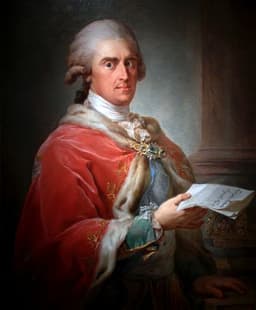
Frederick Augustus I of Saxony
Emperor · Modern
53.4Total
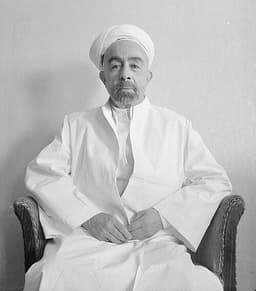
King Abdullah II
Emperor · Modern
53.7Total
Basic Information
Born
1750
1962
Died
1827
—
Era
Modern
Modern
Nationality
Saxony
Jordan
Occupation
Emperor
Emperor
Civilization
Western
Middle Eastern
Score Comparison
Military (10%)
50.0
20.0
Political (20%)
68.0
72.0
Influence (20%)
51.8
59.0
Legacy (20%)
41.7
42.5
Leadership (15%)
74.0
80.0
Strategy (15%)
36.8
35.7
TOTAL
53.4
53.7
Frederick Augustus I of Saxony — Complete Timeline
1806 AD
Alliance with Napoleon in the Napoleonic WarsWar◆ Major
Frederick Augustus I allied Saxony with Napoleon, contributing troops to the French campaigns. Saxon forces fought in the Battle of Jena-Auerstedt (1806) and later in the invasion of Russia (1812), suffering heavy losses.
Napoleonic WarsAllianceInvasion of Russia
Impact: regional
Elevation to King of Saxony by NapoleonPolitical Action◆ Major
Frederick Augustus I was elevated from Elector to King of Saxony by Napoleon Bonaparte after the dissolution of the Holy Roman Empire. He became a key ally of Napoleon, joining the Confederation of the Rhine.
ElevationNapoleonConfederation of the Rhine
Impact: regional
1813 AD
Battle of LeipzigWar
Frederick Augustus I remained loyal to Napoleon during the Battle of Leipzig (1813), where Saxon troops initially fought for the French but later defected to the Allies. After the battle, he was captured by the Allies and Saxony was occupied.
Battle of LeipzigDefectionCapture
Impact: regionaltragic
1815 AD
Congress of Vienna and Loss of TerritoryPolitical Action◆ Major
At the Congress of Vienna, Frederick Augustus I was forced to cede over half of Saxony's territory to Prussia, including the province of Saxony. He retained the title of King but ruled a significantly reduced state.
Congress of ViennaTerritorial LossPrussia
Impact: regionaltragic
King Abdullah II — Complete Timeline
1999 AD
Ascension to the ThronePolitical Action◆ Major
Abdullah II became King of Jordan upon the death of his father King Hussein. He inherited a stable monarchy and continued his father's policies of moderation and economic reform.
SuccessionMonarchy
Impact: national
2000 AD
Launch of Economic Reform ProgramReform◆ Major
Abdullah II initiated a series of economic reforms including privatization, trade liberalization, and promotion of foreign investment. These policies aimed to modernize Jordan's economy and attract international capital.
Economic ReformPrivatizationDevelopment
Impact: nationalconstructive
2011 AD
Response to Arab Spring ProtestsPolitical Action◆ Major
Abdullah II responded to widespread protests by dismissing the government, enacting constitutional reforms, and promising political liberalization. He avoided the violent crackdowns seen in other Arab states.
Arab SpringPolitical ReformProtests
Impact: nationalconstructive
2014 AD
Role in Anti-ISIS CoalitionWar◆ Major
Jordan joined the US-led coalition against the Islamic State (ISIS) in Syria and Iraq. Jordanian airstrikes targeted ISIS positions, and the country hosted coalition forces and Syrian refugees.
CounterterrorismISISMilitary Coalition
Impact: regional
2021 AD
Failed Coup Attempt by Prince HamzahPolitical Action◆ Major
Abdullah II placed his half-brother Prince Hamzah under house arrest, accusing him of involvement in a foreign-backed plot to destabilize the monarchy. The incident highlighted internal royal family tensions.
Coup AttemptRoyal FamilyPolitical Crisis
Impact: nationaldestructive
Expert Analysis
Origins
Frederick Augustus I of Saxony was born on December 23, 1750, in Dresden, the son of Elector Frederick Christian of Saxony and Princess Maria Antonia of Bavaria. He received a thorough education in statecraft and military affairs, but his early life was overshadowed by the Seven Years' War, which left Saxony devastated. He became Elector in 1763, inheriting a weakened state.
King Abdullah II of Jordan was born on January 30, 1962, in Amman, the eldest son of King Hussein and his British-born wife, Princess Muna. He was educated at Sandhurst Royal Military Academy, Oxford, and Georgetown University, gaining exposure to both military and diplomatic training. His father's long reign (46 years) provided a stable foundation, but Abdullah was not initially the heir; he was appointed crown prince in 1999 shortly before his father's death.
Rise to Power
Frederick Augustus I ascended to the Electorate in 1763 at age 12, with his mother acting as regent. He took full power in 1768. His major turning point came in 1806 after the Battle of Jena-Auerstedt, when Napoleon defeated Prussia. Frederick Augustus was elevated from Elector to King of Saxony (December 11, 1806) as a reward for remaining neutral or favoring France. He became a key member of the Confederation of the Rhine, aligning Saxony with Napoleon. This decision brought territorial gains but also dependence on French power.
Abdullah II became king on February 7, 1999, upon his father's death. He was not the original heir; his uncle Hassan had been crown prince for decades, but King Hussein changed the succession in his final weeks. Abdullah quickly consolidated power, retaining key advisors like Prime Minister Rawabdeh. He inherited a stable monarchy but faced economic challenges and regional tensions. His early focus was on economic reform and modernization, launching a privatization program in 2000.
Leadership & Governance
Frederick Augustus I governed as an absolute monarch within the Napoleonic system. He implemented administrative reforms based on French models, but his leadership was constrained by Napoleon's dominance. He contributed troops to Napoleon's campaigns, notably sending 20,000 soldiers to the 1812 invasion of Russia, of which only a few hundred returned. His governance score of 68.0 reflects his ability to maintain Saxony's autonomy while allied to a hegemonic power, but his political decisions were reactive rather than visionary.
Abdullah II has ruled as a constitutional monarch with significant executive powers. He has pursued gradual political liberalization, including the 2011 constitutional amendments that gave parliament more power. His leadership score of 80.0 is the highest in this comparison, reflecting his ability to navigate the Arab Spring by dismissing governments and promising reforms. He has also championed economic liberalization, with GDP growth averaging 4% in the 2000s, though unemployment and debt remain high. His political score of 72.0 indicates effective management of a fragile state.
Triumph & Tragedy
Frederick Augustus I's greatest success was securing the title of King and preserving Saxony's territorial integrity during the Napoleonic Wars. However, his greatest tragedy was the Battle of Leipzig (1813), where Saxon troops initially fought for Napoleon but then defected to the Allies, leading to Saxon losses and occupation. At the Congress of Vienna (1815), he was forced to cede 58% of Saxony's territory to Prussia, including the province of Saxony, reducing his kingdom to half its size. This was a catastrophic failure of his alliance strategy.
Abdullah II's triumphs include a smooth ascension, maintaining stability during the Arab Spring, and playing a key role in the anti-ISIS coalition. His military score of 20.0 reflects Jordan's limited military power, but his influence score of 59.0 highlights his diplomatic role. His greatest failure is the 2021 coup attempt by his half-brother Prince Hamzah, which exposed internal family tensions and raised questions about the monarchy's stability. Additionally, economic reforms have not sufficiently reduced poverty or unemployment, leading to periodic protests.
Character & Destiny
Frederick Augustus I was cautious and loyal to a fault. He remained faithful to Napoleon even when the tide turned, partly due to a sense of honor and partly because of his dependence on French support. His decision at Leipzig to stay with Napoleon despite Saxon troops defecting reflects a stubborn adherence to his alliance. This loyalty cost him half his kingdom. Historians describe him as a well-meaning but weak ruler, unable to adapt to changing circumstances.
Abdullah II is pragmatic and reform-minded, but also authoritarian when threatened. He has promoted interfaith dialogue and women's rights, yet cracked down on dissent. His response to the coup attempt was swift and firm, placing Prince Hamzah under house arrest. His character is marked by a blend of Western education and traditional monarchical instincts, allowing him to balance modernization with stability.
Legacy
Frederick Augustus I's legacy is mixed: he elevated Saxony to a kingdom but lost half its territory. He is remembered as a loyal ally of Napoleon, and his reign marked the end of Saxony as a major power. His legacy score of 41.7 reflects this diminished impact. Saxony became a secondary state in Germany, eventually absorbed into the German Empire in 1871.
Abdullah II's legacy is still unfolding. He has maintained Jordan's stability in a volatile region, but his reforms have been incremental. He is seen as a moderate voice in the Middle East, with influence beyond Jordan's size. His legacy score of 42.5 is slightly higher than Frederick Augustus's, reflecting his continued relevance. However, economic challenges and the Hamzah affair may tarnish his record.
Conclusion
King Abdullah II of Jordan has had greater overall impact than Frederick Augustus I of Saxony, despite the narrow score gap of 0.3 points. Frederick Augustus's total score of 53.4 reflects a ruler who was a pawn in larger geopolitical games, while Abdullah's 53.7 reflects active agency in shaping a modern state. Abdullah's leadership (80.0 vs 74.0) and political skills (72.0 vs 68.0) are superior, and his legacy is more relevant to contemporary affairs. Frederick Augustus's military and strategy scores are slightly higher but ultimately led to failure. In terms of enduring influence, Abdullah's role in regional stability and reform outweighs Frederick Augustus's brief royal elevation. The Saxon king's story is a cautionary tale of over-reliance on a foreign power, while Abdullah's demonstrates the challenges of reform in a fragile state. Thus, King Abdullah II takes the edge.
Rankings
🥇
King Abdullah IILeader
Mil: 20.0Pol: 72.0Inf: 59.0
53.7
🥈
Frederick Augustus I of Saxony
Mil: 50.0Pol: 68.0Inf: 51.8
53.4
+0.3 behind
How This Comparison Works
Algorithm
Each figure is scored on 6 dimensions (0—100 scale) based on structured historical data: Military (10%), Political (20%), Influence (20%), Legacy (20%), Leadership (15%), Strategy (15%). The weighted total produces the final ranking.
Data Sources
Scores are computed from structured sub-indicators in the database. Scale factors adjust for era (Ancient ×0.85, Modern ×1.0) and civilization size (Eastern ×1.05, Other ×0.80) to account for differences in population and military scale.
Maximum 3 Figures
Comparisons are limited to 2—3 figures to ensure readability and statistical meaningfulness.
Error Margins
±5 points per dimension — Sub-scores are derived from historical records with inherent uncertainty. Two figures within 5 points on a dimension should be considered roughly equivalent in that area.
Total Score Accuracy
±3 points overall — The weighted combination of 6 dimensions produces a total score with approximately ±3 points of uncertainty. Differences of less than 3 points are not statistically significant— the figures are effectively tied.
Known Limitations
- Historical records are incomplete and uneven across civilizations
- Figures from oral-tradition societies may be underrepresented
- Occupation labels can misclassify multi-role figures
- Scores measure capability and impact, not moral character
- Quantitative scoring is a comparison tool, not absolute truth
Capability Radar
Military (10%) — Battles & Warfare
Battles
20
5
Win Rate
25
5
Expansion
15
5
Political (20%) — Governance & Reform
Reform
40
60
Diplomacy
50
75
Economy
45
55
Influence (20%) — Cultural & Global Reach
Cultural
30
40
Global
20
55
Legacy (20%) — Historical Impact
Historical
35
35
Longevity
25
30
Leadership (15%) — Power & Stability
Tenure
55
70
Stability
35
65
Strategy (15%) — Tactics & Innovation
Strategy
20
15
Tactics
15
10
Reform
10
20
Similar Comparisons
Comments & Discussion
No comments yet. Be the first to share your thoughts!