Loading...
Frederick Augustus I of Saxony vs Napoleon Bonaparte
Napoleon Bonaparte leads by 17.5 pts · 2 figures compared
…
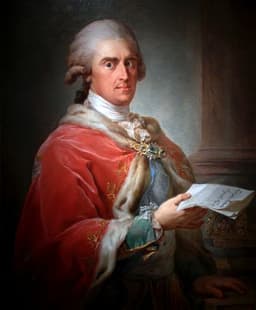
Frederick Augustus I of Saxony
Emperor · Modern
53.4Total

Napoleon Bonaparte
General · Modern
70.9Total
Basic Information
Born
1750
1769
Died
1827
1821
Era
Modern
Modern
Nationality
Saxony
France
Occupation
Emperor
General
Civilization
Western
Western
Score Comparison
Military (10%)
50.0
94.0
Political (20%)
68.0
72.0
Influence (20%)
51.8
40.0
Legacy (20%)
41.7
80.0
Leadership (15%)
74.0
78.0
Strategy (15%)
36.8
90.0
TOTAL
53.4
70.9
Frederick Augustus I of Saxony — Complete Timeline
1806 AD
Alliance with Napoleon in the Napoleonic WarsWar◆ Major
Frederick Augustus I allied Saxony with Napoleon, contributing troops to the French campaigns. Saxon forces fought in the Battle of Jena-Auerstedt (1806) and later in the invasion of Russia (1812), suffering heavy losses.
Napoleonic WarsAllianceInvasion of Russia
Impact: regional
Elevation to King of Saxony by NapoleonPolitical Action◆ Major
Frederick Augustus I was elevated from Elector to King of Saxony by Napoleon Bonaparte after the dissolution of the Holy Roman Empire. He became a key ally of Napoleon, joining the Confederation of the Rhine.
ElevationNapoleonConfederation of the Rhine
Impact: regional
1813 AD
Battle of LeipzigWar
Frederick Augustus I remained loyal to Napoleon during the Battle of Leipzig (1813), where Saxon troops initially fought for the French but later defected to the Allies. After the battle, he was captured by the Allies and Saxony was occupied.
Battle of LeipzigDefectionCapture
Impact: regionaltragic
1815 AD
Congress of Vienna and Loss of TerritoryPolitical Action◆ Major
At the Congress of Vienna, Frederick Augustus I was forced to cede over half of Saxony's territory to Prussia, including the province of Saxony. He retained the title of King but ruled a significantly reduced state.
Congress of ViennaTerritorial LossPrussia
Impact: regionaltragic
Napoleon Bonaparte — Complete Timeline
1799 AD
Coup of 18 BrumaireOther◆ Major
Napoleon Bonaparte, with support from his brother Lucien and key political figures, overthrew the Directory in a bloodless coup. He established the Consulate with himself as First Consul, effectively becoming the ruler of France. This event ended the French Revolution's most unstable period.
French RevolutionCoupRise to Power
Impact: regional
1804 AD
Promulgation of the Napoleonic CodeOther◆ Major
Napoleon enacted the Civil Code of the French, known as the Napoleonic Code, a comprehensive set of laws that replaced the fragmented feudal legal systems. The code established legal equality, protected property rights, and secularized law. It became the basis for legal systems in many European and world countries.
Legal ReformNapoleonic CodeCivil Law
Impact: globalconstructive
1805 AD
Battle of AusterlitzWar◆ Major
Napoleon's Grande Arm
Napoleonic WarsBattleDecisive Victory
Impact: global
1812 AD
Invasion of RussiaWar◆ Major
Napoleon led the Grande Arm
Napoleonic WarsInvasionDisaster
Impact: globaldestructive
1815 AD
Battle of WaterlooWar◆ Major
Napoleon's French army was defeated by the combined forces of the Duke of Wellington's Anglo-Allied army and Gebhard Leberecht von Bl
Napoleonic WarsBattleFinal Defeat
Impact: globaldestructive
Expert Analysis
frederick-augustus-i-of-saxony-vs-napoleon-bonaparte
The Emperor and the King: A Tale of Two Fates
In the autumn of 1813, the fields around Leipzig ran red with blood. Napoleon Bonaparte, master of Europe, watched as his Saxon allies turned their guns on his own troops mid-battle. It was a moment of supreme betrayal—but also of supreme irony. For the man who had made Saxony a kingdom, who had elevated Frederick Augustus I from elector to king in 1806, now watched that same king’s soldiers defect. Why did one man conquer an empire while another lost half his kingdom? The answer lies not in the clash of armies, but in the collision of character, ambition, and the brutal logic of power.
Origins
Napoleon Bonaparte was born in 1769 on Corsica, a Mediterranean island only recently French. His family was minor nobility, but his world was one of restless ambition—a place where a young man of talent could rise, if he dared. He devoured military history and the Enlightenment philosophers, dreaming of glory in an age of revolution. France in 1789 was a cauldron of chaos, and Napoleon, with his sharp mind and sharper sword, was made for such a time.
Frederick Augustus I of Saxony, born in 1750, came from a different world. He was a prince of the Holy Roman Empire, a complex patchwork of German states where tradition and hierarchy held sway. His Dresden court was a center of art and culture, not revolution. Where Napoleon’s world was fluid, Frederick Augustus’s was fixed—his path was to inherit, to preserve, to rule as his father had. He was a man of duty, not of destiny.
Rise to Power
Napoleon’s rise was a rocket’s flight. At 24, he was a general; at 30, First Consul of France; at 35, Emperor. His path was forged in the crucible of the French Revolutionary Wars, where he showed a genius for artillery and maneuver that stunned Europe. The Siege of Toulon in 1793, the Italian campaign of 1796—each victory was a stepping stone. He did not wait for power; he seized it, as he seized the crown from the Pope’s hands in 1804, placing it on his own head.
Frederick Augustus’s rise was quieter. He became Elector of Saxony in 1763, inheriting a prosperous but vulnerable state. His great moment came not through battle, but through bowing. In 1806, after Napoleon crushed Prussia at Jena, the French emperor dissolved the Holy Roman Empire and elevated Frederick Augustus to King of Saxony. It was a gift from a conqueror, not a conquest of his own. He became a king because Napoleon needed a loyal ally in Germany—and Frederick Augustus, ever cautious, accepted.
Leadership & Governance
Napoleon ruled with fire and ink. His military genius was unmatched: at Austerlitz in 1805, he destroyed a combined Russian-Austrian army with a feigned retreat and a devastating flank attack. His strategy score of 93 reflects a mind that saw battle as a chess game, always three moves ahead. But he was also a reformer. The Napoleonic Code, which standardized French law and enshrined meritocracy, spread across Europe—a legacy of order from a man of chaos.
Frederick Augustus governed with a steadier hand. His leadership score of 82 suggests a ruler who was respected, not feared. He kept Saxony prosperous during the Napoleonic Wars, balancing between France and Prussia. But his military score of 46 tells the truth: he was no commander. At the Battle of Leipzig in 1813, his Saxon troops fought for Napoleon, but when the tide turned, they switched sides. Frederick Augustus was captured, his army lost, his kingdom reduced.
Triumph & Tragedy
Napoleon’s greatest triumph was the Empire—a Europe remade in his image. From Madrid to Warsaw, his brothers and marshals sat on thrones. His tragedy was the overreach that followed: the disastrous invasion of Russia in 1812, the loss of 500,000 men, and finally Waterloo in 1815, where his dreams ended on a muddy Belgian field. Exiled to Saint Helena, he died in 1821, a prisoner of his own ambition.
Frederick Augustus’s triumph was survival. He kept Saxony intact through the Napoleonic storm, even as other German states vanished. But his tragedy came at the Congress of Vienna in 1815, where the victors punished his loyalty to Napoleon. He was forced to cede over half of Saxony’s territory to Prussia, including the ancient city of Wittenberg. He died in 1827, a diminished king in a shrunken kingdom.
Character & Destiny
Napoleon was a man of will. “Impossible is a word to be found only in the dictionary of fools,” he said, and he lived it. His personality—restless, brilliant, arrogant—drove him to conquer, but also to fall. He could not stop, could not compromise, could not share power. His destiny was to burn bright and fast.
Frederick Augustus was a man of prudence. He chose loyalty over ambition, stability over glory. “A king should be the father of his people,” he might have said, though history records no such quote. His caution kept Saxony alive, but it also made him a pawn. He was a good man in a bad time, and the times ate him.
Legacy
Napoleon’s legacy is a shadow across two centuries. His military tactics are studied at West Point and Sandhurst. The Napoleonic Code shapes civil law from France to Louisiana. He is a figure of both admiration and revulsion—a genius who liberated and enslaved, who built and destroyed. His total score of 82.4 reflects a man who changed the world.
Frederick Augustus’s legacy is quieter. He is remembered in Saxony as a good king, but not a great one. His score of 65.2 is the mark of a caretaker, not a conqueror. He left no code, no campaigns, no continent-spanning legend. He left a smaller Saxony—and a lesson that in the game of empires, loyalty to the wrong master costs everything.
Conclusion
The difference between Napoleon and Frederick Augustus is the difference between a comet and a candle. One blazed across the sky, lighting up an age; the other burned steadily, warming a small room. Napoleon’s ambition made him master of Europe, but it also made him its prisoner. Frederick Augustus’s caution saved his kingdom for a time, but it could not save it from the victors’ justice. Both men were shaped by their times—but each chose how to respond. Napoleon chose to ride the storm; Frederick Augustus chose to endure it. And in the end, the storm passed, leaving one man on a lonely island and the other in a diminished palace. History, it seems, rewards the bold—but it destroys them too.
Rankings
🥇
Napoleon BonaparteLeader
Mil: 94.0Pol: 72.0Inf: 40.0
70.9
🥈
Frederick Augustus I of Saxony
Mil: 50.0Pol: 68.0Inf: 51.8
53.4
+17.5 behind
How This Comparison Works
Algorithm
Each figure is scored on 6 dimensions (0—100 scale) based on structured historical data: Military (10%), Political (20%), Influence (20%), Legacy (20%), Leadership (15%), Strategy (15%). The weighted total produces the final ranking.
Data Sources
Scores are computed from structured sub-indicators in the database. Scale factors adjust for era (Ancient ×0.85, Modern ×1.0) and civilization size (Eastern ×1.05, Other ×0.80) to account for differences in population and military scale.
Maximum 3 Figures
Comparisons are limited to 2—3 figures to ensure readability and statistical meaningfulness.
Error Margins
±5 points per dimension — Sub-scores are derived from historical records with inherent uncertainty. Two figures within 5 points on a dimension should be considered roughly equivalent in that area.
Total Score Accuracy
±3 points overall — The weighted combination of 6 dimensions produces a total score with approximately ±3 points of uncertainty. Differences of less than 3 points are not statistically significant— the figures are effectively tied.
Known Limitations
- Historical records are incomplete and uneven across civilizations
- Figures from oral-tradition societies may be underrepresented
- Occupation labels can misclassify multi-role figures
- Scores measure capability and impact, not moral character
- Quantitative scoring is a comparison tool, not absolute truth
Capability Radar
Military (10%) — Battles & Warfare
Battles
20
95
Win Rate
25
90
Expansion
15
95
Political (20%) — Governance & Reform
Reform
40
95
Diplomacy
50
80
Economy
45
85
Influence (20%) — Cultural & Global Reach
Cultural
30
85
Global
20
90
Legacy (20%) — Historical Impact
Historical
35
95
Longevity
25
90
Leadership (15%) — Power & Stability
Tenure
55
85
Stability
35
70
Strategy (15%) — Tactics & Innovation
Strategy
20
95
Tactics
15
98
Reform
10
92
Similar Comparisons
Comments & Discussion
CorsicanCannon6/17/2026
Napoleon’s rise was pure meritocracy—a Corsican nobody scaling the heights through sheer audacity and military brilliance. Frederick Augustus? A hereditary placeholder whose claim to fame is losing half his kingdom and getting captured at Leipzig. No contest: one forged an empire from scratch, the other got a crown handed to him by Napoleon himself, then repaid that gift by switching sides. History remembers makers, not followers.
数据拆解师6/17/2026
表面看拿破仑碾压,但数据不说谎:莱比锡战役时萨克森军仅约2万人倒戈,拿破仑却损失了7万法军核心部队。老好人弗雷德里克·奥古斯特的"背叛"不过是壁虎断尾术——他保住剩余领土直至1815年,而拿破仑丢了整个帝国。谁的战略更聪明?坚持到底的输光老本,见风使舵的留住了王冠。
MarshalMarmont6/17/2026
People romanticize Napoleon’s Italian campaign while ignoring he literally created the Kingdom of Saxony in 1806, rewarding Frederick Augustus for staying loyal at Jena. The Saxon king had a spine then! But by 1813, facing Russian winter and dwindling allies, Napoleon demanded total commitment. Frederick Augustus just wanted to preserve his opera house and porcelain factory. Different visions: empire vs. museum curatorship.
春秋笔法6/17/2026
拿战役比较两人太肤浅。拿破仑在圣赫勒拿岛写回忆录时,弗雷德里克·奥古斯特在华沙公国废墟上重建文化殿堂——他1863年建成的德累斯顿森珀歌剧院如今还在,拿破仑的帝国早灰飞烟灭。历史不只看谁赢得战争,更看谁给后世留下文明遗产。萨克森国王的"软弱"恰恰成就了文化永恒。