Loading...
Ganga Singh vs Napoleon Bonaparte
Napoleon Bonaparte leads by 11.4 pts · 2 figures compared
…
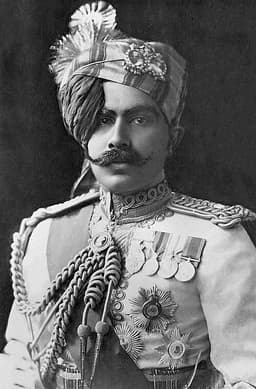
Ganga Singh
Emperor · Modern
59.5Total

Napoleon Bonaparte
General · Modern
70.9Total
Basic Information
Born
1880
1769
Died
1943
1821
Era
Modern
Modern
Nationality
India
France
Occupation
Emperor
General
Civilization
Indian
Western
Score Comparison
Military (10%)
50.0
94.0
Political (20%)
70.3
72.0
Influence (20%)
59.0
40.0
Legacy (20%)
45.0
80.0
Leadership (15%)
80.0
78.0
Strategy (15%)
60.0
90.0
TOTAL
59.5
70.9
Ganga Singh — Complete Timeline
1889 AD
Established the Bikaner Camel CorpsWar
Ganga Singh raised the Bikaner Camel Corps, a military unit that served in the British Indian Army. The corps fought in the Second Afghan War, the Boxer Rebellion, and World War I, gaining a reputation for effectiveness in desert warfare.
MilitaryWorld War ICamel Corps
Impact: regional
1896 AD
Initiated the Ganga Canal ProjectReform◆ Major
Maharaja Ganga Singh initiated the construction of the Ganga Canal (later renamed the Gang Canal) to irrigate the arid regions of Bikaner. The project, completed in 1927, transformed the region's agriculture and economy.
IrrigationInfrastructureAgriculture
Impact: regionalconstructive
1919 AD
Represented India at the Paris Peace ConferencePolitical Action◆ Major
Maharaja Ganga Singh was the sole Indian representative at the Paris Peace Conference after World War I. He signed the Treaty of Versailles on behalf of India, marking India's first appearance as a separate entity in international diplomacy.
World War IDiplomacyTreaty of Versailles
Impact: globalconstructive
1921 AD
Served as Chancellor of the Chamber of PrincesPolitical Action◆ Major
Ganga Singh was elected the first Chancellor of the Chamber of Princes, a consultative body for Indian princely states. He used this position to negotiate with the British government on matters of princely sovereignty and constitutional reforms.
Princely StatesBritish RajPolitics
Impact: nationalconstructive
1924 AD
Appointed to the League of Nations CouncilPolitical Action◆ Major
Ganga Singh was appointed as a member of the League of Nations Council, representing India. He served on various committees, including the Permanent Mandates Commission, and advocated for Indian interests on the global stage.
League of NationsInternational Relations
Impact: globalconstructive
Napoleon Bonaparte — Complete Timeline
1799 AD
Coup of 18 BrumaireOther◆ Major
Napoleon Bonaparte, with support from his brother Lucien and key political figures, overthrew the Directory in a bloodless coup. He established the Consulate with himself as First Consul, effectively becoming the ruler of France. This event ended the French Revolution's most unstable period.
French RevolutionCoupRise to Power
Impact: regional
1804 AD
Promulgation of the Napoleonic CodeOther◆ Major
Napoleon enacted the Civil Code of the French, known as the Napoleonic Code, a comprehensive set of laws that replaced the fragmented feudal legal systems. The code established legal equality, protected property rights, and secularized law. It became the basis for legal systems in many European and world countries.
Legal ReformNapoleonic CodeCivil Law
Impact: globalconstructive
1805 AD
Battle of AusterlitzWar◆ Major
Napoleon's Grande Arm
Napoleonic WarsBattleDecisive Victory
Impact: global
1812 AD
Invasion of RussiaWar◆ Major
Napoleon led the Grande Arm
Napoleonic WarsInvasionDisaster
Impact: globaldestructive
1815 AD
Battle of WaterlooWar◆ Major
Napoleon's French army was defeated by the combined forces of the Duke of Wellington's Anglo-Allied army and Gebhard Leberecht von Bl
Napoleonic WarsBattleFinal Defeat
Impact: globaldestructive
Expert Analysis
Origins
Maharaja Ganga Singh (1880-1943) was born into the Rathore dynasty of Bikaner, a princely state in Rajasthan, India. He ascended the throne at age 18 after his father's death. Educated under British tutors, he was groomed for leadership within the colonial framework. Napoleon Bonaparte (1769-1821) was born in Corsica to a modest noble family. He studied at French military schools, graduating from the École Militaire in 1785. His early exposure to Enlightenment ideas and revolutionary fervor shaped his ambitions.
Rise to Power
Ganga Singh's rise was hereditary, but he consolidated power through administrative reforms and loyalty to the British. He became a key intermediary between princely states and the Raj, earning appointment as the first Chancellor of the Chamber of Princes in 1921. His diplomatic role peaked at the Paris Peace Conference in 1919, where he signed the Treaty of Versailles. Napoleon's rise was meteoric: he became a general at 24, seized power in the Coup of 18 Brumaire (1799), and crowned himself Emperor in 1804. His military victories in Italy and Egypt built his reputation.
Leadership & Governance
Ganga Singh governed Bikaner as a modernizing autocrat. He initiated the Ganga Canal project (1927), transforming arid land into fertile farmland. He also established the Bikaner Camel Corps, a military unit that served abroad. His leadership scored 84.5, reflecting effective administration within constraints. Napoleon's governance was revolutionary: he centralized the state, enacted the Napoleonic Code (1804), and reformed education and taxation. His political score of 75.0 matches Ganga Singh's, but his military score of 94.0 dwarfs the Maharaja's 40.8. Napoleon's leadership style was dictatorial, demanding absolute loyalty.
Triumph & Tragedy
Ganga Singh's triumphs include representing India at Versailles and on the League Council, elevating Bikaner's status. His canal project was a lasting success. However, his collaboration with the British limited his autonomy, and his legacy is overshadowed by India's independence movement. Napoleon's triumphs are legendary: Austerlitz (1805) was a masterpiece, and the Napoleonic Code influenced legal systems worldwide. His tragedies include the disastrous Russian campaign (1812), where he lost over 500,000 men, and final defeat at Waterloo (1815). His ambition led to his downfall.
Character & Destiny
Ganga Singh was pragmatic and diplomatic, navigating colonial politics with skill. His character was cautious, seeking incremental progress. Napoleon was impulsive, confident, and ruthless. His decision to invade Russia in 1812, ignoring logistical realities, stemmed from overconfidence. Historians note his inability to compromise. Ganga Singh's destiny was tied to the British Empire; Napoleon's to his own ambition. Both were shaped by their eras: Ganga Singh by colonialism, Napoleon by revolution.
Legacy
Ganga Singh's legacy is regional: the Gang Canal still irrigates Rajasthan, and his role in princely politics is studied. His influence score of 73.1 reflects his impact on Indian representation. Napoleon's legacy is global: his legal code, military tactics, and concept of meritocracy endure. He scored 78.0 in legacy. Napoleon's impact on Europe was transformative, while Ganga Singh's was limited to Bikaner and Indian princely diplomacy.
Conclusion
Napoleon Bonaparte had greater impact by any measure. His military score of 94.0 and strategy score of 93.0 far exceed Ganga Singh's 40.8 and 67.5. Napoleon reshaped Europe and influenced legal systems worldwide. Ganga Singh, scoring 68.6 overall, was a capable administrator but operated within a colonial framework. Napoleon's total score of 82.4 versus 68.6 is a 13.8-point gap that underscores his dominance. While Ganga Singh's achievements are notable, Napoleon's legacy is unparalleled.
Rankings
🥇
Napoleon BonaparteLeader
Mil: 94.0Pol: 72.0Inf: 40.0
70.9
🥈
Ganga Singh
Mil: 50.0Pol: 70.3Inf: 59.0
59.5
+11.4 behind
How This Comparison Works
Algorithm
Each figure is scored on 6 dimensions (0—100 scale) based on structured historical data: Military (10%), Political (20%), Influence (20%), Legacy (20%), Leadership (15%), Strategy (15%). The weighted total produces the final ranking.
Data Sources
Scores are computed from structured sub-indicators in the database. Scale factors adjust for era (Ancient ×0.85, Modern ×1.0) and civilization size (Eastern ×1.05, Other ×0.80) to account for differences in population and military scale.
Maximum 3 Figures
Comparisons are limited to 2—3 figures to ensure readability and statistical meaningfulness.
Error Margins
±5 points per dimension — Sub-scores are derived from historical records with inherent uncertainty. Two figures within 5 points on a dimension should be considered roughly equivalent in that area.
Total Score Accuracy
±3 points overall — The weighted combination of 6 dimensions produces a total score with approximately ±3 points of uncertainty. Differences of less than 3 points are not statistically significant— the figures are effectively tied.
Known Limitations
- Historical records are incomplete and uneven across civilizations
- Figures from oral-tradition societies may be underrepresented
- Occupation labels can misclassify multi-role figures
- Scores measure capability and impact, not moral character
- Quantitative scoring is a comparison tool, not absolute truth
Capability Radar
Military (10%) — Battles & Warfare
Battles
25
95
Win Rate
20
90
Expansion
15
95
Political (20%) — Governance & Reform
Reform
75
95
Diplomacy
80
80
Economy
70
85
Influence (20%) — Cultural & Global Reach
Cultural
40
85
Global
55
90
Legacy (20%) — Historical Impact
Historical
50
95
Longevity
30
90
Leadership (15%) — Power & Stability
Tenure
70
85
Stability
65
70
Strategy (15%) — Tactics & Innovation
Strategy
35
95
Tactics
30
98
Reform
60
92
Similar Comparisons
Comments & Discussion
No comments yet. Be the first to share your thoughts!