Loading...
This comparison has not been analyzed yet.
One-time AI generation (~1 minute). Scores and timeline are already available below.
Georges Clemenceau vs Mike Moore
Georges Clemenceau leads by 10.9 pts · 2 figures compared
…
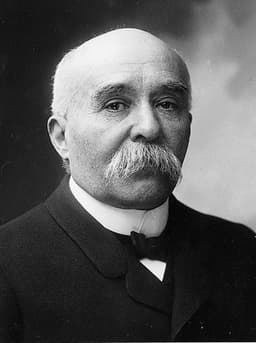
Georges Clemenceau
Politician · Modern
63.8Total

Mike Moore
Politician · Modern
52.9Total
Basic Information
Born
1841
1949
Died
1929
—
Era
Modern
Modern
Nationality
France
New Zealand
Occupation
Politician
Politician
Civilization
Western
Western
Score Comparison
Military (10%)
49.1
50.0
Political (20%)
70.3
68.0
Influence (20%)
65.0
53.3
Legacy (20%)
65.0
41.7
Leadership (15%)
78.0
64.0
Strategy (15%)
41.4
43.8
TOTAL
63.8
52.9
Georges Clemenceau — Complete Timeline
1917 AD
Became Prime Minister of France for the second timePolitical Action◆ Major
Clemenceau was appointed premier during a critical phase of World War I, after the failure of the Nivelle Offensive and mutinies in the French army. He formed a war government and vowed to pursue the war to victory, restoring morale and discipline.
World War ILeadershipWar Government
Impact: global
Suppressed the French army mutinies of 1917Political Action◆ Major
Clemenceau took a hard line against mutineers, ordering arrests and courts-martial. He also improved soldiers' conditions and leave. His actions restored order in the French army, allowing it to continue fighting effectively for the remainder of the war.
World War IMutinyDiscipline
Impact: nationaldestructive
1919 AD
Played a leading role in the Paris Peace ConferencePolitical Action◆ Major
Clemenceau chaired the Paris Peace Conference and was a key figure in drafting the Treaty of Versailles. He insisted on harsh terms for Germany, including reparations, territorial losses, and military restrictions, to ensure French security.
World War IPeace TreatyVersailles
Impact: global
1920 AD
Resigned as Prime MinisterPolitical Action
Clemenceau lost the presidential election to Paul Deschanel and subsequently resigned as prime minister. His departure marked the end of his wartime leadership. He retired from politics, having achieved his goal of victory and a punitive peace.
ResignationPoliticsPost-War
Impact: national
Mike Moore — Complete Timeline
1990 AD
Appointed Prime Minister of New ZealandPolitical Action◆ Major
Mike Moore became Prime Minister of New Zealand on 4 September 1990, succeeding Geoffrey Palmer. He held the office for only 59 days before losing the general election to Jim Bolger's National Party.
New ZealandLabour PartyShort Tenure
Impact: national
Lost the 1990 general electionPolitical Action◆ Major
Moore led Labour into the 1990 general election on 27 October 1990. Labour was defeated decisively, winning only 29 seats to National's 67, ending Moore's brief prime ministership.
New ZealandElectionDefeat
Impact: nationaldestructive
1999 AD
Became Director-General of the World Trade OrganizationPolitical Action◆ Major
Moore served as Director-General of the World Trade Organization from 1999 to 2002. He oversaw the launch of the Doha Development Round in 2001, which aimed to address developing country concerns in global trade.
WTOGlobal TradeDoha Round
Impact: globalconstructive
2010 AD
Appointed New Zealand Ambassador to the United StatesPolitical Action
Moore served as New Zealand's Ambassador to the United States from 2010 to 2015. He worked to strengthen bilateral relations and trade ties between the two countries.
New ZealandDiplomacyUnited States
Impact: national
This comparison has not been analyzed yet.
One-time AI generation (~1 minute). Scores and timeline are already available below.
Rankings
🥇
Georges ClemenceauLeader
Mil: 49.1Pol: 70.3Inf: 65.0
63.8
🥈
Mike Moore
Mil: 50.0Pol: 68.0Inf: 53.3
52.9
+10.9 behind
How This Comparison Works
Algorithm
Each figure is scored on 6 dimensions (0—100 scale) based on structured historical data: Military (10%), Political (20%), Influence (20%), Legacy (20%), Leadership (15%), Strategy (15%). The weighted total produces the final ranking.
Data Sources
Scores are computed from structured sub-indicators in the database. Scale factors adjust for era (Ancient ×0.85, Modern ×1.0) and civilization size (Eastern ×1.05, Other ×0.80) to account for differences in population and military scale.
Maximum 3 Figures
Comparisons are limited to 2—3 figures to ensure readability and statistical meaningfulness.
Error Margins
±5 points per dimension — Sub-scores are derived from historical records with inherent uncertainty. Two figures within 5 points on a dimension should be considered roughly equivalent in that area.
Total Score Accuracy
±3 points overall — The weighted combination of 6 dimensions produces a total score with approximately ±3 points of uncertainty. Differences of less than 3 points are not statistically significant— the figures are effectively tied.
Known Limitations
- Historical records are incomplete and uneven across civilizations
- Figures from oral-tradition societies may be underrepresented
- Occupation labels can misclassify multi-role figures
- Scores measure capability and impact, not moral character
- Quantitative scoring is a comparison tool, not absolute truth
Capability Radar
Military (10%) — Battles & Warfare
Battles
30
28
Win Rate
32
29
Expansion
34
35
Political (20%) — Governance & Reform
Reform
80
40
Diplomacy
90
55
Economy
70
50
Influence (20%) — Cultural & Global Reach
Cultural
60
20
Global
80
40
Legacy (20%) — Historical Impact
Historical
85
30
Longevity
70
20
Leadership (15%) — Power & Stability
Tenure
85
30
Stability
75
45
Strategy (15%) — Tactics & Innovation
Strategy
35
38
Tactics
38
42
Reform
46
47
Similar Comparisons
Comments & Discussion
No comments yet. Be the first to share your thoughts!