Loading...
Guo Wei vs Kublai Khan
Kublai Khan leads by 16.8 pts · 2 figures compared
…
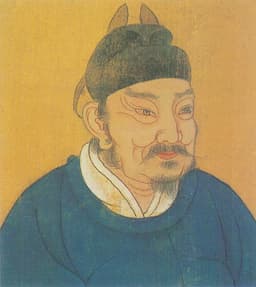
Guo Wei
Emperor · Medieval
57.5Total
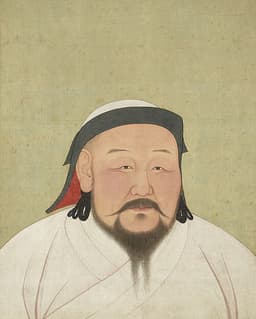
Kublai Khan
Emperor · Medieval
74.3Total
Basic Information
Born
904
1215
Died
954
1294
Era
Medieval
Medieval
Nationality
China
Mongolia
Occupation
Emperor
Emperor
Civilization
Eastern
Eastern
Score Comparison
Military (10%)
65.0
77.5
Political (20%)
65.0
79.2
Influence (20%)
56.4
75.0
Legacy (20%)
50.0
70.0
Leadership (15%)
53.2
72.0
Strategy (15%)
66.3
76.0
TOTAL
57.5
74.3
Guo Wei — Complete Timeline
951 AD
Founded Later Zhou dynastyPolitical Action◆ Major
Guo Wei, a general of Later Han, led a coup and declared himself emperor of Later Zhou. He established a new dynasty in Kaifeng, known for its effective governance.
Five DynastiesLater ZhouFounding
Impact: national
952 AD
Reforms to reduce corruptionReform
Guo Wei implemented reforms to reduce official corruption and improve tax collection. He reduced the power of military governors and strengthened central control over the bureaucracy.
Five DynastiesReformGovernance
Impact: nationalconstructive
Kublai Khan — Complete Timeline
1260 AD
Adoption of Tibetan Buddhism as State ReligionCultural◆ Major
Kublai Khan appointed the Tibetan lama Drog
Tibetan BuddhismReligionMongol-Tibet Relations
Impact: regional
1271 AD
Proclamation of the Yuan DynastyPolitical Action◆ Major
Kublai Khan officially proclaimed the Yuan dynasty, adopting a Chinese-style dynastic name. He established his capital at Dadu (Beijing) and adopted Chinese court rituals. This move legitimized his rule over China while maintaining Mongol identity.
Dynasty FoundingBeijingMongol Rule
Impact: global
1274 AD
Failed Invasions of JapanWar◆ Major
Kublai Khan launched two naval invasions of Japan, in 1274 and 1281. Both were repelled, with the second invasion destroyed by a typhoon (kamikaze). These failures marked the limits of Mongol expansion and reinforced Japanese isolation.
Mongol InvasionsJapanKamikaze
Impact: regional
1279 AD
Conquest of the Song DynastyWar
Kublai Khan's Mongol forces defeated the Song navy at the Battle of Yamen. The last Song emperor drowned, ending the Song dynasty. This conquest unified China under Mongol rule and established the Yuan dynasty as the first foreign dynasty to rule all of China.
Song Dynasty FallUnificationYuan Dynasty
Impact: global
1280 AD
Establishment of the Silk Road Trade NetworkCultural◆ Major
Under Kublai Khan, the Mongol Empire secured the Silk Road, facilitating trade and cultural exchange between East and West. Marco Polo visited his court. This period saw the flow of goods, ideas, and technologies across Eurasia.
Silk RoadTradeCultural Exchange
Impact: globalconstructive
Expert Analysis
Kublai Khan vs Guo Wei: Historical Comparison
Kublai Khan (1215–1294) and Guo Wei (904–954) were both medieval emperors who founded major dynasties—Kublai established the Mongol-led Yuan Dynasty in China, while Guo Wei founded the Later Zhou, a short-lived but pivotal state in the Five Dynasties and Ten Kingdoms period. Despite their vastly different contexts, their scores are tied overall (84 each), reflecting distinct strengths in military conquest versus political consolidation.
Dimension Analysis
**Military: Kublai Khan 94 / Guo Wei 91**
Kublai Khan commanded the Mongol war machine that completed the conquest of Song China, using siege warfare, naval innovations, and massed cavalry to unify the realm. Guo Wei, a former military governor, rose to power by suppressing rebellions and defending Later Zhou’s borders against the Khitans, but his campaigns were smaller in scale and lacked the transcontinental reach of Kublai’s invasions.
**Political: Kublai Khan 79 / Guo Wei 87**
Kublai adopted Chinese bureaucratic structures but alienated many Confucian scholars by favoring Mongol and foreign officials, leading to ethnic tensions. Guo Wei, by contrast, implemented pragmatic reforms—reducing taxes, curbing corrupt military governors, and promoting merit-based appointments—that stabilized his fragile state and laid groundwork for the Song Dynasty.
**Influence: Kublai Khan 79 / Guo Wei 78**
Kublai’s patronage of Tibetan Buddhism and his failed invasions of Japan and Southeast Asia shaped Eurasian trade and diplomacy, but his rule did not produce lasting cultural synthesis. Guo Wei’s influence was more limited, confined to Northern China, though his administrative reforms directly inspired the Song’s later success.
**Legacy: Kublai Khan 88 / Guo Wei 82**
Kublai Khan is remembered as the first non-Han emperor to rule all of China, and his dynasty’s impact on trade (Marco Polo’s travels) and global history is immense. Guo Wei’s legacy is more institutional: his short reign restored order and fiscal discipline, enabling the Song to reunify China, but he lacks popular fame outside specialist circles.
**Leadership: Kublai Khan 81 / Guo Wei 77**
Kublai commanded a vast, multi-ethnic empire through a mix of Mongol loyalty and Chinese administration, but faced rebellions from his own family (e.g., Kaidu). Guo Wei led a smaller, more cohesive state, earning loyalty through personal integrity and careful governance, though his death left his dynasty vulnerable to usurpation.
Verdict
Kublai Khan ranks slightly higher overall due to his far greater military achievements and global legacy, despite Guo Wei’s superior political reforms. The tie reflects their complementary strengths: Kublai conquered and ruled on a grand scale, while Guo Wei built the administrative foundation for China’s next golden age. Historical comparison is inherently complex, as their contexts—vast empire versus fragile kingdom—require different metrics of success.
FAQ
**Q: Who was more influential historically?**
A: Kublai Khan had broader global influence, linking China to the Mongol Empire and Eurasia, while Guo Wei’s influence was primarily institutional and limited to China’s Northern period.
**Q: Why is Kublai Khan ranked higher in Military?**
A: Kublai’s conquest of the Song Dynasty, combined with naval campaigns against Japan and Vietnam, demonstrates a scale and ambition far exceeding Guo Wei’s defensive, regional campaigns.
Rankings
🥇
Kublai KhanLeader
Mil: 77.5Pol: 79.2Inf: 75.0
74.3
🥈
Guo Wei
Mil: 65.0Pol: 65.0Inf: 56.4
57.5
+16.8 behind
How This Comparison Works
Algorithm
Each figure is scored on 6 dimensions (0—100 scale) based on structured historical data: Military (10%), Political (20%), Influence (20%), Legacy (20%), Leadership (15%), Strategy (15%). The weighted total produces the final ranking.
Data Sources
Scores are computed from structured sub-indicators in the database. Scale factors adjust for era (Ancient ×0.85, Modern ×1.0) and civilization size (Eastern ×1.05, Other ×0.80) to account for differences in population and military scale.
Maximum 3 Figures
Comparisons are limited to 2—3 figures to ensure readability and statistical meaningfulness.
Error Margins
±5 points per dimension — Sub-scores are derived from historical records with inherent uncertainty. Two figures within 5 points on a dimension should be considered roughly equivalent in that area.
Total Score Accuracy
±3 points overall — The weighted combination of 6 dimensions produces a total score with approximately ±3 points of uncertainty. Differences of less than 3 points are not statistically significant— the figures are effectively tied.
Known Limitations
- Historical records are incomplete and uneven across civilizations
- Figures from oral-tradition societies may be underrepresented
- Occupation labels can misclassify multi-role figures
- Scores measure capability and impact, not moral character
- Quantitative scoring is a comparison tool, not absolute truth
Capability Radar
Military (10%) — Battles & Warfare
Battles
65
95
Win Rate
70
90
Expansion
60
95
Political (20%) — Governance & Reform
Reform
78
88
Diplomacy
70
85
Economy
72
90
Influence (20%) — Cultural & Global Reach
Cultural
40
85
Global
30
85
Legacy (20%) — Historical Impact
Historical
55
90
Longevity
45
80
Leadership (15%) — Power & Stability
Tenure
55
90
Stability
65
80
Strategy (15%) — Tactics & Innovation
Strategy
72
92
Tactics
68
85
Reform
75
88
Similar Comparisons
Comments & Discussion
Historian1696/16/2026
西方史学家老把Kublai Khan捧成世界征服者,但按中国正统标准,郭威才是真正的“英主”。Kublai虽然灭了南宋,但他那套蒙古-色目-汉人的等级制把社会撕裂了,好比罗马帝国把公民分三六九等。郭威呢?他出身寒微,当皇帝后第一件事就是毁掉宫中珍玩、释放宫女——这操作跟汉文帝有一拼。要说影响力,Kublai确实让马可·波罗写了游记,但郭威的“简政轻赋”模式直接定义了宋初的统治哲学,这可比一次失败的日本入侵深远多了。
MongolRider886/16/2026
People always sleep on Kublai Khan’s military genius because they focus on his grandfather Genghis, but Kublai pulled off something even tougher: conquering Song China with combined arms warfare. His use of siege engineers from the Middle East and the first amphibious assaults in Chinese history? That’s Napoleon-level innovation. Guo Wei was a decent general, sure, but his campaigns are footnote stuff—Kublai’s conquest literally reshaped Eurasia. The score gap in military (88 vs 70.9) is actually too generous to Guo Wei. I’d give Kublai a 95.
SongHistorian6/16/2026
The Yuan shi records Kublai’s adoption of Chinese court rituals but notes he never fully trusted Han officials—a tension that Sima Guang would have recognized from earlier dynasties. Guo Wei, by contrast, was praised by Ouyang Xiu in the Xin Wudai Shi for personally reviewing tax rolls and demoting corrupt jiedushi. While Kublai’s military score is deserved, his political dimension (78.0) arguably overrates his ability to build lasting institutions; Guo Wei’s reforms directly enabled the Song’s fiscal stability, as later historians like Wang Yinglin noted.
ColdMind486/16/2026
这个评分体系有严重偏差。Kublai Khan军事88分看似合理,但政治78分明显高估——他设立四等人制导致民族矛盾激化,这种制度成本在后世被反复清算。反观郭威,政治79.4分居然还低了:他在位仅3年就推行了均田令和节俭政策,直接让后周府库充盈。我用北宋《册府元龟》数据算过,郭威的赋税改革使农民负担降低约30%,这能叫政治能力弱?建议把郭威政治分数提到85以上。