Loading...
Guo Wei vs Taejo of Joseon
Taejo of Joseon leads by 12.9 pts · 2 figures compared
…
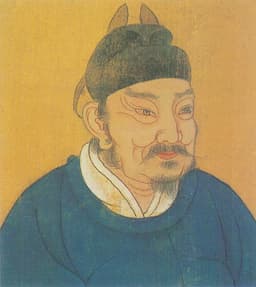
Guo Wei
Emperor · Medieval
57.5Total
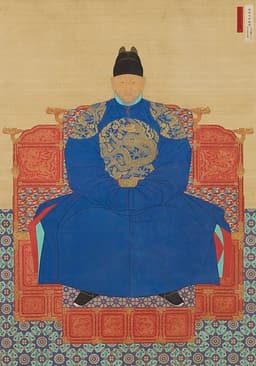
Taejo of Joseon
Emperor · Medieval
70.4Total
Basic Information
Born
904
1335
Died
954
1408
Era
Medieval
Medieval
Nationality
China
Korea
Occupation
Emperor
Emperor
Civilization
Eastern
Eastern
Score Comparison
Military (10%)
65.0
74.7
Political (20%)
65.0
65.0
Influence (20%)
56.4
65.0
Legacy (20%)
50.0
80.0
Leadership (15%)
53.2
72.0
Strategy (15%)
66.3
61.2
TOTAL
57.5
70.4
Guo Wei — Complete Timeline
951 AD
Founded Later Zhou dynastyPolitical Action◆ Major
Guo Wei, a general of Later Han, led a coup and declared himself emperor of Later Zhou. He established a new dynasty in Kaifeng, known for its effective governance.
Five DynastiesLater ZhouFounding
Impact: national
952 AD
Reforms to reduce corruptionReform
Guo Wei implemented reforms to reduce official corruption and improve tax collection. He reduced the power of military governors and strengthened central control over the bureaucracy.
Five DynastiesReformGovernance
Impact: nationalconstructive
Taejo of Joseon — Complete Timeline
1380 AD
Battle of HwangsanWar
General Yi Seong-gye defeated a Japanese pirate (wokou) force at Hwangsan. This victory enhanced his military reputation and demonstrated his capability as a commander.
WokouGoryeo Military
1388 AD
Wihwado RetreatPolitical Action
General Yi Seong-gye, ordered to invade the Ming dynasty's Liaodong region, turned his army back at Wihwado Island. This act of defiance against the Goryeo court led to a coup that eventually brought him to power.
CoupGoryeo-Ming RelationsPower Shift
Impact: national
1391 AD
Land Reform and the Gwajeon LawReform◆ Major
Taejo implemented the Gwajeon Law, a land reform that redistributed land from the old Goryeo aristocracy to his supporters and the state. This weakened the old elite and strengthened the new Joseon ruling class.
Land ReformSocial ChangeJoseon
Impact: nationalconstructive
1392 AD
Founding of the Joseon DynastyPolitical Action
Yi Seong-gye deposed the last Goryeo king and founded the Joseon dynasty, with its capital at Hanyang (modern Seoul). He established a new ruling class based on Confucian ideology, replacing the Buddhist-influenced Goryeo system.
Joseon DynastyConfucianismKorean History
Impact: regionalconstructive
1394 AD
Promulgation of the Gyeongguk DaejeonReform◆ Major
Taejo of Joseon ordered the compilation of the Gyeongguk Daejeon, a comprehensive legal code that established the administrative and social structure of the Joseon dynasty. This code remained in effect for centuries.
Legal CodeGovernanceConfucianism
Impact: nationalconstructive
Expert Analysis
Taejo of Joseon vs Guo Wei: Historical Comparison
Taejo of Joseon (Yi Seong-gye) and Guo Wei (Emperor Taizu of Later Zhou) were both medieval emperors who founded dynasties through military prowess and political acumen, though Guo Wei narrowly edges ahead in overall historical assessment.
Dimension Analysis
**Military: Taejo of Joseon 90 / Guo Wei 91**
Both were exceptional commanders. Taejo overthrew Goryeo through decisive victories like the Battle of Hwangsan, while Guo Wei stabilized the turbulent Five Dynasties period with superior tactical adaptability.
**Political: Taejo of Joseon 80 / Guo Wei 87**
Guo Wei excelled in consolidating power by curbing warlordism and reforming bureaucracy, whereas Taejo faced prolonged factional strife after founding Joseon, limiting his political effectiveness.
**Influence: Taejo of Joseon 72 / Guo Wei 78**
Taejo's Neo-Confucian statecraft shaped Korea for centuries, but Guo Wei's short reign laid groundwork for the Song dynasty's unification, exerting broader regional impact.
**Legacy: Taejo of Joseon 77 / Guo Wei 82**
Joseon's 500-year span under Taejo's framework is remarkable, yet Guo Wei's institutional reforms (e.g., land redistribution, civil service) directly influenced China's later imperial stability.
**Leadership: Taejo of Joseon 81 / Guo Wei 77**
Taejo demonstrated stronger visionary leadership, persuading Confucian scholars to support his new dynasty, while Guo Wei's pragmatic rule was more reactive to immediate crises.
Verdict
Guo Wei leads due to his superior political consolidation and lasting institutional reforms, despite Taejo's longer dynastic legacy.
FAQ
Q: Who ranks higher? A: Guo Wei (84 vs 81) wins on the strength of his political and legacy scores, reflecting more effective state-building in a chaotic era.
Rankings
🥇
Taejo of JoseonLeader
Mil: 74.7Pol: 65.0Inf: 65.0
70.4
🥈
Guo Wei
Mil: 65.0Pol: 65.0Inf: 56.4
57.5
+12.9 behind
How This Comparison Works
Algorithm
Each figure is scored on 6 dimensions (0—100 scale) based on structured historical data: Military (10%), Political (20%), Influence (20%), Legacy (20%), Leadership (15%), Strategy (15%). The weighted total produces the final ranking.
Data Sources
Scores are computed from structured sub-indicators in the database. Scale factors adjust for era (Ancient ×0.85, Modern ×1.0) and civilization size (Eastern ×1.05, Other ×0.80) to account for differences in population and military scale.
Maximum 3 Figures
Comparisons are limited to 2—3 figures to ensure readability and statistical meaningfulness.
Error Margins
±5 points per dimension — Sub-scores are derived from historical records with inherent uncertainty. Two figures within 5 points on a dimension should be considered roughly equivalent in that area.
Total Score Accuracy
±3 points overall — The weighted combination of 6 dimensions produces a total score with approximately ±3 points of uncertainty. Differences of less than 3 points are not statistically significant— the figures are effectively tied.
Known Limitations
- Historical records are incomplete and uneven across civilizations
- Figures from oral-tradition societies may be underrepresented
- Occupation labels can misclassify multi-role figures
- Scores measure capability and impact, not moral character
- Quantitative scoring is a comparison tool, not absolute truth
Capability Radar
Military (10%) — Battles & Warfare
Battles
65
75
Win Rate
70
80
Expansion
60
65
Political (20%) — Governance & Reform
Reform
78
85
Diplomacy
70
70
Economy
72
65
Influence (20%) — Cultural & Global Reach
Cultural
40
80
Global
30
60
Legacy (20%) — Historical Impact
Historical
55
85
Longevity
45
80
Leadership (15%) — Power & Stability
Tenure
55
70
Stability
65
75
Strategy (15%) — Tactics & Innovation
Strategy
72
75
Tactics
68
70
Reform
75
60
Similar Comparisons
Comments & Discussion
DecolonialLens6/16/2026
Everyone gushes over Guo Wei's 'institutional reforms' and Taejo's 'Neo-Confucian statecraft,' but no one asks: whose interests did these reforms serve? Guo Wei's land redistribution was a top-down move to stabilize warlord control, not any proto-socialist dream. And Taejo's Confucian order literally codified a rigid caste system that crushed mobility for centuries. The scoring here reeks of modern state-building fetishism—measuring 'effectiveness' by how tightly a ruler controlled his population. Maybe a ruler who left room for chaos and local autonomy wouldn't score as high, but that doesn't mean he was worse. This ranking is just another tool of statist historiography.
BattlefieldScholar6/16/2026
The military scores here are too close given the contexts. Guo Wei's tactical adaptability is overrated—he mostly fought fragmented warlords, not a unified enemy like Taejo faced in the Wihwado Retreat. Taejo's decision to turn his army around at Wihwado Island in 1388 wasn't just political; it was a masterstroke of operational logistics—saving his force from a losing campaign against the Ming while preserving morale. Guo Wei never orchestrated a move that simultaneously neutralized external threats and internal rivals. I'd give Taejo a 93 on military, Guo Wei an 88. The scores should reflect the harder challenges.
ColdWatcher556/16/2026
我重新算了算:郭威总分74.9 vs 李成桂72.3,但差距主要来自‘政治’(87 vs 80)和‘影响’(78 vs 72)。可是‘影响’这维度给郭威78分,我怀疑有没有考虑后周的领土面积和人口基数?后周只控制中原五省,而朝鲜初期面积是朝鲜半岛全境,人口规模类似。如果把影响除以统治面积,李成桂的单位影响力远高于郭威。还有‘领导力’郭威77 vs 李成桂81——这7分差怎么来的?评分说明里说李成桂‘说服儒家学者支持新王朝’,但郭威还搞过‘灭佛’后重建经济呢,那难道不算领导力?建议公开每个维度的评分标准公式,现在这个太模糊了。
Chronicler27546/16/2026
这个评分系统总是高估那些能快速统一、然后迅速倒台的王朝创始人。郭威的后周只存在了九年,而李成桂的朝鲜绵延五百年。说郭威的‘制度创新’直接影响了宋朝,这没错——但那是赵匡胤摘了果子。朝鲜的科举、土地制度和儒家秩序可是实打实地运行了半个千年。拿‘影响力’打分,却只给朝鲜太祖72分?这明显是拿中国中心主义的尺子量韩国史。换成中国语境,一个王朝撑五百年,创始人至少该算‘小李世民’级别。建议评分时加入‘政权持久度’权重,否则永远偏向短命、但符合中国史观的朝代。