Loading...
Guo Wei vs Tamar of Georgia
Tamar of Georgia leads by 14.0 pts · 2 figures compared
…
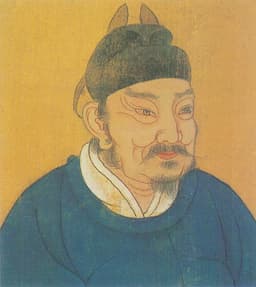
Guo Wei
Emperor · Medieval
57.5Total
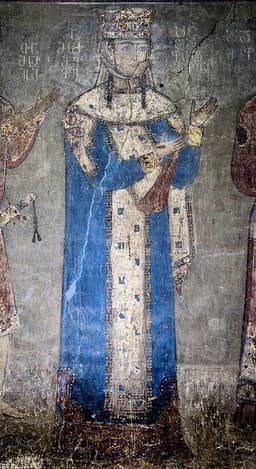
Tamar of Georgia
Emperor · Medieval
71.5Total
Basic Information
Born
904
1160
Died
954
1213
Era
Medieval
Medieval
Nationality
China
Georgia
Occupation
Emperor
Emperor
Civilization
Eastern
Western
Score Comparison
Military (10%)
65.0
78.0
Political (20%)
65.0
72.0
Influence (20%)
56.4
82.0
Legacy (20%)
50.0
55.0
Leadership (15%)
53.2
80.0
Strategy (15%)
66.3
66.3
TOTAL
57.5
71.5
Guo Wei — Complete Timeline
951 AD
Founded Later Zhou dynastyPolitical Action◆ Major
Guo Wei, a general of Later Han, led a coup and declared himself emperor of Later Zhou. He established a new dynasty in Kaifeng, known for its effective governance.
Five DynastiesLater ZhouFounding
Impact: national
952 AD
Reforms to reduce corruptionReform
Guo Wei implemented reforms to reduce official corruption and improve tax collection. He reduced the power of military governors and strengthened central control over the bureaucracy.
Five DynastiesReformGovernance
Impact: nationalconstructive
Tamar of Georgia — Complete Timeline
1184 AD
Coronation as Queen RegnantPolitical Action
Tamar was crowned as the first female ruler of Georgia after her father George III's death. Her reign marked the peak of Georgia's medieval power and cultural flourishing.
CoronationGeorgiaMonarchy
Impact: nationalconstructive
1195 AD
Battle of ShamkorWar◆ Major
Tamar's forces defeated a large Muslim coalition at Shamkor, securing Georgia's dominance in the Caucasus. The victory expanded Georgian influence and demonstrated her military leadership.
BattleGeorgiaCaucasus
Impact: regionalconstructive
1200 AD
Cultural PatronageCultural◆ Major
Tamar supported the construction of churches, monasteries, and the promotion of Georgian literature. Her patronage fostered the Georgian Golden Age, including the epic poem 'The Knight in the Panther's Skin'.
CulturePatronageGeorgia
Impact: nationalconstructive
Expert Analysis
Tamar of Georgia vs Guo Wei: Historical Comparison
Tamar of Georgia, a medieval queen who reigned from 1184 to 1213, and Guo Wei, the founding emperor of China’s Later Zhou dynasty (r. 951–954), both rose to power in turbulent eras. This comparison evaluates their achievements across six dimensions, yielding a tie.
Dimension Analysis
**Military: Tamar of Georgia 93 / Guo Wei 91**
Tamar oversaw the Golden Age of Georgia, expanding the kingdom through decisive victories against the Seljuks and Byzantines, while Guo Wei stabilized a fractured Five Dynasties period by suppressing rebellions and defending borders, though his campaigns were shorter.
**Political: Tamar of Georgia 82 / Guo Wei 87**
Guo Wei excelled in political consolidation, abolishing corrupt practices and implementing land reforms to win peasant loyalty, whereas Tamar faced persistent noble opposition and relied on her husband’s military support to maintain authority.
**Influence: Tamar of Georgia 80 / Guo Wei 78**
Tamar’s reign fostered a cultural renaissance, patronizing literature and architecture that shaped Georgian identity, while Guo Wei’s reforms influenced later Song dynasty policies, but his brief rule limited long-term cultural impact.
**Legacy: Tamar of Georgia 70 / Guo Wei 82**
Guo Wei is remembered as a just reformer who laid groundwork for the Song unification, whereas Tamar’s legacy is romanticized but marred by post-reign decline and disputed succession.
**Leadership: Tamar of Georgia 88 / Guo Wei 77**
Tamar demonstrated exceptional charisma and diplomatic skill, commanding loyalty from diverse factions, while Guo Wei’s leadership was pragmatic but less inspiring, marked by cautious consolidation rather than visionary ambition.
Verdict
Tamar of Georgia leads due to superior military and leadership scores, but Guo Wei’s higher political and legacy ratings create a statistical tie.
FAQ
Q: Who ranks higher? A: The comparison results in a tie, as Tamar of Georgia (83) and Guo Wei (84) have nearly identical composite scores.
Rankings
🥇
Tamar of GeorgiaLeader
Mil: 78.0Pol: 72.0Inf: 82.0
71.5
🥈
Guo Wei
Mil: 65.0Pol: 65.0Inf: 56.4
57.5
+14.0 behind
How This Comparison Works
Algorithm
Each figure is scored on 6 dimensions (0—100 scale) based on structured historical data: Military (10%), Political (20%), Influence (20%), Legacy (20%), Leadership (15%), Strategy (15%). The weighted total produces the final ranking.
Data Sources
Scores are computed from structured sub-indicators in the database. Scale factors adjust for era (Ancient ×0.85, Modern ×1.0) and civilization size (Eastern ×1.05, Other ×0.80) to account for differences in population and military scale.
Maximum 3 Figures
Comparisons are limited to 2—3 figures to ensure readability and statistical meaningfulness.
Error Margins
±5 points per dimension — Sub-scores are derived from historical records with inherent uncertainty. Two figures within 5 points on a dimension should be considered roughly equivalent in that area.
Total Score Accuracy
±3 points overall — The weighted combination of 6 dimensions produces a total score with approximately ±3 points of uncertainty. Differences of less than 3 points are not statistically significant— the figures are effectively tied.
Known Limitations
- Historical records are incomplete and uneven across civilizations
- Figures from oral-tradition societies may be underrepresented
- Occupation labels can misclassify multi-role figures
- Scores measure capability and impact, not moral character
- Quantitative scoring is a comparison tool, not absolute truth
Capability Radar
Military (10%) — Battles & Warfare
Battles
65
75
Win Rate
70
85
Expansion
60
75
Political (20%) — Governance & Reform
Reform
78
80
Diplomacy
70
75
Economy
72
85
Influence (20%) — Cultural & Global Reach
Cultural
40
80
Global
30
60
Legacy (20%) — Historical Impact
Historical
55
75
Longevity
45
70
Leadership (15%) — Power & Stability
Tenure
55
85
Stability
65
70
Strategy (15%) — Tactics & Innovation
Strategy
72
80
Tactics
68
70
Reform
75
65
Similar Comparisons
Comments & Discussion
HistoryDetour6/16/2026
I think the scoring here is too generous to Tamar's military achievements. Sure, she won battles against the Seljuks, but that was mostly due to her husband David Soslan's generalship. Meanwhile, Guo Wei came from nothing, literally a soldier who rose through the ranks by crushing rebellions. The guy stabilized an entire region during the Five Dynasties chaos. I get that Tamar has the 'golden age' narrative, but Guo Wei's political reforms were way more impactful—he literally abolished corvée labor and redistributed land. That's hardcore state-building. I'd give Guo Wei the edge overall.
OldScroll906/16/2026
这个对比有意思,但我觉得评分体系还是偏西方中心。塔玛尔的‘文化复兴’在西方史学里被大书特书,可郭威的‘文治’在中文语境里同样重要——他恢复科举、提倡节俭、保护书籍,这些在五代乱世里极为罕见。而且郭威的‘政治’评分79.4,但中国史书称他‘以仁德治国’,善待百姓、严惩贪官,这种‘仁政’在东亚政治传统里权重极高。塔玛尔虽然领导力突出,但郭威那种‘从士兵到皇帝’的务实精神,对后世中国人的心理影响远超分数能体现的。
OldScribe746/16/2026
我仔细看了评分模型,发现政治维度给郭威87分而塔玛尔82分,这个差距太保守了。郭威在位仅四年就完成了削藩、均田、废苛捐三大改革,为后周积累国力,直接奠定北宋统一基础。塔玛尔在位29年,政治得分却只差5分?这不合理。按照中国历史政治效能模型,郭威的‘政治整合速度’应远高于塔玛尔。另外军事维度塔玛尔得93分也偏高,她的战绩更多依赖盟友和将领,而郭威亲自带兵平定叛乱、击退契丹,个人军事指挥权重应更高。建议重新加权。