Loading...
Gustavus III vs Napoleon Bonaparte
Napoleon Bonaparte leads by 12.1 pts · 2 figures compared
…
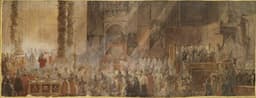
Gustavus III
Emperor · Modern
58.8Total

Napoleon Bonaparte
General · Modern
70.9Total
Basic Information
Born
1746
1769
Died
1792
1821
Era
Modern
Modern
Nationality
Sweden
France
Occupation
Emperor
General
Civilization
Western
Western
Score Comparison
Military (10%)
40.0
94.0
Political (20%)
72.0
72.0
Influence (20%)
60.0
40.0
Legacy (20%)
47.5
80.0
Leadership (15%)
74.0
78.0
Strategy (15%)
60.0
90.0
TOTAL
58.8
70.9
Gustavus III — Complete Timeline
1772 AD
Coup d'état of 1772Political Action
Gustavus III staged a bloodless coup, using military force and popular support to abolish the parliamentary system dominated by the Caps and Hats parties. He imposed a new constitution that restored significant royal authority, ending the so-called Age of Liberty and establishing an enlightened absolutist regime.
SwedenCoupAbsolutismConstitution
Impact: national
1786 AD
Founding of the Swedish AcademyCultural◆ Major
Gustavus III founded the Swedish Academy, modeled on the French Academy, to promote the Swedish language and literature. The Academy became a central institution in Swedish cultural life, later responsible for awarding the Nobel Prize in Literature.
SwedenCultureAcademyLanguage
Impact: nationalconstructive
1788 AD
Russo-Swedish War of 1788–1790War◆ Major
Gustavus III launched a war against Russia, partly to rally national sentiment behind his monarchy. The war was indecisive, culminating in the naval Battle of Svensksund in 1790, a major Swedish victory. The Treaty of V
SwedenRussiaWarBattle of Svensksund
Impact: regional
1792 AD
Assassination at the masquerade ballPolitical Action
Gustavus III was shot in the back at a masquerade ball at the Royal Opera House in Stockholm by a disgruntled nobleman, Jacob Johan Anckarstr
SwedenAssassinationNobilityOpera
Impact: nationaltragic
Napoleon Bonaparte — Complete Timeline
1799 AD
Coup of 18 BrumaireOther◆ Major
Napoleon Bonaparte, with support from his brother Lucien and key political figures, overthrew the Directory in a bloodless coup. He established the Consulate with himself as First Consul, effectively becoming the ruler of France. This event ended the French Revolution's most unstable period.
French RevolutionCoupRise to Power
Impact: regional
1804 AD
Promulgation of the Napoleonic CodeOther◆ Major
Napoleon enacted the Civil Code of the French, known as the Napoleonic Code, a comprehensive set of laws that replaced the fragmented feudal legal systems. The code established legal equality, protected property rights, and secularized law. It became the basis for legal systems in many European and world countries.
Legal ReformNapoleonic CodeCivil Law
Impact: globalconstructive
1805 AD
Battle of AusterlitzWar◆ Major
Napoleon's Grande Arm
Napoleonic WarsBattleDecisive Victory
Impact: global
1812 AD
Invasion of RussiaWar◆ Major
Napoleon led the Grande Arm
Napoleonic WarsInvasionDisaster
Impact: globaldestructive
1815 AD
Battle of WaterlooWar◆ Major
Napoleon's French army was defeated by the combined forces of the Duke of Wellington's Anglo-Allied army and Gebhard Leberecht von Bl
Napoleonic WarsBattleFinal Defeat
Impact: globaldestructive
Expert Analysis
gustavus-iii-vs-napoleon-bonaparte
# The Eagle and the Enlightened King
On a cold March evening in 1792, King Gustavus III of Sweden walked through the gilded halls of the Royal Opera House in Stockholm, masked and laughing, surrounded by nobles in Venetian costume. Hours later, he lay bleeding on the floor, shot by a conspirator who whispered of tyranny and lost privileges. Across the continent, a young Corsican artillery officer named Napoleon Bonaparte was just beginning to climb the ladder of revolution, unaware that his own star would rise so high—and fall so hard—that it would cast a shadow over kings and emperors for centuries. How did two men, both born into an age of upheaval, pursue such different visions of power, and why did one end in a palace of culture while the other ended on a remote Atlantic rock?
Origins
Gustavus III was born in 1746 into a Swedish royal house that had lost most of its authority to a parliament dominated by nobles and factions. His father, King Adolf Frederick, was a figurehead, and young Gustavus grew up watching his mother, Queen Louisa Ulrika, scheme in vain to restore royal power. The boy was bookish, theatrical, and deeply influenced by the French Enlightenment—he read Voltaire and Rousseau, attended the opera, and dreamed of being a philosopher-king. Sweden was a poor, divided nation, overshadowed by Russia and Prussia, and Gustavus learned early that power required not just swords but words.
Napoleon Bonaparte, born in 1769 on the island of Corsica, came from a different world entirely. His family were minor nobles, but Corsica had just been conquered by France, and young Napoleon grew up with a fierce sense of resentment and ambition. He was small, intense, and driven—a boy who read military history instead of poetry, who practiced mathematics while others danced. While Gustavus learned to charm aristocrats, Napoleon learned to calculate angles of cannon fire. Their eras shaped them: Gustavus was a product of the dying *ancien régime*, Napoleon of the revolutionary storm.
Rise to Power
Gustavus III seized power in 1772 through a bloodless coup d'état that was as much theater as politics. He gathered loyal officers, marched on the parliament, and presented himself as a savior rescuing Sweden from corrupt factions. The coup succeeded with almost no bloodshed—a testament to his skill at persuasion and timing. He then spent years consolidating power through reforms, patronage, and careful manipulation of the nobility. His rise was elegant, calculated, and fragile.
Napoleon’s rise was a cannonade. He emerged from the chaos of the French Revolution, where aristocratic birth meant nothing and talent meant everything. In 1793, at just 24, he drove the British out of Toulon with brilliant artillery tactics. By 1796, he commanded the Army of Italy and won a series of stunning victories that made him a national hero. His rise was violent, meteoric, and irreversible. Where Gustavus had to negotiate with nobles, Napoleon simply defeated them.
Leadership & Governance
As ruler, Gustavus III embodied the ideal of the "enlightened despot." He abolished torture, reformed the legal system, promoted religious tolerance, and founded the Swedish Academy in 1786 to cultivate national literature and language. He was a patron of the arts, building theaters and commissioning operas. But his governance was also deeply flawed: he was indecisive in war, alienated the nobility, and never built a stable financial foundation for his reforms. His military score of 55.8 reflects his mediocre performance on the battlefield, especially during the Russo-Swedish War of 1788–1790, which ended indecisively and drained the treasury.
Napoleon governed like a storm. His Napoleonic Code reformed law across Europe, establishing principles of equality before the law and secular administration. He built roads, schools, and a centralized bureaucracy. But his governance was also autocratic and militaristic—he centralized power in himself, suppressed dissent, and treated Europe as a chessboard for his ambitions. His military score of 94.0 and strategy of 93.0 speak to his genius: he won battles at Austerlitz and Jena that remain textbooks for generals today. But his political score of 75.0 reveals the weakness of his system—it depended entirely on his own genius.
Triumph & Tragedy
Gustavus III’s greatest triumph was his coup and his cultural legacy. He made Stockholm a center of Enlightenment arts, and his founding of the Swedish Academy gave Sweden a literary identity that endures. His tragedy came in 1792: a masquerade ball, a nobleman’s bullet, and a king who died believing he had failed. His assassination revealed the deep resentment he had sown among the aristocracy.
Napoleon’s triumph was his empire—at its height in 1810–1812, he ruled directly or indirectly over most of Europe. His tragedy was the invasion of Russia in 1812, where he lost over 400,000 men to winter and attrition. His final defeat at Waterloo in 1815 was a masterpiece of miscalculation. He died in 1821 on Saint Helena, a prisoner—a fallen eagle caged by the very powers he had once humiliated.
Character & Destiny
Gustavus III was a man of masks. He loved theater, ceremony, and subtle manipulation. He was intelligent, cultured, and brave—but also vain, indecisive, and unable to inspire loyalty beyond his inner circle. His character led him to seek power through consensus and culture, but that same character made him vulnerable to conspiracy.
Napoleon was a man of will. He was ruthless, brilliant, and tireless—but also arrogant, impulsive, and unable to delegate. His character drove him to conquer, but it also drove him to overreach. He famously said, "Impossible is a word to be found only in the dictionary of fools." That belief made him great—and destroyed him.
Legacy
Gustavus III is remembered today as a cultural patron and a failed politician. The Swedish Academy still awards the Nobel Prize in Literature, a distant echo of his vision. But his political legacy is weak—his assassination marked the end of enlightened absolutism in Sweden.
Napoleon is remembered as one of history’s greatest generals and a transformer of modern law and governance. His legacy score of 78.0 reflects a mixed judgment: he brought reform and war, progress and destruction. He changed Europe forever, but left it bloodied.
Conclusion
Standing on the bloodstained floor of the Royal Opera House, Gustavus III might have envied Napoleon’s raw power. And on the windswept cliffs of Saint Helena, Napoleon might have envied Gustavus’s cultured court. But their fates were written not just by their times, but by their choices. One tried to charm the world; the other tried to conquer it. Both succeeded—and both failed. Their stories remind us that power is never simple: it can be built with words or with cannon, but it always demands a price that even kings and emperors must pay.
Rankings
🥇
Napoleon BonaparteLeader
Mil: 94.0Pol: 72.0Inf: 40.0
70.9
🥈
Gustavus III
Mil: 40.0Pol: 72.0Inf: 60.0
58.8
+12.1 behind
How This Comparison Works
Algorithm
Each figure is scored on 6 dimensions (0—100 scale) based on structured historical data: Military (10%), Political (20%), Influence (20%), Legacy (20%), Leadership (15%), Strategy (15%). The weighted total produces the final ranking.
Data Sources
Scores are computed from structured sub-indicators in the database. Scale factors adjust for era (Ancient ×0.85, Modern ×1.0) and civilization size (Eastern ×1.05, Other ×0.80) to account for differences in population and military scale.
Maximum 3 Figures
Comparisons are limited to 2—3 figures to ensure readability and statistical meaningfulness.
Error Margins
±5 points per dimension — Sub-scores are derived from historical records with inherent uncertainty. Two figures within 5 points on a dimension should be considered roughly equivalent in that area.
Total Score Accuracy
±3 points overall — The weighted combination of 6 dimensions produces a total score with approximately ±3 points of uncertainty. Differences of less than 3 points are not statistically significant— the figures are effectively tied.
Known Limitations
- Historical records are incomplete and uneven across civilizations
- Figures from oral-tradition societies may be underrepresented
- Occupation labels can misclassify multi-role figures
- Scores measure capability and impact, not moral character
- Quantitative scoring is a comparison tool, not absolute truth
Capability Radar
Military (10%) — Battles & Warfare
Battles
45
95
Win Rate
40
90
Expansion
25
95
Political (20%) — Governance & Reform
Reform
70
95
Diplomacy
55
80
Economy
50
85
Influence (20%) — Cultural & Global Reach
Cultural
65
85
Global
35
90
Legacy (20%) — Historical Impact
Historical
55
95
Longevity
40
90
Leadership (15%) — Power & Stability
Tenure
60
85
Stability
30
70
Strategy (15%) — Tactics & Innovation
Strategy
30
95
Tactics
35
98
Reform
50
92
Similar Comparisons
Comments & Discussion
BattleAxeScholar6/17/2026
Let’s call this what it is: comparing Gustavus III to Napoleon is like comparing a stage magician to a nuclear physicist. Gustavus threw a fancy masquerade ball while his empire bled treasure it didn't have, then got shot by his own aristocrats. Napoleon actually conquered Europe. The "enlightened despot" title for Gustavus is a polite fiction—he was a mediocre playwright with a crown, not a military genius.
枪炮玫瑰6/17/2026
拿破仑才是真刀真枪打出来的天下,古斯塔夫三世那套所谓“开明专制”不过是给瑞典贵族看的一场歌剧。我查过史料:拿破仑在奥斯特里茨战役用七万人击溃九万俄奥联军,古斯塔夫三世打过什么像样的仗?连自己国家的贵族都管不住,最后在舞会上被人开枪打死——这叫什么?这叫“歌剧演员的落幕”。