Loading...
This comparison has not been analyzed yet.
One-time AI generation (~1 minute). Scores and timeline are already available below.
Haakon VII of Norway vs Udai Singh II
Haakon VII of Norway leads by 4.9 pts · 2 figures compared
…
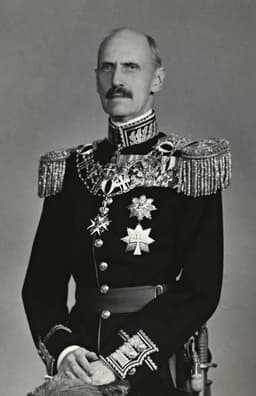
Haakon VII of Norway
Emperor · Modern
56.4Total
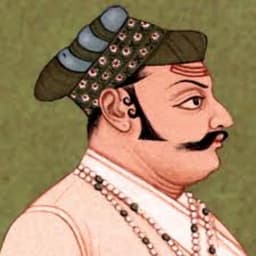
Udai Singh II
Emperor · Modern
51.5Total
Basic Information
Born
1872
1522
Died
1957
1572
Era
Modern
Modern
Nationality
Norway
India
Occupation
Emperor
Emperor
Civilization
Western
Indian
Score Comparison
Military (10%)
17.8
50.0
Political (20%)
70.0
45.1
Influence (20%)
58.3
55.7
Legacy (20%)
52.0
48.3
Leadership (15%)
72.0
65.7
Strategy (15%)
57.5
38.6
TOTAL
56.4
51.5
Haakon VII of Norway — Complete Timeline
1905 AD
Election as King of NorwayPolitical Action
Following the dissolution of the union with Sweden, the Norwegian parliament elected Prince Carl of Denmark as King Haakon VII. He accepted the throne after a referendum confirmed the monarchy. This established the modern, independent Kingdom of Norway with a constitutional monarch.
NorwayIndependenceMonarchyReferendum
Impact: nationalconstructive
1940 AD
Refusal to appoint Quisling as Prime MinisterPolitical Action
After the German invasion of Norway, Nazi Germany demanded that Haakon VII appoint Vidkun Quisling as prime minister. Haakon VII refused, stating he would abdicate rather than accept a government led by Quisling. This act of defiance made him a symbol of Norwegian resistance.
NorwayWorld War IIResistanceQuisling
Impact: nationalconstructive
Leadership of the Norwegian government-in-exilePolitical Action◆ Major
Haakon VII fled Norway after the German invasion and established a government-in-exile in London. He became a central figure in the Allied war effort, broadcasting radio messages to occupied Norway and maintaining the legitimacy of the Norwegian state throughout World War II.
NorwayWorld War IIExileGovernment
Impact: globalconstructive
1945 AD
Return to Norway after World War IIPolitical Action◆ Major
Haakon VII returned to Norway on June 7, 1945, exactly five years after he had fled. His return was a moment of national celebration and unity. He was greeted by massive crowds, symbolizing the restoration of Norwegian sovereignty and the end of the Nazi occupation.
NorwayWorld War IILiberationMonarchy
Impact: nationalconstructive
Udai Singh II — Complete Timeline
1537 AD
Accession to the throne of MewarPolitical Action◆ Major
Udai Singh II succeeded his father Rana Sanga as the Maharana of Mewar. His reign was marked by the founding of Udaipur and the conflict with the Mughals. He ruled until his death in 1572.
SuccessionRoyal Rule
Impact: regional
1559 AD
Founding of Udaipur cityCultural◆ Major
Udai Singh II founded the city of Udaipur on the banks of Lake Pichola. The city was established as the new capital of Mewar after the fall of Chittorgarh. It became known for its lakes, palaces, and scenic beauty.
City FoundingCapitalArchitecture
Impact: regionalconstructive
1560 AD
Construction of Lake PicholaCultural◆ Major
Udai Singh II expanded Lake Pichola by building a dam, creating a large artificial lake. The lake provided water for the new city of Udaipur and became a central feature of its landscape. It later hosted the famous Lake Palace.
Water ManagementUrban PlanningLake
Impact: regionalconstructive
1567 AD
Siege of Chittorgarh by AkbarWar
Udai Singh II faced the Mughal siege of Chittorgarh by Emperor Akbar. After a prolonged siege, the fort fell to the Mughals. Udai Singh fled to the hills, leading to the loss of the traditional Mewar capital.
Mughal ConquestSiegeLoss of Capital
Impact: regionaltragic
This comparison has not been analyzed yet.
One-time AI generation (~1 minute). Scores and timeline are already available below.
Rankings
🥇
Haakon VII of NorwayLeader
Mil: 17.8Pol: 70.0Inf: 58.3
56.4
🥈
Udai Singh II
Mil: 50.0Pol: 45.1Inf: 55.7
51.5
+4.9 behind
How This Comparison Works
Algorithm
Each figure is scored on 6 dimensions (0—100 scale) based on structured historical data: Military (10%), Political (20%), Influence (20%), Legacy (20%), Leadership (15%), Strategy (15%). The weighted total produces the final ranking.
Data Sources
Scores are computed from structured sub-indicators in the database. Scale factors adjust for era (Ancient ×0.85, Modern ×1.0) and civilization size (Eastern ×1.05, Other ×0.80) to account for differences in population and military scale.
Maximum 3 Figures
Comparisons are limited to 2—3 figures to ensure readability and statistical meaningfulness.
Error Margins
±5 points per dimension — Sub-scores are derived from historical records with inherent uncertainty. Two figures within 5 points on a dimension should be considered roughly equivalent in that area.
Total Score Accuracy
±3 points overall — The weighted combination of 6 dimensions produces a total score with approximately ±3 points of uncertainty. Differences of less than 3 points are not statistically significant— the figures are effectively tied.
Known Limitations
- Historical records are incomplete and uneven across civilizations
- Figures from oral-tradition societies may be underrepresented
- Occupation labels can misclassify multi-role figures
- Scores measure capability and impact, not moral character
- Quantitative scoring is a comparison tool, not absolute truth
Capability Radar
Military (10%) — Battles & Warfare
Battles
38
25
Win Rate
39
20
Expansion
40
20
Political (20%) — Governance & Reform
Reform
65
30
Diplomacy
75
35
Economy
60
30
Influence (20%) — Cultural & Global Reach
Cultural
65
45
Global
55
20
Legacy (20%) — Historical Impact
Historical
70
50
Longevity
60
40
Leadership (15%) — Power & Stability
Tenure
70
40
Stability
80
25
Strategy (15%) — Tactics & Innovation
Strategy
45
30
Tactics
51
30
Reform
49
15
Similar Comparisons
Comments & Discussion
No comments yet. Be the first to share your thoughts!