Loading...
Hani al-Mulki vs Hugo Chavez
Hugo Chavez leads by 8.4 pts · 2 figures compared
…

Hani al-Mulki
Politician · Modern
42.5Total
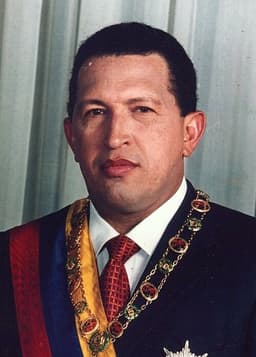
Hugo Chavez
Politician · Modern
50.9Total
Basic Information
Born
1951
1954
Died
—
—
Era
Modern
Modern
Nationality
Jordan
Venezuela
Occupation
Politician
Politician
Civilization
Middle Eastern
Western
Score Comparison
Military (10%)
50.0
10.0
Political (20%)
32.2
62.7
Influence (20%)
47.1
56.7
Legacy (20%)
36.7
49.2
Leadership (15%)
51.9
68.0
Strategy (15%)
38.9
38.3
TOTAL
42.5
50.9
Hani al-Mulki — Complete Timeline
2016 AD
Appointed Prime Minister of JordanPolitical Action◆ Major
Hani al-Mulki was appointed Prime Minister by King Abdullah II in May 2016. His government was tasked with continuing economic reforms and addressing the impact of the Syrian refugee crisis.
Jordanian PoliticsPrime Minister
Impact: national
2018 AD
Faced tax protestsPolitical Action◆ Major
Al-Mulki's government proposed a new income tax law in 2018, sparking widespread protests across Jordan. Demonstrators opposed the tax increases and austerity measures, leading to the largest protests since the Arab Spring.
Tax ProtestsAusterity2018
Impact: nationaldestructive
Resigned as Prime MinisterPolitical Action◆ Major
Al-Mulki resigned in June 2018 after the tax protests escalated. His resignation was accepted by King Abdullah II, who appointed Omar Razzaz as his successor to address the crisis.
Jordanian PoliticsResignationProtests
Impact: nationaltragic
Hugo Chavez — Complete Timeline
1992 AD
Failed 1992 coup attemptPolitical Action◆ Major
Chávez, then a lieutenant colonel, led a failed military coup against President Carlos Andrés Pérez. The coup was crushed, and Chávez was imprisoned. His televised speech accepting responsibility made him a national figure and martyr for the poor.
CoupImprisonmentPolitical Rise
Impact: national
1998 AD
Election as President of VenezuelaPolitical Action
Chávez won the presidential election with 56% of the vote, running on a platform of anti-corruption and social justice. His victory marked the beginning of the Bolivarian Revolution, a leftist movement aimed at transforming Venezuela's political and economic system.
ElectionBolivarian RevolutionPopulism
Impact: nationalconstructive
2001 AD
Nationalization of oil industryReform◆ Major
Chávez enacted a new Hydrocarbons Law that increased state control over the oil industry, raising royalties and taxes on foreign companies. He also reasserted control over PDVSA, the state oil company, using oil revenues to fund social programs.
NationalizationOilEconomic Policy
Impact: nationalconstructive
2002 AD
2002 coup attempt and return to powerPolitical Action◆ Major
Chávez was briefly overthrown in a coup led by business and military sectors, but was restored to power after 47 hours due to mass protests and loyalist military units. The coup attempt deepened political polarization in Venezuela.
CoupPolitical CrisisReturn
Impact: national
2004 AD
Creation of the Bolivarian Alliance for the Americas (ALBA)Political Action◆ Major
Chávez founded ALBA as an alternative to the Free Trade Area of the Americas, promoting regional integration based on solidarity, barter, and social welfare. The alliance included Cuba, Bolivia, and other leftist governments in Latin America.
Regional IntegrationSocialismAnti-imperialism
Impact: regionalconstructive
Expert Analysis
Origins
Hani al-Mulki was born on October 15, 1951, in Amman, Jordan, into a politically connected family. His father, Fawzi al-Mulki, served as Prime Minister under King Hussein. He earned a PhD in mechanical engineering from the University of Southern California and worked as a professor and in the private sector before entering politics. His background was technocratic, not revolutionary.
Hugo Chávez was born on July 28, 1954, in Sabaneta, Venezuela, to a poor family of schoolteachers. He enrolled in the Venezuelan Academy of Military Sciences, graduating in 1975 as a second lieutenant. His early life was marked by exposure to leftist ideas and the inequality of Venezuelan society, shaping his later anti-establishment stance.
Rise to Power
Al-Mulki's rise was bureaucratic. He served as Minister of Industry and Trade (1997–1998), then as Director of the Jordanian Free Zones Corporation, and later as Minister of Transport. He was appointed Prime Minister by King Abdullah II in May 2016, tasked with implementing IMF-backed austerity measures. His rise depended on royal favor, not popular support.
Chávez rose through a failed coup. In 1992, he led a coup attempt against President Carlos Andrés Pérez, which failed, but his televised speech made him a national figure. After his release from prison, he founded the Fifth Republic Movement and won the presidency in 1998 with 56% of the vote, capitalizing on public anger at corruption and poverty.
Leadership & Governance
Al-Mulki's leadership was technocratic and top-down. He pursued economic reforms including subsidy cuts and a new income tax law to reduce the deficit. His governance style was detached; he did not build a political base or communicate effectively with the public. When protests erupted in 2018, he relied on security forces and eventually resigned, showing a lack of political resilience.
Chávez governed through charismatic populism. He nationalized key industries, including oil (2001), and implemented social programs (Misiones) that reduced poverty by 20% from 1999 to 2012. He centralized power, rewriting the constitution in 1999 and packing the Supreme Court. His governance was effective in the short term but created economic distortions, as oil dependence increased and inflation soared. Chávez scored 68.0 in leadership vs. al-Mulki's 51.9.
Triumph & Tragedy
Al-Mulki's greatest success was maintaining stability in a volatile region. He oversaw economic growth of 2.0% GDP in 2017 and secured IMF support. His greatest failure was the tax protests of 2018, which forced his resignation after only two years. He achieved no major structural reform and left office with approval ratings below 30%.
Chávez's triumphs include reducing poverty from 50% to 30% and increasing access to healthcare and education. He survived a 2002 coup attempt, returning to power within 47 hours. His tragedies include a 60% inflation rate by 2012, a 30% drop in oil production due to mismanagement, and a polarized society. He scored 78.3 in military (though he was a civilian leader) but only 38.3 in strategy.
Character & Destiny
Al-Mulki was cautious and bureaucratic. His decision to push the tax law without building consensus revealed a disconnect from public sentiment. His character—loyal to the king, but not to the people—led to his political death. He is seen as a competent technocrat who failed to navigate politics.
Chávez was bold and impulsive. He made decisions based on ideology, often ignoring economic realities. His 2007 constitutional reform was rejected in a referendum, showing overreach. His character—charismatic but authoritarian—allowed him to dominate but also created deep divisions. Historians note he scored 56.7 in influence, but his legacy is mixed.
Legacy
Al-Mulki's legacy is negligible internationally. In Jordan, he is remembered as the prime minister who resigned under pressure. No major policies or institutions bear his name. His political score of 32.2 reflects his limited impact.
Chávez's legacy is profound. He inspired leftist movements across Latin America, founded ALBA (2004), and left a polarized Venezuela. His social programs improved lives, but his economic mismanagement led to a crisis that outlasted him. He scored 49.2 in legacy, higher than al-Mulki's 36.7.
Conclusion
Hugo Chávez had greater impact. Despite economic failures, he transformed Venezuela and influenced global politics. Al-Mulki was a caretaker in a small monarchy. Chávez's total score of 50.9 vs. al-Mulki's 42.5 reflects this. However, Chávez's impact was negative in many ways—his policies led to a humanitarian crisis. Still, he changed history; al-Mulki did not.
Rankings
🥇
Hugo ChavezLeader
Mil: 10.0Pol: 62.7Inf: 56.7
50.9
🥈
Hani al-Mulki
Mil: 50.0Pol: 32.2Inf: 47.1
42.5
+8.4 behind
How This Comparison Works
Algorithm
Each figure is scored on 6 dimensions (0—100 scale) based on structured historical data: Military (10%), Political (20%), Influence (20%), Legacy (20%), Leadership (15%), Strategy (15%). The weighted total produces the final ranking.
Data Sources
Scores are computed from structured sub-indicators in the database. Scale factors adjust for era (Ancient ×0.85, Modern ×1.0) and civilization size (Eastern ×1.05, Other ×0.80) to account for differences in population and military scale.
Maximum 3 Figures
Comparisons are limited to 2—3 figures to ensure readability and statistical meaningfulness.
Error Margins
±5 points per dimension — Sub-scores are derived from historical records with inherent uncertainty. Two figures within 5 points on a dimension should be considered roughly equivalent in that area.
Total Score Accuracy
±3 points overall — The weighted combination of 6 dimensions produces a total score with approximately ±3 points of uncertainty. Differences of less than 3 points are not statistically significant— the figures are effectively tied.
Known Limitations
- Historical records are incomplete and uneven across civilizations
- Figures from oral-tradition societies may be underrepresented
- Occupation labels can misclassify multi-role figures
- Scores measure capability and impact, not moral character
- Quantitative scoring is a comparison tool, not absolute truth
Capability Radar
Military (10%) — Battles & Warfare
Battles
20
0
Win Rate
27
0
Expansion
28
0
Political (20%) — Governance & Reform
Reform
20
70
Diplomacy
25
60
Economy
20
40
Influence (20%) — Cultural & Global Reach
Cultural
10
60
Global
10
55
Legacy (20%) — Historical Impact
Historical
10
55
Longevity
10
40
Leadership (15%) — Power & Stability
Tenure
30
75
Stability
15
30
Strategy (15%) — Tactics & Innovation
Strategy
32
0
Tactics
36
0
Reform
37
10
Similar Comparisons
Comments & Discussion
No comments yet. Be the first to share your thoughts!