Loading...
Hasan-i Sabbah vs Henry V
Hasan-i Sabbah leads by 5.8 pts · 2 figures compared
…
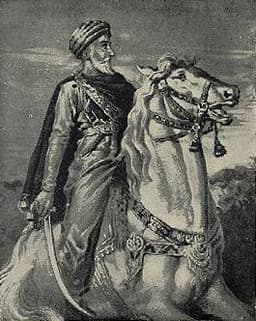
Hasan-i Sabbah
Emperor · Medieval
61.9Total

Henry V
Emperor · Medieval
56.1Total
Basic Information
Born
1050
1081
Died
1124
1125
Era
Medieval
Medieval
Nationality
Nizari Ismaili
Holy Roman Empire
Occupation
Emperor
Emperor
Civilization
Middle Eastern
Western
Score Comparison
Military (10%)
50.0
25.0
Political (20%)
53.8
72.0
Influence (20%)
65.0
59.0
Legacy (20%)
65.0
54.0
Leadership (15%)
61.1
68.0
Strategy (15%)
72.0
43.3
TOTAL
61.9
56.1
Hasan-i Sabbah — Complete Timeline
1090 AD
Capture of Alamut FortressWar
Hasan-i Sabbah and his followers seized the Alamut fortress in the Alborz mountains of northern Iran. This became the headquarters of the Nizari Ismaili state and the base from which he led a decentralized resistance against the Seljuk Empire.
Nizari Ismaili StateFortress CaptureSeljuk Conflict
Impact: regional
Establishment of the Nizari Ismaili StatePolitical Action◆ Major
Following the capture of Alamut, Hasan-i Sabbah established a network of mountain fortresses in Persia and Syria, creating a Nizari Ismaili state. This state operated as a decentralized theocracy, using strategic assassinations to counter Seljuk power.
Nizari Ismaili StatePolitical FoundationSeljuk Conflict
Impact: regional
1092 AD
Assassination of Nizam al-MulkPolitical Action◆ Major
The Seljuk vizier Nizam al-Mulk was assassinated by a Nizari Ismaili agent near Nahavand. This event demonstrated the reach of Hasan-i Sabbah's network and destabilized the Seljuk administration, contributing to the decline of Seljuk central authority.
AssassinationSeljuk EmpireNizari Ismaili
Impact: regionaldestructive
1094 AD
Reform of Nizari Ismaili DoctrineCultural◆ Major
After the death of the Fatimid caliph al-Mustansir, Hasan-i Sabbah supported the succession of Nizar over al-Mustali, leading to a schism. He established the Nizari Ismaili doctrine, emphasizing the authority of the imam and the use of taqiyya (dissimulation) for survival.
Nizari IsmailiDoctrinal SchismFatimid Caliphate
Impact: regional
1124 AD
Death of Hasan-i SabbahOther◆ Major
Hasan-i Sabbah died at Alamut, having led the Nizari Ismaili state for 34 years. He was succeeded by Kiya Buzurg Ummid. His legacy includes the creation of a resilient state that survived for over a century and the development of the Assassin legend.
Nizari Ismaili StateDeathLegacy
Impact: regional
Henry V — Complete Timeline
1106 AD
Election as King of GermanyPolitical Action◆ Major
Henry V was elected King of Germany in 1106 after rebelling against his father Henry IV, who died the same year. His accession marked the continuation of the Salian dynasty amid the Investiture Controversy.
SuccessionRebellion
Impact: regional
1110 AD
Campaign in ItalyWar
Henry V led a military campaign to Italy in 1110-1111 to assert imperial claims over the Papal States and secure his coronation. He captured Rome and forced Pope Paschal II to concede investiture rights, but the agreement was later repudiated.
Italian CampaignPapal Conflict
Impact: regional
1111 AD
Coronation as Holy Roman EmperorPolitical Action◆ Major
Pope Paschal II crowned Henry V Holy Roman Emperor in Rome on April 13, 1111, after Henry forced the Pope to grant him the right of investiture. The coronation followed a tense standoff where Henry imprisoned the Pope and cardinals.
CoronationInvestiture Controversy
Impact: regional
1122 AD
Concordat of WormsPolitical Action
Henry V and Pope Callixtus II signed the Concordat of Worms on September 23, 1122, ending the Investiture Controversy. The agreement gave the Church the right to elect bishops but allowed the emperor to invest them with secular authority.
Investiture ControversyTreatyChurch-State Relations
Impact: regionalconstructive
Expert Analysis
Origins
Hasan-i Sabbah was born around 1050 in Qom, Iran, into a Twelver Shia family. He studied in Rayy and converted to Ismailism. His early life was marked by intellectual pursuits and a deep commitment to Ismaili doctrine. Henry V was born in 1086, the son of Holy Roman Emperor Henry IV. He was raised in the tumultuous politics of the Investiture Controversy, where popes and emperors clashed over the appointment of church officials. Henry V's upbringing was steeped in conflict between secular and religious authority.
Rise to Power
Hasan-i Sabbah's rise began with his conversion to Ismailism and his mission to spread the Nizari cause. In 1090, he captured Alamut fortress in the Alborz mountains, a strategic stronghold that became the headquarters of the Nizari Ismaili state. This event marked a turning point, as he established a network of mountain fortresses in Persia and Syria. His assassination of the Seljuk vizier Nizam al-Mulk in 1092 demonstrated the reach of his network, eliminating a key opponent. Henry V's rise was marked by rebellion against his father. In 1104, he forced Henry IV to abdicate, becoming King of Germany in 1106. He then marched to Italy in 1110-1111 to secure his coronation as Holy Roman Emperor, capturing Rome and forcing Pope Paschal II to crown him in 1111 after a tense standoff.
Leadership & Governance
Hasan-i Sabbah led through a combination of religious authority and strategic terror. He reformed Nizari Ismaili doctrine, establishing a hierarchy of da'is (missionaries) and fidais (devotees) who carried out targeted assassinations. His governance was decentralized, with fortresses operating autonomously under his overall guidance. He scored 61.1 in leadership and 72.0 in strategy, reflecting his innovative use of asymmetric warfare. Henry V governed through negotiation and coercion. He continued the Salian dynasty's policies, but his greatest achievement was the Concordat of Worms in 1122, which ended the Investiture Controversy by granting the Church the right to appoint bishops while allowing the emperor to invest them with secular authority. Henry V scored 68.0 in leadership and 43.3 in strategy, indicating a preference for political compromise over military conquest.
Triumph & Tragedy
Hasan-i Sabbah's greatest triumph was the establishment of the Nizari Ismaili state, which survived for over a century after his death. His assassination network effectively intimidated enemies, preserving his state's autonomy. However, his reliance on terror and isolation limited his political influence; he scored only 53.8 in politics. His tragedy was that his state eventually fell to the Mongols in 1256, and his methods were later vilified. Henry V's triumph was the Concordat of Worms, a landmark compromise that stabilized relations between church and state. He also successfully secured his coronation as emperor. However, his military campaigns were less successful; he scored 25.0 in military. His tragedy was that his reign did not strengthen the empire long-term; the Salian dynasty ended with his death in 1125, as he had no legitimate heir.
Character & Destiny
Hasan-i Sabbah was a charismatic and ruthless leader. His decision-making was driven by ideological conviction and strategic calculation. He famously said, "Nothing is true, everything is permitted," reflecting his pragmatic approach to achieving goals. His character shaped his destiny as a master of guerrilla warfare and psychological manipulation. Henry V was pragmatic and politically astute, willing to compromise to achieve stability. He learned from his father's failures and chose negotiation over confrontation. His character led to a peaceful resolution of the Investiture Controversy but also to a lack of dynastic continuity.
Legacy
Hasan-i Sabbah's legacy is the creation of the Assassins, a term that entered European languages as a synonym for political murder. His methods influenced later secret societies and terrorist groups. He scored 65.0 in both influence and legacy, reflecting his enduring cultural impact. Henry V's legacy is the Concordat of Worms, which defined church-state relations for centuries. He also secured the principle that the emperor could not appoint bishops, limiting imperial power. He scored 59.0 in influence and 54.0 in legacy, indicating a significant but more institutional impact.
Conclusion
Hasan-i Sabbah had a greater overall impact than Henry V, with a total score of 61.9 compared to Henry V's 56.1. While Henry V resolved a major political conflict, his influence was confined to the Holy Roman Empire and the medieval church. Hasan-i Sabbah's creation of the Nizari state and his innovative use of assassination as a political tool had a broader and more lasting impact on global history, influencing everything from the word 'assassin' to modern asymmetric warfare. Hasan-i Sabbah's strategy score of 72.0 versus Henry's 43.3 highlights his superior tactical innovation. Therefore, Hasan-i Sabbah emerges as the more consequential figure.
Rankings
🥇
Hasan-i SabbahLeader
Mil: 50.0Pol: 53.8Inf: 65.0
61.9
🥈
Henry V
Mil: 25.0Pol: 72.0Inf: 59.0
56.1
+5.8 behind
How This Comparison Works
Algorithm
Each figure is scored on 6 dimensions (0—100 scale) based on structured historical data: Military (10%), Political (20%), Influence (20%), Legacy (20%), Leadership (15%), Strategy (15%). The weighted total produces the final ranking.
Data Sources
Scores are computed from structured sub-indicators in the database. Scale factors adjust for era (Ancient ×0.85, Modern ×1.0) and civilization size (Eastern ×1.05, Other ×0.80) to account for differences in population and military scale.
Maximum 3 Figures
Comparisons are limited to 2—3 figures to ensure readability and statistical meaningfulness.
Error Margins
±5 points per dimension — Sub-scores are derived from historical records with inherent uncertainty. Two figures within 5 points on a dimension should be considered roughly equivalent in that area.
Total Score Accuracy
±3 points overall — The weighted combination of 6 dimensions produces a total score with approximately ±3 points of uncertainty. Differences of less than 3 points are not statistically significant— the figures are effectively tied.
Known Limitations
- Historical records are incomplete and uneven across civilizations
- Figures from oral-tradition societies may be underrepresented
- Occupation labels can misclassify multi-role figures
- Scores measure capability and impact, not moral character
- Quantitative scoring is a comparison tool, not absolute truth
Capability Radar
Military (10%) — Battles & Warfare
Battles
15
40
Win Rate
20
45
Expansion
10
30
Political (20%) — Governance & Reform
Reform
70
70
Diplomacy
75
75
Economy
30
55
Influence (20%) — Cultural & Global Reach
Cultural
75
40
Global
70
45
Legacy (20%) — Historical Impact
Historical
80
65
Longevity
85
50
Leadership (15%) — Power & Stability
Tenure
40
65
Stability
25
60
Strategy (15%) — Tactics & Innovation
Strategy
80
40
Tactics
85
35
Reform
90
30
Similar Comparisons
Comments & Discussion
No comments yet. Be the first to share your thoughts!