Loading...
Hassan Ibrahim vs Napoleon Bonaparte
Napoleon Bonaparte leads by 26.5 pts · 2 figures compared
…
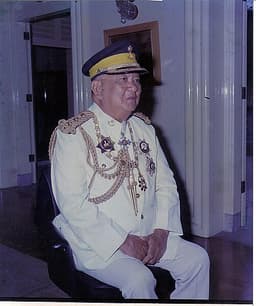
Hassan Ibrahim
General · Modern
44.4Total

Napoleon Bonaparte
General · Modern
70.9Total
Basic Information
Born
1917
1769
Died
1996
1821
Era
Modern
Modern
Nationality
Egypt
France
Occupation
General
General
Civilization
Middle Eastern
Western
Score Comparison
Military (10%)
10.2
94.0
Political (20%)
40.8
72.0
Influence (20%)
51.8
40.0
Legacy (20%)
39.2
80.0
Leadership (15%)
67.0
78.0
Strategy (15%)
45.0
90.0
TOTAL
44.4
70.9
Hassan Ibrahim — Complete Timeline
1952 AD
Participated in the 1952 Egyptian RevolutionPolitical Action◆ Major
Hassan Ibrahim was a member of the Free Officers movement that overthrew King Farouk. He was part of the inner circle that planned the July 23 coup.
Egyptian RevolutionFree OfficersCoup
Impact: national
1961 AD
Served as Vice President of EgyptPolitical Action◆ Major
Ibrahim served as Vice President of Egypt under Nasser from 1961 to 1964. He was involved in the administration of the United Arab Republic and domestic policy.
Vice PresidentUnited Arab RepublicNasser Era
Impact: national
1964 AD
Resigned from GovernmentPolitical Action
Ibrahim resigned from his vice presidency due to disagreements with Nasser's policies. He later retired from public life, distancing himself from the regime.
ResignationPolitical DisagreementNasser Era
Impact: national
Napoleon Bonaparte — Complete Timeline
1799 AD
Coup of 18 BrumaireOther◆ Major
Napoleon Bonaparte, with support from his brother Lucien and key political figures, overthrew the Directory in a bloodless coup. He established the Consulate with himself as First Consul, effectively becoming the ruler of France. This event ended the French Revolution's most unstable period.
French RevolutionCoupRise to Power
Impact: regional
1804 AD
Promulgation of the Napoleonic CodeOther◆ Major
Napoleon enacted the Civil Code of the French, known as the Napoleonic Code, a comprehensive set of laws that replaced the fragmented feudal legal systems. The code established legal equality, protected property rights, and secularized law. It became the basis for legal systems in many European and world countries.
Legal ReformNapoleonic CodeCivil Law
Impact: globalconstructive
1805 AD
Battle of AusterlitzWar◆ Major
Napoleon's Grande Arm
Napoleonic WarsBattleDecisive Victory
Impact: global
1812 AD
Invasion of RussiaWar◆ Major
Napoleon led the Grande Arm
Napoleonic WarsInvasionDisaster
Impact: globaldestructive
1815 AD
Battle of WaterlooWar◆ Major
Napoleon's French army was defeated by the combined forces of the Duke of Wellington's Anglo-Allied army and Gebhard Leberecht von Bl
Napoleonic WarsBattleFinal Defeat
Impact: globaldestructive
Expert Analysis
hassan-ibrahim-vs-napoleon-bonaparte
# The Emperor and the Officer: Two Paths from Revolution to Power
On a June morning in 1815, Napoleon Bonaparte stood on a muddy field near Waterloo, watching his Imperial Guard march to their deaths. He had gambled everything on a single battle and lost. One hundred and forty years later, in the stifling heat of an Egyptian summer, a young army officer named Hassan Ibrahim slipped through the streets of Cairo with a handful of conspirators, carrying a plan that would topple a king without firing a shot. Both men emerged from revolutions. Both wore the uniform of a general. But the chasm between their fates tells us something profound about the nature of power, ambition, and the currents of history.
Origins
Napoleon was born in 1769 on the rugged island of Corsica, a place that had only recently become French. His family was minor nobility, but they were not wealthy. He spoke Italian before French, and his accent would mark him as an outsider throughout his life. The son of a lawyer, he entered military school at nine years old, where other boys mocked his poverty and his accent. This isolation forged a ruthless determination. The French Revolution erupted when he was twenty, and it offered him something unprecedented: a chance to rise entirely on merit.
Hassan Ibrahim was born in 1917, in a very different world. Egypt was a British protectorate, ruled by a puppet king and occupied by foreign troops. He grew up in a society humiliated by colonialism, where the army was one of the few institutions where an ambitious Egyptian could advance. Like Napoleon, he entered military school young. But where Napoleon’s world was exploding into chaos and opportunity, Ibrahim’s was a slow, grinding pressure cooker. The difference in their eras is essential: Napoleon lived in an age of total war, where a general could conquer a continent; Ibrahim lived in an age of nationalist movements, where a general’s greatest weapon was not the cannon but the committee.
Rise to Power
Napoleon’s ascent was a series of spectacular explosions. At twenty-four, he crushed a royalist uprising in Paris with a “whiff of grapeshot” — a brutal, efficient act that made him famous. At twenty-six, he took command of a starving, mutinous army in Italy and turned it into a conquering machine. By thirty, he had made himself First Consul of France. By thirty-five, he was Emperor. Every step was a gamble, a battle, a coup. He did not wait for opportunities; he manufactured them.
Hassan Ibrahim’s rise was quieter, but no less revolutionary. In 1952, at age thirty-five, he was one of the Free Officers, a secret cell within the Egyptian army. Their leader was Gamal Abdel Nasser, a magnetic figure who would eclipse them all. Ibrahim was not the strategist or the visionary; he was the loyalist, the organizer, the man who kept the conspiracy alive through years of patient work. When they struck on July 23, 1952, it was almost bloodless. King Farouk abdicated without a fight. Ibrahim had helped overthrow a monarchy, but he did not seize the throne. He stepped into the shadows.
Leadership & Governance
Napoleon governed like he fought: with overwhelming force and relentless energy. He reformed French law into the Napoleonic Code, a system that still shapes legal thinking across Europe and beyond. He built schools, roads, and a centralized bureaucracy. He made peace with the Catholic Church while preserving revolutionary freedoms. But he could not stop conquering. His military genius — scoring a 94 in strategy — led him to victories at Austerlitz and Jena, but also to the catastrophic invasion of Russia in 1812, where 600,000 men marched east and only a fraction returned.
Hassan Ibrahim governed as a vice president from 1961 to 1964, a period when Nasser was at the height of his power. Egypt was experimenting with Arab socialism, nationalizing industries, and building the Aswan High Dam. Ibrahim’s role was administrative, not visionary. He was the man who managed the machine. His political score of 72 reflects a competent but not transformative figure. Where Napoleon rewrote the laws of Europe, Ibrahim implemented the policies of others.
Triumph & Tragedy
Napoleon’s greatest triumph was not a battle but a moment: December 2, 1804, when he crowned himself Emperor in Notre Dame Cathedral, taking the crown from the Pope’s hands and placing it on his own head. It was the ultimate statement of self-made power. His tragedy is equally clear: the long, slow exile on Saint Helena, a windswept rock in the South Atlantic, where he dictated his memoirs and died at fifty-one, likely of stomach cancer.
Hassan Ibrahim’s triumph was the 1952 Revolution itself, a bloodless transfer of power that ended seventy years of monarchy and began a new era for Egypt. His tragedy was quieter: he resigned in 1964, disillusioned with Nasser’s direction. He did not die in exile or on a battlefield. He retired to obscurity, a footnote in the history of a movement he helped create. His legacy score of 51 reflects this: he was present at the founding, but history remembers the founder.
Character & Destiny
Napoleon was driven by an insatiable hunger for glory. “I am not a man,” he once said, “I am a thing — a force.” He could not share power, could not delegate, could not stop. His character was his destiny. He believed that will could overcome any obstacle, and for a time, it did. But that same will drove him to overreach, to invade Russia, to fight at Waterloo when he should have negotiated.
Hassan Ibrahim was a man of discipline and loyalty. He could share power, which is why he served as vice president. But that same loyalty made him a follower, not a leader. He lacked Napoleon’s consuming ambition. He was content to be the second man. In a revolutionary movement, the second man is often forgotten.
Legacy
Napoleon left behind a transformed Europe. His legal codes, his administrative systems, his national borders — they outlasted his empire. He is remembered as a titan, a genius, a monster. His scores — 82 in influence, 78 in legacy — place him among the most consequential figures in Western history.
Hassan Ibrahim left behind a modest legacy. He is remembered by historians of modern Egypt, by students of the Free Officers movement. But his name does not echo in the streets of Cairo. His scores — 68 in influence, 51 in legacy — place him as a supporting actor in a drama where Nasser was the star.
Conclusion
The difference between Napoleon and Hassan Ibrahim is not simply one of scale. It is one of ambition, opportunity, and the nature of their revolutions. Napoleon lived in an age when a single man could reshape the map of the world. Ibrahim lived in an age of collective movements, where even the most powerful leader was part of a committee. Napoleon wanted everything and lost it all. Ibrahim wanted enough and kept what he had. One became a legend; the other became a footnote. Both were generals. Both were revolutionaries. But history, like time, does not treat all men equally. It gives some the stage for a century, and others only a scene.
Rankings
🥇
Napoleon BonaparteLeader
Mil: 94.0Pol: 72.0Inf: 40.0
70.9
🥈
Hassan Ibrahim
Mil: 10.2Pol: 40.8Inf: 51.8
44.4
+26.5 behind
How This Comparison Works
Algorithm
Each figure is scored on 6 dimensions (0—100 scale) based on structured historical data: Military (10%), Political (20%), Influence (20%), Legacy (20%), Leadership (15%), Strategy (15%). The weighted total produces the final ranking.
Data Sources
Scores are computed from structured sub-indicators in the database. Scale factors adjust for era (Ancient ×0.85, Modern ×1.0) and civilization size (Eastern ×1.05, Other ×0.80) to account for differences in population and military scale.
Maximum 3 Figures
Comparisons are limited to 2—3 figures to ensure readability and statistical meaningfulness.
Error Margins
±5 points per dimension — Sub-scores are derived from historical records with inherent uncertainty. Two figures within 5 points on a dimension should be considered roughly equivalent in that area.
Total Score Accuracy
±3 points overall — The weighted combination of 6 dimensions produces a total score with approximately ±3 points of uncertainty. Differences of less than 3 points are not statistically significant— the figures are effectively tied.
Known Limitations
- Historical records are incomplete and uneven across civilizations
- Figures from oral-tradition societies may be underrepresented
- Occupation labels can misclassify multi-role figures
- Scores measure capability and impact, not moral character
- Quantitative scoring is a comparison tool, not absolute truth
Capability Radar
Military (10%) — Battles & Warfare
Battles
5
95
Win Rate
5
90
Expansion
5
95
Political (20%) — Governance & Reform
Reform
30
95
Diplomacy
30
80
Economy
20
85
Influence (20%) — Cultural & Global Reach
Cultural
10
85
Global
10
90
Legacy (20%) — Historical Impact
Historical
15
95
Longevity
10
90
Leadership (15%) — Power & Stability
Tenure
40
85
Stability
30
70
Strategy (15%) — Tactics & Innovation
Strategy
5
95
Tactics
5
98
Reform
5
92
Similar Comparisons
Comments & Discussion
CorsicanThunder6/17/2026
Waterloo wasn't just a defeat—it was a catastrophic strategic miscalculation that proves Napoleon never understood the logistics of a two-front war. He rushed into Belgium before securing his supply lines, allowing the Prussians to reinforce Wellington. That's not genius; that's hubris. Hassan Ibrahim's patient, bloodless coup shows how real military minds wait for the fracture point. Bonaparte was a tactical virtuoso but a strategic amateur—brilliant on the battlefield, blind to the bigger map.
纸上兵王6/17/2026
拿破仑的自传全是自我美化,他吹嘘的每场战役都在损耗法国国力。别跟我提奥斯特里茨——他确实会指挥冲锋,但治国水平连个县长都不如。相比之下,易卜拉欣用一次无声的午夜散步就推翻了法鲁克王朝,零伤亡,零炮火。这才是真正的以智取胜。拿破仑的"光辉战绩"不过是个战争狂人的账单,最后在滑铁卢破产。历史的赢家不是开枪最快的人,而是枪都不必掏的人。
DesertStrategist6/17/2026
Let's be honest: comparing a Nasser-era lieutenant to Napoleon is like comparing a chess grandmaster to a backgammon player who got lucky. Ibrahim's coup was a single, well-planned night in a country already primed for revolt—timing did more work than tactics. Napoleon, on the other hand, reorganized an entire continent's legal code and military structure from scratch. One man altered the DNA of modern warfare; the other just pulled off a moderately impressive police operation. Scale matters.
历史泥瓦匠6/17/2026
别把易卜拉欣说得那么仁慈。他那场"不流血政变"后,埃及直接掉进了一个更恶毒的军政府泥潭。拿破仑至少给欧洲留下了民法典和现代行政体系,易卜拉欣留下了什么?一场漫长、腐败、最后被以色列打脸的阿拉伯梦。一个用枪炮帮农民打官司,一个用政变帮军官分蛋糕——起点相似,终点天差地别。历史不看谁更低调,看谁真正盖了房子。
OldGuardian6/17/2026
Both men represent the same dangerous archetype: the officer who mistakes a nation for his regiment. Napoleon turned France into a marching army; Ibrahim turned Egypt into a barracks. But here's the difference—Napoleon failed because he overreached (Moscow, Spain, Waterloo), while Ibrahim's failure was more insidious: his Free Officers movement never built institutions, just networks of loyal thugs. One died in exile on a remote island; the other died at home in a palace, surrounded by a system