Loading...
Helmuth von Moltke the Elder vs Shaka Zulu
Helmuth von Moltke the Elder leads by 4.6 pts · 2 figures compared
…
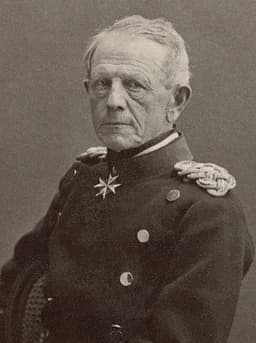
Helmuth von Moltke the Elder
General · Modern
74.8Total
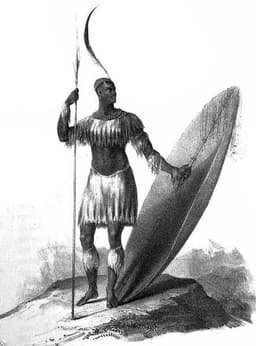
Shaka Zulu
General · Modern
70.2Total
Basic Information
Born
1800
1787
Died
1891
1828
Era
Modern
Modern
Nationality
Germany
Zulu Kingdom
Occupation
General
General
Civilization
Western
Other
Score Comparison
Military (10%)
75.0
80.0
Political (20%)
55.0
72.0
Influence (20%)
88.0
68.0
Legacy (20%)
65.0
68.0
Leadership (15%)
85.0
62.0
Strategy (15%)
80.6
80.8
TOTAL
74.8
70.2
Helmuth von Moltke the Elder — Complete Timeline
1857 AD
Appointment as Chief of the Prussian General StaffPolitical Action◆ Major
Moltke was appointed Chief of the Prussian General Staff, a position he held for 30 years. He reorganized the staff system, emphasizing strategic planning, railroad logistics, and decentralized command, laying the foundation for Prussian military dominance.
PrussiaMilitary ReformGeneral Staff
Impact: nationalconstructive
1866 AD
Battle of KöniggrätzWar
Moltke commanded Prussian forces to a decisive victory over Austria at K
Austro-Prussian WarGerman UnificationBattle
Impact: regional
1870 AD
Battle of SedanWar
Moltke's strategic planning led to the encirclement and capture of the French army under Napoleon III at Sedan during the Franco-Prussian War. This battle effectively decided the war and led to the fall of the Second French Empire.
Franco-Prussian WarBattleFrench Defeat
Impact: global
Siege of ParisWar◆ Major
Moltke directed the Prussian siege of Paris from September 1870 to January 1871. The siege cut off the city from supplies and forced its surrender, leading to the end of the Franco-Prussian War and the proclamation of the German Empire.
Franco-Prussian WarSiegeGerman Unification
Impact: global
1871 AD
Publication of 'On War' InfluenceCultural◆ Major
Moltke's strategic writings and after-action reports, though not a single book, shaped military doctrine for decades. His emphasis on decentralized command (Auftragstaktik) and railroad logistics became foundational to modern warfare.
Military TheoryDoctrineLegacy
Impact: globalconstructive
Shaka Zulu — Complete Timeline
1816 AD
Introduction of the iklwa and horns of the buffalo formationReform
Shaka introduced the iklwa, a short stabbing spear, and the 'horns of the buffalo' tactical formation to the Zulu army. These innovations replaced the traditional throwing assegai and allowed for close-quarters combat, significantly increasing the Zulu's military effectiveness and enabling rapid conquest.
Military InnovationTacticsZulu Warfare
Impact: regional
1819 AD
Conquest of the Ndwandwe KingdomWar◆ Major
Shaka's Zulu army defeated the Ndwandwe kingdom at the Battle of Gqokli Hill, a decisive victory that eliminated a major rival. This conquest allowed Shaka to consolidate control over a large territory in present-day KwaZulu-Natal, marking the rise of the Zulu as a dominant regional power.
ConquestZulu ExpansionNdwandwe
Impact: regional
1828 AD
Assassination of ShakaPolitical Action◆ Major
Shaka was assassinated by his half-brothers Dingane and Mhlangana, with the support of his aunt Mkabayi. The coup ended his reign of terror and expansionist wars, leading to a period of instability and the eventual rise of Dingane as king.
AssassinationSuccession CrisisZulu Kingdom
Impact: regionaltragic
Expert Analysis
Shaka Zulu vs Helmuth von Moltke the Elder
# The Spear and the Pencil: How Shaka Zulu and Moltke the Elder Forged Modern War
On a sweltering morning in 1870, Helmuth von Moltke the Elder sat in a quiet Prussian railway station, studying a map of the French frontier. He was seventy years old, his face a mask of calm calculation. Across the world, in the hills of what is now KwaZulu-Natal, another strategist had died forty-two years earlier, his body left to rot in the sun, his empire still trembling from his fall. These two men never met, never spoke the same language, never fought the same enemy. Yet both changed war forever—one with a spear, the other with a timetable. Their stories reveal how geography, culture, and sheer personality can bend the arc of history in radically different directions.
Origins
Shaka Zulu was born in 1787 as an illegitimate son of a minor Zulu chief, Senzangakhona. His childhood was a crucible of rejection: his father exiled him and his mother, Nandi, and the young boy grew up as an outcast among rival clans. He learned early that life was a contest of survival, not negotiation. The Zulu were then a small, insignificant group in a region of fractured chiefdoms, where cattle raiding and ritual combat were the norms. Shaka’s world was one of constant insecurity, where power was personal and mercy was weakness.
Helmuth von Moltke the Elder was born in 1800 in Mecklenburg, then a patchwork of German states. He came from a noble but impoverished family, and his path to prominence was through the Prussian military academy—a world of discipline, paperwork, and institutional order. Unlike Shaka, Moltke grew up in a society that prized systems over individuals. The Prussian army was already a machine; Moltke’s job was to oil its gears. His early career was unremarkable: he served as a staff officer, wrote essays, and learned to think in terms of logistics and probabilities. Where Shaka learned to fight with his hands, Moltke learned to fight with his mind.
The key difference lies in their eras. Shaka emerged during the *Mfecane*, a period of violent upheaval in southern Africa driven by population pressure and resource scarcity. Moltke came of age in the wake of the Napoleonic Wars, when European states were industrializing and centralizing. Shaka’s world was tribal and oral; Moltke’s was bureaucratic and literate. One built an army of men, the other an army of plans.
Rise to Power
Shaka seized the Zulu throne in 1816 after a short exile. He did not inherit power; he took it. His half-brother Sigujana was murdered, and Shaka, backed by the powerful Mthethwa chief Dingiswayo, installed himself as king. The turning point came almost immediately: he introduced the *iklwa*, a short-bladed stabbing spear, and the “horns of the buffalo” formation—a tactical system that replaced the old practice of throwing spears from a distance with disciplined, close-quarters slaughter. These innovations were not abstract theories; they were born from Shaka’s own battlefield experience. He drilled his men until they moved as one, forbade sandals to toughen their feet, and executed cowards on the spot. By 1819, at the Battle of Gqokli Hill, his army defeated the powerful Ndwandwe kingdom, eliminating his last major rival. Shaka’s rise was brutal, personal, and swift.
Moltke’s ascent was slower, quieter, and institutional. He was appointed Chief of the Prussian General Staff in 1857, at age fifty-seven, after decades of service. Unlike Shaka, he did not command armies in the field; he commanded staff officers. His key turning point was the reorganization of the Prussian military command structure: he decentralized decision-making, empowered junior officers to act independently, and—most crucially—integrated railways into war planning. Where Shaka trained bodies, Moltke trained minds. The 1866 Austro-Prussian War was his Gqokli Hill: at the Battle of Königgrätz, his use of railroads allowed Prussian troops to converge on the Austrian army faster than anyone thought possible. The victory was not won by bravery but by timetables.
The difference in their paths reflects their societies. Shaka could only rise through violence because his world had no institutions for peaceful advancement. Moltke rose through a bureaucracy that rewarded competence and patience. One was a conqueror, the other a manager.
Leadership & Governance
Shaka ruled through terror and charisma. His army was a state within a state: every Zulu male served in age-based regiments (*amabutho*), and Shaka personally controlled promotions, marriages, and even the right to wear certain ornaments. He centralized power by destroying rival chiefs and absorbing their people into the Zulu nation. His military genius lay in tactical innovation: the “horns of the buffalo” formation—with a central thrust and enveloping flanks—was simple, effective, and perfectly adapted to the open terrain of southern Africa. But his political wisdom was limited. He ruled by fear, not consent, and his paranoia grew after his mother’s death in 1827, when he ordered mass executions and forbade the planting of crops. The state he built was strong but brittle.
Moltke governed through systems. As Chief of the General Staff, he did not rule Prussia; he served it. His leadership style was quiet, analytical, and decentralized. He believed that no plan survives contact with the enemy, so he trained his officers to adapt. His military genius was strategic: he understood that war was not a single battle but a campaign of movement, supply, and timing. The Siege of Paris in 1870, which he directed, was a masterpiece of logistics—cutting off a city of two million people without a frontal assault. Yet Moltke was politically cautious. He opposed the annexation of Alsace-Lorraine after the Franco-Prussian War, warning it would create permanent enmity with France. He was ignored.
Shaka’s leadership was personal and visceral; Moltke’s was institutional and cerebral. One created a cult of personality, the other a culture of professionalism.
Triumph & Tragedy
Shaka’s greatest moment was the conquest of the Ndwandwe in 1819, which made the Zulu the dominant power in the region. His tragedy came nine years later: in 1828, his half-brothers Dingane and Mhlangana, backed by his aunt Mkabayi, assassinated him. He had become so feared that even his own family turned against him. His empire, built on his personal authority, began to fracture almost immediately.
Moltke’s triumph was the Battle of Sedan in 1870, where his encirclement of the French army led to the capture of Emperor Napoleon III. It was the crowning achievement of Prussian strategy. His tragedy was subtler: he lived to see his beloved General Staff become a tool of the aggressive Kaiser Wilhelm II, who ignored Moltke’s warnings and plunged Germany into World War I. Moltke died in 1891, but his system—designed for limited wars—was used for total ones.
Character & Destiny
Shaka was a man of extremes: brilliant, paranoid, and ruthless. His personality shaped every decision. He trusted no one, which made him invincible in battle but isolated in power. His cruelty, while effective in the short term, ensured his downfall. Moltke was the opposite: reserved, methodical, and self-effacing. He once said, “Eternal peace is a dream, and not even a beautiful one.” Yet he fought not for glory but for order. His personality made him a great servant of the state but a poor master of it.
Legacy
Shaka is remembered as a national hero in South Africa, a symbol of African resistance and state-building. His military innovations influenced later Zulu leaders like Cetshwayo, who used them against the British at Isandlwana in 1879. But his legacy is also one of destruction: the *Mfecane* caused mass displacement and suffering.
Moltke is remembered as the father of modern staff work and strategic planning. His ideas about decentralization and logistics shaped every major army of the twentieth century. Yet his legacy is ambiguous: the Prussian General Staff he created became a model for total war, culminating in the horrors of 1914–1918.
Conclusion
Shaka and Moltke were both architects of war, but they built with different materials. Shaka worked with flesh and blood, forging a nation from the anvil of his own will. Moltke worked with paper and ink, weaving a system that could move armies like clockwork. One died by the spear he perfected; the other died in bed, his system outliving him. Their stories remind us that war is never just about weapons or tactics—it is about the men who imagine them, and the worlds that shape those imaginations. In the end, both Shaka and Moltke answered the same question: how do you make men fight? But they gave answers so different that they might as well have been speaking different languages.
Rankings
🥇
Helmuth von Moltke the ElderLeader
Mil: 75.0Pol: 55.0Inf: 88.0
74.8
🥈
Shaka Zulu
Mil: 80.0Pol: 72.0Inf: 68.0
70.2
+4.6 behind
How This Comparison Works
Algorithm
Each figure is scored on 6 dimensions (0—100 scale) based on structured historical data: Military (10%), Political (20%), Influence (20%), Legacy (20%), Leadership (15%), Strategy (15%). The weighted total produces the final ranking.
Data Sources
Scores are computed from structured sub-indicators in the database. Scale factors adjust for era (Ancient ×0.85, Modern ×1.0) and civilization size (Eastern ×1.05, Other ×0.80) to account for differences in population and military scale.
Maximum 3 Figures
Comparisons are limited to 2—3 figures to ensure readability and statistical meaningfulness.
Error Margins
±5 points per dimension — Sub-scores are derived from historical records with inherent uncertainty. Two figures within 5 points on a dimension should be considered roughly equivalent in that area.
Total Score Accuracy
±3 points overall — The weighted combination of 6 dimensions produces a total score with approximately ±3 points of uncertainty. Differences of less than 3 points are not statistically significant— the figures are effectively tied.
Known Limitations
- Historical records are incomplete and uneven across civilizations
- Figures from oral-tradition societies may be underrepresented
- Occupation labels can misclassify multi-role figures
- Scores measure capability and impact, not moral character
- Quantitative scoring is a comparison tool, not absolute truth
Capability Radar
Military (10%) — Battles & Warfare
Battles
85
85
Win Rate
95
90
Expansion
85
88
Political (20%) — Governance & Reform
Reform
75
85
Diplomacy
65
60
Economy
60
65
Influence (20%) — Cultural & Global Reach
Cultural
75
80
Global
80
70
Legacy (20%) — Historical Impact
Historical
85
85
Longevity
80
75
Leadership (15%) — Power & Stability
Tenure
70
70
Stability
70
55
Strategy (15%) — Tactics & Innovation
Strategy
95
90
Tactics
90
95
Reform
95
98
Similar Comparisons
Comments & Discussion
SpearCount6/16/2026
Shaka's tactical genius is wildly overhyped—the "horns of the buffalo" was just a basic flanking move, not some revolution. Give me von Moltke's railroad timetables any day; he turned logistics into a weapon, crushing France in weeks. Shaka conquered cattle raiders at close range; Moltke mastered industrial slaughter across borders. One's a tribal champion, the other a true modern architect.
数据铁杆6/16/2026
别被《文明》游戏骗了——恰卡是狠,但所谓"黑拿破仑"全靠英国传教士日记吹出来的。他统治期死几十万人,军队退化到拼体力。毛奇才是真数据狂人:1870年普法战争,他调运130万兵,精确到每一列火车。现代战争不是挥舞短矛,而是计算每吨补给。恰卡是小池塘里的大鱼,毛奇开创了大洋。
GraveDigger6/16/2026
Let's not forget the ugly costs. Shaka's "innovations" included mass executions for cowardice—thousands killed at his whim. Moltke's efficiency gave us Verdun and the Somme as logical extensions. The Prussian polished the murder machine; the Zulu just sharpened the blade. Both are heroes to nationalists who ignore the bodies. War isn't chess; it's butchery dressed in clever uniforms.
历史细节控6/16/2026
你们忽略了一个关键:恰卡的"impondo zankomo"战术不是原创,恩德万德韦人早用过。他真正创新是短刺斧和近战训练,还有把少年编成"战士公会"(amabutho),彻底破坏氏族纽带。毛奇那边,别忘了他1891年死前警告过"战争会打起十年",结果没人听。两个人都被后人简化成标签——其实都是时代困境的产物。
RevisionistEcho6/16/2026
The comparison's flawed—apples and steam engines. Shaka fought to consolidate a fragile state amid Mfecane chaos; Moltke built on centuries of European military science. Shaka's Zulu lasted decades; Moltke's Reich spawned two world wars. If we're judging "modern war," Shaka foreshadowed total mobilization—every man a soldier, every village a depot. Moltke just computerized it. Neither's a saint, but only one gets called a "great" while the other's a "brute."