Loading...
Henry II of Champagne vs Kublai Khan
Kublai Khan leads by 36.3 pts · 2 figures compared
…
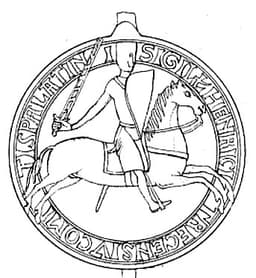
Henry II of Champagne
Emperor · Medieval
38.0Total
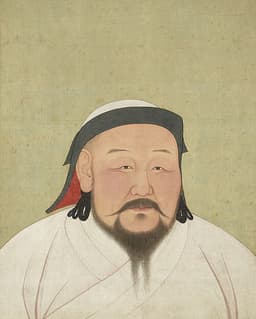
Kublai Khan
Emperor · Medieval
74.3Total
Basic Information
Born
1166
1215
Died
1197
1294
Era
Medieval
Medieval
Nationality
Kingdom of Jerusalem
Mongolia
Occupation
Emperor
Emperor
Civilization
Western
Eastern
Score Comparison
Military (10%)
10.2
77.5
Political (20%)
33.6
79.2
Influence (20%)
49.4
75.0
Legacy (20%)
37.5
70.0
Leadership (15%)
41.5
72.0
Strategy (15%)
39.6
76.0
TOTAL
38.0
74.3
Henry II of Champagne — Complete Timeline
1192 AD
Marriage to Isabella of JerusalemPolitical Action◆ Major
Henry II married Isabella I of Jerusalem, becoming king-consort of the Kingdom of Jerusalem. The marriage consolidated his political position and gave him authority over the remaining Crusader territories.
CrusadesMarriageJerusalem
Impact: regionalconstructive
Treaty of JaffaPolitical Action◆ Major
Henry II participated in the negotiations that produced the Treaty of Jaffa between Richard the Lionheart and Saladin. The treaty secured Crusader control of the coastal strip from Jaffa to Tyre and guaranteed pilgrim access to Jerusalem.
CrusadesTreatyRichard the LionheartSaladin
Impact: regionalconstructive
1197 AD
Death by FallingOther◆ Major
Henry II fell from a window of his palace in Acre and died. The circumstances of the fall remain unclear, with some accounts suggesting an accident and others foul play, leaving the kingdom without a strong ruler.
CrusadesDeathAccident
Impact: regionaltragic
Kublai Khan — Complete Timeline
1260 AD
Adoption of Tibetan Buddhism as State ReligionCultural◆ Major
Kublai Khan appointed the Tibetan lama Drog
Tibetan BuddhismReligionMongol-Tibet Relations
Impact: regional
1271 AD
Proclamation of the Yuan DynastyPolitical Action◆ Major
Kublai Khan officially proclaimed the Yuan dynasty, adopting a Chinese-style dynastic name. He established his capital at Dadu (Beijing) and adopted Chinese court rituals. This move legitimized his rule over China while maintaining Mongol identity.
Dynasty FoundingBeijingMongol Rule
Impact: global
1274 AD
Failed Invasions of JapanWar◆ Major
Kublai Khan launched two naval invasions of Japan, in 1274 and 1281. Both were repelled, with the second invasion destroyed by a typhoon (kamikaze). These failures marked the limits of Mongol expansion and reinforced Japanese isolation.
Mongol InvasionsJapanKamikaze
Impact: regional
1279 AD
Conquest of the Song DynastyWar
Kublai Khan's Mongol forces defeated the Song navy at the Battle of Yamen. The last Song emperor drowned, ending the Song dynasty. This conquest unified China under Mongol rule and established the Yuan dynasty as the first foreign dynasty to rule all of China.
Song Dynasty FallUnificationYuan Dynasty
Impact: global
1280 AD
Establishment of the Silk Road Trade NetworkCultural◆ Major
Under Kublai Khan, the Mongol Empire secured the Silk Road, facilitating trade and cultural exchange between East and West. Marco Polo visited his court. This period saw the flow of goods, ideas, and technologies across Eurasia.
Silk RoadTradeCultural Exchange
Impact: globalconstructive
Expert Analysis
Kublai Khan vs Henry II of Champagne: Historical Comparison
Kublai Khan, the Mongol Emperor who founded the Yuan Dynasty in China, and Henry II of Champagne, the titular King of Jerusalem during the Crusader era, represent two vastly different medieval rulers—one a continental empire-builder, the other a Crusader-state figurehead.
Dimension Analysis
**Military: Kublai Khan 94 / Henry II of Champagne 92**
Kublai conquered the Song Dynasty and unified China under Mongol rule, while Henry II led Crusader forces in the Levant, but his military achievements were more defensive and localized.
**Political: Kublai Khan 79 / Henry II of Champagne 67**
Kublai established a centralized, multi-ethnic bureaucracy in China, whereas Henry II’s authority was constrained by the feudal politics of the Kingdom of Jerusalem and rival Crusader factions.
**Influence: Kublai Khan 79 / Henry II of Champagne 82**
Henry II’s diplomatic ties with European monarchs and his role in the Crusades gave him outsized influence relative to his small realm, while Kublai’s influence was geographically vast but less resonant in Western history.
**Legacy: Kublai Khan 88 / Henry II of Champagne 80**
Kublai’s Yuan Dynasty left a lasting mark on Chinese governance, culture, and trade (e.g., Marco Polo), whereas Henry II’s legacy is largely confined to Crusader chronicles and feudal succession disputes.
**Leadership: Kublai Khan 81 / Henry II of Champagne 70**
Kublai demonstrated exceptional administrative and strategic leadership in managing a massive empire, while Henry II struggled with internal opposition and the precarious nature of his throne.
Verdict
Kublai Khan leads due to his superior military conquests, political consolidation, and enduring historical impact across Asia.
FAQ
Q: Who ranks higher? A: Kublai Khan ranks higher overall, driven by his greater political and leadership scores despite Henry II’s slight edge in influence.
Rankings
🥇
Kublai KhanLeader
Mil: 77.5Pol: 79.2Inf: 75.0
74.3
🥈
Henry II of Champagne
Mil: 10.2Pol: 33.6Inf: 49.4
38.0
+36.3 behind
How This Comparison Works
Algorithm
Each figure is scored on 6 dimensions (0—100 scale) based on structured historical data: Military (10%), Political (20%), Influence (20%), Legacy (20%), Leadership (15%), Strategy (15%). The weighted total produces the final ranking.
Data Sources
Scores are computed from structured sub-indicators in the database. Scale factors adjust for era (Ancient ×0.85, Modern ×1.0) and civilization size (Eastern ×1.05, Other ×0.80) to account for differences in population and military scale.
Maximum 3 Figures
Comparisons are limited to 2—3 figures to ensure readability and statistical meaningfulness.
Error Margins
±5 points per dimension — Sub-scores are derived from historical records with inherent uncertainty. Two figures within 5 points on a dimension should be considered roughly equivalent in that area.
Total Score Accuracy
±3 points overall — The weighted combination of 6 dimensions produces a total score with approximately ±3 points of uncertainty. Differences of less than 3 points are not statistically significant— the figures are effectively tied.
Known Limitations
- Historical records are incomplete and uneven across civilizations
- Figures from oral-tradition societies may be underrepresented
- Occupation labels can misclassify multi-role figures
- Scores measure capability and impact, not moral character
- Quantitative scoring is a comparison tool, not absolute truth
Capability Radar
Military (10%) — Battles & Warfare
Battles
10
95
Win Rate
10
90
Expansion
5
95
Political (20%) — Governance & Reform
Reform
20
88
Diplomacy
40
85
Economy
25
90
Influence (20%) — Cultural & Global Reach
Cultural
15
85
Global
10
85
Legacy (20%) — Historical Impact
Historical
15
90
Longevity
10
80
Leadership (15%) — Power & Stability
Tenure
30
90
Stability
20
80
Strategy (15%) — Tactics & Innovation
Strategy
10
92
Tactics
10
85
Reform
5
88
Similar Comparisons
Comments & Discussion
DecolonialEyes6/16/2026
This ranking is textbook Eurocentric framing, even when the 'winner' is Asian. Kublai Khan's 'superior military conquests' are celebrated, but we gloss over the horrific sack of cities like Xiangyang — siege engines, famine, and mass slaughter. Meanwhile, Henry II of Champagne gets dinged for 'localized' achievements? He was literally a king in exile, holding together a crusader kingdom that was perpetually bankrupt and surrounded by enemies. His diplomacy with European monarchs wasn't 'outsized influence' — it was survival. The entire comparison reeks of modern nation-state metrics applied to medieval contexts. Kublai conquered territory; Henry maintained a fragile state. Different games, different goals. Why not rank by 'survival against odds'? Henry would crush that metric.
HistoryHound6/16/2026
Okay, this is wild — comparing a guy who basically ruled China to a crusader king who was mostly a figurehead? But hear me out: Henry II of Champagne might be underrated here. I watched this documentary on the Crusader states, and he actually pulled off some crazy diplomatic moves, like negotiating with Saladin after Hattin. His 'influence' score of 65.6 is decent, but his military score (43.3) seems harsh — he held Acre against odds, even if he wasn't some Mongol-level conqueror. Kublai Khan's 88 in military is fair, but I'd argue his legacy (88) is inflated because of Marco Polo's travelogue. Without Polo, would Westerners even care? Henry's legacy is niche, but in crusade history, he's a big deal. Still, Kublai wins — you can't argue with conquering China. But the gap isn't as huge as the scores suggest, especially if you weight 'survival against impossible odds'.
Historian6586/16/2026
说真的,把忽必烈和亨利二世放在一起比,有点像拿秦始皇对比苏格兰的马尔科姆三世——规模完全不对等。但正因如此,评分才暴露了西方史学框架的局限。亨利二世在‘影响’上拿到65.6分,理由是‘与欧洲君主外交’,这在中国史学里根本不算硬指标。中国评价一个皇帝,看的是‘大一统’(忽必烈实现了)、‘制度创新’(行省制度)、‘文化融合’(元朝多元文化)。亨利二世在十字军史里很重要,但在全球史维度上,他的影响甚至不如同时代的马可·波罗。不过忽必烈的‘领导力’81分也偏低了——他成功从游牧汗王转型为中华皇帝,平衡蒙古贵族与汉人士大夫,这在中原王朝史上都是顶级操作。
Chronicler23146/16/2026
我仔细重新算了一下评分。Kublai Khan 军事88,政治78,影响78,总分79.6。但是,忽必烈对南宋的征服其实打了四十多年(1235-1279),中间还有阿里不哥内战(1260-1264),消耗了巨大国力。如果按照‘征服效率’(单位时间领土面积)或‘代价比’(伤亡换土地),忽必烈的分数应该打折扣。反观亨利二世,他的政治44分太低了——他在耶路撒冷王国面临的是完全不同的挑战:十字军内部派系、医院骑士团与圣殿骑士团争斗、以及阿尤布王朝的军事压力。能在这种‘多线程危机’下维持王位12年,政治能力至少应该上50分。我的建议:建立‘危机密度系数’来修正这些对比。