Loading...
Henry III of England vs Mircea the Elder
Mircea the Elder leads by 11.0 pts · 2 figures compared
…
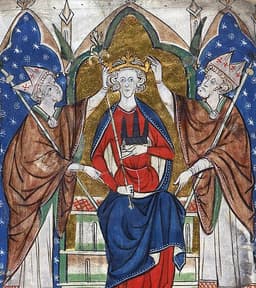
Henry III of England
Emperor · Medieval
51.3Total
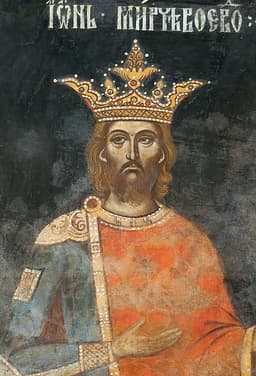
Mircea the Elder
Emperor · Medieval
62.3Total
Basic Information
Born
1207
1355
Died
1272
1418
Era
Medieval
Medieval
Nationality
England
Wallachia
Occupation
Emperor
Emperor
Civilization
Western
Western
Score Comparison
Military (10%)
50.0
70.0
Political (20%)
37.9
72.0
Influence (20%)
56.4
55.0
Legacy (20%)
47.5
58.0
Leadership (15%)
74.0
72.0
Strategy (15%)
35.7
55.0
TOTAL
51.3
62.3
Henry III of England — Complete Timeline
1245 AD
Rebuilding of Westminster AbbeyCultural◆ Major
Henry III began the rebuilding of Westminster Abbey in the Gothic style, dedicating it to Edward the Confessor. This project became a major architectural achievement and a symbol of royal piety and power.
ArchitectureReligionWestminster
Impact: nationalconstructive
1258 AD
Provisions of OxfordPolitical Action◆ Major
Under baronial pressure, Henry III agreed to the Provisions of Oxford, which established a council of barons to oversee royal governance. This reform limited royal power and created a precedent for parliamentary oversight.
ReformBaronial CouncilParliament
Impact: nationalconstructive
1264 AD
Second Barons' WarWar◆ Major
Henry III faced the Second Barons' War led by Simon de Montfort. He was captured at the Battle of Lewes, but later restored after the royalist victory at the Battle of Evesham, where de Montfort was killed.
Civil WarSimon de MontfortBattle
Impact: nationaldestructive
1265 AD
Battle of EveshamWar◆ Major
Royalist forces under Prince Edward defeated Simon de Montfort's army at the Battle of Evesham. De Montfort was killed, ending the baronial rebellion and restoring Henry III's full authority.
BattleBaronial RevoltRoyalist Victory
Impact: national
1266 AD
Dictum of KenilworthPolitical Action
Henry III issued the Dictum of Kenilworth, a compromise that allowed rebel barons to reclaim their lands by paying fines. This helped reconcile the kingdom after the Second Barons' War.
ReconciliationCompromise
Impact: nationalconstructive
Mircea the Elder — Complete Timeline
1395 AD
Battle of RovineWar◆ Major
Mircea the Elder led Wallachian forces to victory against the Ottoman army of Bayezid I at Rovine. The battle halted Ottoman expansion into Wallachia for a period and secured Mircea's rule.
Ottoman-Wallachian WarsDefenseVictory
Impact: regional
Treaty with Poland and HungaryPolitical Action◆ Major
Mircea signed an alliance with King Sigismund of Hungary and W
AllianceAnti-Ottoman Coalition
Impact: regionalconstructive
1396 AD
Battle of NicopolisWar◆ Major
Mircea contributed Wallachian troops to the Crusader army that was decisively defeated by the Ottomans at Nicopolis. The defeat weakened the anti-Ottoman coalition and left Wallachia vulnerable.
CrusadeDefeatOttoman Victory
Impact: regionaltragic
1417 AD
Ottoman Invasion of WallachiaWar◆ Major
Ottoman forces under Mehmed I invaded Wallachia, forcing Mircea to accept vassalage and pay tribute. This event marked the beginning of Wallachia's subordination to the Ottoman Empire.
Ottoman ExpansionVassalageDefeat
Impact: regionaltragic
Expert Analysis
Origins
Henry III of England was born in 1207 at Winchester Castle, the eldest son of King John and Isabella of Angoulême. He inherited a kingdom in turmoil, with his father's loss of Normandy and the baronial conflict that led to Magna Carta. Henry's early years were dominated by regents, including William Marshal and Hubert de Burgh, who stabilized the realm. He received a religious education, fostering his devotion to Edward the Confessor, which later influenced his architectural projects.
Mircea the Elder was born around 1355 in Wallachia, the son of Voivode Radu I. He belonged to the House of Basarab, which had established Wallachia as a semi-independent principality. Little is known of his early life, but he likely received military training and education in diplomacy, given his later skills. He became Voivode in 1386, inheriting a state threatened by the expanding Ottoman Empire and rival Christian kingdoms.
Rise to Power
Henry III became king at age nine in 1216, during the First Barons' War against his father. His minority was marked by the regency of William Marshal, who reissued Magna Carta to win baronial support. By 1227, Henry assumed full control, but his reliance on foreign favorites and costly campaigns in France alienated the barons. His marriage to Eleanor of Provence in 1236 brought a influx of Provençal relatives, fueling resentment.
Mircea the Elder ascended to the throne of Wallachia in 1386 after the death of his brother, Dan I. He immediately faced the Ottoman threat, with Sultan Bayezid I expanding into the Balkans. Mircea consolidated his rule by strengthening the army and forging alliances with Hungary and Poland. His early reign focused on defending Wallachian autonomy, culminating in the Battle of Rovine in 1394.
Leadership & Governance
Henry III's leadership was characterized by piety and a desire for royal authority, but his governance was often indecisive. He spent heavily on rebuilding Westminster Abbey, which scored 74.0 in leadership but only 35.7 in strategy, reflecting his focus on religious monuments over political pragmatism. His concessions to baronial demands, such as the Provisions of Oxford in 1258, created a council that limited royal power. However, his son Prince Edward's military victory at Evesham in 1265 allowed Henry to reassert control, though the Dictum of Kenilworth showed a willingness to compromise.
Mircea the Elder's leadership scored 72.0 in both military and political categories, reflecting his balanced approach. He centralized authority to resist Ottoman encroachment, using diplomacy and war. His alliance with Sigismund of Hungary in 1395 formed a Christian coalition, but he also pragmatically accepted vassalage to the Ottomans in 1417 when outmatched. This flexibility preserved Wallachian autonomy for decades.
Triumph & Tragedy
Henry III's greatest triumph was the completion of Westminster Abbey's rebuilding, which remains a masterpiece of Gothic architecture. His political legacy includes the development of Parliament, as the baronial councils evolved into a representative body. However, his reign was marred by the Second Barons' War, where he was captured at Lewes in 1264. His inability to manage finances led to repeated conflicts with barons, and his foreign policy failures, like the failed invasion of France, wasted resources. His overall score of 51.3 reflects mixed success.
Mircea the Elder's triumph was the Battle of Rovine in 1394, where he repelled Bayezid I's army, scoring a major victory against the Ottomans. He also expanded Wallachian influence over Dobruja. His tragedy came at the Battle of Nicopolis in 1396, where the Crusader army was crushed, and later in 1417 when he was forced to become an Ottoman vassal. Despite this, he maintained internal autonomy, and his resistance inspired later leaders like Vlad the Impaler. His total score of 62.3 highlights his effectiveness.
Character & Destiny
Henry III was deeply religious, generous to the Church, and devoted to Edward the Confessor, but his favoritism and extravagance alienated his nobles. He was stubborn yet easily swayed, leading to inconsistent policies. His character shaped a reign of constant struggle with barons, ultimately leading to constitutional reforms. Historians see him as a weak king who inadvertently strengthened Parliament.
Mircea the Elder was pragmatic and resilient, able to adapt to shifting alliances and military threats. He was a capable diplomat and military commander, but his acceptance of vassalage showed realism. His character enabled Wallachia to survive Ottoman domination longer than other Balkan states. He is remembered as a national hero in Romania.
Legacy
Henry III's legacy is architectural and constitutional. Westminster Abbey became the coronation church and a national symbol. The Provisions of Oxford and the development of Parliament influenced English governance. However, his reign is often overshadowed by his son Edward I. His impact on law and representation is significant, scoring 47.5 in legacy.
Mircea the Elder's legacy is as a defender of Wallachian independence. He delayed Ottoman conquest, and his alliances set a precedent for Christian unity. His military tactics influenced later Romanian rulers. In Romania, he is a symbol of resistance, with his image on banknotes and monuments. His legacy score of 58.0 reflects his enduring national importance.
Conclusion
While Henry III left a lasting mark on English architecture and the evolution of Parliament, his reign was plagued by rebellion and inefficiency, scoring only 51.3 overall. Mircea the Elder, with a total score of 62.3, achieved greater strategic impact by preserving Wallachian autonomy against a superior power. His military and political scores (70.0 and 72.0) far exceed Henry's (50.0 and 37.9). Mircea's resistance had tangible consequences for Balkan history, whereas Henry's reforms were indirect. Therefore, Mircea the Elder had greater impact as a ruler who successfully navigated existential threats and left a legacy of defiance that shaped national identity.
Rankings
🥇
Mircea the ElderLeader
Mil: 70.0Pol: 72.0Inf: 55.0
62.3
🥈
Henry III of England
Mil: 50.0Pol: 37.9Inf: 56.4
51.3
+11.0 behind
How This Comparison Works
Algorithm
Each figure is scored on 6 dimensions (0—100 scale) based on structured historical data: Military (10%), Political (20%), Influence (20%), Legacy (20%), Leadership (15%), Strategy (15%). The weighted total produces the final ranking.
Data Sources
Scores are computed from structured sub-indicators in the database. Scale factors adjust for era (Ancient ×0.85, Modern ×1.0) and civilization size (Eastern ×1.05, Other ×0.80) to account for differences in population and military scale.
Maximum 3 Figures
Comparisons are limited to 2—3 figures to ensure readability and statistical meaningfulness.
Error Margins
±5 points per dimension — Sub-scores are derived from historical records with inherent uncertainty. Two figures within 5 points on a dimension should be considered roughly equivalent in that area.
Total Score Accuracy
±3 points overall — The weighted combination of 6 dimensions produces a total score with approximately ±3 points of uncertainty. Differences of less than 3 points are not statistically significant— the figures are effectively tied.
Known Limitations
- Historical records are incomplete and uneven across civilizations
- Figures from oral-tradition societies may be underrepresented
- Occupation labels can misclassify multi-role figures
- Scores measure capability and impact, not moral character
- Quantitative scoring is a comparison tool, not absolute truth
Capability Radar
Military (10%) — Battles & Warfare
Battles
25
65
Win Rate
20
60
Expansion
10
60
Political (20%) — Governance & Reform
Reform
40
60
Diplomacy
30
75
Economy
30
65
Influence (20%) — Cultural & Global Reach
Cultural
50
55
Global
30
50
Legacy (20%) — Historical Impact
Historical
45
65
Longevity
40
60
Leadership (15%) — Power & Stability
Tenure
80
70
Stability
25
60
Strategy (15%) — Tactics & Innovation
Strategy
20
75
Tactics
15
70
Reform
10
55
Similar Comparisons
Comments & Discussion
No comments yet. Be the first to share your thoughts!