Loading...
This comparison has not been analyzed yet.
One-time AI generation (~1 minute). Scores and timeline are already available below.
Hethum I of Armenia vs Hisham ibn Abd al-Malik
Hisham ibn Abd al-Malik leads by 17.5 pts · 2 figures compared
…
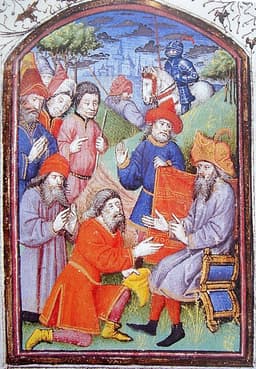
Hethum I of Armenia
Emperor · Medieval
53.1Total
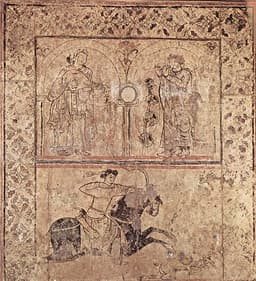
Hisham ibn Abd al-Malik
Emperor · Medieval
70.6Total
Basic Information
Born
1213
691
Died
1270
743
Era
Medieval
Medieval
Nationality
Cilician Armenia
Umayyad Caliphate
Occupation
Emperor
Emperor
Civilization
Middle Eastern
Middle Eastern
Score Comparison
Military (10%)
38.3
74.7
Political (20%)
61.3
78.0
Influence (20%)
52.5
72.0
Legacy (20%)
45.0
58.0
Leadership (15%)
65.0
80.0
Strategy (15%)
60.0
69.1
TOTAL
53.1
70.6
Hethum I of Armenia — Complete Timeline
1244 AD
Submission to the Mongol EmpirePolitical Action◆ Major
Hethum I traveled to the Mongol court of Baiju and formally submitted the Kingdom of Cilician Armenia to Mongol suzerainty. This alliance made Armenia a vassal state of the Mongol Empire, providing military protection against the Mamluks and Seljuks.
SubmissionMongol EmpireVassalage
Impact: regional
1254 AD
Diplomatic Mission to the Mongol Court of KarakorumPolitical Action◆ Major
Hethum I undertook a long journey to the Mongol capital of Karakorum to meet the Great Khan M
DiplomacyMongol EmpireTravel
Impact: regionalconstructive
1258 AD
Alliance with the Mongols at the Siege of Baghdad (1258)War◆ Major
Hethum I led Armenian troops to support the Mongol army under Hulagu Khan during the Siege of Baghdad. The Mongol-Armenian alliance resulted in the fall of the Abbasid Caliphate, a major event in Islamic history.
SiegeMongol AllianceAbbasid Caliphate
Impact: global
1260 AD
Battle of Ain Jalut (Armenian Participation)War◆ Major
Hethum I's Armenian forces fought alongside the Mongols at the Battle of Ain Jalut against the Mamluks. The Mamluk victory halted Mongol expansion and left Cilician Armenia vulnerable to future Mamluk attacks.
BattleMamluksDefeat
Impact: regionaldestructive
Hisham ibn Abd al-Malik — Complete Timeline
724 AD
Accession as CaliphPolitical Action◆ Major
Hisham ibn Abd al-Malik became the Umayyad caliph after the death of his brother, Yazid II. His reign was the longest of the later Umayyads, lasting 19 years.
SuccessionCaliphate
Impact: global
726 AD
Military campaigns against the ByzantinesWar◆ Major
Hisham launched annual raids into Byzantine Anatolia, capturing several fortresses. These campaigns were costly but maintained pressure on the Byzantine Empire, though they did not achieve decisive conquest.
Byzantine WarsRaidsAnatolia
Impact: regional
730 AD
Administrative and economic reformsReform◆ Major
Hisham implemented administrative reforms to improve tax collection and centralize control over the provinces. He also invested in irrigation projects in Iraq, boosting agricultural productivity.
AdministrationEconomyAgriculture
Impact: globalconstructive
732 AD
Defeat at the Battle of ToursWar
Umayyad forces under Hisham's reign were defeated by the Franks under Charles Martel at the Battle of Tours. This halted the northward expansion of the Umayyad Caliphate into Western Europe.
BattleDefeatFranks
Impact: global
This comparison has not been analyzed yet.
One-time AI generation (~1 minute). Scores and timeline are already available below.
Rankings
🥇
Hisham ibn Abd al-MalikLeader
Mil: 74.7Pol: 78.0Inf: 72.0
70.6
🥈
Hethum I of Armenia
Mil: 38.3Pol: 61.3Inf: 52.5
53.1
+17.5 behind
How This Comparison Works
Algorithm
Each figure is scored on 6 dimensions (0—100 scale) based on structured historical data: Military (10%), Political (20%), Influence (20%), Legacy (20%), Leadership (15%), Strategy (15%). The weighted total produces the final ranking.
Data Sources
Scores are computed from structured sub-indicators in the database. Scale factors adjust for era (Ancient ×0.85, Modern ×1.0) and civilization size (Eastern ×1.05, Other ×0.80) to account for differences in population and military scale.
Maximum 3 Figures
Comparisons are limited to 2—3 figures to ensure readability and statistical meaningfulness.
Error Margins
±5 points per dimension — Sub-scores are derived from historical records with inherent uncertainty. Two figures within 5 points on a dimension should be considered roughly equivalent in that area.
Total Score Accuracy
±3 points overall — The weighted combination of 6 dimensions produces a total score with approximately ±3 points of uncertainty. Differences of less than 3 points are not statistically significant— the figures are effectively tied.
Known Limitations
- Historical records are incomplete and uneven across civilizations
- Figures from oral-tradition societies may be underrepresented
- Occupation labels can misclassify multi-role figures
- Scores measure capability and impact, not moral character
- Quantitative scoring is a comparison tool, not absolute truth
Capability Radar
Military (10%) — Battles & Warfare
Battles
35
75
Win Rate
40
70
Expansion
25
75
Political (20%) — Governance & Reform
Reform
40
90
Diplomacy
70
70
Economy
35
85
Influence (20%) — Cultural & Global Reach
Cultural
30
70
Global
25
65
Legacy (20%) — Historical Impact
Historical
40
75
Longevity
30
60
Leadership (15%) — Power & Stability
Tenure
55
80
Stability
45
75
Strategy (15%) — Tactics & Innovation
Strategy
45
80
Tactics
30
65
Reform
20
85
Similar Comparisons
Comments & Discussion
No comments yet. Be the first to share your thoughts!