Loading...
Horatio Kitchener vs Toussaint Louverture
Toussaint Louverture leads by 11.8 pts · 2 figures compared
…

Horatio Kitchener
General · Modern
66.7Total
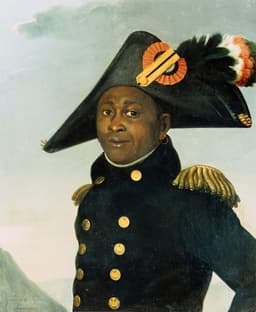
Toussaint Louverture
General · Modern
78.5Total
Basic Information
Born
1850
1743
Died
1916
1803
Era
Modern
Modern
Nationality
Great Britain
Haiti
Occupation
General
General
Civilization
Western
Western
Score Comparison
Military (10%)
80.0
85.0
Political (20%)
72.0
70.3
Influence (20%)
68.0
84.0
Legacy (20%)
55.0
82.0
Leadership (15%)
68.0
72.0
Strategy (15%)
69.1
72.0
TOTAL
66.7
78.5
Horatio Kitchener — Complete Timeline
1898 AD
Battle of OmdurmanWar
Kitchener commanded the Anglo-Egyptian army that defeated the Mahdist forces at Omdurman. The battle secured British control over Sudan and led to the establishment of the Anglo-Egyptian Condominium.
SudanMahdist WarVictory
Impact: regional
Fashoda IncidentPolitical Action◆ Major
Kitchener confronted a French expedition at Fashoda in Sudan, leading to a diplomatic crisis between Britain and France. The incident was resolved peacefully, with France withdrawing, cementing British control over the Nile.
FashodaDiplomacyColonial Rivalry
Impact: global
1914 AD
Appointed Secretary of State for WarPolitical Action
Kitchener was appointed Secretary of State for War at the outbreak of World War I. He organized the massive expansion of the British Army, including the famous 'Your Country Needs You' recruitment campaign.
World War IRecruitmentWar Office
Impact: global
1916 AD
Death at SeaOther◆ Major
Kitchener died when HMS Hampshire struck a German mine and sank off the coast of Orkney, Scotland. His death was a major shock to the British public and removed a key figure from the war effort.
DeathWorld War IHMS Hampshire
Impact: globaltragic
Toussaint Louverture — Complete Timeline
1791 AD
Haitian Revolution LeadershipWar
Louverture joined the slave revolt in Saint-Domingue, quickly rising to leadership. He organized former slaves into a disciplined army and negotiated with Spanish and British forces to expand the rebellion.
Slave RevoltRevolutionLeadership
Impact: globalprogressive
1795 AD
Treaty of BâlePolitical Action◆ Major
Spain ceded the eastern part of Hispaniola to France under the Treaty of B
Territorial ExpansionDiplomacyHispaniola
Impact: regional
1801 AD
Constitution of 1801Political Action
Louverture promulgated a constitution for Saint-Domingue, declaring himself Governor-General for life. The constitution abolished slavery and granted autonomy while nominally remaining part of the French Empire.
ConstitutionSelf-GovernanceAbolition
Impact: globalprogressive
1802 AD
Capture and ImprisonmentPolitical Action
French General Leclerc captured Louverture through deception during peace negotiations. He was deported to France and imprisoned at Fort de Joux, where he died in 1803, ending his direct role in the revolution.
BetrayalImprisonmentFrench Repression
Impact: globaltragic
Expert Analysis
Origins
Horatio Herbert Kitchener was born in 1850 in Ballylongford, Ireland, into a British military family. His father was a lieutenant-colonel, and Kitchener attended the Royal Military Academy Woolwich. He served in the French Army during the Franco-Prussian War before joining the Royal Engineers. His early career included mapping expeditions in Palestine and Cyprus, honing his organizational skills.
Toussaint Louverture was born around 1743 on a plantation in Saint-Domingue (now Haiti) as a slave of African descent. He was relatively privileged for a slave, working as a coachman and reading extensively in French. He was freed around 1776 and became a small landowner. Unlike Kitchener, Louverture had no formal military training; his education came from Enlightenment texts and practical experience.
Rise to Power
Kitchener rose through colonial campaigns. He served as governor of Suakin in 1886 and later as commander of the Egyptian Army. His decisive victory at the Battle of Omdurman in 1898 (scoring 80.0 in military) solidified his reputation. He then secured British control over Sudan and became Governor-General. The Fashoda Incident in 1898, where he confronted a French expedition, elevated his diplomatic stature. In 1914, he was appointed Secretary of State for War, leveraging his fame to lead Britain's war effort.
Louverture joined the Haitian Revolution in 1791, initially as a doctor and later as a military leader. He organized former slaves into a disciplined army, using guerrilla tactics and alliances with Spanish and British forces. By 1794, he switched allegiance to France in exchange for abolition. He defeated British and Spanish forces, and by 1798, he controlled most of Saint-Domingue. In 1801, he promulgated a constitution making himself Governor-General for life, abolishing slavery permanently. His political score of 70.3 reflects his diplomatic acumen.
Leadership & Governance
Kitchener's leadership was autocratic and efficient. He centralized command in Sudan, building infrastructure like railways and schools, but ruled with an iron hand. As War Secretary, he organized the massive recruitment of volunteers (the "Kitchener Army") but clashed with politicians over strategy. His governance score of 68.0 reflects his administrative ability but rigid style.
Louverture's leadership combined military prowess with political savvy. He restored plantation agriculture using paid labor, maintained trade with the US and Britain, and established a legal code. His leadership score of 72.0 shows his ability to unite diverse factions. However, his authoritarian tendencies, like forced labor and suppression of dissent, mirrored colonial practices.
Triumph & Tragedy
Kitchener's greatest triumph was the conquest of Sudan and the Battle of Omdurman, which avenged Gordon's death and secured British imperial interests. His greatest tragedy was his death in 1916, when HMS Hampshire struck a mine, leaving Britain without its iconic war leader. His legacy score of 55.0 reflects the fading of his reputation after WWI.
Louverture's triumph was leading the only successful slave revolt, establishing Haiti as the first black republic. He defeated French, Spanish, and British armies. His tragedy was his capture in 1802 through deception by General Leclerc, and his death in a French prison in 1803. He did not live to see Haiti's independence, but his actions made it possible. His influence score of 84.0 underscores his global impact.
Character & Destiny
Kitchener was aloof, determined, and secretive. His refusal to delegate and preference for personal control led to conflicts with colleagues. His character suited a colonial administrator but failed in the complex politics of WWI. His strategy score of 69.1 shows competence but not innovation.
Louverture was pragmatic, visionary, and charismatic. He adapted to changing circumstances, switching alliances as needed. His ability to inspire former slaves and negotiate with great powers was key. His strategy score of 72.0 reflects his tactical flexibility and long-term vision for a free Haiti.
Legacy
Kitchener's legacy is mixed. He is remembered as an imperial hero in Britain, but his methods in Sudan (e.g., using concentration camps) are criticized. His recruitment posters remain iconic. However, his impact on military organization was limited by his death. His total score of 66.7 reflects a competent but not transformative figure.
Louverture's legacy is profound. He is celebrated as a freedom fighter and a symbol of black liberation. Haiti's constitution of 1801 was a direct challenge to slavery worldwide. His military tactics influenced later anti-colonial struggles. His total score of 78.5 places him as a historical giant.
Conclusion
Toussaint Louverture had greater impact. His military score of 85.0 exceeds Kitchener's 80.0, and his influence and legacy scores (84.0 and 82.0) far surpass Kitchener's (68.0 and 55.0). Louverture's revolution reshaped global politics, ending slavery in Haiti and inspiring movements worldwide. Kitchener, while effective in colonial conquest and WWI mobilization, left a less enduring legacy. Louverture's total of 78.5 vs. Kitchener's 66.7 confirms his superior historical significance.
Rankings
🥇
Toussaint LouvertureLeader
Mil: 85.0Pol: 70.3Inf: 84.0
78.5
🥈
Horatio Kitchener
Mil: 80.0Pol: 72.0Inf: 68.0
66.7
+11.8 behind
How This Comparison Works
Algorithm
Each figure is scored on 6 dimensions (0—100 scale) based on structured historical data: Military (10%), Political (20%), Influence (20%), Legacy (20%), Leadership (15%), Strategy (15%). The weighted total produces the final ranking.
Data Sources
Scores are computed from structured sub-indicators in the database. Scale factors adjust for era (Ancient ×0.85, Modern ×1.0) and civilization size (Eastern ×1.05, Other ×0.80) to account for differences in population and military scale.
Maximum 3 Figures
Comparisons are limited to 2—3 figures to ensure readability and statistical meaningfulness.
Error Margins
±5 points per dimension — Sub-scores are derived from historical records with inherent uncertainty. Two figures within 5 points on a dimension should be considered roughly equivalent in that area.
Total Score Accuracy
±3 points overall — The weighted combination of 6 dimensions produces a total score with approximately ±3 points of uncertainty. Differences of less than 3 points are not statistically significant— the figures are effectively tied.
Known Limitations
- Historical records are incomplete and uneven across civilizations
- Figures from oral-tradition societies may be underrepresented
- Occupation labels can misclassify multi-role figures
- Scores measure capability and impact, not moral character
- Quantitative scoring is a comparison tool, not absolute truth
Capability Radar
Military (10%) — Battles & Warfare
Battles
75
85
Win Rate
70
80
Expansion
75
70
Political (20%) — Governance & Reform
Reform
75
85
Diplomacy
60
80
Economy
55
60
Influence (20%) — Cultural & Global Reach
Cultural
65
85
Global
70
85
Legacy (20%) — Historical Impact
Historical
75
95
Longevity
60
90
Leadership (15%) — Power & Stability
Tenure
70
65
Stability
50
55
Strategy (15%) — Tactics & Innovation
Strategy
80
85
Tactics
65
90
Reform
85
75
Similar Comparisons
Comments & Discussion
No comments yet. Be the first to share your thoughts!