Loading...
Pietro Badoglio vs Toussaint Louverture
Toussaint Louverture leads by 23.7 pts · 2 figures compared
…

Pietro Badoglio
General · Modern
54.8Total
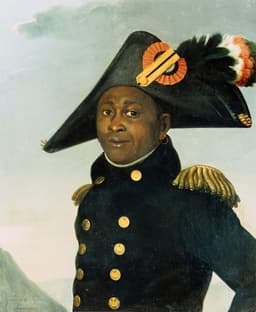
Toussaint Louverture
General · Modern
78.5Total
Basic Information
Born
1871
1743
Died
1956
1803
Era
Modern
Modern
Nationality
Italy
Haiti
Occupation
General
General
Civilization
Western
Western
Score Comparison
Military (10%)
50.0
85.0
Political (20%)
61.3
70.3
Influence (20%)
54.9
84.0
Legacy (20%)
47.5
82.0
Leadership (15%)
62.0
72.0
Strategy (15%)
57.5
72.0
TOTAL
54.8
78.5
Pietro Badoglio — Complete Timeline
1916 AD
Commanded the Capture of Mount SabotinoWar◆ Major
Badoglio, as a general, commanded the Italian capture of Mount Sabotino during the Sixth Battle of the Isonzo. The victory was a significant tactical success, but Badoglio's later role in the disastrous Battle of Caporetto overshadowed it.
World War IBattleItaly
Impact: regional
1917 AD
Battle of CaporettoWar◆ Major
Badoglio commanded the Italian Second Army during the Battle of Caporetto, where Austro-German forces broke through Italian lines. His failure to prepare defenses led to a catastrophic defeat, with over 300,000 Italian casualties and a retreat to the Piave River.
World War IDefeatCaporetto
Impact: regionaltragic
1943 AD
Appointed Prime Minister after Mussolini's FallPolitical Action
After the Grand Council of Fascism deposed Mussolini, King Victor Emmanuel III appointed Badoglio as Prime Minister. Badoglio secretly negotiated an armistice with the Allies, which was announced on September 8, 1943, leading to German occupation of Italy.
World War IIArmisticeItaly
Impact: global
Signed the Armistice of CassibilePolitical Action
Badoglio signed the Armistice of Cassibile with the Allies on September 3, 1943, ending Italy's war with the Allies. The armistice was kept secret until September 8, causing chaos as German forces swiftly occupied northern and central Italy.
World War IIArmisticeItaly
Impact: global
Toussaint Louverture — Complete Timeline
1791 AD
Haitian Revolution LeadershipWar
Louverture joined the slave revolt in Saint-Domingue, quickly rising to leadership. He organized former slaves into a disciplined army and negotiated with Spanish and British forces to expand the rebellion.
Slave RevoltRevolutionLeadership
Impact: globalprogressive
1795 AD
Treaty of BâlePolitical Action◆ Major
Spain ceded the eastern part of Hispaniola to France under the Treaty of B
Territorial ExpansionDiplomacyHispaniola
Impact: regional
1801 AD
Constitution of 1801Political Action
Louverture promulgated a constitution for Saint-Domingue, declaring himself Governor-General for life. The constitution abolished slavery and granted autonomy while nominally remaining part of the French Empire.
ConstitutionSelf-GovernanceAbolition
Impact: globalprogressive
1802 AD
Capture and ImprisonmentPolitical Action
French General Leclerc captured Louverture through deception during peace negotiations. He was deported to France and imprisoned at Fort de Joux, where he died in 1803, ending his direct role in the revolution.
BetrayalImprisonmentFrench Repression
Impact: globaltragic
Expert Analysis
Origins
Pietro Badoglio was born on September 28, 1871, in Grazzano Monferrato, Italy, into a landowning family. He attended the Military Academy of Turin, graduating in 1890 as an artillery officer. His early career included colonial service in Eritrea and Libya, where he gained experience in asymmetric warfare.
Toussaint Louverture was born around 1743 on the plantation of Bréda near Cap-Français, Saint-Domingue (now Haiti), as a slave. He was granted freedom at age 33. He educated himself, reading military and political works, and became a coachman and steward. His early life under slavery shaped his revolutionary drive.
Rise to Power
Badoglio rose through the Italian military hierarchy. He fought in the First Italo-Ethiopian War (1895-1896) and later commanded in Libya. During World War I, he distinguished himself at the capture of Mount Sabotino in 1916, earning promotion to general. After the war, he served as Chief of Staff from 1919 to 1921. However, his career suffered due to his role in the defeat at Caporetto in 1917, where his Second Army collapsed. Despite this, he remained influential under Mussolini, becoming Governor of Libya (1929) and Chief of the General Staff (1925).
Louverture rose during the Haitian Revolution, which began with a slave revolt in August 1791. He initially helped his master escape, but later joined the rebellion. His military skill and political acumen led him to become a leader. In 1794, he switched allegiance from Spain to France after the French abolished slavery. He defeated British and Spanish forces, and by 1798 controlled all of Saint-Domingue. His political maneuvering culminated in the Constitution of 1801, making him Governor-General for life.
Leadership & Governance
Badoglio's leadership was cautious and bureaucratic. He negotiated the Armistice of Cassibile in 1943, ending Italy's war with the Allies, but his secretiveness caused chaos when the armistice was announced. He failed to prepare the army for German retaliation, leading to the disbandment of Italian forces. His political score of 61.3 reflects his hesitant governance; he resigned in 1944 after the liberation of Rome.
Louverture's leadership was transformative. He organized former slaves into a disciplined army and established a working economy. He maintained plantation production by requiring former slaves to work, but with wages. His constitution abolished slavery permanently and promoted racial equality. However, his authoritarian rule and life tenure alienated some. His leadership score of 72.0 reflects his effectiveness but also his autocratic tendencies.
Triumph & Tragedy
Badoglio's greatest success was negotiating the armistice, which allowed Italy to switch sides. However, his greatest failure was the disastrous management of the armistice, resulting in the Italian army's disintegration and the German occupation of Rome. His military score of 50.0 reflects his mixed record, including the Caporetto disaster.
Louverture's triumphs include defeating multiple European powers and securing the abolition of slavery. He expanded Haitian control over the entire island of Hispaniola. His tragedy was his capture by French forces in 1802 through deception; he died in a French prison in 1803. His military score of 85.0 and legacy score of 82.0 reflect his lasting impact.
Character & Destiny
Badoglio was cautious, politically savvy, but indecisive. He survived political changes by adapting, but his lack of strategic vision led to Italy's military humiliation. His character shaped his fate as a transitional figure.
Louverture was charismatic, intelligent, and ruthless. His strategic brilliance unified Haiti, but his trust in French promises led to his downfall. His character made him a revolutionary icon.
Legacy
Badoglio's legacy is modest: he is remembered as the man who ended Italy's war with the Allies, but his incompetence tarnished his reputation. He scored 47.5 in legacy.
Louverture's legacy is profound: he inspired anti-colonial movements and remains a symbol of black liberation. His constitution influenced later abolitionists. He scored 82.0 in legacy.
Conclusion
Toussaint Louverture had greater impact. His total score of 78.5 far exceeds Badoglio's 54.8. Louverture's revolution changed the world by ending slavery in Haiti and challenging colonial power. Badoglio's armistice was significant but poorly executed and soon overshadowed. Louverture's influence endures globally, while Badoglio is a footnote. The data supports Louverture as the more consequential figure.
Rankings
🥇
Toussaint LouvertureLeader
Mil: 85.0Pol: 70.3Inf: 84.0
78.5
🥈
Pietro Badoglio
Mil: 50.0Pol: 61.3Inf: 54.9
54.8
+23.7 behind
How This Comparison Works
Algorithm
Each figure is scored on 6 dimensions (0—100 scale) based on structured historical data: Military (10%), Political (20%), Influence (20%), Legacy (20%), Leadership (15%), Strategy (15%). The weighted total produces the final ranking.
Data Sources
Scores are computed from structured sub-indicators in the database. Scale factors adjust for era (Ancient ×0.85, Modern ×1.0) and civilization size (Eastern ×1.05, Other ×0.80) to account for differences in population and military scale.
Maximum 3 Figures
Comparisons are limited to 2—3 figures to ensure readability and statistical meaningfulness.
Error Margins
±5 points per dimension — Sub-scores are derived from historical records with inherent uncertainty. Two figures within 5 points on a dimension should be considered roughly equivalent in that area.
Total Score Accuracy
±3 points overall — The weighted combination of 6 dimensions produces a total score with approximately ±3 points of uncertainty. Differences of less than 3 points are not statistically significant— the figures are effectively tied.
Known Limitations
- Historical records are incomplete and uneven across civilizations
- Figures from oral-tradition societies may be underrepresented
- Occupation labels can misclassify multi-role figures
- Scores measure capability and impact, not moral character
- Quantitative scoring is a comparison tool, not absolute truth
Capability Radar
Military (10%) — Battles & Warfare
Battles
55
85
Win Rate
45
80
Expansion
30
70
Political (20%) — Governance & Reform
Reform
35
85
Diplomacy
50
80
Economy
30
60
Influence (20%) — Cultural & Global Reach
Cultural
20
85
Global
40
85
Legacy (20%) — Historical Impact
Historical
45
95
Longevity
30
90
Leadership (15%) — Power & Stability
Tenure
60
65
Stability
25
55
Strategy (15%) — Tactics & Innovation
Strategy
55
85
Tactics
50
90
Reform
40
75
Similar Comparisons
Comments & Discussion
No comments yet. Be the first to share your thoughts!