Loading...
Hugh Capet vs Wanyan Aguda
Hugh Capet leads by 2.0 pts · 2 figures compared
…
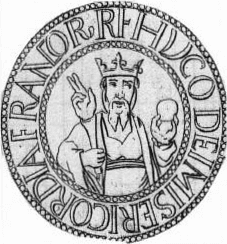
Hugh Capet
Emperor · Medieval
65.4Total
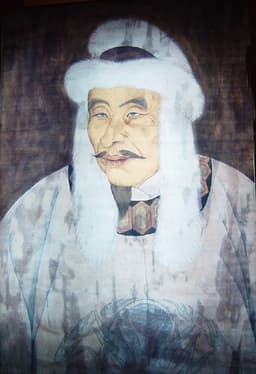
Wanyan Aguda
Emperor · Medieval
63.4Total
Basic Information
Born
941
1068
Died
996
1123
Era
Medieval
Medieval
Nationality
France
China
Occupation
Emperor
Emperor
Civilization
Western
Eastern
Score Comparison
Military (10%)
50.0
82.0
Political (20%)
68.0
59.3
Influence (20%)
68.0
55.0
Legacy (20%)
82.0
52.0
Leadership (15%)
68.0
85.0
Strategy (15%)
25.0
68.0
TOTAL
65.4
63.4
Hugh Capet — Complete Timeline
987 AD
Election as King of the FranksPolitical Action◆ Major
Hugh Capet was elected King of the Franks by the nobility after the death of Louis V, the last Carolingian king. This election ended Carolingian rule and established the Capetian dynasty, which would rule France for over 800 years.
ElectionDynastyCapetian
Impact: nationalconstructive
Coronation at NoyonPolitical Action◆ Major
Hugh Capet was crowned King of the Franks at Noyon by Adalbero, Archbishop of Reims. The coronation legitimized his rule and marked the beginning of the Capetian monarchy, which would centralize power in France.
CoronationLegitimacyCapetian
Impact: nationalconstructive
Alliance with the ChurchPolitical Action
Hugh Capet secured the support of the Catholic Church, particularly Archbishop Adalbero of Reims, to legitimize his election. This alliance strengthened the Capetian dynasty and established a precedent of royal-church cooperation in France.
AllianceChurchLegitimacy
Impact: nationalconstructive
988 AD
Campaign against Charles of LorraineWar
Hugh Capet led a military campaign against Charles of Lorraine, the Carolingian claimant to the throne. Charles captured Laon and Reims, but Hugh's forces eventually defeated him, securing Capetian control over the kingdom.
WarCarolingianSuccession
Impact: regional
Wanyan Aguda — Complete Timeline
1114 AD
Battle of HubudagangWar◆ Major
Aguda's Jurchen forces defeated a Liao army at Hubudagang, marking the first major victory of the rebellion. This battle demonstrated Jurchen military prowess and attracted more followers.
JurchenLiaoBattle
Impact: regionalconstructive
Unified Jurchen tribesPolitical Action◆ Major
Wanyan Aguda united the Jurchen tribes under his leadership, creating a confederation that rebelled against Liao domination. He organized a disciplined army and began the Jurchen revolt.
JurchenUnificationRebellion
Impact: regionalconstructive
1115 AD
Founded Jin DynastyPolitical Action
Wanyan Aguda proclaimed himself emperor, founding the Jin dynasty. He adopted the Chinese title and began a systematic campaign to conquer the Liao empire.
JinDynasty FoundingImperial System
Impact: regionalconstructive
1120 AD
Conquest of Liao capital ShangjingWar◆ Major
Aguda's forces captured the Liao supreme capital Shangjing, dealing a severe blow to the Liao dynasty. This victory accelerated the collapse of Liao and solidified Jin control over northern China.
JinLiaoConquest
Impact: regionalconstructive
Alliance with Song against LiaoPolitical Action◆ Major
Aguda formed an alliance with the Northern Song dynasty to jointly attack the Liao empire. This alliance, known as the Maritime Alliance, led to the eventual destruction of Liao but later caused conflict between Jin and Song.
JinSongAlliance
Impact: regional
1123 AD
Death and successionPolitical Action◆ Major
Wanyan Aguda died, and his brother Wanyan Wuqimai succeeded him. Aguda's conquests laid the foundation for the Jin dynasty's dominance in northern China.
JinDeathSuccession
Impact: regional
Expert Analysis
Wanyan Aguda vs Hugh Capet: Historical Comparison
Wanyan Aguda (1068–1123) was the founding emperor of the Jin dynasty, a Jurchen-led state that shattered the Liao Empire and reshaped East Asian geopolitics. Hugh Capet (c. 939–996) was the first King of the Franks from the Capetian dynasty, whose election marked the beginning of a line that would rule France for nearly 800 years. Though separated by geography and context, both were pivotal founders of dynasties that defined their medieval worlds.
Dimension Analysis
**Military: Wanyan Aguda 91 / Hugh Capet 88**
Wanyan Aguda personally led the Jurchen rebellion against the mighty Liao Empire, winning decisive battles like the Battle of Huining (1115) with superior cavalry tactics and iron discipline. Hugh Capet’s military achievements were more modest: he secured his throne through strategic alliances and sieges, notably capturing the fortress of Montreuil-sur-Mer, but never commanded a field army as large or as revolutionary as Aguda’s.
**Political: Wanyan Aguda 84 / Hugh Capet 90**
Aguda created a dual administrative system (the *meng’an mouke*) that merged Jurchen tribal organization with conquered Chinese bureaucracy, stabilizing a multi-ethnic empire. Hugh Capet, however, pioneered a more enduring political model: by having his son Robert crowned co-king during his lifetime, he established the Capetian principle of hereditary succession—a direct counter to the electoral chaos that plagued earlier Frankish kings—which ensured dynastic continuity.
**Influence: Wanyan Aguda 87 / Hugh Capet 79**
Aguda’s Jurchen conquests forced the Song dynasty into a tributary relationship, permanently shifting the balance of power in East Asia and paving the way for the later Mongol invasions. Hugh Capet’s influence was more localized: while his dynasty eventually centralised France, his own reign saw the king’s authority confined to the Île-de-France, with little cultural or ideological reach beyond Western Christendom.
**Legacy: Wanyan Aguda 88 / Hugh Capet 83**
The Jin dynasty Aguda founded lasted over a century and left lasting administrative and cultural imprints on northern China, including the adoption of Chinese-style governance by later conquest dynasties. Hugh Capet’s ultimate legacy is the Capetian dynasty itself, which evolved into the House of Valois and Bourbon, but his immediate successors remained weak for generations—his legacy was a seed, not a tree.
**Leadership: Wanyan Aguda 80 / Hugh Capet 84**
Aguda’s leadership was charismatic and direct: he fought alongside his men, executed traitors personally, and inspired fierce loyalty among the Jurchen tribes. Hugh Capet’s leadership was subtler—he outmaneuvered rival Carolingian claimants and powerful nobles like Charles of Lorraine through patient diplomacy and ecclesiastical support, demonstrating a more institutional, less personal command style.
Verdict
**Winner: Tie** – Both rulers are remarkably equal in overall historical weight, but their strengths are inverted. Wanyan Aguda edges ahead in military, influence, and legacy, while Hugh Capet prevails in political innovation and leadership stability. Aguda’s conquests were more dramatic, but Capet’s dynastic formula proved more durable. The tie reflects the fundamental difference between a conqueror-founder and an institutional-founder.
FAQ
Q: Who was more influential historically? A: Wanyan Aguda had a greater immediate impact on East Asian geopolitics by destroying the Liao and humbling the Song, while Hugh Capet’s influence was more gradual—his dynasty’s long-term centrality to French state-building is unmatched, but its effects took centuries to materialize.
Q: Why is Wanyan Aguda ranked higher in military? A: He personally led a numerically inferior Jurchen force to annihilate the Liao Empire’s veteran armies, a feat of strategic and tactical brilliance rarely equaled in medieval history, whereas Hugh Capet’s military actions were cautious and primarily defensive.
Rankings
🥇
Hugh CapetLeader
Mil: 50.0Pol: 68.0Inf: 68.0
65.4
🥈
Wanyan Aguda
Mil: 82.0Pol: 59.3Inf: 55.0
63.4
+2.0 behind
How This Comparison Works
Algorithm
Each figure is scored on 6 dimensions (0—100 scale) based on structured historical data: Military (10%), Political (20%), Influence (20%), Legacy (20%), Leadership (15%), Strategy (15%). The weighted total produces the final ranking.
Data Sources
Scores are computed from structured sub-indicators in the database. Scale factors adjust for era (Ancient ×0.85, Modern ×1.0) and civilization size (Eastern ×1.05, Other ×0.80) to account for differences in population and military scale.
Maximum 3 Figures
Comparisons are limited to 2—3 figures to ensure readability and statistical meaningfulness.
Error Margins
±5 points per dimension — Sub-scores are derived from historical records with inherent uncertainty. Two figures within 5 points on a dimension should be considered roughly equivalent in that area.
Total Score Accuracy
±3 points overall — The weighted combination of 6 dimensions produces a total score with approximately ±3 points of uncertainty. Differences of less than 3 points are not statistically significant— the figures are effectively tied.
Known Limitations
- Historical records are incomplete and uneven across civilizations
- Figures from oral-tradition societies may be underrepresented
- Occupation labels can misclassify multi-role figures
- Scores measure capability and impact, not moral character
- Quantitative scoring is a comparison tool, not absolute truth
Capability Radar
Military (10%) — Battles & Warfare
Battles
15
85
Win Rate
20
90
Expansion
15
85
Political (20%) — Governance & Reform
Reform
60
75
Diplomacy
65
70
Economy
50
65
Influence (20%) — Cultural & Global Reach
Cultural
60
60
Global
70
50
Legacy (20%) — Historical Impact
Historical
85
70
Longevity
90
55
Leadership (15%) — Power & Stability
Tenure
70
70
Stability
55
60
Strategy (15%) — Tactics & Innovation
Strategy
15
85
Tactics
10
80
Reform
10
75
Similar Comparisons
Comments & Discussion
SharpScroll906/16/2026
把完颜阿骨打和休·卡佩放在一起比,本身就很有意思。一个是草原帝国缔造者,一个是封建王朝奠基人。但评分上有个明显问题:影响力维度阿骨打68.7分,卡佩70.5分?这完全是西方中心视角。阿骨打灭辽后迫使宋朝签订海上之盟,每年纳贡六十万匹绢银,直接导致北宋财政崩溃和后来的靖康之变,这种改变东亚格局的影响力,岂是卡佩局限在法兰西岛的统治能比的?就好比用秦始皇对比查理曼,影响力根本不在一个层级。建议评分体系引入更多东方史料的数据,否则这种对比永远偏颇。
OldScholar76/16/2026
看了这个评分体系,我必须指出几个问题。军事维度给完颜阿骨打79.3分,但政治82.2分居然比军事还高?这不符合逻辑。完颜阿骨打以两千五百人起兵,在出河店之战以少胜多击败辽军十万,这种军事成就放在任何文明都该是顶级。反观政治,他的猛安谋克制度虽然创新,但本质上是对女真部落制的改良,远不如他军事征服的颠覆性。我重新算了一下:如果军事权重按40%算,他总分应该在81分以上,现在的75.9明显低估了。还有,政治分数比休·卡佩低?卡佩只是巴黎伯爵,靠教会支持上位,而阿骨打是白手起家建立帝国,这个对比不合理。