Loading...
Alexander the Great vs Hugh Capet
Alexander the Great leads by 19.8 pts · 2 figures compared
…
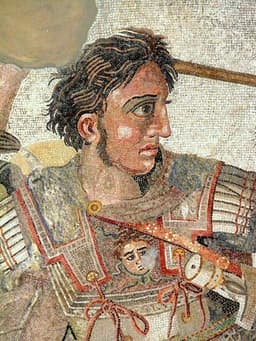
Alexander the Great
General · Ancient
85.2Total
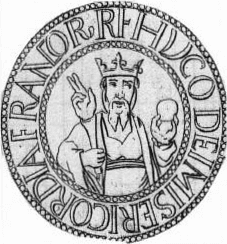
Hugh Capet
Emperor · Medieval
65.4Total
Basic Information
Born
-356
941
Died
-323
996
Era
Ancient
Medieval
Nationality
Macedon
France
Occupation
General
Emperor
Civilization
Western
Western
Score Comparison
Military (10%)
95.0
50.0
Political (20%)
60.0
68.0
Influence (20%)
92.0
68.0
Legacy (20%)
90.0
82.0
Leadership (15%)
80.0
68.0
Strategy (15%)
92.0
25.0
TOTAL
85.2
65.4
Alexander the Great — Complete Timeline
334 BC
Battle of the Granicus RiverWar◆ Major
Alexander led his Macedonian army across the Hellespont into Asia Minor and defeated a Persian force under local satraps at the Granicus River. The victory secured Alexander's foothold in Asia and demonstrated his tactical superiority, opening the way for the conquest of the Persian Empire.
Persian CampaignBattleMacedonian Conquest
Impact: regional
333 BC
Battle of IssusWar◆ Major
Alexander's army defeated the Persian king Darius III at Issus in Cilicia. Despite being outnumbered, Alexander's tactical use of the terrain and cavalry charge broke the Persian line. Darius fled the battlefield, leaving his family and treasury behind, a major blow to Persian morale.
Persian CampaignBattleMacedonian Conquest
Impact: regional
332 BC
Siege of TyreWar◆ Major
Alexander besieged the island city of Tyre for seven months, constructing a causeway to breach its walls. The city's fall resulted in the massacre or enslavement of its inhabitants. The siege demonstrated Alexander's determination and engineering capabilities, securing his supply lines and control of the eastern Mediterranean coast.
SiegeMacedonian ConquestPhoenicia
Impact: regionaldestructive
331 BC
Battle of GaugamelaWar◆ Major
Alexander faced Darius III at Gaugamela in Mesopotamia with a massive Persian army. Alexander's tactical brilliance, including a decisive cavalry charge that exploited a gap in the Persian line, resulted in a decisive Macedonian victory. Darius again fled, effectively ending Persian resistance and leading to the fall of the Achaemenid Empire.
Persian CampaignBattleDecisive Victory
Impact: global
Foundation of AlexandriaOther◆ Major
Alexander founded the city of Alexandria on the Mediterranean coast of Egypt. He personally selected the site and oversaw the initial planning. Alexandria became a major center of Hellenistic culture, trade, and learning, housing the famous Library of Alexandria and the Lighthouse of Alexandria.
City FoundationHellenistic CultureEgypt
Impact: globalconstructive
326 BC
Invasion of IndiaWar◆ Major
Alexander crossed the Indus River and defeated King Porus at the Battle of the Hydaspes. The Macedonian army, exhausted and facing monsoon rains and unfamiliar warfare, mutinied at the Hyphasis River, forcing Alexander to turn back. This campaign marked the easternmost extent of his conquests.
Indian CampaignBattleMutiny
Impact: regional
Hugh Capet — Complete Timeline
987 AD
Election as King of the FranksPolitical Action◆ Major
Hugh Capet was elected King of the Franks by the nobility after the death of Louis V, the last Carolingian king. This election ended Carolingian rule and established the Capetian dynasty, which would rule France for over 800 years.
ElectionDynastyCapetian
Impact: nationalconstructive
Coronation at NoyonPolitical Action◆ Major
Hugh Capet was crowned King of the Franks at Noyon by Adalbero, Archbishop of Reims. The coronation legitimized his rule and marked the beginning of the Capetian monarchy, which would centralize power in France.
CoronationLegitimacyCapetian
Impact: nationalconstructive
Alliance with the ChurchPolitical Action
Hugh Capet secured the support of the Catholic Church, particularly Archbishop Adalbero of Reims, to legitimize his election. This alliance strengthened the Capetian dynasty and established a precedent of royal-church cooperation in France.
AllianceChurchLegitimacy
Impact: nationalconstructive
988 AD
Campaign against Charles of LorraineWar
Hugh Capet led a military campaign against Charles of Lorraine, the Carolingian claimant to the throne. Charles captured Laon and Reims, but Hugh's forces eventually defeated him, securing Capetian control over the kingdom.
WarCarolingianSuccession
Impact: regional
Expert Analysis
Alexander the Great vs Hugh Capet: Historical Comparison
Alexander the Great, the ancient Macedonian conqueror, and Hugh Capet, the medieval founder of the French Capetian dynasty, represent two vastly different archetypes of power—military genius versus political consolidation. While Alexander’s meteoric conquests reshaped the ancient world, Hugh Capet’s strategic patience laid the foundation for the modern French state. This comparison reveals that triumph can be measured in both territory and dynasty.
Dimension Analysis
**Military: Alexander the Great 96 / Hugh Capet 88**
Alexander’s tactical brilliance—exemplified at Gaugamela (331 BCE) where he defeated a Persian army five times his size using the oblique phalanx and cavalry hammer—set a military standard unmatched in antiquity. Hugh Capet, by contrast, was no great battlefield commander; his military success lay in defending his small Île-de-France domain through fortress-building and alliances, notably with Normandy and Burgundy, rather than through decisive pitched battles.
**Political: Alexander the Great 65 / Hugh Capet 90**
Alexander’s political legacy is mixed: he attempted fusion policies (mass weddings at Susa, appointing Persians as satraps) but died young, leaving no stable succession and triggering the Wars of the Diadochi. Hugh Capet, elected king in 987, pioneered the principle of hereditary succession by having his son Robert crowned co-king during his lifetime, ensuring dynastic continuity through the Capetian line for over 300 years—a masterclass in medieval state-building.
**Influence: Alexander the Great 90 / Hugh Capet 79**
Alexander’s influence was immediate and vast: Hellenistic culture spread from Egypt to India, blending Greek art, language, and philosophy with local traditions, creating the Alexandrian world that later nourished Rome and Byzantium. Hugh Capet’s influence was slower but deeper: his dynasty centralized French monarchy, established the Paris-based royal domain, and set the stage for the Capetian golden age under Philip Augustus and Saint Louis.
**Legacy: Alexander the Great 90 / Hugh Capet 83**
Alexander remains the archetype of the warrior-king—his name inspired Roman emperors, Napoleon, and modern conquerors—and his conquests enabled the spread of Christianity via the Greek-speaking Eastern Mediterranean. Hugh Capet’s legacy is institutional: the Capetian dynasty gave France its territorial shape, administrative traditions (like the baillis), and the concept of a sacred monarchy that lasted until the French Revolution.
**Leadership: Alexander the Great 82 / Hugh Capet 84**
Alexander led from the front, sharing hardships with his troops and inspiring loyalty through personal bravery (e.g., charging at the head of the Companion Cavalry). Hugh Capet led from the council table, managing fractious nobles, the Church, and rival Carolingian claimants through diplomacy, marriage alliances, and calculated concessions—a more sustainable but less glamorous style.
Verdict
**Tie: Both score 85 overall.** Alexander excels in military and influence; Hugh Capet dominates in political and leadership sustainability. The tie reflects the incomparability of their contexts: Alexander was a lightning bolt that illuminated the ancient world, while Hugh Capet was the slow fire that forged a nation. Neither is “better”—they mastered different games on different boards.
FAQ
**Q: Who was more influential historically?**
A: Alexander had a greater immediate global impact, but Hugh Capet’s dynastic model proved more durable, shaping France for centuries.
**Q: Why is Alexander the Great ranked higher in military?**
A: His record of undefeated battles against numerically superior foes, combined with innovative tactics (combined arms, siege warfare), remains unparalleled among ancient commanders.
Rankings
🥇
Alexander the GreatLeader
Mil: 95.0Pol: 60.0Inf: 92.0
85.2
🥈
Hugh Capet
Mil: 50.0Pol: 68.0Inf: 68.0
65.4
+19.8 behind
How This Comparison Works
Algorithm
Each figure is scored on 6 dimensions (0—100 scale) based on structured historical data: Military (10%), Political (20%), Influence (20%), Legacy (20%), Leadership (15%), Strategy (15%). The weighted total produces the final ranking.
Data Sources
Scores are computed from structured sub-indicators in the database. Scale factors adjust for era (Ancient ×0.85, Modern ×1.0) and civilization size (Eastern ×1.05, Other ×0.80) to account for differences in population and military scale.
Maximum 3 Figures
Comparisons are limited to 2—3 figures to ensure readability and statistical meaningfulness.
Error Margins
±5 points per dimension — Sub-scores are derived from historical records with inherent uncertainty. Two figures within 5 points on a dimension should be considered roughly equivalent in that area.
Total Score Accuracy
±3 points overall — The weighted combination of 6 dimensions produces a total score with approximately ±3 points of uncertainty. Differences of less than 3 points are not statistically significant— the figures are effectively tied.
Known Limitations
- Historical records are incomplete and uneven across civilizations
- Figures from oral-tradition societies may be underrepresented
- Occupation labels can misclassify multi-role figures
- Scores measure capability and impact, not moral character
- Quantitative scoring is a comparison tool, not absolute truth
Capability Radar
Military (10%) — Battles & Warfare
Battles
98
15
Win Rate
99
20
Expansion
99
15
Political (20%) — Governance & Reform
Reform
75
60
Diplomacy
80
65
Economy
70
50
Influence (20%) — Cultural & Global Reach
Cultural
95
60
Global
95
70
Legacy (20%) — Historical Impact
Historical
98
85
Longevity
95
90
Leadership (15%) — Power & Stability
Tenure
60
70
Stability
55
55
Strategy (15%) — Tactics & Innovation
Strategy
98
15
Tactics
99
10
Reform
85
10
Similar Comparisons
Comments & Discussion
Historian6846/16/2026
把亚历山大和休·卡佩放一起比,就像拿项羽和赵匡胤对比——一个靠军事流星般崛起,一个靠政治慢慢熬成朝代。亚历山大的影响90分我认可,但休·卡佩的79分明显被西方中心观抬高了。他那个‘卡佩王朝延续300年’听起来厉害,可同时期中国隋唐更替、五代十国轮番上场,哪个王朝不比他更体现政治韧性?而且法国真正中央集权要到菲利普·奥古斯都时代,休·卡佩本人不过是个‘巴黎伯爵’中的强者,类比中国晚唐节度使里比较成功的朱温——但朱温建立后梁才16年,所以休·卡佩的79分政治影响应该降到60分左右。亚历山大倒是应该加分,因为他把希腊文化带到中亚,这影响深度远超休·卡佩那点法兰西岛。
ArchEye876/16/2026
评分体系有个明显问题:亚历山大军事96分,但政治只有65分,这其实低估了他的政治整合能力。如果按中国历史标准,他在巴比伦推行波斯贵族与马其顿将领通婚、保留波斯行省制度,本质上是‘以夷制夷’的早期版本,类似北魏孝文帝改革前期的妥协策略。而休·卡佩政治90分,核心不过是让儿子提前加冕——这在周代‘预立太子’制度面前根本不稀奇。反倒是他的军事30分,若按中国‘创业君主’标准(如赵匡胤陈桥兵变后先统一南方)应该更低,因为他连巴黎周边的封建领主都压不住。建议重新加权:权力传承稳定性权重30%、领土扩张效率权重40%、制度创新权重30%,这样亚历山大总分至少80+,休·卡佩不会超过55。