Loading...
Huo Qubing vs Qin Shi Huang
Qin Shi Huang leads by 29.9 pts · 2 figures compared
…

Huo Qubing
General · Ancient
55.3Total
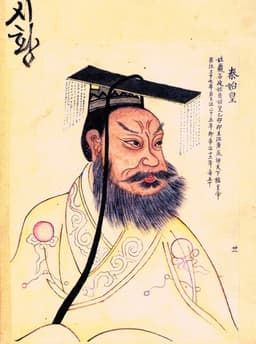
Qin Shi Huang
Emperor · Ancient
85.2Total
Basic Information
Born
-140
-259
Died
-117
-210
Era
Ancient
Ancient
Nationality
China
China
Occupation
General
Emperor
Civilization
Eastern
Eastern
Score Comparison
Military (10%)
88.0
80.0
Political (20%)
35.0
90.0
Influence (20%)
55.0
85.0
Legacy (20%)
52.0
90.0
Leadership (15%)
46.3
78.0
Strategy (15%)
76.0
82.0
TOTAL
55.3
85.2
Huo Qubing — Complete Timeline
123 BC
Appointment as General of the Swift CavalryPolitical Action
Emperor Wu of Han appointed Huo Qubing as General of the Swift Cavalry (Piaoqi General) after his early victories. This rank gave him independent command of cavalry forces.
AppointmentHan DynastyMilitary
Impact: nationalconstructive
121 BC
Battle of HexiWar◆ Major
Huo Qubing led a campaign in the Hexi Corridor, defeating the Xiongnu and capturing the Hunye King. This victory secured the region for the Han dynasty and opened the Silk Road.
CampaignHan DynastyXiongnuSilk Road
Impact: regionalconstructive
119 BC
Battle of MobeiWar
Huo Qubing led a Han cavalry force deep into Xiongnu territory, reaching Lake Baikal. He defeated the Xiongnu forces under the Tuqi King, killing over 70,000 enemy troops. This was a decisive victory.
BattleHan DynastyXiongnuLake Baikal
Impact: regionalconstructive
117 BC
Early DeathOther◆ Major
Huo Qubing died at the age of 23, likely from illness. His early death cut short a brilliant military career. Emperor Wu mourned him deeply and ordered a grand funeral.
DeathHan DynastyMilitary
Impact: nationaltragic
Qin Shi Huang — Complete Timeline
246 BC
Construction of the Mausoleum and Terracotta ArmyOther◆ Major
Qin Shi Huang commissioned a vast mausoleum complex near Xi'an, guarded by thousands of life-sized terracotta soldiers, horses, and chariots. The project employed hundreds of thousands of workers and reflected his obsession with immortality and imperial power.
Impact: global
230 BC
Conquest of the Six Warring StatesWar
From 230 to 221 BCE, Ying Zheng led the Qin state in a series of campaigns that conquered the Han, Zhao, Wei, Chu, Yan, and Qi states. This unified China under a single ruler for the first time, ending the Warring States period.
Impact: global
221 BC
Standardization of Writing, Currency, and MeasurementsReform◆ Major
Qin Shi Huang ordered the standardization of Chinese script, currency, and weights and measures across the unified empire. This facilitated administration, trade, and cultural integration, laying a foundation for future dynasties.
Impact: globalconstructive
Proclamation of the Qin DynastyPolitical Action
After conquering the last independent state, Ying Zheng declared himself Shi Huangdi (First Emperor), founding the Qin Dynasty. He adopted a new title to signify his supreme authority and initiated centralized imperial rule.
Impact: global
214 BC
Initiation of the Great Wall ConstructionOther◆ Major
Qin Shi Huang ordered the connection and extension of existing northern fortifications to create a unified defensive wall against nomadic Xiongnu raids. This project involved massive conscripted labor and became the precursor to the later Great Wall.
Impact: regional
213 BC
Burning of Books and Burying of ScholarsPolitical Action◆ Major
On the advice of Li Si, Qin Shi Huang ordered the burning of historical records and philosophical texts not aligned with Legalist doctrine. He also had 460 Confucian scholars buried alive to suppress dissent and consolidate ideological control.
Impact: nationaldestructive
Expert Analysis
huo-qubing-vs-qin-shi-huang
# The First Emperor and the Young General: Two Paths to Immortality
On a windswept plain in northern China, two men once dreamed of eternity. One was a king who conquered the world and built an army of clay to guard his tomb. The other was a teenager who rode into battle with such fury that his enemies fled before him, only to die before he could grow a beard. Qin Shi Huang and Huo Qubing—both forged in the crucible of ancient China’s wars, both seeking to leave a mark that time could not erase. Yet their stories could not have diverged more dramatically, and in that divergence lies a profound lesson about power, youth, and the nature of legacy.
Origins
Qin Shi Huang was born in 259 BC, a prince of the Qin state during the chaotic Warring States period. His childhood was shadowed by political intrigue—his father was a hostage in another state, and young Ying Zheng grew up surrounded by spies, courtiers, and the constant threat of assassination. By the time he ascended the throne at thirteen, he had learned one lesson above all: trust no one, control everything.
Huo Qubing came from a different world. Born in 140 BC, he was the nephew of Wei Qing, a great Han general. While Qin Shi Huang learned statecraft in cold palace corridors, Huo Qubing learned horsemanship and archery on the northern steppes. He was a boy of war, not of courts. The Han Empire was already unified and prosperous; his task was not to create a nation but to defend it.
Rise to Power
Qin Shi Huang’s rise was methodical, brutal, and total. From 230 to 221 BC, he unleashed a series of campaigns that devoured the six rival states one by one. He did not merely defeat them—he erased them. Their kings were captured or killed, their armies disbanded, their walls torn down. When the last state fell in 221 BC, Ying Zheng declared himself *Shi Huangdi*—the First Emperor—and announced that his dynasty would last ten thousand generations.
Huo Qubing’s rise was a blur of hooves and arrows. In 123 BC, at just seventeen, Emperor Wu of Han appointed him General of the Swift Cavalry after a string of dazzling victories. He was not a strategist who pored over maps; he was a force of nature who led his men on lightning raids deep into enemy territory. Where Qin Shi Huang built an empire with siege engines and edicts, Huo Qubing carved his name with a cavalry saber.
Leadership & Governance
As emperor, Qin Shi Huang was a revolutionary. He standardized writing, currency, and measurements across his vast realm—a feat that would bind China together for millennia. He ordered the construction of the Great Wall, connecting existing fortifications into a unified barrier against northern nomads. But his rule had a dark side. In 213 BC, on the advice of his chancellor Li Si, he ordered the burning of books and the burying of scholars alive, seeking to erase all history that did not glorify the Qin.
Huo Qubing had no interest in governance. He was a pure military commander, and his style reflected this. He led from the front, ate the same food as his soldiers, and pushed his men to extraordinary feats of endurance. At the Battle of Hexi in 121 BC, he defeated the Xiongnu and captured the Hunye King, securing the crucial Hexi Corridor. At the Battle of Mobei in 119 BC, he drove deep into the Mongolian steppes, reaching Lake Baikal—a feat that no Chinese general had ever achieved. His cavalry moved so fast that the Xiongnu called him a demon.
Triumph & Tragedy
Qin Shi Huang’s greatest triumph was also his greatest tragedy. He unified China, but at a terrible cost. He built roads and canals, but forced millions into labor. He created a centralized bureaucracy, but crushed all dissent. His mausoleum, guarded by the Terracotta Army, was a monument to his obsession with immortality. Yet he died in 210 BC at the age of forty-nine, poisoned, some say, by mercury pills meant to prolong his life. Within three years, the Qin Dynasty collapsed.
Huo Qubing’s tragedy was simpler and crueler. In 117 BC, at the age of twenty-three, he died suddenly, likely from illness. The same Emperor Wu who had elevated him now mourned him, ordering a grand funeral and a tomb shaped like the Qilian Mountains he had conquered. But the question lingers: what would he have become? A new emperor? A disgraced rebel? We will never know.
Character & Destiny
Qin Shi Huang was a man of iron will and paranoia. He believed that order could be imposed by force, that history could be rewritten, that death could be defied. His personality shaped every aspect of his rule—the standardization, the book burnings, the search for immortality. He was a builder and a destroyer, a visionary and a tyrant.
Huo Qubing was a meteor. He burned bright and fast, leaving no time for corruption or compromise. He was loved by his soldiers, feared by his enemies, and adored by his emperor. His early death preserved his legend in amber. He never had to make the hard choices of peace, never had to govern, never had to grow old.
Legacy
Qin Shi Huang’s legacy is the foundation of imperial China. The writing system he standardized is still used today. The Great Wall, though rebuilt many times, traces its origin to his edict. His Terracotta Army has become a global icon. Yet he is remembered as both a unifier and a tyrant—a man who gave China its shape but lost its soul.
Huo Qubing’s legacy is more personal. He is the eternal young hero, the boy general who conquered the steppes and died before the world could tarnish him. His name is whispered in Chinese military history with a mixture of awe and sadness. He is a reminder that some flames are too bright to last.
Conclusion
Standing before the Terracotta Army, one feels the weight of Qin Shi Huang’s ambition—an army frozen in time, waiting for a battle that never comes. Huo Qubing’s tomb, shaped like mountains, stands silent under the Gansu sky. Both men sought immortality: one through stone and decree, the other through speed and steel. The First Emperor built a world that would remember him; the Young General lived a life that could not be forgotten. In the end, perhaps the question is not who was greater, but who was happier. And that, like the warriors of Xi’an, remains a mystery buried in clay.
Rankings
🥇
Qin Shi HuangLeader
Mil: 80.0Pol: 90.0Inf: 85.0
85.2
🥈
Huo Qubing
Mil: 88.0Pol: 35.0Inf: 55.0
55.3
+29.9 behind
How This Comparison Works
Algorithm
Each figure is scored on 6 dimensions (0—100 scale) based on structured historical data: Military (10%), Political (20%), Influence (20%), Legacy (20%), Leadership (15%), Strategy (15%). The weighted total produces the final ranking.
Data Sources
Scores are computed from structured sub-indicators in the database. Scale factors adjust for era (Ancient ×0.85, Modern ×1.0) and civilization size (Eastern ×1.05, Other ×0.80) to account for differences in population and military scale.
Maximum 3 Figures
Comparisons are limited to 2—3 figures to ensure readability and statistical meaningfulness.
Error Margins
±5 points per dimension — Sub-scores are derived from historical records with inherent uncertainty. Two figures within 5 points on a dimension should be considered roughly equivalent in that area.
Total Score Accuracy
±3 points overall — The weighted combination of 6 dimensions produces a total score with approximately ±3 points of uncertainty. Differences of less than 3 points are not statistically significant— the figures are effectively tied.
Known Limitations
- Historical records are incomplete and uneven across civilizations
- Figures from oral-tradition societies may be underrepresented
- Occupation labels can misclassify multi-role figures
- Scores measure capability and impact, not moral character
- Quantitative scoring is a comparison tool, not absolute truth
Capability Radar
Military (10%) — Battles & Warfare
Battles
85
85
Win Rate
90
90
Expansion
85
90
Political (20%) — Governance & Reform
Reform
10
95
Diplomacy
25
75
Economy
10
90
Influence (20%) — Cultural & Global Reach
Cultural
60
95
Global
65
85
Legacy (20%) — Historical Impact
Historical
75
95
Longevity
70
95
Leadership (15%) — Power & Stability
Tenure
30
70
Stability
15
65
Strategy (15%) — Tactics & Innovation
Strategy
88
85
Tactics
92
80
Reform
40
95
Similar Comparisons
Comments & Discussion
铁血书生6/17/2026
秦始皇治国如履薄冰,统一六国后推行书同文、车同轨,这不是暴政是制度创新。说他是暴君的人,要么没看过睡虎地秦简的法律条文,要么是带节奏的键盘侠。霍去病是少年英雄,但他的“封狼居胥”靠的是汉武帝砸钱砸人,真要比战略,他连卫青的脚趾头都比不上。捧霍贬秦,历史审美有问题。
江湖说书人6/17/2026
霍去病二十岁封狼居胥,那是汉朝最强武勋,但你以为他是纯天才?他舅舅卫青手把手教他兵法,汉武帝给的骑兵是精英中的精英,他自己连战术笔记都没留下一本。秦始皇呢,从质子和棋子熬成棋手,拉拢李斯、搞死嫪毐,亲手写完中国统一剧本。霍去病是开挂打副本,秦始皇是开荒建服务器——谁更硬核,心里没数?
ColdScribe116/17/2026
Raw numbers don’t lie: Qin Shi Huang deployed 700,000 workers for his mausoleum complex and standardized weights across a territory of 2+ million square kilometers. Huo Qubing? At 21, he supposedly killed 70,000 Xiongnu in one campaign. Google that casualty count—ancient historians loved inflating body counts. I’m skeptical the steppe could even support that many warriors. Qin’s legacy is measurable in archaeology. Huo’s is a headline without a byline.
Chronicler67516/17/2026
Latest digs at Qin’s mausoleum reveal mercury rivers that mirror the empire’s actual river systems—that’s not just opulence, it’s a cartographic statement. Huo’s tomb? A few bronze horses and broken pots. Qin Shi Huang engineered immortality through infrastructure that still shapes China’s geography. Huo Qubing burned bright then vanished like a meteor. I respect the charge, but give me the man who filled a mountain with an empire’s blueprint.
Chronicler17436/17/2026
Huo Qubing’s command style was tactical brilliance wasted on a teenager’s ego. He rode with only light cavalry, scorning supply lines—what military historian calls that anything but arrogance? He won battles, sure, but his refusal to train his troops and his reliance on speed over strategy left the Han vulnerable when he dropped dead at 23. Qin Shi Huang built an empire with siege engines and bureaucratic control that lasted millennia. Huo was a flash in the pan, not a legacy.