Loading...
This comparison has not been analyzed yet.
One-time AI generation (~1 minute). Scores and timeline are already available below.
Hyegong of Silla vs Zenobia of Palmyra
Zenobia of Palmyra leads by 23.8 pts · 2 figures compared
…

Hyegong of Silla
Emperor · Ancient
34.4Total
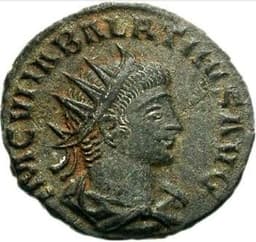
Zenobia of Palmyra
Emperor · Ancient
58.2Total
Basic Information
Born
-758
240
Died
—
274
Era
Ancient
Ancient
Nationality
Korea
Palmyrene Empire
Occupation
Emperor
Emperor
Civilization
Eastern
Middle Eastern
Score Comparison
Military (10%)
10.2
82.0
Political (20%)
26.4
54.7
Influence (20%)
44.0
60.0
Legacy (20%)
35.0
52.0
Leadership (15%)
34.6
55.3
Strategy (15%)
45.0
55.0
TOTAL
34.4
58.2
Hyegong of Silla — Complete Timeline
780 AD
Assassination of Hyegong of SillaPolitical Action◆ Major
King Hyegong was killed in a coup led by Kim Yang-sang and other nobles. The assassination ended the middle Silla period and resulted in the collapse of the direct royal line, leading to a period of instability and the rise of the succeeding king Wonseong.
CoupAssassinationSilla
Impact: nationaldestructive
Zenobia of Palmyra — Complete Timeline
270 AD
Conquest of EgyptWar◆ Major
Zenobia's general Zabdas led a Palmyrene army to conquer Egypt, defeating the Roman prefect Tenagino Probus. Egypt became part of the Palmyrene Empire, giving Zenobia control over the grain supply to Rome.
ConquestEgyptPalmyrene Empire
Impact: regionaldestructive
271 AD
Proclamation of Augustus for VaballathusPolitical Action◆ Major
Zenobia proclaimed her son Vaballathus as Augustus (emperor), effectively declaring independence from the Roman Empire. This was a direct challenge to Roman authority and marked the height of Palmyrene power.
ProclamationIndependencePalmyrene Empire
Impact: regionaldestructive
272 AD
Defeat by Aurelian at the Battle of ImmaeWar◆ Major
Roman Emperor Aurelian defeated Zenobia's forces at the Battle of Immae near Antioch. The Palmyrene army was routed, and Zenobia was forced to retreat to Palmyra.
BattleRoman-Persian WarAurelian
Impact: regionaldestructive
274 AD
Capture and Parade in RomePolitical Action◆ Major
After the fall of Palmyra, Zenobia was captured by Aurelian and brought to Rome. She was paraded in golden chains in Aurelian's triumph, a symbol of Roman victory over the Palmyrene rebellion.
CaptureTriumphRoman Empire
Impact: regionaltragic
This comparison has not been analyzed yet.
One-time AI generation (~1 minute). Scores and timeline are already available below.
Rankings
🥇
Zenobia of PalmyraLeader
Mil: 82.0Pol: 54.7Inf: 60.0
58.2
🥈
Hyegong of Silla
Mil: 10.2Pol: 26.4Inf: 44.0
34.4
+23.8 behind
How This Comparison Works
Algorithm
Each figure is scored on 6 dimensions (0—100 scale) based on structured historical data: Military (10%), Political (20%), Influence (20%), Legacy (20%), Leadership (15%), Strategy (15%). The weighted total produces the final ranking.
Data Sources
Scores are computed from structured sub-indicators in the database. Scale factors adjust for era (Ancient ×0.85, Modern ×1.0) and civilization size (Eastern ×1.05, Other ×0.80) to account for differences in population and military scale.
Maximum 3 Figures
Comparisons are limited to 2—3 figures to ensure readability and statistical meaningfulness.
Error Margins
±5 points per dimension — Sub-scores are derived from historical records with inherent uncertainty. Two figures within 5 points on a dimension should be considered roughly equivalent in that area.
Total Score Accuracy
±3 points overall — The weighted combination of 6 dimensions produces a total score with approximately ±3 points of uncertainty. Differences of less than 3 points are not statistically significant— the figures are effectively tied.
Known Limitations
- Historical records are incomplete and uneven across civilizations
- Figures from oral-tradition societies may be underrepresented
- Occupation labels can misclassify multi-role figures
- Scores measure capability and impact, not moral character
- Quantitative scoring is a comparison tool, not absolute truth
Capability Radar
Military (10%) — Battles & Warfare
Battles
5
65
Win Rate
5
60
Expansion
5
70
Political (20%) — Governance & Reform
Reform
20
35
Diplomacy
20
60
Economy
20
45
Influence (20%) — Cultural & Global Reach
Cultural
15
55
Global
5
45
Legacy (20%) — Historical Impact
Historical
20
60
Longevity
10
50
Leadership (15%) — Power & Stability
Tenure
30
40
Stability
10
30
Strategy (15%) — Tactics & Innovation
Strategy
5
75
Tactics
5
70
Reform
5
30
Similar Comparisons
Comments & Discussion
No comments yet. Be the first to share your thoughts!