Loading...
James I of Scotland vs Magnus the Good
Magnus the Good leads by 13.1 pts · 2 figures compared
…
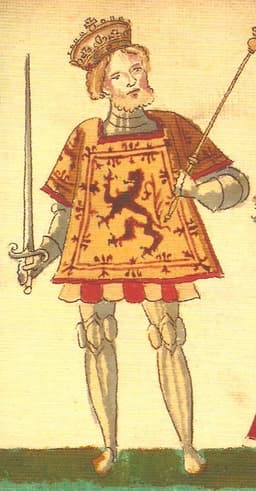
James I of Scotland
Emperor · Medieval
44.6Total
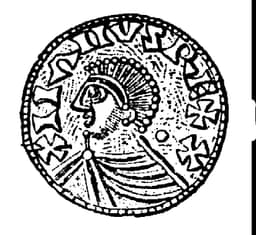
Magnus the Good
Emperor · Medieval
57.7Total
Basic Information
Born
1394
1024
Died
1437
1047
Era
Medieval
Medieval
Nationality
Scotland
Norway
Occupation
Emperor
Emperor
Civilization
Western
Western
Score Comparison
Military (10%)
21.2
70.0
Political (20%)
43.7
54.7
Influence (20%)
54.9
54.9
Legacy (20%)
45.0
46.7
Leadership (15%)
48.4
74.0
Strategy (15%)
36.8
60.0
TOTAL
44.6
57.7
James I of Scotland — Complete Timeline
1406 AD
Capture by English PiratesOther
James I was captured by English pirates while traveling to France for safety. He was handed over to Henry IV of England and imprisoned in the Tower of London, remaining a captive for 18 years. His father Robert III died soon after, leaving Scotland without a king.
CaptureImprisonmentRegency
Impact: nationaltragic
1424 AD
Release and Return to ScotlandPolitical Action◆ Major
James I was released from English captivity after the Treaty of London, which required a ransom of 40,000 pounds. He returned to Scotland and was crowned at Scone, beginning his personal rule after 18 years of regency.
ReleaseCoronationRansom
Impact: nationalconstructive
Publication of The Kingis QuairCultural
James I wrote The Kingis Quair, a poetic allegory of his imprisonment and love for Joan Beaufort. The poem is considered a major work of Middle Scots literature and reflects the influence of Chaucer on Scottish poetry.
PoetryLiteratureImprisonment
Impact: nationalconstructive
1425 AD
Execution of Albany StewartsPolitical Action◆ Major
James I executed Murdoch Stewart, Duke of Albany, and his sons at Stirling Castle for treason. The executions eliminated the powerful Albany family, who had ruled as regents during James's captivity, and consolidated royal power.
ExecutionNoble PurgeCentralization
Impact: nationaldestructive
1437 AD
Assassination at PerthPolitical Action
James I was assassinated by a group of nobles led by Sir Robert Graham at the Blackfriars monastery in Perth. The murder was a response to James's centralizing policies and harsh treatment of the nobility. His death plunged Scotland into another period of regency.
AssassinationNoble RevoltRegency
Impact: nationaltragic
Magnus the Good — Complete Timeline
1035 AD
Became King of NorwayPolitical Action◆ Major
Magnus the Good became King of Norway at age 11 after his father, Olaf II, was killed in battle. He was proclaimed king by the Norwegian nobility who had opposed Cnut the Great's rule, restoring the native dynasty after a period of Danish domination.
SuccessionNorwayRestoration
Impact: regionalconstructive
1042 AD
Became King of DenmarkPolitical Action◆ Major
Upon the death of Harthacnut, Magnus the Good inherited the Danish throne, becoming king of both Norway and Denmark. This union was based on a prior agreement between Magnus and Harthacnut, creating a personal union of the two Scandinavian kingdoms.
UnionDenmarkNorway
Impact: regionalconstructive
1043 AD
Defeated the Wends at the Battle of Lyrskov HeathWar
Magnus the Good led a Danish army to victory against the Wends (Slavic tribes) at Lyrskov Heath in present-day Germany. The battle secured Danish control over the southern Baltic coast and enhanced Magnus's reputation as a military leader.
BattleWendsBaltic
Impact: regional
Fought against Sweyn Estridsson for DenmarkWar◆ Major
Magnus the Good faced a rebellion from Sweyn Estridsson, a Danish nobleman who claimed the Danish throne. Magnus defeated Sweyn in several battles, forcing him into exile, but the conflict weakened Magnus's hold on Denmark and drained resources.
Civil WarDenmarkRebellion
Impact: regional
1047 AD
Died suddenly in DenmarkOther◆ Major
Magnus the Good died suddenly in Denmark at age 23, possibly from illness or an accident. His death ended the personal union of Norway and Denmark, as he had no heirs, leading to the division of his kingdoms between Harald Hardrada and Sweyn Estridsson.
DeathSuccession CrisisScandinavia
Impact: regionaltragic
Expert Analysis
Origins
James I of Scotland was born in 1394 to King Robert III and Annabella Drummond. As a child, he was sent to France for safety but was captured by English pirates in 1406 and held prisoner for 18 years. His education included poetry and literature, leading to his authorship of 'The Kingis Quair'. Magnus the Good was born in 1024, the illegitimate son of King Olaf II of Norway. After his father's death at the Battle of Stiklestad in 1030, Magnus was raised in exile in Sweden and later in the court of Yaroslav the Wise in Novgorod. His upbringing was martial, preparing him for kingship.
Rise to Power
James I's rise was delayed by his captivity. He was released in 1424 under the Treaty of London, which required a ransom of 40,000 pounds. Upon return, he was crowned and immediately moved to consolidate power. Magnus the Good became King of Norway at age 11 in 1035 after the Norwegian nobility rejected the Danish rule of Sweyn Knutsson. In 1042, upon the death of Harthacnut, Magnus inherited the Danish throne based on a prior agreement, uniting Norway and Denmark.
Leadership & Governance
James I centralized royal authority, curbing the power of the nobility. He executed Murdoch Stewart, Duke of Albany, and his sons in 1425 for treason, eliminating a rival faction. He also reformed the Scottish parliament and judiciary. His governance was autocratic, leading to resentment. Magnus the Good ruled with a combination of military strength and diplomacy. He maintained control over Norway and Denmark through campaigns against rebels like Sweyn Estridsson. He also led a successful campaign against the Wends at the Battle of Lyrskov Heath in 1043, securing Danish borders.
Triumph & Tragedy
James I's triumphs include strengthening the Scottish monarchy and producing a significant literary work. However, his centralized policies provoked a noble conspiracy, leading to his assassination in 1437 at the Blackfriars monastery in Perth. Magnus the Great's triumphs include uniting Norway and Denmark and defeating the Wends. His tragedy was his early death at age 23 in 1047, which ended the union and plunged both kingdoms into succession disputes.
Character & Destiny
James I was intelligent and cultured but also vengeful and autocratic. His imprisonment shaped his desire for control but also alienated his nobles. Magnus the Good was a capable military leader, scoring 70.0 in military compared to James's 21.2. He was pragmatic and ruthless when needed. His early death suggests a life cut short by chance rather than character flaws.
Legacy
James I's legacy includes the strengthening of the Scottish crown and his literary work, which influenced later Scottish poetry. His assassination demonstrated the fragility of royal power. Magnus the Good is remembered as a unifier of Norway and Denmark, though his union did not last. He is a figure in the sagas, often depicted as a wise and just king. His military achievements, like the Battle of Lyrskov Heath, had lasting impact on Danish territory.
Conclusion
Magnus the Good had a greater impact, with a total score of 57.7 compared to James I's 44.6. Magnus achieved unification of two kingdoms and military victories that shaped Scandinavian history. James I's reforms were significant but ultimately undone by his assassination. Magnus's leadership and military scores (74.0 and 70.0) far exceed James's (48.4 and 21.2), reflecting his effectiveness. While James left a cultural legacy, Magnus's political and military achievements had broader and more immediate consequences.
Rankings
🥇
Magnus the GoodLeader
Mil: 70.0Pol: 54.7Inf: 54.9
57.7
🥈
James I of Scotland
Mil: 21.2Pol: 43.7Inf: 54.9
44.6
+13.1 behind
How This Comparison Works
Algorithm
Each figure is scored on 6 dimensions (0—100 scale) based on structured historical data: Military (10%), Political (20%), Influence (20%), Legacy (20%), Leadership (15%), Strategy (15%). The weighted total produces the final ranking.
Data Sources
Scores are computed from structured sub-indicators in the database. Scale factors adjust for era (Ancient ×0.85, Modern ×1.0) and civilization size (Eastern ×1.05, Other ×0.80) to account for differences in population and military scale.
Maximum 3 Figures
Comparisons are limited to 2—3 figures to ensure readability and statistical meaningfulness.
Error Margins
±5 points per dimension — Sub-scores are derived from historical records with inherent uncertainty. Two figures within 5 points on a dimension should be considered roughly equivalent in that area.
Total Score Accuracy
±3 points overall — The weighted combination of 6 dimensions produces a total score with approximately ±3 points of uncertainty. Differences of less than 3 points are not statistically significant— the figures are effectively tied.
Known Limitations
- Historical records are incomplete and uneven across civilizations
- Figures from oral-tradition societies may be underrepresented
- Occupation labels can misclassify multi-role figures
- Scores measure capability and impact, not moral character
- Quantitative scoring is a comparison tool, not absolute truth
Capability Radar
Military (10%) — Battles & Warfare
Battles
10
55
Win Rate
10
60
Expansion
10
60
Political (20%) — Governance & Reform
Reform
50
45
Diplomacy
30
55
Economy
40
40
Influence (20%) — Cultural & Global Reach
Cultural
50
40
Global
20
30
Legacy (20%) — Historical Impact
Historical
40
45
Longevity
30
35
Leadership (15%) — Power & Stability
Tenure
40
60
Stability
20
50
Strategy (15%) — Tactics & Innovation
Strategy
10
55
Tactics
10
50
Reform
10
30
Similar Comparisons
Comments & Discussion
No comments yet. Be the first to share your thoughts!