Loading...
Isabella I of Castile vs Pachacuti
Isabella I of Castile leads by 7.8 pts · 2 figures compared
…
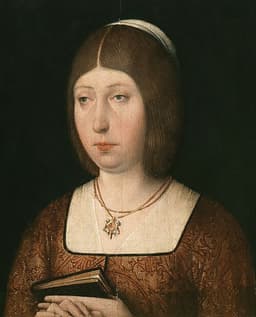
Isabella I of Castile
Emperor · Medieval
77.2Total
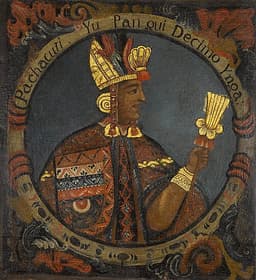
Pachacuti
Emperor · Medieval
69.4Total
Basic Information
Born
1451
1418
Died
1504
1472
Era
Medieval
Medieval
Nationality
Spain
Inca Empire
Occupation
Emperor
Emperor
Civilization
Western
Other
Score Comparison
Military (10%)
76.0
78.5
Political (20%)
78.0
58.1
Influence (20%)
80.0
65.0
Legacy (20%)
75.0
72.0
Leadership (15%)
78.0
78.0
Strategy (15%)
75.0
69.2
TOTAL
77.2
69.4
Isabella I of Castile — Complete Timeline
1469 AD
Marriage to Ferdinand of AragonPolitical Action
Isabella married Ferdinand II of Aragon in Valladolid, uniting the kingdoms of Castile and Aragon. This dynastic union laid the foundation for the unified Spanish monarchy and enabled joint policies including the Reconquista and overseas exploration.
Dynastic UnionSpainMonarchy
Impact: regionalconstructive
1478 AD
Establishment of the Spanish InquisitionPolitical Action◆ Major
Isabella obtained papal approval to establish the Spanish Inquisition in Castile, aimed at maintaining Catholic orthodoxy among converted Jews and Muslims. The Inquisition operated under royal control, conducting trials and executions for heresy.
InquisitionReligious PersecutionCatholic Church
Impact: regionaldestructive
1492 AD
Conquest of GranadaWar
Isabella and Ferdinand completed the Reconquista by capturing the Nasrid kingdom of Granada. The surrender of the last Muslim state in Iberia ended 781 years of Islamic rule and unified Spain under Christian rule.
ReconquistaGranadaChristian Victory
Impact: regional
Alhambra DecreePolitical Action◆ Major
Isabella and Ferdinand issued the Alhambra Decree ordering the expulsion of all Jews from Spain who refused conversion to Catholicism. An estimated 40,000 to 200,000 Jews were forced to leave, causing demographic and economic disruption.
ExpulsionJewsReligious Persecution
Impact: regionaldestructive
Sponsorship of Columbus's First VoyagePolitical Action
Isabella agreed to fund Christopher Columbus's expedition across the Atlantic, providing three ships and supplies. Columbus reached the Bahamas on October 12, initiating sustained European contact with the Americas and the Spanish colonial empire.
ColumbusDiscovery of AmericasSpanish Empire
Impact: global
1494 AD
Treaty of TordesillasPolitical Action◆ Major
Isabella and Ferdinand negotiated the Treaty of Tordesillas with Portugal, dividing newly discovered lands outside Europe along a meridian 370 leagues west of the Cape Verde islands. This agreement shaped colonial claims in the Americas and Africa.
Colonial DivisionSpainPortugal
Impact: global
Pachacuti — Complete Timeline
1438 AD
Conquest of the Chanka KingdomWar
Pachacuti led the Inca army to defeat the Chanka, a powerful rival, in a decisive battle near Cusco. This victory secured his position as Sapa Inca and initiated a period of rapid expansion, transforming the Inca from a small kingdom into a vast empire.
ConquestInca ExpansionChanka
Impact: regional
1440 AD
Reconstruction of CuscoCultural◆ Major
Pachacuti rebuilt Cusco as the imperial capital, designing it in the shape of a puma and constructing massive stone structures like Sacsayhuam
Urban PlanningArchitectureInca Empire
Impact: regionalconstructive
1450 AD
Initiation of Machu Picchu's ConstructionCultural◆ Major
Pachacuti ordered the construction of Machu Picchu, a royal estate and ceremonial site high in the Andes. The complex featured sophisticated dry-stone masonry and terraced agriculture, serving as a symbol of Inca engineering and a retreat for the emperor.
ArchitectureRoyal EstateInca Engineering
Impact: regionalconstructive
Expert Analysis
Pachacuti vs Isabella I of Castile
### The Mountain and the Throne
In the high Andes, a man who called himself the “Shaker of the Earth” commanded stones to move, carving a city from a cloud-veiled ridge. In the sun-scorched plains of Castile, a queen in heavy velvet signed decrees that reshaped the world, her quill scratching across parchment as the last Muslim emirate fell. Pachacuti and Isabella I of Castile never met, yet their lives, separated by a mere generation, ask a haunting question: What does it take to forge an empire—and what price is paid for the act? One built his realm from mountain granite, the other from royal blood and religious zeal. Their stories, told side by side, reveal not just how power works, but how the very soil of history shapes the hands that hold it.
### Origins
Pachacuti was born in 1418, a prince of a modest kingdom in the Cusco valley. The Inca were not yet an empire; they were a warlike tribe surrounded by rivals, notably the powerful Chanka. His father, Viracocha Inca, was a cautious ruler, and young Cusi Yupanqui—his birth name—was not the favored heir. He grew up learning the art of war in a world where survival depended on the edge of a bronze-tipped spear. The Andes themselves were his classroom: steep terraces, thin air, and a sky so close the gods seemed to whisper.
Isabella, born in 1451, came into a Spain that was a patchwork of warring Christian kingdoms and the fading Nasrid emirate of Granada. She was the daughter of John II of Castile, a king whose court was a nest of intrigue. Her childhood was marked by instability: her half-brother Henry IV’s chaotic reign, whispers of illegitimacy, and the constant threat of noble rebellion. Where Pachacuti learned to read the land, Isabella learned to read people—to discern loyalty from flattery, to wield piety as a weapon. Her era was one of crusade and consolidation, where faith and politics were braided together like the cords of a Castilian whip.
### Rise to Power
Pachacuti’s ascent came through blood. In 1438, the Chanka attacked Cusco, and his father fled. The prince refused to run. He rallied the city’s defenders and, in a desperate battle outside the capital, crushed the Chanka army. It was a victory so total that it became legend: the earth itself, they said, shook with his fury. He took the name Pachacuti—“He Who Remakes the World”—and seized the throne from his father. His rise was a coup of courage, born from a single, decisive moment.
Isabella’s path was a chess game. In 1469, she married Ferdinand of Aragon in secret, defying her brother the king. This union was not a romantic whim but a calculated alliance. When Henry IV died in 1474, she declared herself queen of Castile, sparking a war with rival claimants. She fought not with a spear but with letters, treaties, and the careful manipulation of noble factions. By 1479, she had won, and the crowns of Castile and Aragon were joined. Her rise was a masterpiece of patience and nerve, a slow accumulation of power rather than a single, shattering blow.
### Leadership & Governance
Pachacuti ruled as a divine architect. He rebuilt Cusco in the shape of a puma, its stone walls fitted so precisely that a knife blade could not slip between them. He created a system of mit’a—mandatory public labor—that turned conquered peoples into subjects bound by obligation, not fear. His military genius lay in logistics: he built roads and storehouses across the Andes, enabling his armies to move faster than any foe. Yet his greatest innovation was psychological. He demanded that conquered leaders be brought to Cusco to learn Quechua and worship Inti, the sun god. He did not destroy their cultures; he absorbed them.
Isabella governed with ink and iron. She and Ferdinand centralized power, breaking the nobility’s hold by placing loyal bureaucrats in key posts. In 1478, she established the Spanish Inquisition, not merely to root out heresy but to forge a uniform Catholic identity. The 1492 conquest of Granada was a military campaign, but it was also a political masterpiece: she allowed the defeated Moors to surrender with honors, then gradually eroded their rights. The Alhambra Decree of the same year, expelling Jews who refused conversion, was a brutal act of state-building. For Isabella, unity meant purity—religious, cultural, and political. She did not absorb; she purified.
### Triumph & Tragedy
Pachacuti’s triumph was Machu Picchu, begun around 1450. It was a royal estate, a mountain sanctuary where the emperor could commune with the gods. It was also a symbol: a city that defied gravity, carved from living rock. His tragedy was the cost. The mit’a system, efficient as it was, demanded endless labor. The empire he built was a pyramid of human effort, and when he died in 1472, it was left to heirs who could not maintain his vision.
Isabella’s triumph was 1492. In a single year, she conquered Granada, expelled the Jews, and funded Christopher Columbus’s voyage. That last decision—sending three ships west—was a gamble that changed the world. Her tragedy was the same. The conquest of the Americas unleashed centuries of exploitation and genocide. The Inquisition, meant to purify, became a machine of terror. She died in 1504, leaving a unified Spain that was also a fractured kingdom, its wealth built on the suffering of others.
### Character & Destiny
Pachacuti was a pragmatist who believed in order. He did not wage war for glory but for stability. His personality was that of a builder: methodical, patient, ruthless when necessary. He saw the world as a structure to be perfected. Isabella was a zealot who believed in destiny. She saw herself as God’s instrument, and her decisions were driven by a conviction that unity under one faith was the only path to salvation. Where Pachacuti remade the world by moving mountains, Isabella remade it by moving peoples—across oceans and out of kingdoms.
Their fates were shaped by their eras. Pachacuti ruled in a world without horses, gunpowder, or global ambition. His empire was a closed system, self-sufficient and inward. Isabella ruled at the dawn of the Atlantic world. Her Spain was a hinge between medieval crusade and modern empire. One built a civilization that would be destroyed by strangers; the other launched the ships that brought those strangers.
### Legacy
Pachacuti is remembered as the father of the Inca Empire, the man who made Cusco the navel of the world. Machu Picchu stands as his monument, a place of wonder that outlasted his dynasty. But his empire fell to a handful of Spaniards in 1532, a collapse that seems inevitable only in hindsight. His legacy is one of awe and fragility.
Isabella is remembered as the queen who unified Spain and launched the Age of Exploration. Her name appears on coins, cities, and treaties. But she is also a figure of controversy: the Inquisition, the expulsion, the colonization. Her legacy is one of greatness and shadow.
### Conclusion
Standing at the edge of a Machu Picchu terrace, looking down at the Urubamba River, one feels the weight of a world built by hand and will. Sitting in the Alhambra, gazing at the delicate arches of the Nasrid palace, one feels the weight of a world that was erased. Pachacuti and Isabella were both empire-builders, but they built from different materials: one from stone and obligation, the other from faith and decree. Their stories remind us that every empire is a monument to its founder’s character—and that the same hands that raise cities can also cast shadows that last for centuries.
Rankings
🥇
Isabella I of CastileLeader
Mil: 76.0Pol: 78.0Inf: 80.0
77.2
🥈
Pachacuti
Mil: 78.5Pol: 58.1Inf: 65.0
69.4
+7.8 behind
How This Comparison Works
Algorithm
Each figure is scored on 6 dimensions (0—100 scale) based on structured historical data: Military (10%), Political (20%), Influence (20%), Legacy (20%), Leadership (15%), Strategy (15%). The weighted total produces the final ranking.
Data Sources
Scores are computed from structured sub-indicators in the database. Scale factors adjust for era (Ancient ×0.85, Modern ×1.0) and civilization size (Eastern ×1.05, Other ×0.80) to account for differences in population and military scale.
Maximum 3 Figures
Comparisons are limited to 2—3 figures to ensure readability and statistical meaningfulness.
Error Margins
±5 points per dimension — Sub-scores are derived from historical records with inherent uncertainty. Two figures within 5 points on a dimension should be considered roughly equivalent in that area.
Total Score Accuracy
±3 points overall — The weighted combination of 6 dimensions produces a total score with approximately ±3 points of uncertainty. Differences of less than 3 points are not statistically significant— the figures are effectively tied.
Known Limitations
- Historical records are incomplete and uneven across civilizations
- Figures from oral-tradition societies may be underrepresented
- Occupation labels can misclassify multi-role figures
- Scores measure capability and impact, not moral character
- Quantitative scoring is a comparison tool, not absolute truth
Capability Radar
Military (10%) — Battles & Warfare
Battles
75
85
Win Rate
80
90
Expansion
85
90
Political (20%) — Governance & Reform
Reform
90
92
Diplomacy
80
75
Economy
75
80
Influence (20%) — Cultural & Global Reach
Cultural
85
85
Global
95
65
Legacy (20%) — Historical Impact
Historical
95
80
Longevity
90
70
Leadership (15%) — Power & Stability
Tenure
85
85
Stability
70
82
Strategy (15%) — Tactics & Innovation
Strategy
85
88
Tactics
70
80
Reform
90
85
Similar Comparisons
Comments & Discussion
ShakerOfFalseEarth6/16/2026
Pachacuti wasn't "shaking the earth" with divine power—he was shaking it with conscripted labor. Machu Picchu wasn't a mystical creation; it was a forced relocation project disguised as sacred architecture. Meanwhile, Isabella's Granada campaign was a masterclass in siege logistics using Lombard cannons and mercenary tercios. Give me Isabella any day: real state-building uses gunpowder and tax records, not miracle stories about moving stones with your hands.
高原野狐6/16/2026
吹什么Pachacuti多伟大?他搞的mit'a劳役制就是变相奴隶制,强迫平民背石头在海拔四千米的悬崖上盖城。你知道马丘比丘建了几十年死了多少人吗?伊莎贝拉女王再狠,好歹建立了统一税制和现代官僚体系。一个是靠血汗堆出来的石头神话,一个是靠制度打下的真帝国—这也能比?