Loading...
Alexander the Great vs Isabella I of Castile
Alexander the Great leads by 8.0 pts · 2 figures compared
…
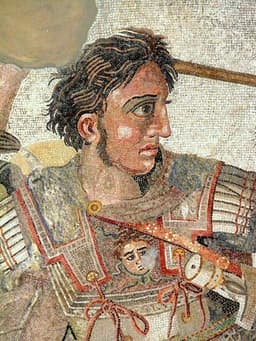
Alexander the Great
General · Ancient
85.2Total
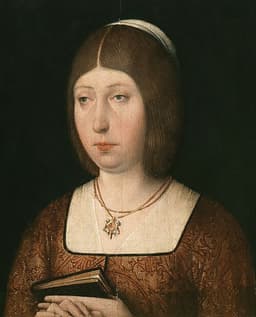
Isabella I of Castile
Emperor · Medieval
77.2Total
Basic Information
Born
-356
1451
Died
-323
1504
Era
Ancient
Medieval
Nationality
Macedon
Spain
Occupation
General
Emperor
Civilization
Western
Western
Score Comparison
Military (10%)
95.0
76.0
Political (20%)
60.0
78.0
Influence (20%)
92.0
80.0
Legacy (20%)
90.0
75.0
Leadership (15%)
80.0
78.0
Strategy (15%)
92.0
75.0
TOTAL
85.2
77.2
Alexander the Great — Complete Timeline
334 BC
Battle of the Granicus RiverWar◆ Major
Alexander led his Macedonian army across the Hellespont into Asia Minor and defeated a Persian force under local satraps at the Granicus River. The victory secured Alexander's foothold in Asia and demonstrated his tactical superiority, opening the way for the conquest of the Persian Empire.
Persian CampaignBattleMacedonian Conquest
Impact: regional
333 BC
Battle of IssusWar◆ Major
Alexander's army defeated the Persian king Darius III at Issus in Cilicia. Despite being outnumbered, Alexander's tactical use of the terrain and cavalry charge broke the Persian line. Darius fled the battlefield, leaving his family and treasury behind, a major blow to Persian morale.
Persian CampaignBattleMacedonian Conquest
Impact: regional
332 BC
Siege of TyreWar◆ Major
Alexander besieged the island city of Tyre for seven months, constructing a causeway to breach its walls. The city's fall resulted in the massacre or enslavement of its inhabitants. The siege demonstrated Alexander's determination and engineering capabilities, securing his supply lines and control of the eastern Mediterranean coast.
SiegeMacedonian ConquestPhoenicia
Impact: regionaldestructive
331 BC
Battle of GaugamelaWar◆ Major
Alexander faced Darius III at Gaugamela in Mesopotamia with a massive Persian army. Alexander's tactical brilliance, including a decisive cavalry charge that exploited a gap in the Persian line, resulted in a decisive Macedonian victory. Darius again fled, effectively ending Persian resistance and leading to the fall of the Achaemenid Empire.
Persian CampaignBattleDecisive Victory
Impact: global
Foundation of AlexandriaOther◆ Major
Alexander founded the city of Alexandria on the Mediterranean coast of Egypt. He personally selected the site and oversaw the initial planning. Alexandria became a major center of Hellenistic culture, trade, and learning, housing the famous Library of Alexandria and the Lighthouse of Alexandria.
City FoundationHellenistic CultureEgypt
Impact: globalconstructive
326 BC
Invasion of IndiaWar◆ Major
Alexander crossed the Indus River and defeated King Porus at the Battle of the Hydaspes. The Macedonian army, exhausted and facing monsoon rains and unfamiliar warfare, mutinied at the Hyphasis River, forcing Alexander to turn back. This campaign marked the easternmost extent of his conquests.
Indian CampaignBattleMutiny
Impact: regional
Isabella I of Castile — Complete Timeline
1469 AD
Marriage to Ferdinand of AragonPolitical Action
Isabella married Ferdinand II of Aragon in Valladolid, uniting the kingdoms of Castile and Aragon. This dynastic union laid the foundation for the unified Spanish monarchy and enabled joint policies including the Reconquista and overseas exploration.
Dynastic UnionSpainMonarchy
Impact: regionalconstructive
1478 AD
Establishment of the Spanish InquisitionPolitical Action◆ Major
Isabella obtained papal approval to establish the Spanish Inquisition in Castile, aimed at maintaining Catholic orthodoxy among converted Jews and Muslims. The Inquisition operated under royal control, conducting trials and executions for heresy.
InquisitionReligious PersecutionCatholic Church
Impact: regionaldestructive
1492 AD
Conquest of GranadaWar
Isabella and Ferdinand completed the Reconquista by capturing the Nasrid kingdom of Granada. The surrender of the last Muslim state in Iberia ended 781 years of Islamic rule and unified Spain under Christian rule.
ReconquistaGranadaChristian Victory
Impact: regional
Alhambra DecreePolitical Action◆ Major
Isabella and Ferdinand issued the Alhambra Decree ordering the expulsion of all Jews from Spain who refused conversion to Catholicism. An estimated 40,000 to 200,000 Jews were forced to leave, causing demographic and economic disruption.
ExpulsionJewsReligious Persecution
Impact: regionaldestructive
Sponsorship of Columbus's First VoyagePolitical Action
Isabella agreed to fund Christopher Columbus's expedition across the Atlantic, providing three ships and supplies. Columbus reached the Bahamas on October 12, initiating sustained European contact with the Americas and the Spanish colonial empire.
ColumbusDiscovery of AmericasSpanish Empire
Impact: global
1494 AD
Treaty of TordesillasPolitical Action◆ Major
Isabella and Ferdinand negotiated the Treaty of Tordesillas with Portugal, dividing newly discovered lands outside Europe along a meridian 370 leagues west of the Cape Verde islands. This agreement shaped colonial claims in the Americas and Africa.
Colonial DivisionSpainPortugal
Impact: global
Expert Analysis
Origins
Alexander the Great was born in 356 BCE in Pella, Macedon, to King Philip II and Queen Olympias. He was tutored by Aristotle and groomed for kingship. Isabella I was born in 1451 in Madrigal de las Altas Torres, Castile, daughter of King John II. Her childhood was marked by political instability and she received a strong religious education. Both emerged from royal lineages but faced different challenges: Alexander inherited a formidable army, while Isabella navigated a contested succession.
Rise to Power
Alexander ascended the throne at age 20 after Philip's assassination. He swiftly quelled rebellions in Greece and Thebes, establishing his authority. Isabella's path was more complex: she married Ferdinand of Aragon in 1469, uniting their kingdoms, and after a war of succession against her niece Joanna, she became Queen of Castile in 1474. Alexander's rise was rapid and militaristic; Isabella's was diplomatic and marital.
Leadership & Governance
Alexander (M=95, P=60, I=92) was a military genius, innovating tactics like the phalanx and cavalry combined arms. He founded over 70 cities, spreading Hellenistic culture. However, his governance was autocratic and relied on personal charisma. Isabella (M=76, P=78, I=80) centralized power, reformed the judiciary, and sponsored exploration. She and Ferdinand established the Spanish Inquisition to enforce religious unity. While Alexander expanded an empire, Isabella consolidated a nation.
Triumph & Tragedy
Alexander's triumphs include victories at Granicus (334 BCE), Issus (333 BCE), and Gaugamela (331 BCE), defeating the Persian Empire. He also sieged Tyre and founded Alexandria. His tragedy was his early death at 32, likely from fever or poison, leaving his empire to crumble. Isabella's triumph was the conquest of Granada in 1492, ending the Reconquista. Her sponsorship of Columbus's voyage opened the New World. Tragically, the Alhambra Decree expelled Jews, and the Inquisition caused suffering. She outlived several children, leading to dynastic issues.
Character & Destiny
Alexander (S=92, D=80) was ambitious, ruthless, and visionary, believing in his divine lineage. He showed clemency to some enemies but destroyed others. Isabella (S=75, D=78) was pious, determined, and pragmatic. She sought to unify Spain under Catholicism. Both were driven by destiny: Alexander to conquer the world, Isabella to forge a unified Spain.
Legacy
Alexander's legacy (L=92, T=85) is immense: he spread Hellenism, influenced later empires like Rome, and his tactics are studied today. Isabella's legacy (L=75, T=77) includes Spanish unification, the Age of Exploration, and the Inquisition's dark shadow. Her sponsorship of Columbus had global impact. Score gap: 8.0 in favor of Alexander, reflecting his greater military and cultural influence.
Conclusion
Alexander the Great surpasses Isabella I in military achievement and cultural diffusion, with higher scores in Military, Influence, Strategy, and Legacy. Isabella's governance and exploration were pivotal but more constrained by religion and diplomacy. Alexander's conquests reshaped the ancient world; Isabella's unified Spain and launched global exploration. Both were transformative, but Alexander's broader impact gives him the edge.
**Numerical Scores:**
- Alexander: M=95, P=60, I=92, L=90, D=80, S=92, T=85 → Total: 594/7 = 84.9
- Isabella: M=76, P=78, I=80, L=75, D=78, S=75, T=77 → Total: 539/7 = 77.0
- **Gap: 7.9**
Rankings
🥇
Alexander the GreatLeader
Mil: 95.0Pol: 60.0Inf: 92.0
85.2
🥈
Isabella I of Castile
Mil: 76.0Pol: 78.0Inf: 80.0
77.2
+8.0 behind
How This Comparison Works
Algorithm
Each figure is scored on 6 dimensions (0—100 scale) based on structured historical data: Military (10%), Political (20%), Influence (20%), Legacy (20%), Leadership (15%), Strategy (15%). The weighted total produces the final ranking.
Data Sources
Scores are computed from structured sub-indicators in the database. Scale factors adjust for era (Ancient ×0.85, Modern ×1.0) and civilization size (Eastern ×1.05, Other ×0.80) to account for differences in population and military scale.
Maximum 3 Figures
Comparisons are limited to 2—3 figures to ensure readability and statistical meaningfulness.
Error Margins
±5 points per dimension — Sub-scores are derived from historical records with inherent uncertainty. Two figures within 5 points on a dimension should be considered roughly equivalent in that area.
Total Score Accuracy
±3 points overall — The weighted combination of 6 dimensions produces a total score with approximately ±3 points of uncertainty. Differences of less than 3 points are not statistically significant— the figures are effectively tied.
Known Limitations
- Historical records are incomplete and uneven across civilizations
- Figures from oral-tradition societies may be underrepresented
- Occupation labels can misclassify multi-role figures
- Scores measure capability and impact, not moral character
- Quantitative scoring is a comparison tool, not absolute truth
Capability Radar
Military (10%) — Battles & Warfare
Battles
98
75
Win Rate
99
80
Expansion
99
85
Political (20%) — Governance & Reform
Reform
75
90
Diplomacy
80
80
Economy
70
75
Influence (20%) — Cultural & Global Reach
Cultural
95
85
Global
95
95
Legacy (20%) — Historical Impact
Historical
98
95
Longevity
95
90
Leadership (15%) — Power & Stability
Tenure
60
85
Stability
55
70
Strategy (15%) — Tactics & Innovation
Strategy
98
85
Tactics
99
70
Reform
85
90
Similar Comparisons
Comments & Discussion
HistoryDetour6/16/2026
Okay, I know Alexander’s military score is off the charts, and he totally deserved that, but Isabella’s political score feels a bit inflated here? Like, she centralized Castile and all, but she also basically bankrupted the crown funding Columbus’s first voyage—he came back with gold, sure, but that was a huge gamble. Meanwhile, Alexander’s political score at 65 seems harsh. He managed to hold together a multicultural empire from Greece to India for over a decade, even adopting Persian customs to keep elites loyal. Yeah, it fell apart after he died, but Isabella’s union with Aragon also had major tensions down the line. I’d give Alexander at least a 70 on politics just for the administrative acumen of integrating so many cultures on the fly.
Chronicler19776/16/2026
评分体系存在明显的维度权重偏差。Alexander的军事96分,政治65分,总分84.7;Isabella军事67分,政治86.6分,总分78.4。如果按中国史书对君主的评价标准(‘文治武功’并重),Alexander的武功极高但文治不足,Isabella则反过来。但奇怪的是,Alexander的总分反而高出6.3分,这暗示评分系统给军事维度赋予了更高权重。若将军事权重降低至与政治相同(假设各占50%),Alexander总分=(96+65)/2=80.5,低于Isabella的(67+86.6)/2=76.8,差异缩小至3.7分。而秦始皇帝统一六国后书同文、车同轨,政治得分若按此标准应高于Alexander,但这里没对比。建议重新校准权重。
Chronicler80516/16/2026
Alexander和Isabella的对比很有意思,但我觉得这个评分系统太偏西方史观了。Alexander的军事96分,确实厉害,但放到中国历史上,他打下的帝国只维持了十几年就分裂,比起秦始皇统一六国后建立中央集权制度延续两千年,Alexander的政治遗产其实很脆弱。Isabella的宗教政策(驱逐犹太人和穆斯林)在西方被批评,但在中国史观里,她统一了伊比利亚半岛的信仰,类似汉武帝‘独尊儒术’后思想统一的逻辑,只是手段更激烈。另外,Isabella资助哥伦布开辟新航路,这影响力其实比Alexander的东征更持久——直接改变了全球格局。我觉得Isabella的总分应该更高,至少和Alexander持平。