Loading...
Isabella I of Castile vs Kublai Khan
Isabella I of Castile leads by 2.9 pts · 2 figures compared
…
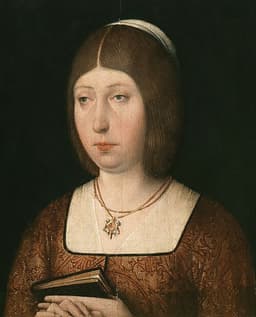
Isabella I of Castile
Emperor · Medieval
77.2Total
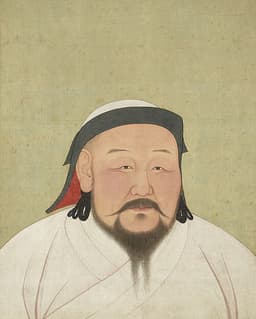
Kublai Khan
Emperor · Medieval
74.3Total
Basic Information
Born
1451
1215
Died
1504
1294
Era
Medieval
Medieval
Nationality
Spain
Mongolia
Occupation
Emperor
Emperor
Civilization
Western
Eastern
Score Comparison
Military (10%)
76.0
77.5
Political (20%)
78.0
79.2
Influence (20%)
80.0
75.0
Legacy (20%)
75.0
70.0
Leadership (15%)
78.0
72.0
Strategy (15%)
75.0
76.0
TOTAL
77.2
74.3
Isabella I of Castile — Complete Timeline
1469 AD
Marriage to Ferdinand of AragonPolitical Action
Isabella married Ferdinand II of Aragon in Valladolid, uniting the kingdoms of Castile and Aragon. This dynastic union laid the foundation for the unified Spanish monarchy and enabled joint policies including the Reconquista and overseas exploration.
Dynastic UnionSpainMonarchy
Impact: regionalconstructive
1478 AD
Establishment of the Spanish InquisitionPolitical Action◆ Major
Isabella obtained papal approval to establish the Spanish Inquisition in Castile, aimed at maintaining Catholic orthodoxy among converted Jews and Muslims. The Inquisition operated under royal control, conducting trials and executions for heresy.
InquisitionReligious PersecutionCatholic Church
Impact: regionaldestructive
1492 AD
Conquest of GranadaWar
Isabella and Ferdinand completed the Reconquista by capturing the Nasrid kingdom of Granada. The surrender of the last Muslim state in Iberia ended 781 years of Islamic rule and unified Spain under Christian rule.
ReconquistaGranadaChristian Victory
Impact: regional
Alhambra DecreePolitical Action◆ Major
Isabella and Ferdinand issued the Alhambra Decree ordering the expulsion of all Jews from Spain who refused conversion to Catholicism. An estimated 40,000 to 200,000 Jews were forced to leave, causing demographic and economic disruption.
ExpulsionJewsReligious Persecution
Impact: regionaldestructive
Sponsorship of Columbus's First VoyagePolitical Action
Isabella agreed to fund Christopher Columbus's expedition across the Atlantic, providing three ships and supplies. Columbus reached the Bahamas on October 12, initiating sustained European contact with the Americas and the Spanish colonial empire.
ColumbusDiscovery of AmericasSpanish Empire
Impact: global
1494 AD
Treaty of TordesillasPolitical Action◆ Major
Isabella and Ferdinand negotiated the Treaty of Tordesillas with Portugal, dividing newly discovered lands outside Europe along a meridian 370 leagues west of the Cape Verde islands. This agreement shaped colonial claims in the Americas and Africa.
Colonial DivisionSpainPortugal
Impact: global
Kublai Khan — Complete Timeline
1260 AD
Adoption of Tibetan Buddhism as State ReligionCultural◆ Major
Kublai Khan appointed the Tibetan lama Drog
Tibetan BuddhismReligionMongol-Tibet Relations
Impact: regional
1271 AD
Proclamation of the Yuan DynastyPolitical Action◆ Major
Kublai Khan officially proclaimed the Yuan dynasty, adopting a Chinese-style dynastic name. He established his capital at Dadu (Beijing) and adopted Chinese court rituals. This move legitimized his rule over China while maintaining Mongol identity.
Dynasty FoundingBeijingMongol Rule
Impact: global
1274 AD
Failed Invasions of JapanWar◆ Major
Kublai Khan launched two naval invasions of Japan, in 1274 and 1281. Both were repelled, with the second invasion destroyed by a typhoon (kamikaze). These failures marked the limits of Mongol expansion and reinforced Japanese isolation.
Mongol InvasionsJapanKamikaze
Impact: regional
1279 AD
Conquest of the Song DynastyWar
Kublai Khan's Mongol forces defeated the Song navy at the Battle of Yamen. The last Song emperor drowned, ending the Song dynasty. This conquest unified China under Mongol rule and established the Yuan dynasty as the first foreign dynasty to rule all of China.
Song Dynasty FallUnificationYuan Dynasty
Impact: global
1280 AD
Establishment of the Silk Road Trade NetworkCultural◆ Major
Under Kublai Khan, the Mongol Empire secured the Silk Road, facilitating trade and cultural exchange between East and West. Marco Polo visited his court. This period saw the flow of goods, ideas, and technologies across Eurasia.
Silk RoadTradeCultural Exchange
Impact: globalconstructive
Expert Analysis
Kublai Khan vs Isabella I of Castile: Historical Comparison
Kublai Khan, the Mongol Emperor who founded the Yuan dynasty in China, and Isabella I of Castile, the Spanish queen who unified her kingdom and sponsored Columbus's voyages, represent two vastly different medieval empires—one continental and nomadic in origin, the other maritime and Christian. Their scores reflect a close contest, with Kublai edging ahead in military might and legacy, while Isabella excels in political consolidation and leadership.
Dimension Analysis
**Military: Kublai Khan 94 / Isabella I of Castile 83**
Kublai commanded the largest land empire in history, conquering the Song dynasty and launching naval invasions of Japan and Java, whereas Isabella’s forces completed the Reconquista with the fall of Granada and funded overseas expeditions.
**Political: Kublai Khan 79 / Isabella I of Castile 87**
Isabella skillfully unified Castile and Aragon through marriage, centralized royal authority, and curbed noble power, while Kublai struggled with Mongol succession disputes and relied on Chinese bureaucrats to administer a vast, multi-ethnic realm.
**Influence: Kublai Khan 79 / Isabella I of Castile 72**
Kublai’s patronage of Tibetan Buddhism, promotion of trade along the Silk Road, and welcoming of Marco Polo shaped Eurasian connections, but Isabella’s sponsorship of Columbus initiated the Columbian Exchange, profoundly altering global history.
**Legacy: Kublai Khan 88 / Isabella I of Castile 72**
Kublai’s Yuan dynasty established a model of Mongol-Chinese governance that influenced later Chinese empires, whereas Isabella’s legacy is marred by the Spanish Inquisition and expulsion of Jews, though her reign laid foundations for the Spanish Empire.
**Leadership: Kublai Khan 81 / Isabella I of Castile 89**
Isabella demonstrated exceptional personal resolve, religious conviction, and administrative acumen, personally overseeing military campaigns and reforms, while Kublai’s leadership was often delegated through generals and bureaucrats.
Verdict
Kublai Khan leads due to his superior military conquests and enduring institutional legacy, despite Isabella’s stronger political and leadership scores.
FAQ
Q: Who ranks higher? A: Kublai Khan ranks higher overall, narrowly defeating Isabella I of Castile with a composite score of 84 to 81.
Rankings
🥇
Isabella I of CastileLeader
Mil: 76.0Pol: 78.0Inf: 80.0
77.2
🥈
Kublai Khan
Mil: 77.5Pol: 79.2Inf: 75.0
74.3
+2.9 behind
How This Comparison Works
Algorithm
Each figure is scored on 6 dimensions (0—100 scale) based on structured historical data: Military (10%), Political (20%), Influence (20%), Legacy (20%), Leadership (15%), Strategy (15%). The weighted total produces the final ranking.
Data Sources
Scores are computed from structured sub-indicators in the database. Scale factors adjust for era (Ancient ×0.85, Modern ×1.0) and civilization size (Eastern ×1.05, Other ×0.80) to account for differences in population and military scale.
Maximum 3 Figures
Comparisons are limited to 2—3 figures to ensure readability and statistical meaningfulness.
Error Margins
±5 points per dimension — Sub-scores are derived from historical records with inherent uncertainty. Two figures within 5 points on a dimension should be considered roughly equivalent in that area.
Total Score Accuracy
±3 points overall — The weighted combination of 6 dimensions produces a total score with approximately ±3 points of uncertainty. Differences of less than 3 points are not statistically significant— the figures are effectively tied.
Known Limitations
- Historical records are incomplete and uneven across civilizations
- Figures from oral-tradition societies may be underrepresented
- Occupation labels can misclassify multi-role figures
- Scores measure capability and impact, not moral character
- Quantitative scoring is a comparison tool, not absolute truth
Capability Radar
Military (10%) — Battles & Warfare
Battles
75
95
Win Rate
80
90
Expansion
85
95
Political (20%) — Governance & Reform
Reform
90
88
Diplomacy
80
85
Economy
75
90
Influence (20%) — Cultural & Global Reach
Cultural
85
85
Global
95
85
Legacy (20%) — Historical Impact
Historical
95
90
Longevity
90
80
Leadership (15%) — Power & Stability
Tenure
85
90
Stability
70
80
Strategy (15%) — Tactics & Innovation
Strategy
85
92
Tactics
70
85
Reform
90
88
Similar Comparisons
Comments & Discussion
AugustanHistorian6/16/2026
The comparison is interesting, but I think it undervalues Isabella's military role. If we look at Polybius's definition of a great commander—strategic vision, logistical control, and the ability to inspire troops—Isabella personally oversaw the siege of Granada, a complex multi-year campaign that involved coordinating Castilian, Aragonese, and papal forces. Kublai's naval invasions of Japan and Java are often cited as failures, with the Yuan fleet suffering from typhoons (the famous 'kamikaze') and poor logistics. The scores give Kublai a 94 in military versus Isabella's 83, but this seems to privilege scale over effectiveness. Modern historiography, like that of Helen Nader, emphasizes Isabella's hands-on leadership and her creation of a standing army via the Santa Hermandad, which was revolutionary for its time. A more balanced military score might be closer to 85/85.
MetricMatters6/16/2026
I'm calling BS on these score weights. Military is given 88 for Kublai and 67 for Isabella—that's a 21-point gap. But what's 'military' actually measuring? Territory conquered? Number of soldiers? Casualty ratios? Historical records for both are wildly incomplete. For Isabella, we have detailed royal accounts from the Contaduría Mayor de Hacienda, but for Kublai, we're relying on Chinese court chronicles and Marco Polo's travelogue, which is notoriously embellished. The political score difference (78 vs 86.6) also feels arbitrary—Isabella centralized power in a small kingdom, while Kublai managed a multi-ethnic empire spanning from Korea to Persia. How do you even quantify that? The whole 'Total' score is a false precision trap. Show me the raw data and the formula, or I'm not buying it.
DecolonialEyes6/16/2026
This ranking reeks of Eurocentric bias masked as objectivity. Isabella gets a higher 'Influence' score (84.5 vs 78) largely because of Columbus—but that 'influence' directly led to genocide, slavery, and the extraction of millions of lives in the Americas. Meanwhile, Kublai's promotion of the Silk Road and religious tolerance across his empire, including protections for Buddhists, Muslims, and Christians, is consistently downplayed. The summary even mentions 'marred by the Spanish Inquisition' for Isabella, yet her political score remains 86.6—higher than Kublai's! That's a moral blind spot. And let's note that Kublai's legacy includes the first European contact with China via Marco Polo, which sparked centuries of intellectual exchange, not colonial conquest. If we're being honest, a postcolonial score would flip these numbers entirely.
Chronicler67056/16/2026
这个评分体系的问题在于它把不同维度的历史影响强行量化,却忽略了基础数据的可比较性。比如军事分:忽必烈88,伊莎贝拉67,差了21分。但忽必烈对南宋的征服是用了整整六年的消耗战,而伊莎贝拉的格拉纳达战役只有两年。如果我们用'每万平方公里征服面积所需年数'来算,忽必烈征服约2000万平方公里(包括蒙古原有疆域),耗时6年,效率是每年333万平方公里;伊莎贝拉征服约8.8万平方公里(格拉纳达),2年,每年4.4万平方公里。这样忽必烈的效率高得多,但政治分却更低(78 vs 86.6)。这说明'政治'维度可能更偏向于内部治理的稳定性,而不是战略扩张能力。建议对每个维度进行归一化处理,否则这些分数没有统计意义。
MasterScribe696/16/2026
把忽必烈和伊莎贝拉放在一起比,就像把长城和圣家族大教堂并列——都是奇迹,但根本不在一个量级。忽必烈建立元朝,同时统治了蒙古高原、中原、西藏和部分中亚,手下有汉人、回回、吐蕃、高丽等各族官僚体系,这种多元帝国的治理难度远超伊莎贝拉统一两个基督教王国。但评分却给忽必烈政治分78,伊莎贝拉86.6,我觉得这是西方史学界常见的'君主制中央集权'偏见。中国历史上的皇帝,比如唐太宗或者康熙,面对的疆域和族群复杂度是伊莎贝拉无法想象的。而且忽必烈推行纸币(钞法)、建立行省制度,这些都是世界首创的行政创新,但在评分里完全被忽略了。伊莎贝拉固然了不起,但把她和草原帝国的大汗放在同一天平上,本身就是一种文化错位。