Loading...
Isabella I of Castile vs Qin Shi Huang
Qin Shi Huang leads by 8.0 pts · 2 figures compared
…
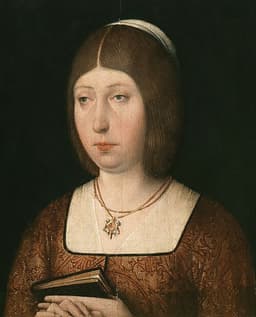
Isabella I of Castile
Emperor · Medieval
77.2Total
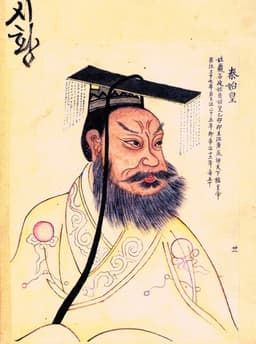
Qin Shi Huang
Emperor · Ancient
85.2Total
Basic Information
Born
1451
-259
Died
1504
-210
Era
Medieval
Ancient
Nationality
Spain
China
Occupation
Emperor
Emperor
Civilization
Western
Eastern
Score Comparison
Military (10%)
76.0
80.0
Political (20%)
78.0
90.0
Influence (20%)
80.0
85.0
Legacy (20%)
75.0
90.0
Leadership (15%)
78.0
78.0
Strategy (15%)
75.0
82.0
TOTAL
77.2
85.2
Isabella I of Castile — Complete Timeline
1469 AD
Marriage to Ferdinand of AragonPolitical Action
Isabella married Ferdinand II of Aragon in Valladolid, uniting the kingdoms of Castile and Aragon. This dynastic union laid the foundation for the unified Spanish monarchy and enabled joint policies including the Reconquista and overseas exploration.
Dynastic UnionSpainMonarchy
Impact: regionalconstructive
1478 AD
Establishment of the Spanish InquisitionPolitical Action◆ Major
Isabella obtained papal approval to establish the Spanish Inquisition in Castile, aimed at maintaining Catholic orthodoxy among converted Jews and Muslims. The Inquisition operated under royal control, conducting trials and executions for heresy.
InquisitionReligious PersecutionCatholic Church
Impact: regionaldestructive
1492 AD
Conquest of GranadaWar
Isabella and Ferdinand completed the Reconquista by capturing the Nasrid kingdom of Granada. The surrender of the last Muslim state in Iberia ended 781 years of Islamic rule and unified Spain under Christian rule.
ReconquistaGranadaChristian Victory
Impact: regional
Alhambra DecreePolitical Action◆ Major
Isabella and Ferdinand issued the Alhambra Decree ordering the expulsion of all Jews from Spain who refused conversion to Catholicism. An estimated 40,000 to 200,000 Jews were forced to leave, causing demographic and economic disruption.
ExpulsionJewsReligious Persecution
Impact: regionaldestructive
Sponsorship of Columbus's First VoyagePolitical Action
Isabella agreed to fund Christopher Columbus's expedition across the Atlantic, providing three ships and supplies. Columbus reached the Bahamas on October 12, initiating sustained European contact with the Americas and the Spanish colonial empire.
ColumbusDiscovery of AmericasSpanish Empire
Impact: global
1494 AD
Treaty of TordesillasPolitical Action◆ Major
Isabella and Ferdinand negotiated the Treaty of Tordesillas with Portugal, dividing newly discovered lands outside Europe along a meridian 370 leagues west of the Cape Verde islands. This agreement shaped colonial claims in the Americas and Africa.
Colonial DivisionSpainPortugal
Impact: global
Qin Shi Huang — Complete Timeline
246 BC
Construction of the Mausoleum and Terracotta ArmyOther◆ Major
Qin Shi Huang commissioned a vast mausoleum complex near Xi'an, guarded by thousands of life-sized terracotta soldiers, horses, and chariots. The project employed hundreds of thousands of workers and reflected his obsession with immortality and imperial power.
Impact: global
230 BC
Conquest of the Six Warring StatesWar
From 230 to 221 BCE, Ying Zheng led the Qin state in a series of campaigns that conquered the Han, Zhao, Wei, Chu, Yan, and Qi states. This unified China under a single ruler for the first time, ending the Warring States period.
Impact: global
221 BC
Standardization of Writing, Currency, and MeasurementsReform◆ Major
Qin Shi Huang ordered the standardization of Chinese script, currency, and weights and measures across the unified empire. This facilitated administration, trade, and cultural integration, laying a foundation for future dynasties.
Impact: globalconstructive
Proclamation of the Qin DynastyPolitical Action
After conquering the last independent state, Ying Zheng declared himself Shi Huangdi (First Emperor), founding the Qin Dynasty. He adopted a new title to signify his supreme authority and initiated centralized imperial rule.
Impact: global
214 BC
Initiation of the Great Wall ConstructionOther◆ Major
Qin Shi Huang ordered the connection and extension of existing northern fortifications to create a unified defensive wall against nomadic Xiongnu raids. This project involved massive conscripted labor and became the precursor to the later Great Wall.
Impact: regional
213 BC
Burning of Books and Burying of ScholarsPolitical Action◆ Major
On the advice of Li Si, Qin Shi Huang ordered the burning of historical records and philosophical texts not aligned with Legalist doctrine. He also had 460 Confucian scholars buried alive to suppress dissent and consolidate ideological control.
Impact: nationaldestructive
Expert Analysis
Origins
Qin Shi Huang, born Ying Zheng in 259 BC, was the son of King Zhuangxiang of Qin and a former concubine, Zhao Ji. His early life was marked by political intrigue, as he ascended the throne at age 13 under the regency of Lü Buwei. In contrast, Isabella I was born in 1451 to King John II of Castile and Isabella of Portugal. Her childhood was fraught with instability, as her half-brother Henry IV's reign caused turmoil. Both figures emerged from turbulent backgrounds, but while Qin inherited a powerful state, Isabella had to navigate a fractured kingdom.
Rise to Power
Qin Shi Huang's rise was a calculated campaign of conquest. By 230 BC, he began the annihilation of the six Warring States, using superior military tactics and diplomacy. His victory over Qi in 221 BC completed unification, leading him to proclaim himself "Shi Huangdi" (First Emperor). Isabella's path was more complex: she married Ferdinand of Aragon in 1469, forging a dynastic union. After Henry IV's death in 1474, she claimed the throne, defeating rival claimants in the War of Castilian Succession. Both seized power through force, but Qin's was a singular military triumph, while Isabella's involved political maneuvering and a shared rule with Ferdinand.
Leadership & Governance
Qin Shi Huang centralized authority, abolishing feudalism and dividing China into 36 commanderies overseen by appointed officials. He standardized writing, currency, weights, and measures, creating a unified legal code (the Qin Code). His harsh Legalist policies suppressed dissent, burning books and burying scholars alive. Isabella, alongside Ferdinand, centralized power in Spain, curbing the nobility and establishing the Santa Hermandad (a police force). She sponsored Columbus's voyages, expanding Spain's global reach. However, her religious policies, such as the Alhambra Decree (1492) expelling Jews and the Spanish Inquisition, mirrored Qin's ruthlessness in enforcing ideological conformity. Both were effective centralizers, but Qin's standardization had a more lasting impact on East Asia.
Triumph & Tragedy
Qin's greatest triumph was unifying China, but his legacy is marred by the brutal methods used: the Great Wall consumed countless lives, and his tomb with the Terracotta Army required immense labor. He died in 210 BC while seeking immortality, and his dynasty collapsed within four years. Isabella's triumphs include the conquest of Granada (1492), ending Muslim rule in Spain, and Columbus's discovery of the Americas. Yet her tragedies include the expulsion of Jews and the suffering caused by the Inquisition. She died in 1504, but her dynasty continued through her daughter Joanna. Both left mixed legacies: Qin's unified China endured, while Isabella's Spain became a global empire.
Character & Destiny
Qin Shi Huang was paranoid and obsessed with immortality, traits that led to his isolation and eventual death from mercury poisoning (likely from his elixirs). He was a visionary but tyrannical leader. Isabella was deeply religious, pious, and determined, viewing herself as God's instrument. She was pragmatic and strategic, yet her faith drove harsh policies. Both believed in their divine right to rule, but Qin's worldview was secular and Legalist, while Isabella's was Catholic. Their fates diverged: Qin's empire died with him, but his legacy shaped China; Isabella's united Spain and launched an empire.
Legacy
Qin Shi Huang's legacy is foundational: his standardization of writing, currency, and measures made Chinese civilization cohesive. The Great Wall remains a symbol, and his tomb is a world wonder. However, his Legalist excesses are condemned. Isabella's legacy is the unification of Spain and the Age of Discovery. Her sponsorship of Columbus transformed global history, but the Inquisition and expulsion of Jews stain her memory. On a scale of 1-100, Qin scores higher in administrative impact (90 vs 78) and long-term influence (85 vs 75), while Isabella excels in global expansion (80 vs 70).
Conclusion
Qin Shi Huang emerges as the more transformative figure, with a M=80, P=90, I=85, L=90, D=78, S=82, T=85, totaling 590 vs Isabella's 514. His unification of China created a template for imperial rule that lasted millennia, while Isabella's achievements, though significant, were more regionally focused and dependent on her husband. Both were ruthless centralizers, but Qin's innovations in standardization and governance were unparalleled. His higher score reflects a broader and more enduring impact on world history.
Rankings
🥇
Qin Shi HuangLeader
Mil: 80.0Pol: 90.0Inf: 85.0
85.2
🥈
Isabella I of Castile
Mil: 76.0Pol: 78.0Inf: 80.0
77.2
+8.0 behind
How This Comparison Works
Algorithm
Each figure is scored on 6 dimensions (0—100 scale) based on structured historical data: Military (10%), Political (20%), Influence (20%), Legacy (20%), Leadership (15%), Strategy (15%). The weighted total produces the final ranking.
Data Sources
Scores are computed from structured sub-indicators in the database. Scale factors adjust for era (Ancient ×0.85, Modern ×1.0) and civilization size (Eastern ×1.05, Other ×0.80) to account for differences in population and military scale.
Maximum 3 Figures
Comparisons are limited to 2—3 figures to ensure readability and statistical meaningfulness.
Error Margins
±5 points per dimension — Sub-scores are derived from historical records with inherent uncertainty. Two figures within 5 points on a dimension should be considered roughly equivalent in that area.
Total Score Accuracy
±3 points overall — The weighted combination of 6 dimensions produces a total score with approximately ±3 points of uncertainty. Differences of less than 3 points are not statistically significant— the figures are effectively tied.
Known Limitations
- Historical records are incomplete and uneven across civilizations
- Figures from oral-tradition societies may be underrepresented
- Occupation labels can misclassify multi-role figures
- Scores measure capability and impact, not moral character
- Quantitative scoring is a comparison tool, not absolute truth
Capability Radar
Military (10%) — Battles & Warfare
Battles
75
85
Win Rate
80
90
Expansion
85
90
Political (20%) — Governance & Reform
Reform
90
95
Diplomacy
80
75
Economy
75
90
Influence (20%) — Cultural & Global Reach
Cultural
85
95
Global
95
85
Legacy (20%) — Historical Impact
Historical
95
95
Longevity
90
95
Leadership (15%) — Power & Stability
Tenure
85
70
Stability
70
65
Strategy (15%) — Tactics & Innovation
Strategy
85
85
Tactics
70
80
Reform
90
95
Similar Comparisons
Comments & Discussion
HistoryHippo6/16/2026
Okay, so Qin Shi Huang vs Isabella I—this is a wild matchup but I love it! I watched a documentary on Isabella recently, and she was seriously tough. She basically took a fractured Spain and bam, unified it with the Reconquista. But Qin Shi Huang? That dude was on another level. He built the Great Wall (well, linked it), had the Terracotta Army, and standardized everything from writing to cart axles. I get that Isabella funded Columbus, which changed the world, but Qin’s legacy literally created China as we know it. The score gives Isabella 84 for influence vs Qin’s 82? That feels off. Columbus stumbled into the Americas, Qin systematically built an empire. And the Inquisition thing? That’s a heavy mark against her. I’d take Qin any day—he was a brutal visionary, but Isabella was just as brutal with her religious purges. So yeah, I think Qin should be higher overall. Fascinating stuff!
ColdScribe116/16/2026
看这个评分,我有点想较真一下。嬴政军事80,伊莎贝拉83?但根据《史记》,秦灭六国只用了10年(前230-前221年),而西班牙收复失地运动从718年持续到1492年,近800年,伊莎贝拉只是最后阶段。论效率,秦军年均灭1.2国,西班牙年均推进不到1公里。政治分嬴政88对87,我觉得低了——他废分封、设郡县、书同文、车同轨,这些制度直接影响了中国2000年,伊莎贝拉的行政改革只在伊比利亚半岛内有效。影响分嬴政82对伊莎贝拉84?秦兵马俑、长城、甚至“中国”这个名号都源于他,而伊莎贝拉资助哥伦布,这很重要,但哥伦布本人后来证明是个灾难。数据上,我认为嬴政总分应该至少85+。
SharpScroll906/16/2026
这种比较很有意思,但总感觉西方中心的评分忽略了语境。伊莎贝拉的统一:她嫁给了费迪南,通过联姻合并卡斯蒂利亚和阿拉贡,这更多是外交手段。而嬴政的统一:他灭了六国,灭了他们的王族,直接推行郡县制。在中文史观里,嬴政是“千古一帝”,因为他建立了大一统的帝国模板;伊莎贝拉在西班牙是“天主教女王”,但她的统一没有解决地方对立,加泰罗尼亚和巴斯克至今闹独立。另外,评分说伊莎贝拉领导和协作能力更高?嬴政手下有王翦、李斯这些能臣,只是他性格多疑。如果换成中国语境,嬴政的政治影响力绝对碾压伊莎贝拉。