Loading...
This comparison has not been analyzed yet.
One-time AI generation (~1 minute). Scores and timeline are already available below.
Ivan Alexander vs Maravarman Kulasekara
Maravarman Kulasekara leads by 5.3 pts · 2 figures compared
…

Ivan Alexander
Emperor · Medieval
54.7Total
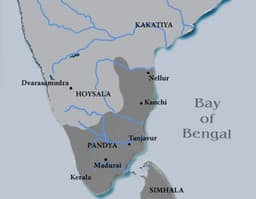
Maravarman Kulasekara
Emperor · Medieval
60.0Total
Basic Information
Born
1300
1268
Died
1371
1310
Era
Medieval
Medieval
Nationality
Bulgaria
India
Occupation
Emperor
Emperor
Civilization
Western
Indian
Score Comparison
Military (10%)
10.0
74.7
Political (20%)
68.0
53.8
Influence (20%)
56.7
60.0
Legacy (20%)
50.0
54.0
Leadership (15%)
74.0
68.0
Strategy (15%)
57.5
58.0
TOTAL
54.7
60.0
Ivan Alexander — Complete Timeline
1331 AD
Coronation as TsarPolitical Action◆ Major
Ivan Alexander was crowned Tsar of Bulgaria after overthrowing his predecessor. His reign marked the last period of cultural and political flourishing before the Ottoman conquest.
CoronationReignBulgarian Empire
Impact: nationalconstructive
1340 AD
Compilation of the Law CodeReform◆ Major
Ivan Alexander oversaw the compilation of a comprehensive law code, the 'Zakonik' (Law of the Tsar). This codified Byzantine and Bulgarian legal traditions, strengthening central authority.
Law CodeReformLegal System
Impact: nationalconstructive
1350 AD
Patronage of the Tarnovo Literary SchoolCultural◆ Major
Ivan Alexander patronized the Tarnovo Literary School, which produced illuminated manuscripts like the 'Manasses Chronicle' and the 'Gospels of Tsar Ivan Alexander'. This was the peak of medieval Bulgarian culture.
CulturalManuscriptsTarnovo School
Impact: regionalconstructive
1355 AD
Division of the EmpirePolitical Action◆ Major
Ivan Alexander divided Bulgaria between his two sons, Ivan Shishman and Ivan Sratsimir, weakening the state. This fragmentation facilitated the later Ottoman conquest.
DivisionSuccessionWeakening
Impact: nationaldestructive
Maravarman Kulasekara — Complete Timeline
1268 AD
Accession as Pandya emperorPolitical Action◆ Major
Maravarman Kulasekara succeeded Jatavarman Sundara Pandya as the Pandya emperor. He inherited a powerful empire but faced challenges from the Hoysalas and the Delhi Sultanate.
PandyaSuccessionEmpire
Impact: regional
1275 AD
War with the Hoysala kingdomWar
Maravarman Kulasekara fought a war against the Hoysala king Narasimha III. The conflict was inconclusive, but it drained Pandya resources and weakened the empire.
PandyaHoysalaWar
Impact: regional
1310 AD
Invasion by Malik KafurWar
Malik Kafur, a general of the Delhi Sultanate, invaded the Pandya kingdom. Maravarman Kulasekara was killed in the battle, and the Pandya capital Madurai was sacked, ending the Pandya empire.
Delhi SultanateInvasionDeath
Impact: regionaltragic
This comparison has not been analyzed yet.
One-time AI generation (~1 minute). Scores and timeline are already available below.
Rankings
🥇
Maravarman KulasekaraLeader
Mil: 74.7Pol: 53.8Inf: 60.0
60.0
🥈
Ivan Alexander
Mil: 10.0Pol: 68.0Inf: 56.7
54.7
+5.3 behind
How This Comparison Works
Algorithm
Each figure is scored on 6 dimensions (0—100 scale) based on structured historical data: Military (10%), Political (20%), Influence (20%), Legacy (20%), Leadership (15%), Strategy (15%). The weighted total produces the final ranking.
Data Sources
Scores are computed from structured sub-indicators in the database. Scale factors adjust for era (Ancient ×0.85, Modern ×1.0) and civilization size (Eastern ×1.05, Other ×0.80) to account for differences in population and military scale.
Maximum 3 Figures
Comparisons are limited to 2—3 figures to ensure readability and statistical meaningfulness.
Error Margins
±5 points per dimension — Sub-scores are derived from historical records with inherent uncertainty. Two figures within 5 points on a dimension should be considered roughly equivalent in that area.
Total Score Accuracy
±3 points overall — The weighted combination of 6 dimensions produces a total score with approximately ±3 points of uncertainty. Differences of less than 3 points are not statistically significant— the figures are effectively tied.
Known Limitations
- Historical records are incomplete and uneven across civilizations
- Figures from oral-tradition societies may be underrepresented
- Occupation labels can misclassify multi-role figures
- Scores measure capability and impact, not moral character
- Quantitative scoring is a comparison tool, not absolute truth
Capability Radar
Military (10%) — Battles & Warfare
Battles
45
75
Win Rate
40
70
Expansion
35
75
Political (20%) — Governance & Reform
Reform
55
65
Diplomacy
50
60
Economy
60
65
Influence (20%) — Cultural & Global Reach
Cultural
65
60
Global
30
40
Legacy (20%) — Historical Impact
Historical
55
65
Longevity
40
50
Leadership (15%) — Power & Stability
Tenure
60
70
Stability
45
55
Strategy (15%) — Tactics & Innovation
Strategy
55
70
Tactics
50
65
Reform
40
60
Similar Comparisons
Comments & Discussion
No comments yet. Be the first to share your thoughts!