Loading...
Ivan Chernyakhovsky vs Napoleon Bonaparte
Napoleon Bonaparte leads by 16.5 pts · 2 figures compared
…
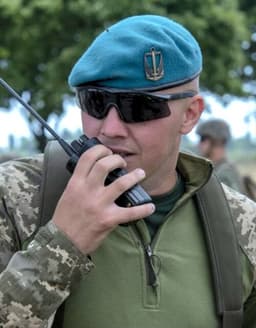
Ivan Chernyakhovsky
General · Modern
54.4Total

Napoleon Bonaparte
General · Modern
70.9Total
Basic Information
Born
1906
1769
Died
1945
1821
Era
Modern
Modern
Nationality
USSR
France
Occupation
General
General
Civilization
Western
Western
Score Comparison
Military (10%)
78.0
94.0
Political (20%)
35.1
72.0
Influence (20%)
58.0
40.0
Legacy (20%)
50.0
80.0
Leadership (15%)
50.7
78.0
Strategy (15%)
67.2
90.0
TOTAL
54.4
70.9
Ivan Chernyakhovsky — Complete Timeline
1943 AD
Battle of KurskWar◆ Major
Chernyakhovsky commanded the 60th Army during the Battle of Kursk. His forces defended the northern face and later participated in the counteroffensive, liberating Kursk and advancing toward Ukraine.
World War IIKurskCounteroffensive
Impact: regional
1944 AD
Command of the 3rd Belorussian FrontWar◆ Major
Chernyakhovsky was appointed commander of the 3rd Belorussian Front at age 37, becoming the youngest front commander in the Soviet Army. He led the front in Operation Bagration and the liberation of Vilnius.
World War IIBelorussian FrontYoungest
Impact: regional
1945 AD
East Prussian OffensiveWar◆ Major
Chernyakhovsky commanded the 3rd Belorussian Front in the East Prussian Offensive. His forces advanced into East Prussia, capturing towns and encircling German forces in K
World War IIEast PrussiaOffensive
Impact: regional
Death in combat near MelzakWar◆ Major
Chernyakhovsky was killed by artillery shell fragments near Melzak (now Pieni
World War IIKilled in ActionEast Prussia
Impact: nationaltragic
Napoleon Bonaparte — Complete Timeline
1799 AD
Coup of 18 BrumaireOther◆ Major
Napoleon Bonaparte, with support from his brother Lucien and key political figures, overthrew the Directory in a bloodless coup. He established the Consulate with himself as First Consul, effectively becoming the ruler of France. This event ended the French Revolution's most unstable period.
French RevolutionCoupRise to Power
Impact: regional
1804 AD
Promulgation of the Napoleonic CodeOther◆ Major
Napoleon enacted the Civil Code of the French, known as the Napoleonic Code, a comprehensive set of laws that replaced the fragmented feudal legal systems. The code established legal equality, protected property rights, and secularized law. It became the basis for legal systems in many European and world countries.
Legal ReformNapoleonic CodeCivil Law
Impact: globalconstructive
1805 AD
Battle of AusterlitzWar◆ Major
Napoleon's Grande Arm
Napoleonic WarsBattleDecisive Victory
Impact: global
1812 AD
Invasion of RussiaWar◆ Major
Napoleon led the Grande Arm
Napoleonic WarsInvasionDisaster
Impact: globaldestructive
1815 AD
Battle of WaterlooWar◆ Major
Napoleon's French army was defeated by the combined forces of the Duke of Wellington's Anglo-Allied army and Gebhard Leberecht von Bl
Napoleonic WarsBattleFinal Defeat
Impact: globaldestructive
Expert Analysis
ivan-chernyakhovsky-vs-napoleon-bonaparte
# The General and the Emperor: Napoleon Bonaparte and Ivan Chernyakhovsky
On a frozen February morning in 1945, a Soviet general stepped from his command car near the East Prussian town of Melzak. A fragment of artillery shell, fired from a German gun he could not see, ended his life instantly. He was 38 years old. Just over a century earlier, in June 1815, another general watched his empire dissolve on the muddy fields of Waterloo, his grand ambitions shattered by a coalition he had spent years provoking. He was 46. One died in the heat of battle, the youngest front commander in Soviet history. The other died in exile on a remote Atlantic island, the most famous conqueror Europe had ever seen. Both were men of war. But their stories—one a blazing comet, the other a brief, brilliant flash—reveal how history treats its generals with wildly uneven hands.
Origins
Napoleon Bonaparte was born in 1769 on the Mediterranean island of Corsica, a place that had only recently become French. His family was minor nobility, but poor. Young Napoleon spoke Italian-accented French and carried the chip of an outsider. He entered military school at nine, where classmates mocked his accent and his small stature. The French Revolution, which erupted when he was twenty, became his ladder. It tore down an old world of aristocrats and opened every rank to talent. Napoleon climbed with ruthless speed.
Ivan Chernyakhovsky was born in 1906 in a Ukrainian village, the son of a railway worker who had fought in the First World War. His childhood was marked by poverty and loss: his father died when Ivan was young, and the family struggled. He joined the Red Army in 1924, not as a noble outsider but as a loyal son of the Soviet system. The Russian Revolution had already happened. His world was one of ideology, industrialization, and the looming shadow of Stalin. Where Napoleon saw the Revolution as an opportunity to rise, Chernyakhovsky saw it as a structure to serve.
Rise to Power
Napoleon’s ascent was theatrical. In 1795, at 26, he defended the revolutionary government from a royalist mob with a "whiff of grapeshot"—a brutal cannonade that cleared the streets of Paris. He was rewarded with command of the Army of Italy. There, he astonished Europe: in 1796, he defeated larger Austrian armies through speed, deception, and a willingness to live off the land. By 1799, he had seized power in a coup and made himself First Consul. By 1804, he crowned himself Emperor.
Chernyakhovsky’s rise was quieter, but no less remarkable. He advanced through the ranks of the Red Army in the 1930s, a decade when Stalin’s purges decimated the officer corps. Survival itself was an achievement. Chernyakhovsky commanded a tank division during the desperate defense of Leningrad in 1941, then the 60th Army at the Battle of Kursk in 1943. There, his forces held the northern face of the salient against German armored thrusts, then joined the counteroffensive that broke the Wehrmacht’s back. In 1944, at age 37, he became the youngest front commander in Soviet history, leading the 3rd Belorussian Front. Napoleon had conquered Italy at 27; Chernyakhovsky commanded armies that would conquer Germany at 38.
Leadership & Governance
Napoleon was a genius of movement. His strategy, scored at 93, was instinctive and aggressive: strike the enemy’s flank, divide his forces, destroy his army in a single decisive battle. He won at Austerlitz in 1805, at Jena in 1806, at Friedland in 1807. But his political wisdom, scored at 75, was more fragile. The Napoleonic Code reformed French law and spread Enlightenment ideals across Europe—equality before the law, religious toleration, meritocracy. Yet Napoleon also crowned himself emperor, placed his brothers on thrones, and treated conquered nations as spoils. He could not stop conquering.
Chernyakhovsky’s military score, at 79.6, reflects a different kind of war. The Eastern Front was not a campaign of brilliant maneuvers but a grinding war of attrition, fought over vast distances and against a ruthless enemy. Chernyakhovsky excelled at combined-arms operations: coordinating infantry, tanks, artillery, and air power to smash through German defenses. His East Prussian Offensive in early 1945 was a masterclass in speed and pressure. But his political score, at 45.9, reflects the reality that he was a Soviet commander under Stalin: his role was to fight, not to govern. He left no code, no reforms, no political legacy.
Triumph & Tragedy
Napoleon’s greatest moment was perhaps Austerlitz in 1805, where he lured the combined Russian and Austrian armies into a trap and crushed them. His greatest failure was the invasion of Russia in 1812: he marched 600,000 men into the vastness of the East and returned with fewer than 100,000. The disaster broke his aura of invincibility. Waterloo in 1815 was the final act—a battle he should have won, but where his subordinates failed, his timing faltered, and the Prussian arrival sealed his fate.
Chernyakhovsky’s triumph was leading the 3rd Belorussian Front into East Prussia in 1945, the first Soviet forces to set foot on German soil. It was a moment of vengeance and liberation. His tragedy came not from defeat but from a random shell fragment. He died at the peak of his career, with the war nearly won. He never saw Berlin. He never knew what kind of general he might have become in peacetime.
Character & Destiny
Napoleon’s character was ambition itself. "Impossible," he once said, "is a word to be found only in the dictionary of fools." He believed he could shape history through sheer will, and for a decade, he was right. But his arrogance alienated allies, exhausted France, and united Europe against him. He was a man who could not stop.
Chernyakhovsky’s character was shaped by duty. He was known as a demanding commander, tough on subordinates, but also as a man who shared the hardships of his troops. He rose within a system that punished failure with death, and he succeeded by being competent, loyal, and relentless. He was not a visionary; he was a weapon.
Legacy
Napoleon’s legacy is immense. His military tactics are still studied. The Napoleonic Code influenced legal systems across Europe and the world. He reshaped the map of Europe, ended the Holy Roman Empire, and sparked nationalism that would define the next century. His score of 82.4 reflects a figure who changed the course of history.
Chernyakhovsky’s legacy, scored at 63.1, is more contained. He is remembered in Russia as a hero of the Great Patriotic War, a symbol of sacrifice and competence. Monuments were erected, streets were named after him. But his death truncated his story. He did not live to become Zhukov or Rokossovsky—figures whose names echo through history. He remains a footnote in the vast narrative of the Second World War, a brilliant general who died too soon.
Conclusion
Napoleon and Chernyakhovsky never met. They fought in different centuries, for different causes, with different tools. Napoleon built an empire and lost it; Chernyakhovsky helped destroy an empire and died before he could see the peace. One left a world transformed; the other left a promise unfulfilled. Their stories remind us that history remembers not just what a general does, but how long he lives to do it—and that the difference between a legend and a footnote can be measured in a single shell fragment.
Rankings
🥇
Napoleon BonaparteLeader
Mil: 94.0Pol: 72.0Inf: 40.0
70.9
🥈
Ivan Chernyakhovsky
Mil: 78.0Pol: 35.1Inf: 58.0
54.4
+16.5 behind
How This Comparison Works
Algorithm
Each figure is scored on 6 dimensions (0—100 scale) based on structured historical data: Military (10%), Political (20%), Influence (20%), Legacy (20%), Leadership (15%), Strategy (15%). The weighted total produces the final ranking.
Data Sources
Scores are computed from structured sub-indicators in the database. Scale factors adjust for era (Ancient ×0.85, Modern ×1.0) and civilization size (Eastern ×1.05, Other ×0.80) to account for differences in population and military scale.
Maximum 3 Figures
Comparisons are limited to 2—3 figures to ensure readability and statistical meaningfulness.
Error Margins
±5 points per dimension — Sub-scores are derived from historical records with inherent uncertainty. Two figures within 5 points on a dimension should be considered roughly equivalent in that area.
Total Score Accuracy
±3 points overall — The weighted combination of 6 dimensions produces a total score with approximately ±3 points of uncertainty. Differences of less than 3 points are not statistically significant— the figures are effectively tied.
Known Limitations
- Historical records are incomplete and uneven across civilizations
- Figures from oral-tradition societies may be underrepresented
- Occupation labels can misclassify multi-role figures
- Scores measure capability and impact, not moral character
- Quantitative scoring is a comparison tool, not absolute truth
Capability Radar
Military (10%) — Battles & Warfare
Battles
75
95
Win Rate
80
90
Expansion
70
95
Political (20%) — Governance & Reform
Reform
20
95
Diplomacy
25
80
Economy
15
85
Influence (20%) — Cultural & Global Reach
Cultural
35
85
Global
45
90
Legacy (20%) — Historical Impact
Historical
55
95
Longevity
40
90
Leadership (15%) — Power & Stability
Tenure
30
85
Stability
20
70
Strategy (15%) — Tactics & Innovation
Strategy
78
95
Tactics
82
98
Reform
60
92
Similar Comparisons
Comments & Discussion
No comments yet. Be the first to share your thoughts!