Loading...
Jai Singh II of Amber vs Napoleon Bonaparte
Napoleon Bonaparte leads by 14.3 pts · 2 figures compared
…
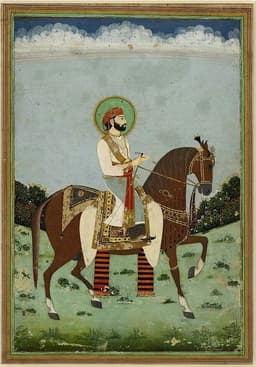
Jai Singh II of Amber
Emperor · Modern
56.6Total

Napoleon Bonaparte
General · Modern
70.9Total
Basic Information
Born
1688
1769
Died
1743
1821
Era
Modern
Modern
Nationality
India
France
Occupation
Emperor
General
Civilization
Indian
Western
Score Comparison
Military (10%)
10.0
94.0
Political (20%)
72.0
72.0
Influence (20%)
60.0
40.0
Legacy (20%)
52.0
80.0
Leadership (15%)
72.0
78.0
Strategy (15%)
60.0
90.0
TOTAL
56.6
70.9
Jai Singh II of Amber — Complete Timeline
1724 AD
Construction of Jantar Mantar in DelhiInvention◆ Major
Jai Singh II built the first Jantar Mantar observatory in Delhi, commissioned by Mughal Emperor Muhammad Shah. The observatory featured instruments like the Samrat Yantra and Jai Prakash Yantra for astronomical calculations. It was one of five observatories he built across India.
AstronomyScienceMughal Patronage
Impact: regionalconstructive
1727 AD
Founding of Jaipur cityCultural◆ Major
Jai Singh II founded the planned city of Jaipur, designed according to Vastu Shastra and Shilpa Shastra. The city was laid out in a grid pattern with wide streets and designated commercial zones. It became the capital of the Jaipur princely state.
Urban PlanningCity FoundingArchitecture
Impact: regionalconstructive
1733 AD
Battle of JavliWar
Jai Singh II led a campaign against the Jat ruler Badan Singh of Javli. The battle resulted in Jai Singh's victory and the annexation of Javli territory into Jaipur. This expanded Jaipur's influence in the region.
Territorial ExpansionRajput-Jat Conflict
Impact: regional
1734 AD
Construction of Jantar Mantar in JaipurInvention◆ Major
Jai Singh II built the Jantar Mantar observatory in Jaipur, a collection of 19 astronomical instruments. The observatory allowed precise measurements of time, celestial positions, and eclipses. It remains one of the largest stone observatories in the world.
AstronomyScienceArchitecture
Impact: globalconstructive
1735 AD
Publication of Zij-i Muhammad ShahiInvention◆ Major
Jai Singh II compiled the Zij-i Muhammad Shahi, an astronomical table based on observations from his observatories. The work updated earlier Islamic astronomical tables and provided accurate data for celestial movements. It was presented to Mughal Emperor Muhammad Shah.
AstronomySciencePublication
Impact: globalconstructive
Napoleon Bonaparte — Complete Timeline
1799 AD
Coup of 18 BrumaireOther◆ Major
Napoleon Bonaparte, with support from his brother Lucien and key political figures, overthrew the Directory in a bloodless coup. He established the Consulate with himself as First Consul, effectively becoming the ruler of France. This event ended the French Revolution's most unstable period.
French RevolutionCoupRise to Power
Impact: regional
1804 AD
Promulgation of the Napoleonic CodeOther◆ Major
Napoleon enacted the Civil Code of the French, known as the Napoleonic Code, a comprehensive set of laws that replaced the fragmented feudal legal systems. The code established legal equality, protected property rights, and secularized law. It became the basis for legal systems in many European and world countries.
Legal ReformNapoleonic CodeCivil Law
Impact: globalconstructive
1805 AD
Battle of AusterlitzWar◆ Major
Napoleon's Grande Arm
Napoleonic WarsBattleDecisive Victory
Impact: global
1812 AD
Invasion of RussiaWar◆ Major
Napoleon led the Grande Arm
Napoleonic WarsInvasionDisaster
Impact: globaldestructive
1815 AD
Battle of WaterlooWar◆ Major
Napoleon's French army was defeated by the combined forces of the Duke of Wellington's Anglo-Allied army and Gebhard Leberecht von Bl
Napoleonic WarsBattleFinal Defeat
Impact: globaldestructive
Expert Analysis
jai-singh-ii-of-amber-vs-napoleon-bonaparte
# The Emperor and the Stargazer
In the spring of 1815, as Napoleon Bonaparte marched through the snow toward his final gamble at Waterloo, his empire was crumbling. Less than a century earlier, on the other side of the world, a Rajput king named Jai Singh II was laying the foundation stones of Jaipur, a city designed not for conquest but for cosmic harmony. These two men, born into vastly different worlds, shared the same century yet could not have diverged more sharply in ambition, method, and fate. One sought to reshape the map of Europe; the other sought to map the heavens. Why did Napoleon, with his dazzling military genius, end his days in exile on a remote Atlantic island, while Jai Singh II, who never commanded a great army, left observatories that still stand? The answer lies not in the raw scores of history—Napoleon’s military rating of 94 against Jai Singh’s 52—but in the deeper currents of what each man believed power truly meant.
Origins
Napoleon Bonaparte was born in 1769 on the island of Corsica, a place of rugged independence and simmering resentment against French rule. His family was minor nobility, but their world was poor and provincial. From childhood, Napoleon absorbed the volatile energies of the French Revolution—a time when old hierarchies were shattered, and a young artillery officer could rise to command armies. His education at French military academies taught him the science of war, but his soul was forged in the chaos of revolution, where ambition was the only currency that mattered.
Jai Singh II, born in 1688 in Amber, Rajasthan, belonged to the Kachhwaha Rajput clan, a warrior aristocracy that had served Mughal emperors for generations. His childhood was steeped in the rituals of court, the codes of Rajput honor, and the mathematics of Vedic astronomy. Where Napoleon saw a world to be conquered, Jai Singh saw a cosmos to be understood. The Mughal Empire under Aurangzeb was in decline, but for a Rajput prince, the path to power lay not in open rebellion but in careful diplomacy, service, and the cultivation of knowledge.
Rise to Power
Napoleon’s ascent was meteoric. In 1796, at age 27, he took command of the French army in Italy and within months had shattered the Austrian Empire’s hold on the peninsula. His Italian campaign of 1796-1797 was a masterpiece of speed, deception, and ruthless exploitation of enemy weaknesses. By 1799, he had seized power in France as First Consul, and by 1804 he crowned himself Emperor. Every step was a gamble, and every gamble paid off—until they didn’t.
Jai Singh’s rise was more measured. He became ruler of Amber at age 11 in 1699, under a regency. His early years were spent navigating the treacherous politics of the Mughal court, where Rajput kings served as generals and governors. In 1719, he supported the Mughal emperor Muhammad Shah, securing his position as a trusted noble. His power came not from conquest but from patronage—the emperor commissioned him to reform the Islamic calendar, a task that led Jai Singh to build observatories across northern India. His rise was not a lightning strike but the slow accretion of trust, skill, and intellectual ambition.
Leadership & Governance
Napoleon governed through will and terror. He centralized the French state, created the Napoleonic Code—a legal framework that influenced nations for centuries—and built a network of roads, schools, and banks. But his leadership was ultimately autocratic: he tolerated no dissent, suppressed the press, and treated Europe as a chessboard for his ambition. His military genius was undeniable—his strategy of concentrating overwhelming force at the decisive point, as at Austerlitz in 1805, rewrote the art of war. Yet his political wisdom was shallow. He failed to understand that conquered peoples would resist, that nationalism was a force he could not control, and that his own ego would drive him to invade Russia in 1812, a catastrophe that cost half a million lives.
Jai Singh governed through alliance and enlightenment. As a Rajput king under Mughal suzerainty, he could not wage aggressive war; his military score of 52 reflects a man who fought only when necessary and preferred negotiation. Instead, he invested in architecture, astronomy, and urban planning. In 1727, he founded Jaipur, a city laid out in nine rectangular blocks according to ancient Vastu principles—a planned metropolis that balanced defense, commerce, and spiritual order. His Jantar Mantar observatories, built in Delhi in 1724 and Jaipur in 1734, were not mere monuments but working laboratories, equipped with giant stone instruments to track the stars with astonishing precision. In 1735, he published the *Zij-i Muhammad Shahi*, a set of astronomical tables that corrected errors in earlier Islamic and European star charts. His leadership was that of a scholar-king who believed that the highest form of power was understanding the universe.
Triumph & Tragedy
Napoleon’s greatest triumph was the Battle of Austerlitz in 1805, where he destroyed the combined armies of Austria and Russia. His greatest tragedy was the invasion of Russia in 1812, where the vastness of the land and the cruelty of winter consumed his Grand Army. Exiled to Elba in 1814, he escaped and returned to power for a hundred days, only to meet final defeat at Waterloo in 1815. He died in 1821 on Saint Helena, a prisoner of the British, his dreams of European domination in ashes.
Jai Singh’s triumph was quieter but more enduring. The observatories he built still stand in Delhi, Jaipur, Ujjain, Varanasi, and Mathura. His *Zij-i Muhammad Shahi* remained a standard reference for astronomers in India for generations. His tragedy was that his intellectual ambitions were not fully realized—the Mughal court, distracted by political decay, did not sustain his scientific projects after his death. He died in 1743, his kingdom intact, but his vision of a scientifically enlightened India faded as colonial powers rose.
Character & Destiny
Napoleon’s character was a furnace of ambition, insecurity, and relentless energy. He once said, “Impossible is a word to be found only in the dictionary of fools.” His destiny was shaped by his refusal to accept limits—a quality that drove him to extraordinary heights but also to catastrophic overreach. He could not stop, could not compromise, could not delegate. His downfall was not just military but psychological: he believed he was the master of events, but events eventually mastered him.
Jai Singh’s character was that of a seeker. He was a Rajput warrior who chose the astrolabe over the sword. His destiny was shaped by his acceptance of limits—the limits of his political position under the Mughals, the limits of human knowledge, and the limits of time. He did not try to conquer the world; he tried to measure it. His humility before the cosmos was his strength. “The heavens declare the glory of God,” he might have said, “and the firmament shows his handiwork.” But he did not try to seize that glory for himself.
Legacy
Napoleon’s legacy is a contradiction. He spread the ideals of the French Revolution—legal equality, meritocracy, secular governance—across Europe, yet he also revived monarchy and enslaved Haiti. His Napoleonic Code remains the foundation of civil law in much of the world, but his wars killed millions. He is remembered as a titan of history, a figure of both awe and caution.
Jai Singh’s legacy is quieter but more harmonious. Jaipur, the Pink City, thrives as a UNESCO World Heritage site, a living monument to his vision. The Jantar Mantar in Jaipur, with its giant sundials and zodiac instruments, is a testament to the marriage of science and art. He is remembered not as a conqueror but as a builder—of cities, of knowledge, of a bridge between the ancient and the modern.
Conclusion
Standing before the Samrat Yantra in Jaipur—a stone sundial that towers 27 meters high and can tell time to within two seconds—one feels the weight of a different kind of ambition. Napoleon wanted to conquer the world; Jai Singh wanted to understand it. One left behind a legend of power and tragedy; the other left behind a tool for measuring the heavens. In the end, which legacy endures? The observatories still function; the Napoleonic Code has been amended countless times. Perhaps the deepest difference is this: Napoleon’s ambition was ultimately about himself, while Jai Singh’s was about something larger—the stars, the cosmos, the unchanging order of the universe. And in the long arc of history, the stars outlast empires.
Rankings
🥇
Napoleon BonaparteLeader
Mil: 94.0Pol: 72.0Inf: 40.0
70.9
🥈
Jai Singh II of Amber
Mil: 10.0Pol: 72.0Inf: 60.0
56.6
+14.3 behind
How This Comparison Works
Algorithm
Each figure is scored on 6 dimensions (0—100 scale) based on structured historical data: Military (10%), Political (20%), Influence (20%), Legacy (20%), Leadership (15%), Strategy (15%). The weighted total produces the final ranking.
Data Sources
Scores are computed from structured sub-indicators in the database. Scale factors adjust for era (Ancient ×0.85, Modern ×1.0) and civilization size (Eastern ×1.05, Other ×0.80) to account for differences in population and military scale.
Maximum 3 Figures
Comparisons are limited to 2—3 figures to ensure readability and statistical meaningfulness.
Error Margins
±5 points per dimension — Sub-scores are derived from historical records with inherent uncertainty. Two figures within 5 points on a dimension should be considered roughly equivalent in that area.
Total Score Accuracy
±3 points overall — The weighted combination of 6 dimensions produces a total score with approximately ±3 points of uncertainty. Differences of less than 3 points are not statistically significant— the figures are effectively tied.
Known Limitations
- Historical records are incomplete and uneven across civilizations
- Figures from oral-tradition societies may be underrepresented
- Occupation labels can misclassify multi-role figures
- Scores measure capability and impact, not moral character
- Quantitative scoring is a comparison tool, not absolute truth
Capability Radar
Military (10%) — Battles & Warfare
Battles
45
95
Win Rate
40
90
Expansion
35
95
Political (20%) — Governance & Reform
Reform
65
95
Diplomacy
70
80
Economy
55
85
Influence (20%) — Cultural & Global Reach
Cultural
60
85
Global
40
90
Legacy (20%) — Historical Impact
Historical
65
95
Longevity
70
90
Leadership (15%) — Power & Stability
Tenure
60
85
Stability
50
70
Strategy (15%) — Tactics & Innovation
Strategy
55
95
Tactics
50
98
Reform
30
92
Similar Comparisons
Comments & Discussion
桔梗之盾6/17/2026
拿破仑是只靠军功上位的暴发户,而杰伊·辛格二世才是真正的文明缔造者。他设计的斋浦尔城以天文仪器和几何布局著称,简·达·曼塔尔天文台的日晷误差至今不超过两秒。拿破仑呢?滑铁卢一战败光家底,流放圣赫勒拿岛。一个只会打仗却输了全部,一个建城立观,天文学遗产至今可用。你选谁当历史标杆?显然是那位星象师。