Loading...
Jaswant Singh of Jodhpur vs Napoleon Bonaparte
Napoleon Bonaparte leads by 21.5 pts · 2 figures compared
…
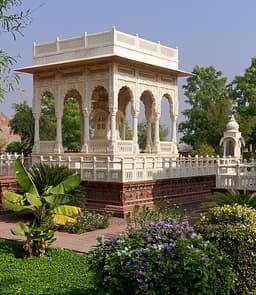
Jaswant Singh of Jodhpur
Emperor · Modern
49.4Total

Napoleon Bonaparte
General · Modern
70.9Total
Basic Information
Born
1629
1769
Died
1678
1821
Era
Modern
Modern
Nationality
India
France
Occupation
Emperor
General
Civilization
Indian
Western
Score Comparison
Military (10%)
10.0
94.0
Political (20%)
61.3
72.0
Influence (20%)
52.5
40.0
Legacy (20%)
43.3
80.0
Leadership (15%)
67.0
78.0
Strategy (15%)
51.7
90.0
TOTAL
49.4
70.9
Jaswant Singh of Jodhpur — Complete Timeline
1658 AD
Battle of DharmatWar◆ Major
Jaswant Singh commanded the Rajput contingent for the Mughal prince Dara Shikoh against Aurangzeb at Dharmat. Aurangzeb's forces won, leading to Dara's downfall and Jaswant's temporary disgrace.
Mughal War of SuccessionBattle
Impact: regional
1659 AD
Battle of KhajwaWar◆ Major
Jaswant Singh fought for Aurangzeb against Dara Shikoh at Khajwa. His support helped Aurangzeb secure victory, and he was rewarded with the governorship of Gujarat.
Mughal War of SuccessionBattle
Impact: regional
1660 AD
Governor of GujaratPolitical Action
Jaswant Singh served as governor of Gujarat under Aurangzeb. He administered the province effectively but faced conflicts with Mughal officials, leading to his recall.
GovernorGujaratMughal Administration
Impact: regionalconstructive
1678 AD
Death in the Battle of JamrudWar◆ Major
Jaswant Singh died while leading a Mughal campaign against the Afghans at Jamrud. His death left Marwar without a strong ruler, leading to a succession crisis and Mughal intervention.
BattleDeathMarwar
Impact: regionaltragic
Napoleon Bonaparte — Complete Timeline
1799 AD
Coup of 18 BrumaireOther◆ Major
Napoleon Bonaparte, with support from his brother Lucien and key political figures, overthrew the Directory in a bloodless coup. He established the Consulate with himself as First Consul, effectively becoming the ruler of France. This event ended the French Revolution's most unstable period.
French RevolutionCoupRise to Power
Impact: regional
1804 AD
Promulgation of the Napoleonic CodeOther◆ Major
Napoleon enacted the Civil Code of the French, known as the Napoleonic Code, a comprehensive set of laws that replaced the fragmented feudal legal systems. The code established legal equality, protected property rights, and secularized law. It became the basis for legal systems in many European and world countries.
Legal ReformNapoleonic CodeCivil Law
Impact: globalconstructive
1805 AD
Battle of AusterlitzWar◆ Major
Napoleon's Grande Arm
Napoleonic WarsBattleDecisive Victory
Impact: global
1812 AD
Invasion of RussiaWar◆ Major
Napoleon led the Grande Arm
Napoleonic WarsInvasionDisaster
Impact: globaldestructive
1815 AD
Battle of WaterlooWar◆ Major
Napoleon's French army was defeated by the combined forces of the Duke of Wellington's Anglo-Allied army and Gebhard Leberecht von Bl
Napoleonic WarsBattleFinal Defeat
Impact: globaldestructive
Expert Analysis
jaswant-singh-of-jodhpur-vs-napoleon-bonaparte
# The Conqueror and the Vassal: Napoleon and Jaswant Singh
On a June morning in 1815, Napoleon Bonaparte watched the rain-soaked fields of Waterloo, his grand army poised for a battle that would decide the fate of Europe. A century and a half earlier, on a dusty plain near Jamrud in the Afghan hills, Jaswant Singh of Jodhpur fell in a skirmish that barely registered beyond the Mughal court. One man remade the world; the other fought to preserve a world already fading. What separates a figure who reshapes history from one who merely passes through it? The answer lies not just in ambition, but in the currents of the age and the choices that define a leader.
Origins
Napoleon was born in 1769 on the island of Corsica, a place newly French and fiercely independent. His family was minor nobility, poor enough that he ate bread and water at military school, where his classmates mocked his accent. This outsider’s hunger drove him. He absorbed Enlightenment ideas, studied artillery, and watched the French Revolution tear down a thousand years of monarchy. The old world was collapsing, and a young man with talent could climb as high as his sword could reach.
Jaswant Singh was born in 1629 into the Rathore clan of Marwar, rulers of the desert kingdom of Jodhpur. His world was one of fixed hierarchies—Rajput honor, Mughal service, and the eternal dance between submission and pride. His father had died in battle, and Jaswant inherited a throne that required constant negotiation with the Mughal emperor. Unlike Napoleon, he did not question the system; he sought to navigate it. His education was martial and courtly, not philosophical. Where Napoleon saw a ladder to the sky, Jaswant saw a path through a narrow gate.
Rise to Power
Napoleon’s ascent was a masterpiece of timing and audacity. At 24, he crushed a royalist uprising in Paris with a “whiff of grapeshot.” At 26, he conquered Italy, turning a ragged army into a legend. He seized power in a coup in 1799, crowned himself emperor in 1804, and by 1807 had humbled Prussia, Austria, and Russia. Each victory was a gamble, each step a calculated risk. The Revolution had cleared the stage, and Napoleon walked onto it alone.
Jaswant Singh’s rise was subtler, constrained by obligations. He became Maharaja of Marwar as a boy and spent his life as a Mughal vassal. In 1658, at the Battle of Dharmat, he commanded the Rajput contingent for Prince Dara Shikoh, the Mughal heir, against the rebellious Aurangzeb. He lost. A year later, at the Battle of Khajwa, he switched sides, fighting for Aurangzeb against Dara. His support helped secure Aurangzeb’s victory, and he was rewarded with the governorship of Gujarat, which he administered from 1660 with competence but constant friction. He was not seizing power; he was surviving within it.
Leadership & Governance
Napoleon ruled like a force of nature. He reorganized France into efficient departments, established the Bank of France, and created the Napoleonic Code—a legal framework that enshrined merit, property rights, and secular authority. His military genius was unmatched: he used speed, artillery, and the corps system to shatter larger armies. But he also centralized power, censored the press, and placed family on thrones. His governance was brilliant, brittle, and utterly dependent on his own presence.
Jaswant Singh governed as a Rajput king within the Mughal system. In Gujarat, he collected taxes, maintained order, and defended the frontier. But he was never his own master. Aurangzeb distrusted him, and the emperor’s growing orthodoxy squeezed Rajput autonomy. Jaswant’s military record was mixed—competent but not spectacular, with a strategy score of 44.2 against Napoleon’s 93. He fought for others, not for a vision of his own. His leadership was about loyalty, not transformation.
Triumph & Tragedy
Napoleon’s greatest moment was Austerlitz in 1805, where he destroyed a Russo-Austrian army and dissolved the Holy Roman Empire. His tragedy was the invasion of Russia in 1812—600,000 men marched east; fewer than 40,000 returned. Exiled to Elba, he escaped and rallied France for one last campaign, only to meet Wellington at Waterloo. His final years were spent on Saint Helena, dictating memoirs and blaming the weather.
Jaswant Singh’s triumph was surviving the Mughal civil war and ruling Marwar for two decades. His tragedy came in 1678, at the Battle of Jamrud, where he died leading a Mughal campaign against Afghan tribes. His death left Marwar without a strong heir, and Aurangzeb seized the kingdom, triggering a Rajput rebellion that outlasted both men. Jaswant’s end was not a grand defeat but a quiet extinction.
Character & Destiny
Napoleon was driven by an insatiable will. “Impossible is a word to be found only in the dictionary of fools,” he said. His personality—brilliant, arrogant, relentless—shaped every decision. He trusted his star, and for a decade, it did not fail him. But the same hunger that lifted him to power also pushed him beyond reason. He could not stop, and so he fell.
Jaswant Singh was a man caught between worlds. He was a Rajput king who served a Mughal emperor, a warrior who fought for a master he did not choose. His strategy score of 44.2 reflects a life of reaction, not initiative. He was honorable, capable, but ultimately a figure of his time, not above it. Where Napoleon remade history, Jaswant was remade by it.
Legacy
Napoleon’s legacy is monumental. The Napoleonic Code influences legal systems across Europe and the Americas. He reshaped nationalism, warfare, and the very idea of the modern state. His memory is contested—tyrant or reformer—but never ignored. His total score of 82.4 reflects a figure who changed the world.
Jaswant Singh’s legacy is local. He is remembered in Rajasthan as a ruler who defended Rajput honor, but his death opened the door to Mughal aggression. His score of 60.9 speaks to a life of service, not transformation. He is a footnote in the story of India’s decline under Aurangzeb, a tragic figure in a larger drama.
Conclusion
Napoleon and Jaswant Singh faced the same fundamental question: how to lead in a world of empires and armies. Napoleon answered with revolution, conquest, and a vision of himself as destiny’s instrument. Jaswant answered with loyalty, duty, and the careful management of a shrinking space. One changed the map; the other held a line. Their difference is not merely of talent but of context—the French Revolution opened doors that Mughal India had long closed. But it is also a difference of will. Napoleon would not accept the world as it was; Jaswant could not imagine it otherwise. In that gap between what is and what might be, history writes its verdict.
Rankings
🥇
Napoleon BonaparteLeader
Mil: 94.0Pol: 72.0Inf: 40.0
70.9
🥈
Jaswant Singh of Jodhpur
Mil: 10.0Pol: 61.3Inf: 52.5
49.4
+21.5 behind
How This Comparison Works
Algorithm
Each figure is scored on 6 dimensions (0—100 scale) based on structured historical data: Military (10%), Political (20%), Influence (20%), Legacy (20%), Leadership (15%), Strategy (15%). The weighted total produces the final ranking.
Data Sources
Scores are computed from structured sub-indicators in the database. Scale factors adjust for era (Ancient ×0.85, Modern ×1.0) and civilization size (Eastern ×1.05, Other ×0.80) to account for differences in population and military scale.
Maximum 3 Figures
Comparisons are limited to 2—3 figures to ensure readability and statistical meaningfulness.
Error Margins
±5 points per dimension — Sub-scores are derived from historical records with inherent uncertainty. Two figures within 5 points on a dimension should be considered roughly equivalent in that area.
Total Score Accuracy
±3 points overall — The weighted combination of 6 dimensions produces a total score with approximately ±3 points of uncertainty. Differences of less than 3 points are not statistically significant— the figures are effectively tied.
Known Limitations
- Historical records are incomplete and uneven across civilizations
- Figures from oral-tradition societies may be underrepresented
- Occupation labels can misclassify multi-role figures
- Scores measure capability and impact, not moral character
- Quantitative scoring is a comparison tool, not absolute truth
Capability Radar
Military (10%) — Battles & Warfare
Battles
45
95
Win Rate
40
90
Expansion
35
95
Political (20%) — Governance & Reform
Reform
30
95
Diplomacy
50
80
Economy
35
85
Influence (20%) — Cultural & Global Reach
Cultural
35
85
Global
20
90
Legacy (20%) — Historical Impact
Historical
40
95
Longevity
30
90
Leadership (15%) — Power & Stability
Tenure
40
85
Stability
30
70
Strategy (15%) — Tactics & Innovation
Strategy
45
95
Tactics
50
98
Reform
30
92
Similar Comparisons
Comments & Discussion
WATERLOO'S FOOL6/17/2026
Comparing a minor Rajput vassal to Napoleon is absurd. Jaswant Singh died in a pointless skirmish against the Mughals—hardly a blip. Napoleon rewrote European law with the Napoleonic Code and reshaped warfare. One man changed continents; the other fought for a dying feudal system. Apples and oranges, mate.
沙漠浪子6/17/2026
拿破仑和贾斯万特·辛格?根本不是一个量级。拿破仑从科西嘉穷小子爬到欧洲霸主,用大炮和法典改写历史;辛格只是个在莫卧儿朝廷里打转的藩王,最后死在阿富汗山沟里的杂兵战中。别拿流星和沙子比——一个照亮夜空,一个随风消散。
ARTILLERYMAN'S REBUTTAL6/17/2026
Sure, Napoleon conquered Europe, but Jaswant Singh understood the art of survival in a world of empires. While Napoleon's ambitions led to his exile on St. Helena, Singh fought to preserve Rajput autonomy against Mughal centralization. Different scales, but similar struggles—both were trapped by their era's geopolitics. Give the man some credit for navigating impossible odds.
历史的角落6/17/2026
你们都在吹拿破仑,可别忘了贾斯万特·辛格在1658年达默尔战役中的战术!他带着一万骑兵突袭莫卧儿大军,差点杀了奥朗则布。拿破仑有大军团,辛格有沙漠游击战。不是所有伟大都要用地图上的色块衡量——有时候,失败也比遗忘好。
SKEPTIC OF GREAT MEN6/17/2026
This whole comparison is a stretch. Napoleon was a product of revolutionary France's military revolution—mass conscription, mobile artillery, meritocracy. Jaswant Singh operated in a pre-industrial, honor-bound system where battles were decided by cavalry charges and court intrigue. Their "greatness" is entirely contingent on different historical contexts. Stop romanticizing conquest.