Loading...
This comparison has not been analyzed yet.
One-time AI generation (~1 minute). Scores and timeline are already available below.
Jawaharlal Nehru vs Robert Muldoon
Jawaharlal Nehru leads by 7.7 pts · 2 figures compared
…
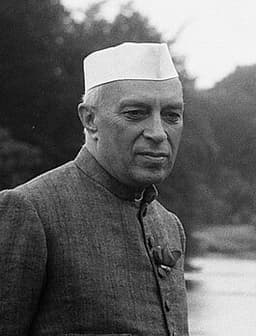
Jawaharlal Nehru
Politician · Modern
59.9Total
Robert Muldoon
Politician · Modern
52.2Total
Basic Information
Born
1889
1921
Died
1964
—
Era
Modern
Modern
Nationality
India
New Zealand
Occupation
Politician
Politician
Civilization
Indian
Western
Score Comparison
Military (10%)
10.0
50.0
Political (20%)
78.0
45.0
Influence (20%)
88.0
55.7
Legacy (20%)
40.0
46.7
Leadership (15%)
78.0
72.0
Strategy (15%)
35.0
40.5
TOTAL
59.9
52.2
Jawaharlal Nehru — Complete Timeline
1919 AD
Jallianwala Bagh Massacre ResponsePolitical Action◆ Major
Nehru, deeply affected by the Jallianwala Bagh massacre, joined the Indian independence movement. He became a key leader in the Indian National Congress, advocating for non-violent resistance against British rule.
Independence MovementIndian National CongressNon-violence
Impact: national
1929 AD
Election as Congress President (Lahore Session)Political Action◆ Major
Nehru was elected President of the Indian National Congress at its Lahore session, where he declared Purna Swaraj (complete independence) as the party's goal. This marked a shift from dominion status to full independence.
Indian National CongressIndependencePurna Swaraj
Impact: nationalprogressive
1942 AD
Quit India Movement LeadershipPolitical Action◆ Major
Nehru, alongside Gandhi, led the Quit India Movement, demanding an end to British rule. He was arrested and imprisoned for nearly three years, but the movement intensified pressure on Britain to leave India.
Quit IndiaCivil DisobedienceImprisonment
Impact: nationalprogressive
1947 AD
First Prime Minister of IndiaPolitical Action
Nehru became the first Prime Minister of independent India, delivering his 'Tryst with Destiny' speech. He led the nation through partition, integration of princely states, and the drafting of a secular, democratic constitution.
IndependencePrime MinisterConstitution
Impact: globalconstructive
1961 AD
Founding of the Non-Aligned MovementPolitical Action◆ Major
Nehru co-founded the Non-Aligned Movement with Tito, Nasser, and Sukarno, advocating for a third way during the Cold War. This positioned India as a leader of developing nations, promoting peace and decolonization.
Non-Aligned MovementCold WarForeign Policy
Impact: globalconstructive
Robert Muldoon — Complete Timeline
1975 AD
Election as Prime Minister of New ZealandPolitical Action◆ Major
Robert Muldoon led the National Party to victory in the 1975 general election, defeating the Labour government. He became Prime Minister, a position he held for nine years, known for his confrontational style and populist policies.
ElectionNational Party
Impact: national
1979 AD
Think Big industrial projectsReform◆ Major
Muldoon's government launched the 'Think Big' program, a series of large-scale industrial projects including synthetic fuel plants and steel mills. The projects aimed to reduce New Zealand's dependence on imported oil but incurred massive debt and were criticized as economically unsound.
Industrial PolicyEconomy
Impact: nationaldestructive
1981 AD
1981 Springbok Tour protestsPolitical Action◆ Major
Muldoon's government allowed the South African rugby team to tour New Zealand despite apartheid, sparking massive protests. The tour divided the country and led to widespread civil disobedience, with police clashing with protesters.
ApartheidProtestsRugby
Impact: nationaldestructive
1982 AD
Wage and price freezeReform◆ Major
Muldoon imposed a comprehensive wage and price freeze to combat inflation. The freeze was initially popular but led to distortions in the economy and was eventually abandoned, contributing to his government's defeat in 1984.
Economic PolicyInflation
Impact: nationaldestructive
1984 AD
Defeat in the 1984 snap electionPolitical Action◆ Major
Muldoon called a snap election in 1984, which his National Party lost to David Lange's Labour Party. The defeat ended his nine-year tenure as Prime Minister, and he later faced a constitutional crisis over the transition of power.
ElectionDefeat
Impact: nationaltragic
This comparison has not been analyzed yet.
One-time AI generation (~1 minute). Scores and timeline are already available below.
Rankings
🥇
Jawaharlal NehruLeader
Mil: 10.0Pol: 78.0Inf: 88.0
59.9
🥈
Robert Muldoon
Mil: 50.0Pol: 45.0Inf: 55.7
52.2
+7.7 behind
How This Comparison Works
Algorithm
Each figure is scored on 6 dimensions (0—100 scale) based on structured historical data: Military (10%), Political (20%), Influence (20%), Legacy (20%), Leadership (15%), Strategy (15%). The weighted total produces the final ranking.
Data Sources
Scores are computed from structured sub-indicators in the database. Scale factors adjust for era (Ancient ×0.85, Modern ×1.0) and civilization size (Eastern ×1.05, Other ×0.80) to account for differences in population and military scale.
Maximum 3 Figures
Comparisons are limited to 2—3 figures to ensure readability and statistical meaningfulness.
Error Margins
±5 points per dimension — Sub-scores are derived from historical records with inherent uncertainty. Two figures within 5 points on a dimension should be considered roughly equivalent in that area.
Total Score Accuracy
±3 points overall — The weighted combination of 6 dimensions produces a total score with approximately ±3 points of uncertainty. Differences of less than 3 points are not statistically significant— the figures are effectively tied.
Known Limitations
- Historical records are incomplete and uneven across civilizations
- Figures from oral-tradition societies may be underrepresented
- Occupation labels can misclassify multi-role figures
- Scores measure capability and impact, not moral character
- Quantitative scoring is a comparison tool, not absolute truth
Capability Radar
Military (10%) — Battles & Warfare
Battles
26
28
Win Rate
28
32
Expansion
32
33
Political (20%) — Governance & Reform
Reform
85
65
Diplomacy
90
55
Economy
70
60
Influence (20%) — Cultural & Global Reach
Cultural
80
40
Global
85
35
Legacy (20%) — Historical Impact
Historical
85
50
Longevity
80
30
Leadership (15%) — Power & Stability
Tenure
85
70
Stability
75
50
Strategy (15%) — Tactics & Innovation
Strategy
35
36
Tactics
37
40
Reform
36
41
Similar Comparisons
Comments & Discussion
No comments yet. Be the first to share your thoughts!