Loading...
This comparison has not been analyzed yet.
One-time AI generation (~1 minute). Scores and timeline are already available below.
Jawaharlal Nehru vs Tarja Halonen
Jawaharlal Nehru leads by 0.3 pts · 2 figures compared
…
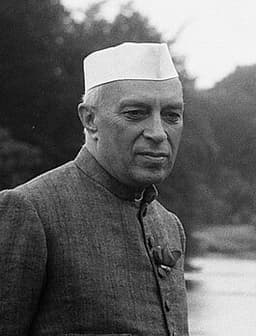
Jawaharlal Nehru
Politician · Modern
59.9Total

Tarja Halonen
Politician · Modern
59.6Total
Basic Information
Born
1889
1943
Died
1964
—
Era
Modern
Modern
Nationality
India
Finland
Occupation
Politician
Politician
Civilization
Indian
Western
Score Comparison
Military (10%)
10.0
35.5
Political (20%)
78.0
72.0
Influence (20%)
88.0
61.0
Legacy (20%)
40.0
48.3
Leadership (15%)
78.0
79.8
Strategy (15%)
35.0
60.0
TOTAL
59.9
59.6
Jawaharlal Nehru — Complete Timeline
1919 AD
Jallianwala Bagh Massacre ResponsePolitical Action◆ Major
Nehru, deeply affected by the Jallianwala Bagh massacre, joined the Indian independence movement. He became a key leader in the Indian National Congress, advocating for non-violent resistance against British rule.
Independence MovementIndian National CongressNon-violence
Impact: national
1929 AD
Election as Congress President (Lahore Session)Political Action◆ Major
Nehru was elected President of the Indian National Congress at its Lahore session, where he declared Purna Swaraj (complete independence) as the party's goal. This marked a shift from dominion status to full independence.
Indian National CongressIndependencePurna Swaraj
Impact: nationalprogressive
1942 AD
Quit India Movement LeadershipPolitical Action◆ Major
Nehru, alongside Gandhi, led the Quit India Movement, demanding an end to British rule. He was arrested and imprisoned for nearly three years, but the movement intensified pressure on Britain to leave India.
Quit IndiaCivil DisobedienceImprisonment
Impact: nationalprogressive
1947 AD
First Prime Minister of IndiaPolitical Action
Nehru became the first Prime Minister of independent India, delivering his 'Tryst with Destiny' speech. He led the nation through partition, integration of princely states, and the drafting of a secular, democratic constitution.
IndependencePrime MinisterConstitution
Impact: globalconstructive
1961 AD
Founding of the Non-Aligned MovementPolitical Action◆ Major
Nehru co-founded the Non-Aligned Movement with Tito, Nasser, and Sukarno, advocating for a third way during the Cold War. This positioned India as a leader of developing nations, promoting peace and decolonization.
Non-Aligned MovementCold WarForeign Policy
Impact: globalconstructive
Tarja Halonen — Complete Timeline
2000 AD
Elected first female President of FinlandPolitical Action◆ Major
Tarja Halonen was elected as the 11th President of Finland, becoming the first woman to hold the office. She won the election with 51.6% of the vote in the second round, defeating Esko Aho.
PresidencyGender EqualityElection
Impact: nationalprogressive
2002 AD
Oversaw Finland's participation in the EurozonePolitical Action◆ Major
During Halonen's presidency, Finland adopted the euro as its currency, replacing the markka. She supported the move as part of European integration, though it was controversial among some Finns.
EurozoneCurrencyEuropean Integration
Impact: nationalconstructive
2003 AD
Promoted human rights and gender equality internationallyPolitical Action◆ Major
Halonen used her presidency to advocate for human rights, gender equality, and social justice. She spoke at the UN and other forums, supporting LGBT rights and women's empowerment, both domestically and globally.
Human RightsGender EqualityForeign Policy
Impact: globalprogressive
2006 AD
Re-elected for a second termPolitical Action◆ Major
Halonen was re-elected as president, defeating Sauli Niinist
Re-electionPresidencyFinland
Impact: nationalconstructive
2012 AD
Ended her presidency after two termsPolitical Action
Halonen stepped down after serving the maximum two terms, as per the Finnish constitution. She was succeeded by Sauli Niinist
PresidencyTerm LimitTransition
Impact: national
This comparison has not been analyzed yet.
One-time AI generation (~1 minute). Scores and timeline are already available below.
Rankings
🥇
Jawaharlal NehruLeader
Mil: 10.0Pol: 78.0Inf: 88.0
59.9
🥈
Tarja Halonen
Mil: 35.5Pol: 72.0Inf: 61.0
59.6
+0.3 behind
How This Comparison Works
Algorithm
Each figure is scored on 6 dimensions (0—100 scale) based on structured historical data: Military (10%), Political (20%), Influence (20%), Legacy (20%), Leadership (15%), Strategy (15%). The weighted total produces the final ranking.
Data Sources
Scores are computed from structured sub-indicators in the database. Scale factors adjust for era (Ancient ×0.85, Modern ×1.0) and civilization size (Eastern ×1.05, Other ×0.80) to account for differences in population and military scale.
Maximum 3 Figures
Comparisons are limited to 2—3 figures to ensure readability and statistical meaningfulness.
Error Margins
±5 points per dimension — Sub-scores are derived from historical records with inherent uncertainty. Two figures within 5 points on a dimension should be considered roughly equivalent in that area.
Total Score Accuracy
±3 points overall — The weighted combination of 6 dimensions produces a total score with approximately ±3 points of uncertainty. Differences of less than 3 points are not statistically significant— the figures are effectively tied.
Known Limitations
- Historical records are incomplete and uneven across civilizations
- Figures from oral-tradition societies may be underrepresented
- Occupation labels can misclassify multi-role figures
- Scores measure capability and impact, not moral character
- Quantitative scoring is a comparison tool, not absolute truth
Capability Radar
Military (10%) — Battles & Warfare
Battles
26
49
Win Rate
28
49
Expansion
32
54
Political (20%) — Governance & Reform
Reform
85
60
Diplomacy
90
70
Economy
70
55
Influence (20%) — Cultural & Global Reach
Cultural
80
50
Global
85
55
Legacy (20%) — Historical Impact
Historical
85
50
Longevity
80
40
Leadership (15%) — Power & Stability
Tenure
85
65
Stability
75
65
Strategy (15%) — Tactics & Innovation
Strategy
35
56
Tactics
37
59
Reform
36
60
Similar Comparisons
Comments & Discussion
No comments yet. Be the first to share your thoughts!