Loading...
Jeongjo of Joseon vs Napoleon Bonaparte
Napoleon Bonaparte leads by 19.6 pts · 2 figures compared
…
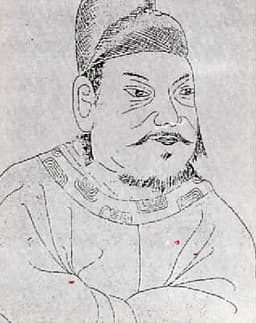
Jeongjo of Joseon
Emperor · Modern
51.3Total

Napoleon Bonaparte
General · Modern
70.9Total
Basic Information
Born
1752
1769
Died
1800
1821
Era
Modern
Modern
Nationality
Korea
France
Occupation
Emperor
General
Civilization
Eastern
Western
Score Comparison
Military (10%)
10.2
94.0
Political (20%)
60.0
72.0
Influence (20%)
57.2
40.0
Legacy (20%)
46.7
80.0
Leadership (15%)
72.0
78.0
Strategy (15%)
45.0
90.0
TOTAL
51.3
70.9
Jeongjo of Joseon — Complete Timeline
1776 AD
Establishment of Kyujanggak Royal LibraryCultural◆ Major
Jeongjo founded the Kyujanggak library to house royal documents and promote scholarship. He appointed talented scholars regardless of faction, fostering intellectual growth. The library became a center for Silhak (Practical Learning) and reformist ideas.
LibraryScholarshipSilhak
Impact: nationalconstructive
1791 AD
Reforms in Taxation and AdministrationReform
Jeongjo implemented the 'Sagyek' system to improve tax collection and reduce corruption. He also reformed the land tax and military service system, easing burdens on peasants. These reforms strengthened the state but faced resistance from entrenched interests.
Tax ReformAdministrationEconomy
Impact: nationalconstructive
1794 AD
Construction of Hwaseong FortressCultural◆ Major
King Jeongjo built Hwaseong Fortress in Suwon to honor his father Crown Prince Sado and to establish a new administrative center. The fortress incorporated advanced Western and Eastern military architecture. It was completed in 1796 and is now a UNESCO World Heritage site.
ArchitectureFortressUNESCO
Impact: nationalconstructive
1800 AD
Mysterious Death of JeongjoOther◆ Major
King Jeongjo died suddenly at age 48, possibly from illness or poisoning. His death was suspicious, as he was in good health. It led to a purge of his reformist supporters by the Andong Kim clan, ending his progressive policies.
DeathConspiracyPower Shift
Impact: nationaltragic
Napoleon Bonaparte — Complete Timeline
1799 AD
Coup of 18 BrumaireOther◆ Major
Napoleon Bonaparte, with support from his brother Lucien and key political figures, overthrew the Directory in a bloodless coup. He established the Consulate with himself as First Consul, effectively becoming the ruler of France. This event ended the French Revolution's most unstable period.
French RevolutionCoupRise to Power
Impact: regional
1804 AD
Promulgation of the Napoleonic CodeOther◆ Major
Napoleon enacted the Civil Code of the French, known as the Napoleonic Code, a comprehensive set of laws that replaced the fragmented feudal legal systems. The code established legal equality, protected property rights, and secularized law. It became the basis for legal systems in many European and world countries.
Legal ReformNapoleonic CodeCivil Law
Impact: globalconstructive
1805 AD
Battle of AusterlitzWar◆ Major
Napoleon's Grande Arm
Napoleonic WarsBattleDecisive Victory
Impact: global
1812 AD
Invasion of RussiaWar◆ Major
Napoleon led the Grande Arm
Napoleonic WarsInvasionDisaster
Impact: globaldestructive
1815 AD
Battle of WaterlooWar◆ Major
Napoleon's French army was defeated by the combined forces of the Duke of Wellington's Anglo-Allied army and Gebhard Leberecht von Bl
Napoleonic WarsBattleFinal Defeat
Impact: globaldestructive
Expert Analysis
jeongjo-of-joseon-vs-napoleon-bonaparte
# The Emperor and the King: Two Visions of Power in an Age of Revolution
In the summer of 1794, as the guillotine still dripped in Paris and revolutionary armies swept across Europe, a very different kind of ruler was laying stones in Korea. King Jeongjo of Joseon personally oversaw the construction of Hwaseong Fortress, a marvel of Eastern engineering that blended Confucian order with Western military technology. Half a world away, a young Corsican artillery officer named Napoleon Bonaparte was preparing to crush a royalist uprising in the streets of Paris. Both men sought to reshape their worlds through power and reform. One would conquer an empire; the other would build a fortress. One would die in exile on a remote Atlantic island; the other would perish under mysterious circumstances in his own palace. What drove these two leaders—born just seventeen years apart—to such different destinies?
Origins
Napoleon Bonaparte was born in 1769 on the island of Corsica, a recently acquired French territory where his family belonged to the minor nobility. He spoke Italian before French, carried the resentments of a colonial subject, and entered military school as an outsider. His era was one of violent upheaval: the French Revolution tore down monarchy, church, and aristocracy, creating opportunities for ambitious men of talent. Napoleon seized them with ferocious energy.
Jeongjo of Joseon, born in 1752, came from a world that seemed frozen in time—the Confucian kingdom of Korea, which had endured for five centuries. But his childhood was anything but stable. His father, Crown Prince Sado, was executed by his own grandfather, King Yeongjo, in a rice chest—a brutal act of political necessity that haunted Jeongjo for life. He grew up surrounded by court intrigue, factional violence, and the constant threat of death. Where Napoleon learned to command armies, Jeongjo learned to navigate the treacherous waters of court politics.
Rise to Power
Napoleon’s ascent was meteoric and military. At age twenty-four, he recaptured Toulon from British forces. At twenty-six, he suppressed a royalist rebellion with a "whiff of grapeshot." By thirty, he had conquered Italy and Egypt. His path was built on battlefield victories, propaganda, and the collapse of old institutions. He crowned himself emperor in 1804, taking the crown from the Pope’s hands and placing it on his own head—a gesture that captured his entire philosophy of self-made power.
Jeongjo’s rise was slower, more cautious, and entirely within the Confucian system. He became king in 1776 at age twenty-four, but real power eluded him for years. The Joseon court was divided into warring factions—the Noron and Soron—who had killed his father and distrusted his reforms. Jeongjo could not simply conquer his enemies; he had to outmaneuver them. His first major act was the establishment of the Kyujanggak Royal Library in 1776, a seemingly innocuous cultural project that was actually a brilliant political move: it allowed him to appoint talented scholars from outside the established factions, creating a loyal base of intellectuals who owed everything to him.
Leadership & Governance
Napoleon governed through conquest and codification. His Napoleonic Code, implemented across Europe, standardized laws, protected property rights, and abolished feudalism—but also restricted women’s rights and restored slavery in French colonies. He appointed officials based on merit, not birth, and created a centralized bureaucracy that survives in France today. His military genius was unmatched: he won sixty battles, revolutionized warfare with rapid maneuvers and concentrated artillery, and inspired soldiers with personal courage and promises of glory. But his governance was ultimately authoritarian; he silenced dissent, censored newspapers, and crowned himself emperor.
Jeongjo governed through reform and ritual. He implemented the *Sagyek* system in 1791 to reform taxation and reduce corruption, carefully balancing the interests of peasants and landowners. He promoted commerce and technology, importing Western books and scientific instruments while maintaining Confucian orthodoxy. He built Hwaseong Fortress not just as a military stronghold but as a symbol of filial piety—honoring his murdered father—and as a planned city that would serve as a new administrative center free from factional control. His military score of 14.4 reflects a king who never led an army in battle, but his political score of 72.0 and leadership score of 79.0 show a ruler who understood that in a Confucian state, persuasion and precedent were more powerful than cannon.
Triumph & Tragedy
Napoleon’s greatest triumph was Austerlitz in 1805, where he destroyed the combined armies of Austria and Russia, cementing his control over Europe. His greatest tragedy was the invasion of Russia in 1812—a colossal strategic blunder that cost half a million men and shattered his aura of invincibility. He was exiled to Elba, escaped, ruled for a Hundred Days, and met final defeat at Waterloo in 1815. He died in 1821 on Saint Helena, a prisoner of the British, at age fifty-one.
Jeongjo’s greatest triumph was Hwaseong Fortress, completed in 1796—a masterpiece of Korean architecture and engineering that still stands today as a UNESCO World Heritage site. His greatest tragedy was his mysterious death in 1800 at age forty-eight. He was in good health, active and reform-minded, when he suddenly died. Rumors of poisoning by conservative court factions have never been proven, but the timing was devastating: his reforms were immediately reversed by his successor, and the Joseon dynasty declined into stagnation.
Character & Destiny
Napoleon was restless, brilliant, and insatiable. "Impossible is a word to be found only in the dictionary of fools," he said. His ambition knew no bounds, and neither did his capacity for self-destruction. He could not stop conquering, even when conquest no longer served France. His personality—arrogant, charismatic, ruthless—drove him to both triumph and ruin.
Jeongjo was cautious, patient, and deeply filial. He spent his entire reign trying to honor his father and reform a system that had killed him. "A king should be like a mirror," Confucian scholars taught, "reflecting the virtues of heaven." Jeongjo tried to be that mirror, but the court factions were stronger than any single king. His personality—reserved, strategic, burdened by family trauma—allowed him to achieve much within the system but never to transcend it.
Legacy
Napoleon’s legacy is global and contested. He spread revolutionary ideals of nationalism, meritocracy, and legal equality across Europe, but also militarism and authoritarianism. His name adorns streets, codes, and battles. His total score of 82.4 reflects a figure of immense impact, both destructive and creative.
Jeongjo’s legacy is more contained but no less significant. He is remembered as one of Joseon’s greatest kings, a reformer who tried to modernize within tradition. Hwaseong Fortress stands as his monument—not a symbol of conquest, but of resilience. His total score of 64.5 reflects a different kind of greatness: not the explosive force of Napoleon, but the quiet persistence of a king who held his world together against powerful enemies.
Conclusion
Napoleon and Jeongjo never met, never knew each other’s names. Yet their parallel lives illuminate two fundamental paths of leadership in an age of revolution. Napoleon chose to break the world and remake it in his image. Jeongjo chose to repair the world from within, brick by brick, fortress by fortress. One ended in exile, the other in assassination. One changed the world forever; the other preserved a world worth remembering. Perhaps the deepest question their stories pose is not who was greater, but what greatness means—and whether the measure of a leader is the empire they build or the legacy they leave standing.
Rankings
🥇
Napoleon BonaparteLeader
Mil: 94.0Pol: 72.0Inf: 40.0
70.9
🥈
Jeongjo of Joseon
Mil: 10.2Pol: 60.0Inf: 57.2
51.3
+19.6 behind
How This Comparison Works
Algorithm
Each figure is scored on 6 dimensions (0—100 scale) based on structured historical data: Military (10%), Political (20%), Influence (20%), Legacy (20%), Leadership (15%), Strategy (15%). The weighted total produces the final ranking.
Data Sources
Scores are computed from structured sub-indicators in the database. Scale factors adjust for era (Ancient ×0.85, Modern ×1.0) and civilization size (Eastern ×1.05, Other ×0.80) to account for differences in population and military scale.
Maximum 3 Figures
Comparisons are limited to 2—3 figures to ensure readability and statistical meaningfulness.
Error Margins
±5 points per dimension — Sub-scores are derived from historical records with inherent uncertainty. Two figures within 5 points on a dimension should be considered roughly equivalent in that area.
Total Score Accuracy
±3 points overall — The weighted combination of 6 dimensions produces a total score with approximately ±3 points of uncertainty. Differences of less than 3 points are not statistically significant— the figures are effectively tied.
Known Limitations
- Historical records are incomplete and uneven across civilizations
- Figures from oral-tradition societies may be underrepresented
- Occupation labels can misclassify multi-role figures
- Scores measure capability and impact, not moral character
- Quantitative scoring is a comparison tool, not absolute truth
Capability Radar
Military (10%) — Battles & Warfare
Battles
10
95
Win Rate
10
90
Expansion
5
95
Political (20%) — Governance & Reform
Reform
75
95
Diplomacy
55
80
Economy
65
85
Influence (20%) — Cultural & Global Reach
Cultural
55
85
Global
30
90
Legacy (20%) — Historical Impact
Historical
50
95
Longevity
40
90
Leadership (15%) — Power & Stability
Tenure
60
85
Stability
60
70
Strategy (15%) — Tactics & Innovation
Strategy
25
95
Tactics
20
98
Reform
40
92
Similar Comparisons
Comments & Discussion
GUNPOWDER-MONARCH6/17/2026
Hwaseong Fortress is more impressive than any of Napoleon's Egyptian pyramids fantasies. While Napoleon was busy losing 30,000 men in the Levant, Jeongjo was actually building something that still stands—a fortress that mixed Korean ingenuity with Western cannon designs. They both loved reform, but only one left a legacy you can touch. Napoleon's Code? Jeongjo's Kyujanggak library still outlasts it as a center of learning.
水利建设专家6/17/2026
别拿拿破仑和正祖比军事,正祖根本就没带过兵。你让一个每天研究城墙砖块怎么砌的文人君主,去跟奥斯特里茨战役的指挥官比?正祖在位20年打了0场仗,拿破仑打了60多场。不过要论水利工程和灌溉系统,拿破仑那点埃及运河水闸,放在朝鲜半岛连给正祖提鞋都不配。
CHOSUN-VS-CORSE6/17/2026
The real difference is vision: Napoleon built a personal empire that crumbled in 15 years; Jeongjo built institutions that lasted centuries. While Bonaparte was crowning himself emperor on Notre Dame's altar, Jeongjo was establishing Kyujanggak to preserve 70,000 volumes of Korean scholarship. Napoleon died alone on St. Helena; Jeongjo's reforms shaped Korea until the 20th century. Who really lost in the end?
火药桶与书卷气6/17/2026
正祖最大的悲剧不是被毒杀,而是生在朝鲜这小池塘里。拿破仑能在欧洲搅得天翻地覆,是因为他撞上了法国大革命的历史洪流。给你正祖放在1799年的巴黎,他未必比拿破仑差;但把科西嘉小个子扔到18世纪的汉阳,他连水原城墙都修不起来,因为朝鲜的士大夫会把他喷死。革命创造英雄,王朝埋没天才。