Loading...
Jiang Wei vs Qin Shi Huang
Qin Shi Huang leads by 31.7 pts · 2 figures compared
…

Jiang Wei
General · Ancient
53.5Total
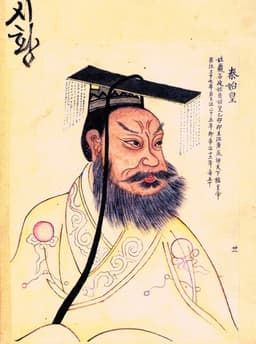
Qin Shi Huang
Emperor · Ancient
85.2Total
Basic Information
Born
202
-259
Died
264
-210
Era
Ancient
Ancient
Nationality
China
China
Occupation
General
Emperor
Civilization
Eastern
Eastern
Score Comparison
Military (10%)
70.0
80.0
Political (20%)
35.1
90.0
Influence (20%)
55.7
85.0
Legacy (20%)
50.0
90.0
Leadership (15%)
54.2
78.0
Strategy (15%)
66.3
82.0
TOTAL
53.5
85.2
Jiang Wei — Complete Timeline
234 AD
Became successor to Zhuge LiangPolitical Action◆ Major
After Zhuge Liang's death, Jiang Wei was appointed as the commander of Shu Han's military forces, tasked with continuing the Northern Expeditions against Wei. He was given command of the remaining troops.
Shu HanZhuge LiangSuccession
Impact: nationalconstructive
238 AD
Led the first Northern ExpeditionWar
Jiang Wei launched his first major campaign against Wei, attacking the Wei-held territories of Longxi and Nan'an. The campaign achieved limited gains but failed to capture key cities.
Northern ExpeditionsShu HanMilitary Campaign
Impact: regional
Conducted eleven Northern ExpeditionsWar◆ Major
Over the course of his career, Jiang Wei launched eleven separate campaigns against Wei, each with varying degrees of success. These campaigns drained Shu Han's resources and manpower without achieving a decisive breakthrough.
Northern ExpeditionsShu HanMilitary Strategy
Impact: nationaldestructive
255 AD
Defeated by Deng Ai at the Battle of TaoxiWar◆ Major
Jiang Wei's forces were decisively defeated by Deng Ai at Taoxi. The defeat forced Jiang Wei to retreat and weakened Shu Han's military position.
Northern ExpeditionsDeng AiBattle
Impact: regionaldestructive
263 AD
Surrendered to Deng Ai after the fall of ShuPolitical Action
After Deng Ai's surprise attack on Chengdu, Jiang Wei surrendered to the Wei general. He later attempted to restore Shu by conspiring with Zhong Hui, but the plot failed and he was killed.
Shu HanFall of ShuSurrender
Impact: nationaltragic
Qin Shi Huang — Complete Timeline
246 BC
Construction of the Mausoleum and Terracotta ArmyOther◆ Major
Qin Shi Huang commissioned a vast mausoleum complex near Xi'an, guarded by thousands of life-sized terracotta soldiers, horses, and chariots. The project employed hundreds of thousands of workers and reflected his obsession with immortality and imperial power.
Impact: global
230 BC
Conquest of the Six Warring StatesWar
From 230 to 221 BCE, Ying Zheng led the Qin state in a series of campaigns that conquered the Han, Zhao, Wei, Chu, Yan, and Qi states. This unified China under a single ruler for the first time, ending the Warring States period.
Impact: global
221 BC
Standardization of Writing, Currency, and MeasurementsReform◆ Major
Qin Shi Huang ordered the standardization of Chinese script, currency, and weights and measures across the unified empire. This facilitated administration, trade, and cultural integration, laying a foundation for future dynasties.
Impact: globalconstructive
Proclamation of the Qin DynastyPolitical Action
After conquering the last independent state, Ying Zheng declared himself Shi Huangdi (First Emperor), founding the Qin Dynasty. He adopted a new title to signify his supreme authority and initiated centralized imperial rule.
Impact: global
214 BC
Initiation of the Great Wall ConstructionOther◆ Major
Qin Shi Huang ordered the connection and extension of existing northern fortifications to create a unified defensive wall against nomadic Xiongnu raids. This project involved massive conscripted labor and became the precursor to the later Great Wall.
Impact: regional
213 BC
Burning of Books and Burying of ScholarsPolitical Action◆ Major
On the advice of Li Si, Qin Shi Huang ordered the burning of historical records and philosophical texts not aligned with Legalist doctrine. He also had 460 Confucian scholars buried alive to suppress dissent and consolidate ideological control.
Impact: nationaldestructive
Expert Analysis
jiang-wei-vs-qin-shi-huang
### The Conqueror and the Loyalist: Why Qin Shi Huang Built an Empire While Jiang Wei Could Only Dream of One
In the year 221 BC, a king of the western state of Qin stood before the ruins of a world he had just annihilated. Ying Zheng, then thirty-eight, had crushed the last of the six rival kingdoms that had torn China apart for centuries. He declared himself *Shi Huangdi*—the First Emperor—and set in motion a revolution that would define China for two millennia. Four hundred and eighty-five years later, in the year 263 AD, a Shu Han general named Jiang Wei stood in a Wei military camp, handing his sword to the enemy commander Deng Ai. The kingdom Jiang Wei had served with every fiber of his being—Shu Han—had just fallen. One man built a dynasty that would be remembered as the beginning of imperial China. The other died trying to save a lost cause. Why did their paths diverge so dramatically? The answer lies not just in their talents, but in the worlds that shaped them.
### Origins
Qin Shi Huang was born into a world of chaos and opportunity. The Warring States period (475–221 BC) was a brutal, relentless competition among seven major states for supremacy. Ying Zheng’s father was a Qin prince, but his mother was a former concubine, and his early life was shadowed by palace intrigue. He grew up in a state that had already embraced Legalism—a ruthless philosophy that valued order and strength above all else. The Qin state was a machine: efficient, militarized, and utterly unsentimental. Young Ying Zheng learned that power was not inherited; it was seized and held by force.
Jiang Wei, born in 202 AD, emerged from a very different China. The Han Dynasty had fallen, and the land was splintered into three warring kingdoms: Wei, Shu, and Wu. Jiang Wei was a minor official in Wei before he defected to Shu Han, drawn by the vision of its brilliant chancellor, Zhuge Liang. Unlike the raw, chaotic competition of the Warring States, the Three Kingdoms era was a world of established dynastic claims, elaborate alliances, and a deep reverence for Confucian loyalty. Jiang Wei grew up in a culture that prized service to a legitimate ruler, not the naked ambition of a conqueror. His world was one of exhaustion and stalemate, not of open-ended possibility.
### Rise to Power
Qin Shi Huang’s rise was a series of calculated, brutal conquests. From 230 to 221 BC, he led his armies in a relentless wave of annexations: Han fell first, then Zhao, Wei, Chu, Yan, and finally Qi. Each victory was a step toward total unification. He did not negotiate; he crushed. His path was built on the backs of soldiers and the genius of Legalist advisors like Li Si. The key turning point was not a single battle but the sheer, grinding efficiency of the Qin war machine.
Jiang Wei’s rise was entirely different. He did not conquer a kingdom; he inherited a burden. When Zhuge Liang died in 234 AD, exhausted from his own failed northern campaigns, he passed the command of Shu Han’s military to Jiang Wei. This was not a seizure of power but a solemn trust. Jiang Wei was not a founder; he was a successor. His path was defined by duty, not ambition. He spent the next thirty years launching eleven northern expeditions against the far larger state of Wei, each one a desperate attempt to fulfill Zhuge Liang’s dream of restoring the Han Dynasty.
### Leadership & Governance
Qin Shi Huang ruled as a revolutionary. He standardized writing, currency, and measurements across his new empire—a feat of administrative genius that would make unified China possible. He ordered the linking of northern fortifications into what would become the Great Wall. But his governance was also terrifying: he burned books that contradicted Legalist doctrine and buried scholars alive. He believed that the past must be destroyed to create the future. His leadership was absolute, visionary, and merciless.
Jiang Wei’s leadership was that of a general fighting a losing war. He was a capable commander—his score for military leadership (77.9) reflects genuine skill—but he was never a statesman. He did not standardize currency or build walls. He led campaigns: eleven of them, from 238 AD onward. Some were minor victories, others were defeats. The most devastating came in 255 AD at the Battle of Taoxi, where the Wei general Deng Ai crushed his forces. Jiang Wei’s political wisdom (62.8) was far below Qin Shi Huang’s (88.0). He could not forge alliances, secure resources, or outmaneuver the court intrigue that plagued Shu Han. He was a loyal soldier in a kingdom that was slowly bleeding to death.
### Triumph & Tragedy
Qin Shi Huang’s greatest moment was his proclamation of the Qin Dynasty in 221 BC. He had achieved the impossible: the unification of China. His greatest tragedy was the empire he built—brilliant in conception, fragile in execution. He died in 210 BC, and within three years, the Qin Dynasty collapsed in rebellion. Yet his legacy—the centralized, bureaucratic state—survived.
Jiang Wei’s greatest moment was perhaps his sheer persistence. Eleven campaigns against a larger, wealthier enemy is a testament to his courage. His tragedy was the fall of Shu Han in 263 AD. After a surprise attack by Deng Ai on the capital Chengdu, Jiang Wei surrendered. He later attempted to restore Shu by plotting with the Wei general Zhong Hui, but the conspiracy failed. Jiang Wei was killed. His kingdom was gone. His cause was lost.
### Character & Destiny
Qin Shi Huang was driven by an unshakable belief in his own destiny. He was paranoid, ruthless, and megalomaniacal—he even sought immortality through elixirs. But his paranoia was productive: it drove him to build walls, standardize scripts, and centralize power. His personality bent the world to his will.
Jiang Wei was driven by loyalty. He was not a visionary; he was a caretaker of a dream that belonged to Zhuge Liang. His personality was shaped by duty, not ambition. He could not bend the world, so he threw himself against it, again and again, until he broke. His destiny was to be a footnote in someone else’s story—the loyal general who failed.
### Legacy
Qin Shi Huang’s legacy is monumental. He is remembered as the First Emperor, the man who gave China its name and its template for empire. The Terracotta Army, buried near his mausoleum from 246 BC onward, stands as a silent testament to his power. His influence score of 82.0 and legacy score of 85.0 reflect his enduring shadow.
Jiang Wei’s legacy is smaller but poignant. He is remembered as a tragic hero, a symbol of loyalty in the face of impossible odds. His total score of 69.3 is modest, but his story resonates in Chinese culture as a cautionary tale about the limits of devotion. He is not a founder; he is a reminder that sometimes, the most faithful servants are the ones who lose.
### Conclusion
Standing at the edge of history, Qin Shi Huang and Jiang Wei represent two poles of human ambition. One man destroyed a world to build an empire. The other gave his life to preserve a dream that was already dead. Their differences were not just personal—they were products of their times. The Warring States rewarded conquerors; the Three Kingdoms rewarded loyalists. Yet both men, in their own ways, were prisoners of their eras. Qin Shi Huang’s empire crumbled within a generation. Jiang Wei’s kingdom fell in his lifetime. What remains is not their success or failure, but the stark clarity of their choices. One chose power. The other chose duty. History remembers both, but it only built on the work of one.
Rankings
🥇
Qin Shi HuangLeader
Mil: 80.0Pol: 90.0Inf: 85.0
85.2
🥈
Jiang Wei
Mil: 70.0Pol: 35.1Inf: 55.7
53.5
+31.7 behind
How This Comparison Works
Algorithm
Each figure is scored on 6 dimensions (0—100 scale) based on structured historical data: Military (10%), Political (20%), Influence (20%), Legacy (20%), Leadership (15%), Strategy (15%). The weighted total produces the final ranking.
Data Sources
Scores are computed from structured sub-indicators in the database. Scale factors adjust for era (Ancient ×0.85, Modern ×1.0) and civilization size (Eastern ×1.05, Other ×0.80) to account for differences in population and military scale.
Maximum 3 Figures
Comparisons are limited to 2—3 figures to ensure readability and statistical meaningfulness.
Error Margins
±5 points per dimension — Sub-scores are derived from historical records with inherent uncertainty. Two figures within 5 points on a dimension should be considered roughly equivalent in that area.
Total Score Accuracy
±3 points overall — The weighted combination of 6 dimensions produces a total score with approximately ±3 points of uncertainty. Differences of less than 3 points are not statistically significant— the figures are effectively tied.
Known Limitations
- Historical records are incomplete and uneven across civilizations
- Figures from oral-tradition societies may be underrepresented
- Occupation labels can misclassify multi-role figures
- Scores measure capability and impact, not moral character
- Quantitative scoring is a comparison tool, not absolute truth
Capability Radar
Military (10%) — Battles & Warfare
Battles
65
85
Win Rate
40
90
Expansion
30
90
Political (20%) — Governance & Reform
Reform
50
95
Diplomacy
45
75
Economy
40
90
Influence (20%) — Cultural & Global Reach
Cultural
55
95
Global
30
85
Legacy (20%) — Historical Impact
Historical
60
95
Longevity
55
95
Leadership (15%) — Power & Stability
Tenure
60
70
Stability
35
65
Strategy (15%) — Tactics & Innovation
Strategy
60
85
Tactics
70
80
Reform
55
95
Similar Comparisons
Comments & Discussion
IRON DYNASTY6/17/2026
Qin Shi Huang didn't just conquer—he standardized writing, measures, and axle lengths across China, a unity Jiang Wei could only dream of. Jiang Wei's nine Northern Expeditions drained Shu's resources without a single strategic win. Qin won because they built systems; Shu lost because they worshipped a fading dream.
兰亭剑客6/17/2026
嬴政用郡县制取代分封,中央集权让帝国四百年不散;姜维却死守诸葛亮的老套路,九伐中原累死三军。一个开创历史新篇章,一个只是重复失败的老剧情。站在兵马俑前,谁更值得称道,答案不言自明。
DATA DIVIDER6/17/2026
The "comparison" stats are generous: Jiang Wei led 9 campaigns with maybe 100k troops total; Qin Shi Huang mobilized millions, ending with a 300k-man army. That's not dedication versus ambition—that's a small-state tactician versus a world-system builder. Shu Han's GDP was a fraction of Qin's. Jiang Wei didn't lose glory; he lost a numbers game.
铁血史官6/17/2026
姜维的悲剧在于忠诚与能力脱节。他继承诸葛亮遗志,可蜀汉后期人才凋零、国库空虚,内斗如黄皓乱政让他孤掌难鸣。秦始皇则靠商鞅变法积累的国力,李斯、王翦等能臣相助,才有横扫六合的本钱。个人再强,也架不住时代的门槛。