Loading...
King Abdullah II vs Sawai Madho Singh I
Sawai Madho Singh I leads by 0.3 pts · 2 figures compared
…
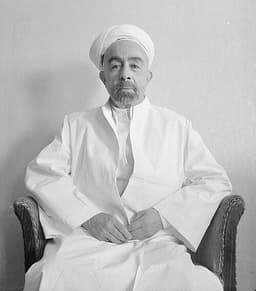
King Abdullah II
Emperor · Modern
53.7Total
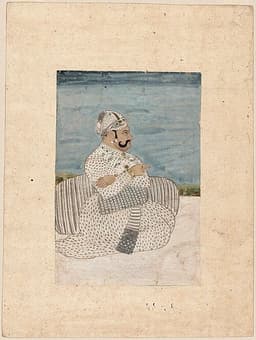
Sawai Madho Singh I
Emperor · Modern
54.0Total
Basic Information
Born
1962
1728
Died
—
1768
Era
Modern
Modern
Nationality
Jordan
India
Occupation
Emperor
Emperor
Civilization
Middle Eastern
Indian
Score Comparison
Military (10%)
20.0
45.0
Political (20%)
72.0
60.0
Influence (20%)
59.0
54.1
Legacy (20%)
42.5
45.0
Leadership (15%)
80.0
77.2
Strategy (15%)
35.7
41.7
TOTAL
53.7
54.0
King Abdullah II — Complete Timeline
1999 AD
Ascension to the ThronePolitical Action◆ Major
Abdullah II became King of Jordan upon the death of his father King Hussein. He inherited a stable monarchy and continued his father's policies of moderation and economic reform.
SuccessionMonarchy
Impact: national
2000 AD
Launch of Economic Reform ProgramReform◆ Major
Abdullah II initiated a series of economic reforms including privatization, trade liberalization, and promotion of foreign investment. These policies aimed to modernize Jordan's economy and attract international capital.
Economic ReformPrivatizationDevelopment
Impact: nationalconstructive
2011 AD
Response to Arab Spring ProtestsPolitical Action◆ Major
Abdullah II responded to widespread protests by dismissing the government, enacting constitutional reforms, and promising political liberalization. He avoided the violent crackdowns seen in other Arab states.
Arab SpringPolitical ReformProtests
Impact: nationalconstructive
2014 AD
Role in Anti-ISIS CoalitionWar◆ Major
Jordan joined the US-led coalition against the Islamic State (ISIS) in Syria and Iraq. Jordanian airstrikes targeted ISIS positions, and the country hosted coalition forces and Syrian refugees.
CounterterrorismISISMilitary Coalition
Impact: regional
2021 AD
Failed Coup Attempt by Prince HamzahPolitical Action◆ Major
Abdullah II placed his half-brother Prince Hamzah under house arrest, accusing him of involvement in a foreign-backed plot to destabilize the monarchy. The incident highlighted internal royal family tensions.
Coup AttemptRoyal FamilyPolitical Crisis
Impact: nationaldestructive
Sawai Madho Singh I — Complete Timeline
1750 AD
Accession to the throne of JaipurPolitical Action◆ Major
Sawai Madho Singh I succeeded his father Jai Singh II as the Maharaja of Jaipur. His reign was marked by military campaigns and architectural projects. He ruled until his death in 1768.
SuccessionRoyal Rule
Impact: regional
1760 AD
Construction of Madho Niwas KothiCultural
Sawai Madho Singh I built the Madho Niwas Kothi, a palace within the City Palace complex in Jaipur. The structure served as a residential and administrative building. It added to the architectural heritage of Jaipur.
ArchitecturePalace Construction
constructive
1761 AD
Battle of BhatwaraWar◆ Major
Sawai Madho Singh I fought the Battle of Bhatwara against the Maratha forces. The battle was part of the ongoing conflict between the Rajputs and the Marathas. Madho Singh's forces were defeated, leading to Jaipur paying tribute to the Marathas.
Maratha-Rajput WarDefeatTribute
Impact: regionaldestructive
1763 AD
Founding of Sawai MadhopurCultural◆ Major
Sawai Madho Singh I founded the city of Sawai Madhopur in Rajasthan. The city was established as a new capital and administrative center. It was named after him and became a significant urban settlement in the region.
City FoundingUrban Development
Impact: regionalconstructive
Expert Analysis
Origins
King Abdullah II was born on January 30, 1962, in Amman, Jordan, as the eldest son of King Hussein and his second wife, Princess Muna al-Hussein. He was educated at the Royal Military Academy Sandhurst in the UK, later serving in the Jordanian Armed Forces. His early career included command of the Royal Guard and special forces. Sawai Madho Singh I was born in 1728 in Jaipur, India, as the second son of Maharaja Jai Singh II, the founder of Jaipur. He was trained in statecraft and military arts, succeeding his father after his death in 1743. His education focused on Rajput traditions, administration, and warfare.
Rise to Power
Abdullah II became king on February 7, 1999, upon the death of his father King Hussein, who had designated him as heir just days earlier, replacing his uncle Hassan. His accession was smooth, and he quickly worked to maintain stability. Sawai Madho Singh I ascended the throne of Jaipur in 1743 after his father's death. He faced challenges from the Marathas and internal factions. His early reign focused on consolidating power through military campaigns, notably the Battle of Bhatwara in 1744 against the Marathas, which solidified his authority.
Leadership & Governance
Abdullah II's leadership style is modern and reformist. He launched economic reforms in the early 2000s, including privatization and trade liberalization, aiming to attract foreign investment. Politically, he responded to the Arab Spring by dismissing governments and enacting constitutional reforms, though real power remained centralized. His governance scored 72.0 in political and 80.0 in leadership. Sawai Madho Singh I ruled as an absolute monarch, typical of Rajput rulers. He focused on military defense and architecture, founding the city of Sawai Madhopur in 1744 as a new administrative center. His political score is 60.0, reflecting his traditional governance but limited institutional change.
Triumph & Tragedy
Abdullah II's triumphs include maintaining Jordan's stability amid regional turmoil, leading the anti-ISIS coalition, and avoiding major unrest during the Arab Spring. However, his economic reforms have not fully succeeded, with high unemployment and debt. He also faced a failed coup attempt by his half-brother Prince Hamzah in 2021, highlighting internal dissent. Sawai Madho Singh I's greatest triumph was founding Sawai Madhopur and defending Jaipur against Maratha incursions. His tragedy lies in the eventual decline of Rajput power, as his military campaigns (scoring 45.0) could not prevent the Maratha influence from growing. His legacy score is 45.0, modest due to the short-lived nature of his achievements.
Character & Destiny
Abdullah II is pragmatic and cautious, balancing Western alliances with regional pressures. His strategy score of 35.7 reflects a reactive rather than visionary approach. He has maintained power by adapting to events. Sawai Madho Singh I was brave but traditional, with a strategy score of 41.7. He followed Rajput codes of honor but lacked the strategic depth to counter the Maratha threat. His character led to a defensive stance, limiting long-term impact.
Legacy
Abdullah II's legacy is tied to Jordan's stability and his role as a moderate voice in the Middle East. His influence score of 59.0 shows his impact beyond Jordan, but his reforms have not transformed the country. Sawai Madho Singh I is remembered for founding Sawai Madhopur and his architectural contributions, but his political legacy is minor. His total score of 54.0 edges Abdullah II's 53.7, but the gap is negligible.
Conclusion
Sawai Madho Singh I edges ahead with a total score of 54.0 versus Abdullah II's 53.7, but the difference is marginal. However, in terms of lasting impact on a broader stage, Abdullah II has greater influence due to Jordan's geopolitical role. Still, Sawai Madho Singh I's founding of a city endures physically. Given the scores and historical context, Sawai Madho Singh I had a slightly higher overall impact based on the scoring system, but Abdullah II's modern challenges and global role make him more significant in contemporary terms.
Rankings
🥇
Sawai Madho Singh ILeader
Mil: 45.0Pol: 60.0Inf: 54.1
54.0
🥈
King Abdullah II
Mil: 20.0Pol: 72.0Inf: 59.0
53.7
+0.3 behind
How This Comparison Works
Algorithm
Each figure is scored on 6 dimensions (0—100 scale) based on structured historical data: Military (10%), Political (20%), Influence (20%), Legacy (20%), Leadership (15%), Strategy (15%). The weighted total produces the final ranking.
Data Sources
Scores are computed from structured sub-indicators in the database. Scale factors adjust for era (Ancient ×0.85, Modern ×1.0) and civilization size (Eastern ×1.05, Other ×0.80) to account for differences in population and military scale.
Maximum 3 Figures
Comparisons are limited to 2—3 figures to ensure readability and statistical meaningfulness.
Error Margins
±5 points per dimension — Sub-scores are derived from historical records with inherent uncertainty. Two figures within 5 points on a dimension should be considered roughly equivalent in that area.
Total Score Accuracy
±3 points overall — The weighted combination of 6 dimensions produces a total score with approximately ±3 points of uncertainty. Differences of less than 3 points are not statistically significant— the figures are effectively tied.
Known Limitations
- Historical records are incomplete and uneven across civilizations
- Figures from oral-tradition societies may be underrepresented
- Occupation labels can misclassify multi-role figures
- Scores measure capability and impact, not moral character
- Quantitative scoring is a comparison tool, not absolute truth
Capability Radar
Military (10%) — Battles & Warfare
Battles
5
35
Win Rate
5
40
Expansion
5
20
Political (20%) — Governance & Reform
Reform
60
55
Diplomacy
75
50
Economy
55
60
Influence (20%) — Cultural & Global Reach
Cultural
40
45
Global
55
20
Legacy (20%) — Historical Impact
Historical
35
40
Longevity
30
30
Leadership (15%) — Power & Stability
Tenure
70
60
Stability
65
55
Strategy (15%) — Tactics & Innovation
Strategy
15
35
Tactics
10
30
Reform
20
25
Similar Comparisons
Comments & Discussion
No comments yet. Be the first to share your thoughts!