Loading...
King Fuchai of Wu vs Muyeol of Silla
Muyeol of Silla leads by 11.7 pts · 2 figures compared
…

King Fuchai of Wu
Emperor · Ancient
51.8Total
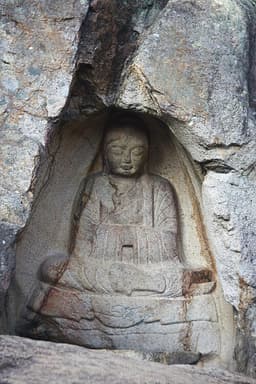
Muyeol of Silla
Emperor · Ancient
63.5Total
Basic Information
Born
-528
-604
Died
-473
—
Era
Ancient
Ancient
Nationality
China
Korea
Occupation
Emperor
Emperor
Civilization
Eastern
Eastern
Score Comparison
Military (10%)
65.0
82.0
Political (20%)
42.3
60.0
Influence (20%)
51.8
62.0
Legacy (20%)
45.8
58.0
Leadership (15%)
58.8
72.0
Strategy (15%)
57.5
55.0
TOTAL
51.8
63.5
King Fuchai of Wu — Complete Timeline
494 BC
Defeated Yue and Captured GoujianWar◆ Major
King Fuchai of Wu defeated the state of Yue at the Battle of Fujiao. He captured King Goujian of Yue and took him as a hostage, but later released him after Goujian feigned submission, a decision that proved fatal.
VictoryYueGoujian
Impact: regional
491 BC
Spared Goujian's LifePolitical Action
Fuchai, persuaded by his minister Bo Pi and deceived by Goujian's apparent loyalty, released the Yue king. This act of clemency allowed Goujian to return to Yue and secretly rebuild his strength for revenge.
MistakeGoujianRelease
Impact: regionaldestructive
482 BC
Became Hegemon of the Spring and Autumn PeriodPolitical Action◆ Major
Fuchai convened a meeting of feudal lords at Huangchi and was recognized as hegemon. However, while he was away, Yue attacked Wu's capital, weakening Wu and exposing the vulnerability of his overextension.
HegemonYue AttackOverreach
Impact: regional
473 BC
Committed Suicide After Wu's FallOther◆ Major
Yue forces under Goujian conquered Wu. Fuchai, surrounded and defeated, committed suicide. His death ended the Wu state, and his earlier decision to spare Goujian was seen as the cause of his downfall.
DeathDefeatYue
Impact: regionaltragic
Muyeol of Silla — Complete Timeline
654 AD
Formation of the Silla-Tang alliancePolitical Action
King Muyeol, as crown prince, negotiated a military alliance with the Tang dynasty of China. This alliance provided Silla with Chinese military support against Baekje and Goguryeo, setting the stage for the unification of the Korean Peninsula.
AllianceTang ChinaSilla
Impact: regionalconstructive
655 AD
Appointment of Kim Yushin as commanderPolitical Action
Muyeol appointed General Kim Yushin as the supreme commander of Silla's military forces. Kim Yushin's leadership was instrumental in the campaigns against Baekje and Goguryeo, and his strategic genius became a cornerstone of Silla's unification efforts.
MilitaryLeadershipSilla
Impact: nationalconstructive
660 AD
Conquest of BaekjeWar◆ Major
Muyeol, as king, led Silla forces in a joint campaign with Tang China to conquer Baekje. The allied army captured the Baekje capital, Sabi, and the kingdom fell. This victory eliminated one of Silla's major rivals and was a crucial step toward unification.
ConquestBaekjeSilla
Impact: regionaldestructive
661 AD
Death during unification campaignOther◆ Major
Muyeol died while Silla was still at war with Goguryeo. His death occurred before the final unification was achieved, but his alliance with Tang and conquest of Baekje had already set the course for Silla's eventual victory under his successor, King Munmu.
DeathUnificationSilla
Impact: regionaltragic
Expert Analysis
Origins
King Fuchai of Wu (c. 528–473 BCE) was the son of King Helü of Wu. His father died from wounds suffered in battle against Yue, instilling in Fuchai a deep desire for revenge. He ascended the throne around 495 BCE. Fuchai was raised in a militaristic state known for its advanced bronze sword-making and naval power. His education emphasized warfare and statecraft, but he lacked the diplomatic subtlety of his contemporaries.
Muyeol of Silla (604–661 CE), born Kim Chunchu, was a member of the Silla royal clan. His father was a prince, and his mother was a princess. He grew up in a period of intense rivalry among the Three Kingdoms of Korea: Silla, Baekje, and Goguryeo. Muyeol was educated in Confucian classics and Chinese military strategy. He traveled to Tang China as a young prince, gaining firsthand knowledge of the powerful empire.
Rise to Power
Fuchai rose to power by avenging his father. In 494 BCE, he led a successful campaign against Yue, defeating King Goujian at the Battle of Fujiao. He captured Goujian but, persuaded by his minister Bo Pi and deceived by Goujian's apparent loyalty, spared his life. This decision allowed Goujian to rebuild Yue. Fuchai then turned his attention northward, seeking hegemony over the Central Plains. He built the Han Canal to transport troops and supplies. In 482 BCE, he convened a meeting of feudal lords at Huangchi and was recognized as hegemon. However, while he was away, Yue attacked Wu's capital, weakening the state.
Muyeol's rise was strategic. As crown prince, he recognized the need for a powerful ally against Baekje and Goguryeo. In 654 CE, he negotiated the Silla-Tang alliance, securing Chinese military support. He ascended the throne in 654 CE after the death of King Jinpyeong. He appointed General Kim Yushin as supreme commander, leveraging his military expertise. Muyeol's political acumen allowed him to maintain the alliance despite Tang's imperial ambitions.
Leadership & Governance
Fuchai governed Wu with a focus on expansion and personal glory. He invested heavily in military infrastructure, including the canal system. However, his governance was undermined by arrogance and poor counsel. He trusted Bo Pi, who was susceptible to Yue's bribery. Fuchai ignored warnings from his general Wu Zixu, who later committed suicide. Fuchai's domestic policies were harsh, leading to unrest. His military campaigns drained resources, and he failed to secure the loyalty of conquered territories.
Muyeol's leadership was pragmatic and alliance-driven. He centralized power in Silla, reducing the influence of aristocratic clans. He adopted Tang administrative practices, including a centralized bureaucracy and tax system. He promoted Buddhism as a unifying force. His governance emphasized stability and cooperation with Tang, which provided military and technological support. He appointed capable officials based on merit, notably Kim Yushin.
Triumph & Tragedy
Fuchai's greatest triumph was achieving hegemony over the Central Plains, a status recognized by the Zhou king. He expanded Wu's territory and built infrastructure. However, his greatest failure was sparing Goujian. This act of clemency, driven by misplaced confidence, led to Wu's destruction. He also failed to secure his borders while campaigning north. His death by suicide marked the end of Wu, which was absorbed by Yue.
Muyeol's triumph was the conquest of Baekje in 660 CE, accomplished through the Silla-Tang alliance. The allied forces captured the Baekje capital Sabi and the king. This victory was a crucial step toward unification. However, Muyeol died in 661 CE before completing the unification. He did not see the fall of Goguryeo, which occurred under his successor. His reliance on Tang also created tensions, as Tang sought to dominate the peninsula.
Character & Destiny
Fuchai was impulsive and overconfident. He allowed personal revenge to cloud strategic judgment. His decision to spare Goujian was influenced by flattery and a desire to display magnanimity. He ignored wise counsel and surrounded himself with sycophants. His character led directly to his downfall. Historical assessments, such as those in Sima Qian's Records of the Grand Historian, portray Fuchai as a tragic figure undone by hubris.
Muyeol was calculating and patient. He understood the value of alliances and long-term planning. His diplomatic skills were crucial in securing Tang support. He delegated military command to capable generals. His character enabled the unification of Korea, but his early death left the final stages to others. Muyeol is remembered as a wise and effective ruler.
Legacy
Fuchai's legacy is largely negative. He is remembered as a cautionary tale of hubris and misplaced trust. The story of his sparing Goujian is a classic lesson in statecraft. His military achievements, such as the canal, had limited lasting impact. Wu's culture and advancements, like bronze sword technology, were absorbed by Yue. His political score of 42.3 reflects his poor decision-making.
Muyeol's legacy is foundational for Korean unification. He established the Silla-Tang alliance that brought down Baekje and Goguryeo. His administrative reforms strengthened Silla. The unified Silla period that followed is considered a golden age in Korean history. Muyeol's scores reflect his effectiveness: military 82.0, political 60.0, influence 62.0, legacy 58.0, leadership 72.0, strategy 55.0, total 63.5. His total score exceeds Fuchai's 51.8 by 11.7 points.
Conclusion
Muyeol of Silla had a greater impact than King Fuchai of Wu. Muyeol's strategic alliance with Tang China led to the unification of Korea, a lasting achievement that shaped the Korean nation. Fuchai's reign ended in total collapse, and his legacy is a warning rather than a model. Muyeol's scores across all categories except strategy (55.0 vs 57.5) are higher, and his political and military effectiveness are clearly superior. While Fuchai achieved temporary hegemony, Muyeol's work endured. The data supports Muyeol as the more significant historical figure.
Rankings
🥇
Muyeol of SillaLeader
Mil: 82.0Pol: 60.0Inf: 62.0
63.5
🥈
King Fuchai of Wu
Mil: 65.0Pol: 42.3Inf: 51.8
51.8
+11.7 behind
How This Comparison Works
Algorithm
Each figure is scored on 6 dimensions (0—100 scale) based on structured historical data: Military (10%), Political (20%), Influence (20%), Legacy (20%), Leadership (15%), Strategy (15%). The weighted total produces the final ranking.
Data Sources
Scores are computed from structured sub-indicators in the database. Scale factors adjust for era (Ancient ×0.85, Modern ×1.0) and civilization size (Eastern ×1.05, Other ×0.80) to account for differences in population and military scale.
Maximum 3 Figures
Comparisons are limited to 2—3 figures to ensure readability and statistical meaningfulness.
Error Margins
±5 points per dimension — Sub-scores are derived from historical records with inherent uncertainty. Two figures within 5 points on a dimension should be considered roughly equivalent in that area.
Total Score Accuracy
±3 points overall — The weighted combination of 6 dimensions produces a total score with approximately ±3 points of uncertainty. Differences of less than 3 points are not statistically significant— the figures are effectively tied.
Known Limitations
- Historical records are incomplete and uneven across civilizations
- Figures from oral-tradition societies may be underrepresented
- Occupation labels can misclassify multi-role figures
- Scores measure capability and impact, not moral character
- Quantitative scoring is a comparison tool, not absolute truth
Capability Radar
Military (10%) — Battles & Warfare
Battles
65
65
Win Rate
60
70
Expansion
60
80
Political (20%) — Governance & Reform
Reform
40
65
Diplomacy
30
85
Economy
45
60
Influence (20%) — Cultural & Global Reach
Cultural
40
55
Global
30
55
Legacy (20%) — Historical Impact
Historical
55
70
Longevity
40
65
Leadership (15%) — Power & Stability
Tenure
55
60
Stability
20
70
Strategy (15%) — Tactics & Innovation
Strategy
50
75
Tactics
55
60
Reform
40
55
Similar Comparisons
Comments & Discussion
No comments yet. Be the first to share your thoughts!