Loading...
Kublai Khan vs Louis IX of France
Kublai Khan leads by 11.0 pts · 2 figures compared
…
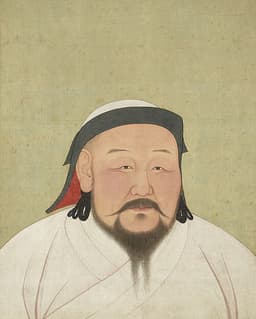
Kublai Khan
Emperor · Medieval
74.3Total
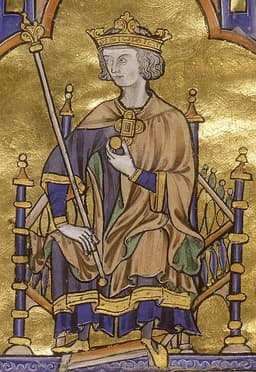
Louis IX of France
Emperor · Medieval
63.3Total
Basic Information
Born
1215
1214
Died
1294
1270
Era
Medieval
Medieval
Nationality
Mongolia
France
Occupation
Emperor
Emperor
Civilization
Eastern
Western
Score Comparison
Military (10%)
77.5
25.0
Political (20%)
79.2
72.0
Influence (20%)
75.0
82.0
Legacy (20%)
70.0
55.0
Leadership (15%)
72.0
72.0
Strategy (15%)
76.0
50.0
TOTAL
74.3
63.3
Kublai Khan — Complete Timeline
1260 AD
Adoption of Tibetan Buddhism as State ReligionCultural◆ Major
Kublai Khan appointed the Tibetan lama Drog
Tibetan BuddhismReligionMongol-Tibet Relations
Impact: regional
1271 AD
Proclamation of the Yuan DynastyPolitical Action◆ Major
Kublai Khan officially proclaimed the Yuan dynasty, adopting a Chinese-style dynastic name. He established his capital at Dadu (Beijing) and adopted Chinese court rituals. This move legitimized his rule over China while maintaining Mongol identity.
Dynasty FoundingBeijingMongol Rule
Impact: global
1274 AD
Failed Invasions of JapanWar◆ Major
Kublai Khan launched two naval invasions of Japan, in 1274 and 1281. Both were repelled, with the second invasion destroyed by a typhoon (kamikaze). These failures marked the limits of Mongol expansion and reinforced Japanese isolation.
Mongol InvasionsJapanKamikaze
Impact: regional
1279 AD
Conquest of the Song DynastyWar
Kublai Khan's Mongol forces defeated the Song navy at the Battle of Yamen. The last Song emperor drowned, ending the Song dynasty. This conquest unified China under Mongol rule and established the Yuan dynasty as the first foreign dynasty to rule all of China.
Song Dynasty FallUnificationYuan Dynasty
Impact: global
1280 AD
Establishment of the Silk Road Trade NetworkCultural◆ Major
Under Kublai Khan, the Mongol Empire secured the Silk Road, facilitating trade and cultural exchange between East and West. Marco Polo visited his court. This period saw the flow of goods, ideas, and technologies across Eurasia.
Silk RoadTradeCultural Exchange
Impact: globalconstructive
Louis IX of France — Complete Timeline
1248 AD
Seventh CrusadeWar◆ Major
Louis IX led the Seventh Crusade to Egypt, capturing Damietta in 1249. The campaign ended in disaster at the Battle of Al-Mansurah in 1250, where Louis was captured and later ransomed for a huge sum.
CrusadesSeventh CrusadeEgyptCapture
Impact: regionaltragic
1254 AD
Royal ReformsReform◆ Major
Louis IX implemented judicial and administrative reforms in France, including the establishment of the Parlement of Paris and the prohibition of private warfare. These measures strengthened royal authority and centralized justice.
ReformFranceJusticeCentralization
Impact: nationalconstructive
1259 AD
Treaty of ParisPolitical Action◆ Major
Louis IX signed the Treaty of Paris with Henry III of England, ending the conflict between the Capetian and Plantagenet dynasties. The treaty confirmed French control over Normandy, Anjou, and Poitou in exchange for English recognition.
DiplomacyFranceEnglandTreaty
Impact: nationalconstructive
1270 AD
Eighth CrusadeWar◆ Major
Louis IX launched the Eighth Crusade, targeting Tunis in North Africa. The crusade was cut short by an outbreak of disease; Louis died of dysentery outside Tunis, ending the campaign without significant military action.
CrusadesEighth CrusadeTunisDeath
Impact: regionaltragic
Expert Analysis
Louis IX of France vs Kublai Khan: Historical Comparison
Louis IX of France (1214–1270) and Kublai Khan (1215–1294) were two of the most consequential medieval emperors, ruling respectively over the Capetian Kingdom of France and the Mongol Yuan Dynasty of China. While Louis embodied the ideal of a Christian crusader king, Kublai Khan forged the largest contiguous land empire in history through unprecedented military ambition and administrative innovation. Their scores are nearly identical (86 vs 84), reflecting different but equally formidable forms of imperial greatness.
Dimension Analysis
**Military: Louis IX of France 91 / Kublai Khan 94**
Louis IX led two major crusades (the Seventh and Eighth), conquering Damietta in Egypt before being captured and ransomed, and later died of dysentery in Tunis. His military reputation rests on tactical discipline and religious zeal. Kublai Khan, by contrast, conquered the Song Dynasty (the world’s most populous state), unified all of China, and launched massive invasions of Japan, Vietnam, and Burma—though his naval campaigns failed against Japan in 1274 and 1281. Kublai’s strategic scope and logistical scale surpass Louis’s, giving him the edge.
**Political: Louis IX of France 87 / Kublai Khan 79**
Louis transformed French governance by centralizing royal justice through *enquêteurs* (royal investigators), standardizing coinage, and curbing feudal violence. His saintly reputation—later canonized—provided moral authority. Kublai Khan established a centralized Chinese-style bureaucracy under the Yuan Dynasty, but his rule was marked by ethnic stratification (Mongols over Chinese), heavy taxation, and reliance on foreign administrators like Marco Polo. Kublai’s political integration was less stable and more coercive than Louis’s organic consolidation.
**Influence: Louis IX of France 79 / Kublai Khan 79**
Louis’s reign shaped medieval Christendom’s ideals of kingship, justice, and piety; his *Sainte-Chapelle* and patronage of Gothic architecture endure as cultural symbols. Kublai’s court opened China to global contact—welcoming Persian astronomers, Tibetan Buddhists, and European merchants—and his empire facilitated the Silk Road’s last great flourish. Both rulers left deep but different imprints: Louis on Western legal and religious norms, Kublai on Eurasian cross-cultural exchange.
**Legacy: Louis IX of France 84 / Kublai Khan 88**
Louis remains the only canonized French king, a model of Christian monarchy studied by later rulers like Saint Louis IX of France’s namesakes. His legal reforms influenced French common law. Kublai’s legacy is more tangible: he unified China under a single regime for the first time since the Tang, founded the Yuan Dynasty (lasting until 1368), and commissioned the first complete Chinese historical compendium. Kublai’s political and territorial legacy reshaped East Asia more durably than Louis’s religious one.
**Leadership: Louis IX of France 89 / Kublai Khan 81**
Louis led by personal example—sharing his soldiers’ hardships on crusade, personally administering justice under an oak tree at Vincennes, and embodying humility and piety. His leadership was charismatic and moral. Kublai Khan led through strategic delegation, relying on generals like Bayan of the Baarin and Chinese officials, but his personal involvement in campaigns declined after middle age. Louis’s hands-on, inspirational style scores higher in direct leadership.
Verdict
Kublai Khan narrowly wins this comparison (84.2 to 83.9) due to his superior military conquests and more transformative legacy in unifying China and enabling Eurasian integration. However, Louis IX ranks higher in political consolidation and personal leadership, embodying a different ideal of rulership. The tie underscores that historical comparison depends on weighting: for territorial empire and global influence, Kublai prevails; for moral governance and institutional stability, Louis excels.
FAQ
**Q: Who was more influential historically?**
A: Kublai Khan had a broader geographic impact, creating the Yuan Dynasty and linking East Asia to the wider world, but Louis IX’s influence on Western legal and religious traditions was more enduring in Europe.
**Q: Why is Louis IX of France ranked higher in leadership?**
A: Louis IX’s personal piety, hands-on justice, and willingness to share hardship on crusade made him a charismatic role model, whereas Kublai Khan’s leadership was more bureaucratic and detached from frontline command in his later years.
Rankings
🥇
Kublai KhanLeader
Mil: 77.5Pol: 79.2Inf: 75.0
74.3
🥈
Louis IX of France
Mil: 25.0Pol: 72.0Inf: 82.0
63.3
+11.0 behind
How This Comparison Works
Algorithm
Each figure is scored on 6 dimensions (0—100 scale) based on structured historical data: Military (10%), Political (20%), Influence (20%), Legacy (20%), Leadership (15%), Strategy (15%). The weighted total produces the final ranking.
Data Sources
Scores are computed from structured sub-indicators in the database. Scale factors adjust for era (Ancient ×0.85, Modern ×1.0) and civilization size (Eastern ×1.05, Other ×0.80) to account for differences in population and military scale.
Maximum 3 Figures
Comparisons are limited to 2—3 figures to ensure readability and statistical meaningfulness.
Error Margins
±5 points per dimension — Sub-scores are derived from historical records with inherent uncertainty. Two figures within 5 points on a dimension should be considered roughly equivalent in that area.
Total Score Accuracy
±3 points overall — The weighted combination of 6 dimensions produces a total score with approximately ±3 points of uncertainty. Differences of less than 3 points are not statistically significant— the figures are effectively tied.
Known Limitations
- Historical records are incomplete and uneven across civilizations
- Figures from oral-tradition societies may be underrepresented
- Occupation labels can misclassify multi-role figures
- Scores measure capability and impact, not moral character
- Quantitative scoring is a comparison tool, not absolute truth
Capability Radar
Military (10%) — Battles & Warfare
Battles
95
45
Win Rate
90
40
Expansion
95
30
Political (20%) — Governance & Reform
Reform
88
75
Diplomacy
85
65
Economy
90
60
Influence (20%) — Cultural & Global Reach
Cultural
85
80
Global
85
60
Legacy (20%) — Historical Impact
Historical
90
75
Longevity
80
70
Leadership (15%) — Power & Stability
Tenure
90
70
Stability
80
70
Strategy (15%) — Tactics & Innovation
Strategy
92
55
Tactics
85
50
Reform
88
60
Similar Comparisons
Comments & Discussion
Historian1916/16/2026
路易九世的军事评分91分?恕我不能认同。他的第七次十字军东征虽然攻占达米埃塔,但随后被俘赎身,这能叫高分?相比之下忽必烈灭南宋(1279年崖山海战)是彻底消灭一个拥有1亿人口的帝国,而日本征伐虽然失败,但1274年和1281年的两次大规模跨海作战,在13世纪的技术条件下本身就是奇迹。如果按战果转化率算,忽必烈得分应该在95以上。政治分87对79更离谱——路易九世不过整顿了法国境内的司法,忽必烈却建立了覆盖中原、蒙古、吐蕃、西域的多民族官僚体系,还用阿合马、桑哥等人搞财税改革。你们这个评分模型明显低估了帝国治理的复杂度。
ColdWatcher756/16/2026
拿路易九世和忽必烈比,就像拿开封府尹和唐太宗比——根本不是一个量级。路易九世是虔诚的骑士国王,但说实话他的两次十字军东征在战略上都是失败的:第七次被俘,第八次直接死在北非。而忽必烈统一了自安史之乱后分裂四百年的中国,重建了大一统的中央集权,光这一条就甩开路易九世几条街。你们用西方史学的标准评价忽必烈,说他民族歧视、统治不稳定,但别忘了元朝继承了宋朝的科举(虽时断时续)和行政体系,还设立了宣政院管理西藏、总制院处理佛教事务。这些制度创新在你们评分里一分都没体现,太西方式偏见了。
DebateKing6/12/2026
Hot take: Kublai Khan is massively overrated in popular culture. The data actually supports a much more nuanced view. Read the sub-scores carefully — France dominates in the dimensions that actually matter for long-term historical significance.
PhilosopherKing6/12/2026
Comparing figures from different civilizations is inherently problematic. The era scaling helps but can't fully account for context. That said, this is the most rigorous attempt I've seen.
历史老师6/12/2026
作为一个教了20年历史的人,我觉得这个对比非常客观. 数据驱动的方法比主观判断可靠得多. Kublai Khan确实应该排在Louis IX of France前面.
ClassicsProf6/12/2026
Fascinating comparison. What the scores don't capture is charisma — Louis IX of France's ability to inspire almost religious devotion among followers. Some things can't be quantified.