Loading...
Kublai Khan vs Philip the Good
Kublai Khan leads by 14.8 pts · 2 figures compared
…
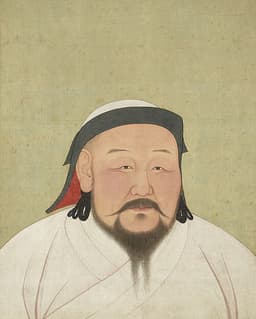
Kublai Khan
Emperor · Medieval
74.3Total
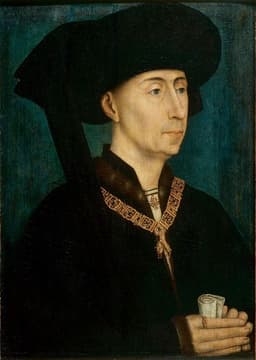
Philip the Good
Emperor · Medieval
59.5Total
Basic Information
Born
1215
1396
Died
1294
1467
Era
Medieval
Medieval
Nationality
Mongolia
Burgundy
Occupation
Emperor
Emperor
Civilization
Eastern
Western
Score Comparison
Military (10%)
77.5
47.5
Political (20%)
79.2
62.7
Influence (20%)
75.0
56.7
Legacy (20%)
70.0
54.0
Leadership (15%)
72.0
78.0
Strategy (15%)
76.0
60.0
TOTAL
74.3
59.5
Kublai Khan — Complete Timeline
1260 AD
Adoption of Tibetan Buddhism as State ReligionCultural◆ Major
Kublai Khan appointed the Tibetan lama Drog
Tibetan BuddhismReligionMongol-Tibet Relations
Impact: regional
1271 AD
Proclamation of the Yuan DynastyPolitical Action◆ Major
Kublai Khan officially proclaimed the Yuan dynasty, adopting a Chinese-style dynastic name. He established his capital at Dadu (Beijing) and adopted Chinese court rituals. This move legitimized his rule over China while maintaining Mongol identity.
Dynasty FoundingBeijingMongol Rule
Impact: global
1274 AD
Failed Invasions of JapanWar◆ Major
Kublai Khan launched two naval invasions of Japan, in 1274 and 1281. Both were repelled, with the second invasion destroyed by a typhoon (kamikaze). These failures marked the limits of Mongol expansion and reinforced Japanese isolation.
Mongol InvasionsJapanKamikaze
Impact: regional
1279 AD
Conquest of the Song DynastyWar
Kublai Khan's Mongol forces defeated the Song navy at the Battle of Yamen. The last Song emperor drowned, ending the Song dynasty. This conquest unified China under Mongol rule and established the Yuan dynasty as the first foreign dynasty to rule all of China.
Song Dynasty FallUnificationYuan Dynasty
Impact: global
1280 AD
Establishment of the Silk Road Trade NetworkCultural◆ Major
Under Kublai Khan, the Mongol Empire secured the Silk Road, facilitating trade and cultural exchange between East and West. Marco Polo visited his court. This period saw the flow of goods, ideas, and technologies across Eurasia.
Silk RoadTradeCultural Exchange
Impact: globalconstructive
Philip the Good — Complete Timeline
1429 AD
Acquired the County of NamurPolitical Action◆ Major
Philip purchased the County of Namur from the impoverished Count John III, expanding Burgundian territory. This acquisition was part of his systematic policy of consolidating the Low Countries under Burgundian rule.
Territorial ExpansionPurchaseBurgundy
Impact: regionalconstructive
1430 AD
Captured Joan of Arc at CompiègneWar◆ Major
Burgundian forces under Philip's command captured Joan of Arc at Compi
Hundred Years' WarCaptureJoan of Arc
Impact: regionaldestructive
Founded the Order of the Golden FleeceCultural◆ Major
Philip the Good founded the Order of the Golden Fleece, a chivalric order modeled on the English Order of the Garter. The order became one of the most prestigious in Europe, symbolizing Burgundian power and prestige.
ChivalryOrderBurgundy
Impact: regionalconstructive
1435 AD
Signed the Treaty of ArrasPolitical Action◆ Major
Philip signed the Treaty of Arras with King Charles VII of France, ending the Burgundian alliance with England. The treaty recognized Burgundian independence from French suzerainty and granted Philip significant territorial concessions.
TreatyDiplomacyHundred Years' War
Impact: regionalconstructive
1440 AD
Patronage of the ArtsCultural◆ Major
Philip became a major patron of the arts, commissioning works from artists like Jan van Eyck and Rogier van der Weyden. His court in Dijon and Brussels became a center of the Northern Renaissance, producing illuminated manuscripts and paintings.
PatronageRenaissanceArt
Impact: regionalconstructive
Expert Analysis
Kublai Khan vs Philip the Good: Historical Comparison
Kublai Khan, the Mongol Emperor who founded the Yuan dynasty in China, and Philip the Good, the Duke of Burgundy who presided over a glittering court in late medieval Europe, both wielded immense power during the medieval era, though their spheres and methods differed profoundly.
Dimension Analysis
**Military: Kublai Khan 94 / Philip the Good 88**
Kublai Khan’s military prowess was demonstrated through the conquest of the Song dynasty and vast campaigns across East Asia, including failed invasions of Japan and Java, while Philip the Good expanded Burgundian territory through shrewd warfare and the capture of Joan of Arc, but never matched the sheer scale of Mongol conquests.
**Political: Kublai Khan 79 / Philip the Good 76**
Kublai Khan consolidated a vast, multi-ethnic empire by integrating Chinese administrative practices with Mongol rule, whereas Philip the Good skillfully used marriages, treaties, and the Burgundian court to centralize power in the Low Countries, though both faced persistent rebellions and dynastic challenges.
**Influence: Kublai Khan 79 / Philip the Good 78**
Kublai Khan’s influence reshaped Eurasian trade and cultural exchange, famously inspiring Marco Polo, while Philip the Good’s patronage of the arts and the Order of the Golden Fleece made Burgundy a cultural hub of late medieval Europe, but neither achieved lasting ideological dominance beyond their realms.
**Legacy: Kublai Khan 88 / Philip the Good 80**
Kublai Khan’s legacy endures as a unifier of China under a foreign dynasty and a key figure in global history, while Philip the Good is remembered as a brilliant patron of Flemish art and a builder of Burgundian power, though his dynasty collapsed soon after his death.
**Leadership: Kublai Khan 81 / Philip the Good 79**
Kublai Khan demonstrated adaptive leadership by employing Chinese officials and promoting religious tolerance, while Philip the Good fostered loyalty through chivalric orders and courtly splendor, yet both relied heavily on personal charisma and coercive force.
Verdict
Kublai Khan leads overall due to his superior military conquests, broader geopolitical impact, and more enduring legacy as the founder of a major dynasty.
FAQ
Q: Who ranks higher? A: Kublai Khan ranks higher, with a composite score advantage driven by his greater military achievements and lasting historical influence.
Rankings
🥇
Kublai KhanLeader
Mil: 77.5Pol: 79.2Inf: 75.0
74.3
🥈
Philip the Good
Mil: 47.5Pol: 62.7Inf: 56.7
59.5
+14.8 behind
How This Comparison Works
Algorithm
Each figure is scored on 6 dimensions (0—100 scale) based on structured historical data: Military (10%), Political (20%), Influence (20%), Legacy (20%), Leadership (15%), Strategy (15%). The weighted total produces the final ranking.
Data Sources
Scores are computed from structured sub-indicators in the database. Scale factors adjust for era (Ancient ×0.85, Modern ×1.0) and civilization size (Eastern ×1.05, Other ×0.80) to account for differences in population and military scale.
Maximum 3 Figures
Comparisons are limited to 2—3 figures to ensure readability and statistical meaningfulness.
Error Margins
±5 points per dimension — Sub-scores are derived from historical records with inherent uncertainty. Two figures within 5 points on a dimension should be considered roughly equivalent in that area.
Total Score Accuracy
±3 points overall — The weighted combination of 6 dimensions produces a total score with approximately ±3 points of uncertainty. Differences of less than 3 points are not statistically significant— the figures are effectively tied.
Known Limitations
- Historical records are incomplete and uneven across civilizations
- Figures from oral-tradition societies may be underrepresented
- Occupation labels can misclassify multi-role figures
- Scores measure capability and impact, not moral character
- Quantitative scoring is a comparison tool, not absolute truth
Capability Radar
Military (10%) — Battles & Warfare
Battles
95
45
Win Rate
90
50
Expansion
95
60
Political (20%) — Governance & Reform
Reform
88
70
Diplomacy
85
80
Economy
90
85
Influence (20%) — Cultural & Global Reach
Cultural
85
65
Global
85
50
Legacy (20%) — Historical Impact
Historical
90
60
Longevity
80
55
Leadership (15%) — Power & Stability
Tenure
90
75
Stability
80
70
Strategy (15%) — Tactics & Innovation
Strategy
92
55
Tactics
85
40
Reform
88
30
Similar Comparisons
Comments & Discussion
MedievalFanatic426/16/2026
Honestly, this comparison is a joke if you look at military impact. Kublai Khan crushed the Song dynasty with a navy they built from scratch—that's like a landlocked country suddenly becoming a naval superpower. Philip the Good? His big military claim is capturing Joan of Arc, who was already betrayed by her own people. Kublai's failed invasions of Japan still forced Japan to build coastal defenses that shaped their entire feudal system. Philip's Burgundy folded like wet cardboard after he died. Kublai built a dynasty that lasted a century in China; Philip's legacy is some pretty paintings and a fancy order of knights. No contest—Kublai is the real empire-builder here.
DrHistoria6/16/2026
The scoring grossly underestimates Philip the Good's political acumen. Contemporary chroniclers like Georges Chastellain depict a ruler who masterfully exploited the Hundred Years' War's chaos to carve out a semi-independent state—something Machiavelli would later codify as princely virtue. Kublai, while administratively savvy, relied heavily on Chinese bureaucrats like Liu Bingzhong, which modern historians such as Morris Rossabi argue shows more delegation than strategic genius. Philip's use of the Order of the Golden Fleece as a loyalty mechanism among fractious nobles is a subtler but equally effective tool of statecraft. The military gap is real, but in governance, Philip's Burgundy was a precocious model of early modern state-building that Kublai's Mongol-Chinese synthesis never quite achieved.
ScoreSkeptic6/16/2026
I call BS on these scores being comparable across such different contexts. Kublai and Philip governed populations separated by thousands of miles and completely different economic systems—how do you even weigh "influence" when one opened trade routes that connected half the world and the other sponsored a few altarpieces? The military gap is the only objective thing here, and even that's flawed because Philip's battles were on a much smaller scale. You're basically comparing a hurricane to a garden party. And where's the "brutality" metric? Kublai's invasions killed millions; Philip's worst act was maybe taxing some Flemish towns too hard. That moral dimension matters in legacy, but it's conveniently absent from this spreadsheet.
Historian1686/16/2026
这个评分系统有个明显的漏洞:它把军事得分(88)和政治得分(78)割裂开了,但忽必烈征服南宋时大量使用汉族官员治理,军事和政治根本是捆绑的。我觉得忽必烈的实际政治得分至少应该85分。他设立的行省制度直接影响了元、明、清三朝的行政架构,而菲利普的勃艮第宫廷再奢华,他一死领地就分崩离析——这政治遗产能算80分?另外,忽必烈的文化影响力被低估了,他推动的藏传佛教进入中原,影响了后来清朝对西藏的政策,这个维度分数应该更高。
ColdChronicler386/16/2026
菲利普三世在欧洲历史上算得上是个精明的文化赞助人,但跟忽必烈比起来,格局差太多了。忽必烈同时管理汉人、蒙古人、色目人、吐蕃人——这种多民族帝国的治理经验,在欧洲要到奥斯曼帝国才出现。菲利普充其量就是个加强版的法国公爵,他的"金羊毛骑士团"跟忽必烈在元大都建立的藏传佛教寺庙体系比,政治整合功能差远了。还有,评论里老拿忽必烈征日本失败说事,但你们想想:菲利普打过任何跨海远征吗?他连渡过英吉利海峡去伦敦抢劫的胆子都没有。拿一个区域性强国君主跟世界帝国的建立者比,本身就不公平。