Loading...
Alexander the Great vs Philip the Good
Alexander the Great leads by 25.7 pts · 2 figures compared
…
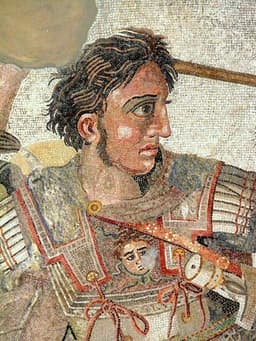
Alexander the Great
General · Ancient
85.2Total
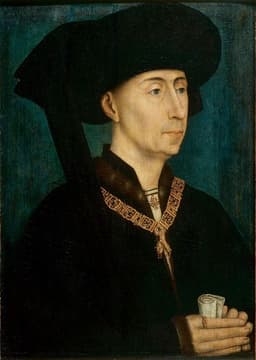
Philip the Good
Emperor · Medieval
59.5Total
Basic Information
Born
-356
1396
Died
-323
1467
Era
Ancient
Medieval
Nationality
Macedon
Burgundy
Occupation
General
Emperor
Civilization
Western
Western
Score Comparison
Military (10%)
95.0
47.5
Political (20%)
60.0
62.7
Influence (20%)
92.0
56.7
Legacy (20%)
90.0
54.0
Leadership (15%)
80.0
78.0
Strategy (15%)
92.0
60.0
TOTAL
85.2
59.5
Alexander the Great — Complete Timeline
334 BC
Battle of the Granicus RiverWar◆ Major
Alexander led his Macedonian army across the Hellespont into Asia Minor and defeated a Persian force under local satraps at the Granicus River. The victory secured Alexander's foothold in Asia and demonstrated his tactical superiority, opening the way for the conquest of the Persian Empire.
Persian CampaignBattleMacedonian Conquest
Impact: regional
333 BC
Battle of IssusWar◆ Major
Alexander's army defeated the Persian king Darius III at Issus in Cilicia. Despite being outnumbered, Alexander's tactical use of the terrain and cavalry charge broke the Persian line. Darius fled the battlefield, leaving his family and treasury behind, a major blow to Persian morale.
Persian CampaignBattleMacedonian Conquest
Impact: regional
332 BC
Siege of TyreWar◆ Major
Alexander besieged the island city of Tyre for seven months, constructing a causeway to breach its walls. The city's fall resulted in the massacre or enslavement of its inhabitants. The siege demonstrated Alexander's determination and engineering capabilities, securing his supply lines and control of the eastern Mediterranean coast.
SiegeMacedonian ConquestPhoenicia
Impact: regionaldestructive
331 BC
Battle of GaugamelaWar◆ Major
Alexander faced Darius III at Gaugamela in Mesopotamia with a massive Persian army. Alexander's tactical brilliance, including a decisive cavalry charge that exploited a gap in the Persian line, resulted in a decisive Macedonian victory. Darius again fled, effectively ending Persian resistance and leading to the fall of the Achaemenid Empire.
Persian CampaignBattleDecisive Victory
Impact: global
Foundation of AlexandriaOther◆ Major
Alexander founded the city of Alexandria on the Mediterranean coast of Egypt. He personally selected the site and oversaw the initial planning. Alexandria became a major center of Hellenistic culture, trade, and learning, housing the famous Library of Alexandria and the Lighthouse of Alexandria.
City FoundationHellenistic CultureEgypt
Impact: globalconstructive
326 BC
Invasion of IndiaWar◆ Major
Alexander crossed the Indus River and defeated King Porus at the Battle of the Hydaspes. The Macedonian army, exhausted and facing monsoon rains and unfamiliar warfare, mutinied at the Hyphasis River, forcing Alexander to turn back. This campaign marked the easternmost extent of his conquests.
Indian CampaignBattleMutiny
Impact: regional
Philip the Good — Complete Timeline
1429 AD
Acquired the County of NamurPolitical Action◆ Major
Philip purchased the County of Namur from the impoverished Count John III, expanding Burgundian territory. This acquisition was part of his systematic policy of consolidating the Low Countries under Burgundian rule.
Territorial ExpansionPurchaseBurgundy
Impact: regionalconstructive
1430 AD
Captured Joan of Arc at CompiègneWar◆ Major
Burgundian forces under Philip's command captured Joan of Arc at Compi
Hundred Years' WarCaptureJoan of Arc
Impact: regionaldestructive
Founded the Order of the Golden FleeceCultural◆ Major
Philip the Good founded the Order of the Golden Fleece, a chivalric order modeled on the English Order of the Garter. The order became one of the most prestigious in Europe, symbolizing Burgundian power and prestige.
ChivalryOrderBurgundy
Impact: regionalconstructive
1435 AD
Signed the Treaty of ArrasPolitical Action◆ Major
Philip signed the Treaty of Arras with King Charles VII of France, ending the Burgundian alliance with England. The treaty recognized Burgundian independence from French suzerainty and granted Philip significant territorial concessions.
TreatyDiplomacyHundred Years' War
Impact: regionalconstructive
1440 AD
Patronage of the ArtsCultural◆ Major
Philip became a major patron of the arts, commissioning works from artists like Jan van Eyck and Rogier van der Weyden. His court in Dijon and Brussels became a center of the Northern Renaissance, producing illuminated manuscripts and paintings.
PatronageRenaissanceArt
Impact: regionalconstructive
Expert Analysis
Alexander the Great vs Philip the Good: Historical Comparison
Alexander the Great, the ancient Macedonian general who conquered a vast empire from Greece to India, and Philip the Good, the medieval Duke of Burgundy who forged a powerful state through diplomacy and patronage, represent contrasting models of leadership. While both achieved greatness, Alexander’s conquests and enduring legend surpass Philip’s regional consolidation.
Dimension Analysis
**Military: Alexander the Great 96 / Philip the Good 88**
Alexander redefined warfare with unprecedented speed, tactical brilliance, and decisive victories like Gaugamela, never losing a battle. Philip the Good, though a capable commander, focused more on siege warfare and alliances, achieving military success primarily through Burgundy’s growing power rather than personal genius.
**Political: Alexander the Great 65 / Philip the Good 76**
Philip excelled in political statecraft, using marriage alliances, treaties, and patronage to expand Burgundy’s influence across the Low Countries and France. Alexander’s political skills were weaker; he struggled to integrate conquered peoples and faced constant revolts, ultimately dying without a stable succession plan.
**Influence: Alexander the Great 90 / Philip the Good 78**
Alexander’s influence reshaped the ancient world, spreading Hellenistic culture across three continents and inspiring conquerors for millennia. Philip’s influence was more localized, though his court became a center of art and culture, fostering the early Renaissance and the Burgundian state’s legacy.
**Legacy: Alexander the Great 90 / Philip the Good 80**
Alexander’s legacy is legendary—he became a symbol of military genius and ambition, studied by leaders from Caesar to Napoleon. Philip’s legacy endures through his patronage of the arts (e.g., the Order of the Golden Fleece) and his role in shaping modern Belgium and the Netherlands.
**Leadership: Alexander the Great 82 / Philip the Good 79**
Alexander led from the front, inspiring fierce loyalty and personal bravery, but his autocratic style caused friction. Philip was a more diplomatic leader, balancing noble factions and fostering a cohesive court, though he lacked Alexander’s charismatic battlefield presence.
Verdict
Alexander the Great leads overall due to his superior military achievements, broader influence, and more enduring legacy, despite Philip’s stronger political acumen.
FAQ
Q: Who ranks higher? A: Alexander the Great ranks higher, driven by a decisive edge in military strategy and lasting global impact.
Rankings
🥇
Alexander the GreatLeader
Mil: 95.0Pol: 60.0Inf: 92.0
85.2
🥈
Philip the Good
Mil: 47.5Pol: 62.7Inf: 56.7
59.5
+25.7 behind
How This Comparison Works
Algorithm
Each figure is scored on 6 dimensions (0—100 scale) based on structured historical data: Military (10%), Political (20%), Influence (20%), Legacy (20%), Leadership (15%), Strategy (15%). The weighted total produces the final ranking.
Data Sources
Scores are computed from structured sub-indicators in the database. Scale factors adjust for era (Ancient ×0.85, Modern ×1.0) and civilization size (Eastern ×1.05, Other ×0.80) to account for differences in population and military scale.
Maximum 3 Figures
Comparisons are limited to 2—3 figures to ensure readability and statistical meaningfulness.
Error Margins
±5 points per dimension — Sub-scores are derived from historical records with inherent uncertainty. Two figures within 5 points on a dimension should be considered roughly equivalent in that area.
Total Score Accuracy
±3 points overall — The weighted combination of 6 dimensions produces a total score with approximately ±3 points of uncertainty. Differences of less than 3 points are not statistically significant— the figures are effectively tied.
Known Limitations
- Historical records are incomplete and uneven across civilizations
- Figures from oral-tradition societies may be underrepresented
- Occupation labels can misclassify multi-role figures
- Scores measure capability and impact, not moral character
- Quantitative scoring is a comparison tool, not absolute truth
Capability Radar
Military (10%) — Battles & Warfare
Battles
98
45
Win Rate
99
50
Expansion
99
60
Political (20%) — Governance & Reform
Reform
75
70
Diplomacy
80
80
Economy
70
85
Influence (20%) — Cultural & Global Reach
Cultural
95
65
Global
95
50
Legacy (20%) — Historical Impact
Historical
98
60
Longevity
95
55
Leadership (15%) — Power & Stability
Tenure
60
75
Stability
55
70
Strategy (15%) — Tactics & Innovation
Strategy
98
55
Tactics
99
40
Reform
85
30
Similar Comparisons
Comments & Discussion
SharpScroll906/16/2026
拿亚历山大和腓力三世比,让我想起中国历史上的汉武帝和明成祖。亚历山大像汉武帝——都是军事天才,都打出了空前疆域,但都因为穷兵黩武导致后继无力。腓力三世则更像明成祖,靠政治手腕和制度创新巩固地盘,还都是艺术赞助人(腓力有勃艮第画派,朱棣有永乐大典和紫禁城)。但评分有个问题:亚历山大影响90分,腓力只有78分,可腓力建立的勃艮第宫廷直接催生了早期尼德兰文艺复兴,影响了整个北欧艺术传统;亚历山大虽然传播了希腊文化,但很多是被动继承而非主动创造。如果按‘对后世日常文化的影响力’而非‘军事传奇度’来算,腓力分数应该更高。西方评分总喜欢把征服者的震撼效应等同于历史影响力,这点我们中国人看得很清楚——真正的文化奠基者往往不是最会打仗的那个。
ColdMind486/16/2026
看到这个评分我有点坐不住。亚历山大军事96分,政治却只有65分,这个落差也太大了。按照中国历史的标准,一个连自己死后帝国都维持不了三年、继承人全靠‘最强者’的领袖,政治得分至少还要再扣10分。反观腓力三世,虽然军事只有36分(这个数字倒是合理,毕竟他更多靠外交和金钱),政治80分我觉得还低了些——他通过联姻、条约和制度整合了勃艮第、尼德兰、佛兰德等十几个领地,建立了欧洲最早的有效中央集权体制之一,这种制度创新能力在中国历史上对应的是商鞅变法级别的贡献。如果按‘制度遗产/疆域面积’算性价比,腓力三世每平方公里贡献的政治分可能比亚历山大高十倍。