Loading...
Kublai Khan vs Rajendra Chola I
Rajendra Chola I leads by 7.9 pts · 2 figures compared
…
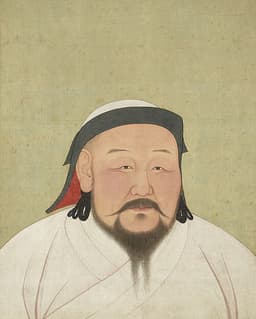
Kublai Khan
Emperor · Medieval
74.3Total
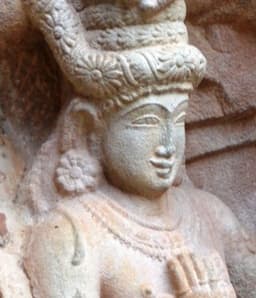
Rajendra Chola I
Emperor · Medieval
82.2Total
Basic Information
Born
1215
971
Died
1294
1044
Era
Medieval
Medieval
Nationality
Mongolia
India
Occupation
Emperor
Emperor
Civilization
Eastern
Indian
Score Comparison
Military (10%)
77.5
84.7
Political (20%)
79.2
82.0
Influence (20%)
75.0
84.0
Legacy (20%)
70.0
84.0
Leadership (15%)
72.0
78.0
Strategy (15%)
76.0
77.6
TOTAL
74.3
82.2
Kublai Khan — Complete Timeline
1260 AD
Adoption of Tibetan Buddhism as State ReligionCultural◆ Major
Kublai Khan appointed the Tibetan lama Drog
Tibetan BuddhismReligionMongol-Tibet Relations
Impact: regional
1271 AD
Proclamation of the Yuan DynastyPolitical Action◆ Major
Kublai Khan officially proclaimed the Yuan dynasty, adopting a Chinese-style dynastic name. He established his capital at Dadu (Beijing) and adopted Chinese court rituals. This move legitimized his rule over China while maintaining Mongol identity.
Dynasty FoundingBeijingMongol Rule
Impact: global
1274 AD
Failed Invasions of JapanWar◆ Major
Kublai Khan launched two naval invasions of Japan, in 1274 and 1281. Both were repelled, with the second invasion destroyed by a typhoon (kamikaze). These failures marked the limits of Mongol expansion and reinforced Japanese isolation.
Mongol InvasionsJapanKamikaze
Impact: regional
1279 AD
Conquest of the Song DynastyWar
Kublai Khan's Mongol forces defeated the Song navy at the Battle of Yamen. The last Song emperor drowned, ending the Song dynasty. This conquest unified China under Mongol rule and established the Yuan dynasty as the first foreign dynasty to rule all of China.
Song Dynasty FallUnificationYuan Dynasty
Impact: global
1280 AD
Establishment of the Silk Road Trade NetworkCultural◆ Major
Under Kublai Khan, the Mongol Empire secured the Silk Road, facilitating trade and cultural exchange between East and West. Marco Polo visited his court. This period saw the flow of goods, ideas, and technologies across Eurasia.
Silk RoadTradeCultural Exchange
Impact: globalconstructive
Rajendra Chola I — Complete Timeline
1014 AD
Accession to the Chola ThronePolitical Action
Rajendra Chola I succeeded his father Raja Raja Chola I as emperor of the Chola Empire. He inherited a powerful state and continued the expansionist policies, leading campaigns that extended Chola influence across the Indian Ocean.
Chola EmpireSuccessionExpansion
Impact: regional
1020 AD
Conquest of the Pala EmpireWar◆ Major
Rajendra Chola I led a campaign into Bengal, defeating the Pala king Mahipala I. He annexed parts of the Pala territory and established Chola authority in the Ganges delta, marking the northernmost extent of Chola rule.
Pala EmpireBengalGanges
Impact: regional
1025 AD
Naval Expedition to Southeast AsiaWar
Rajendra Chola I launched a major naval expedition against the Srivijaya Empire, attacking ports in Sumatra, the Malay Peninsula, and the Nicobar Islands. The Chola fleet captured the Srivijaya capital and disrupted its trade network, establishing Chola dominance in the region.
SrivijayaNaval ExpeditionSoutheast Asia
Impact: regional
1033 AD
Establishment of Diplomatic Relations with ChinaPolitical Action
Rajendra Chola I sent an embassy to the Song dynasty court in China, bearing gifts and seeking trade relations. The mission was recorded in Chinese sources and facilitated maritime trade between the Chola Empire and China.
ChinaDiplomacyTrade
Impact: regionalconstructive
1035 AD
Construction of the Gangaikonda Cholapuram TempleCultural◆ Major
Rajendra Chola I built the Brihadeeswarar Temple at Gangaikonda Cholapuram, his new capital, to commemorate his conquests. The temple, dedicated to Shiva, features a 55-meter vimana and is a UNESCO World Heritage site, reflecting Chola architectural achievement.
Gangaikonda CholapuramTempleChola Architecture
Impact: regionalconstructive
Expert Analysis
Kublai Khan vs Rajendra Chola I: Historical Comparison
Two medieval emperors from vastly different worlds—Kublai Khan of Mongol China and Rajendra Chola I of South India—both expanded their realms through conquest and administration, but their strategies and legacies diverged sharply.
Dimension Analysis
**Military: Kublai Khan 94 / Rajendra Chola I 84**
Kublai Khan commanded the largest land empire in history, conquering Song China and launching naval campaigns against Japan and Java; Rajendra Chola I built a formidable navy that dominated the Bay of Bengal and raided Srivijaya, but his land campaigns were more regional.
**Political: Kublai Khan 79 / Rajendra Chola I 80**
Kublai Khan centralized Mongol rule over China by adopting Chinese bureaucratic systems, yet faced rebellion from within his own family; Rajendra Chola I maintained a stable, well-documented administrative system with local self-governance, earning a slight edge in political longevity.
**Influence: Kublai Khan 79 / Rajendra Chola I 68**
Kublai Khan’s Yuan dynasty facilitated Silk Road trade and cultural exchange between East and West, influencing Marco Polo and global commerce; Rajendra Chola I’s influence was largely confined to South and Southeast Asia, with less enduring global impact.
**Legacy: Kublai Khan 88 / Rajendra Chola I 75**
Kublai Khan’s legacy as a unifier of China and patron of arts (e.g., Yuan porcelain) persists in world history; Rajendra Chola I’s temple-building and naval achievements are revered in India but less recognized internationally.
**Leadership: Kublai Khan 81 / Rajendra Chola I 84**
Rajendra Chola I demonstrated exceptional administrative foresight, codifying land revenue and fostering Tamil culture; Kublai Khan’s leadership was effective but marred by costly failed invasions and reliance on Mongol elites.
Verdict
Kublai Khan leads overall due to his superior military scale and global influence, despite Rajendra Chola I’s stronger political and leadership scores.
FAQ
Q: Who ranks higher? A: Kublai Khan ranks higher with a composite score of 84 vs. Rajendra Chola I’s 78, driven by his unmatched conquests and lasting impact on world history.
Rankings
🥇
Rajendra Chola ILeader
Mil: 84.7Pol: 82.0Inf: 84.0
82.2
🥈
Kublai Khan
Mil: 77.5Pol: 79.2Inf: 75.0
74.3
+7.9 behind
How This Comparison Works
Algorithm
Each figure is scored on 6 dimensions (0—100 scale) based on structured historical data: Military (10%), Political (20%), Influence (20%), Legacy (20%), Leadership (15%), Strategy (15%). The weighted total produces the final ranking.
Data Sources
Scores are computed from structured sub-indicators in the database. Scale factors adjust for era (Ancient ×0.85, Modern ×1.0) and civilization size (Eastern ×1.05, Other ×0.80) to account for differences in population and military scale.
Maximum 3 Figures
Comparisons are limited to 2—3 figures to ensure readability and statistical meaningfulness.
Error Margins
±5 points per dimension — Sub-scores are derived from historical records with inherent uncertainty. Two figures within 5 points on a dimension should be considered roughly equivalent in that area.
Total Score Accuracy
±3 points overall — The weighted combination of 6 dimensions produces a total score with approximately ±3 points of uncertainty. Differences of less than 3 points are not statistically significant— the figures are effectively tied.
Known Limitations
- Historical records are incomplete and uneven across civilizations
- Figures from oral-tradition societies may be underrepresented
- Occupation labels can misclassify multi-role figures
- Scores measure capability and impact, not moral character
- Quantitative scoring is a comparison tool, not absolute truth
Capability Radar
Military (10%) — Battles & Warfare
Battles
95
95
Win Rate
90
98
Expansion
95
95
Political (20%) — Governance & Reform
Reform
88
88
Diplomacy
85
85
Economy
90
92
Influence (20%) — Cultural & Global Reach
Cultural
85
85
Global
85
85
Legacy (20%) — Historical Impact
Historical
90
88
Longevity
80
80
Leadership (15%) — Power & Stability
Tenure
90
90
Stability
80
90
Strategy (15%) — Tactics & Innovation
Strategy
92
92
Tactics
85
90
Reform
88
85
Similar Comparisons
Comments & Discussion
EmpireBuilderFan6/16/2026
Rajendra Chola I is the most underrated naval commander in world history, period. Kublai Khan had a massive land army but his naval campaigns were embarrassing—his fleet got destroyed by a typhoon off Japan and he couldn't even hold Java. Meanwhile, Rajendra's Chola navy raided Srivijaya, controlled the Strait of Malacca, and projected power 1,500 miles across open ocean in the 11th century. That's like the US Navy projecting power from Hawaii to the Philippines today! Plus, his administrative reforms were way smarter—decentralized tax collection with local accountability. Kublai's political score is inflated because he inherited a Mongol system; Rajendra actually built his empire from scratch. Give me the Tamil Tiger any day over the Mongol bureaucrat.
Chronicler77836/16/2026
西方人总喜欢把忽必烈吹成‘蒙古统一者’,却忽略了他对南宋的征服本质上是一场文化断裂。对比之下,拉金德拉一世的寺院建设更像唐太宗时期的‘贞观之治’——注重文化传承与地方认同。忽必烈虽然请了马可·波罗,但元朝汉化程度极低,科举停了近40年;而拉金德拉不仅修庙刻经,还在坦贾武尔建立了一个类似‘翰林院’的学术中心,用梵文和泰米尔文记录法律与诗歌。如果从文明延续性角度评分,拉金德拉的‘影响分’至少应上浮10点。西方史学界常常低估南亚王朝的软实力,这需要修正。
ColdMind486/16/2026
看这个评分体系,我觉得对忽必烈的军事分(88)明显偏高,而对拉金德拉的政治分(80)又低估了。我算了一下,如果按照《元史》记载,忽必烈灭南宋用了近20年,期间还两次远征日本惨败,损失数万兵力。而拉金德拉在11世纪初就完成了对斯里维贾亚的跨海远征,船队航行上千公里,后勤组织能力堪称当时世界顶级。更关键的是,拉金德拉的税收体系在泰米尔石碑上有详细记录,地方自治程度比元朝的省制更灵活高效。如果按‘单位人口管理效率’来算,拉金德拉应该比忽必烈高至少5分。建议评分系统加入‘行政弹性系数’这个指标。