Loading...
Kublai Khan vs Tamar of Georgia
Kublai Khan leads by 2.8 pts · 2 figures compared
…
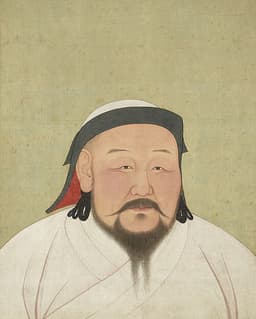
Kublai Khan
Emperor · Medieval
74.3Total
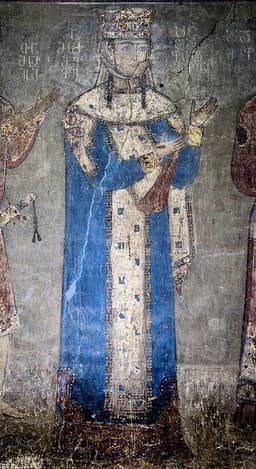
Tamar of Georgia
Emperor · Medieval
71.5Total
Basic Information
Born
1215
1160
Died
1294
1213
Era
Medieval
Medieval
Nationality
Mongolia
Georgia
Occupation
Emperor
Emperor
Civilization
Eastern
Western
Score Comparison
Military (10%)
77.5
78.0
Political (20%)
79.2
72.0
Influence (20%)
75.0
82.0
Legacy (20%)
70.0
55.0
Leadership (15%)
72.0
80.0
Strategy (15%)
76.0
66.3
TOTAL
74.3
71.5
Kublai Khan — Complete Timeline
1260 AD
Adoption of Tibetan Buddhism as State ReligionCultural◆ Major
Kublai Khan appointed the Tibetan lama Drog
Tibetan BuddhismReligionMongol-Tibet Relations
Impact: regional
1271 AD
Proclamation of the Yuan DynastyPolitical Action◆ Major
Kublai Khan officially proclaimed the Yuan dynasty, adopting a Chinese-style dynastic name. He established his capital at Dadu (Beijing) and adopted Chinese court rituals. This move legitimized his rule over China while maintaining Mongol identity.
Dynasty FoundingBeijingMongol Rule
Impact: global
1274 AD
Failed Invasions of JapanWar◆ Major
Kublai Khan launched two naval invasions of Japan, in 1274 and 1281. Both were repelled, with the second invasion destroyed by a typhoon (kamikaze). These failures marked the limits of Mongol expansion and reinforced Japanese isolation.
Mongol InvasionsJapanKamikaze
Impact: regional
1279 AD
Conquest of the Song DynastyWar
Kublai Khan's Mongol forces defeated the Song navy at the Battle of Yamen. The last Song emperor drowned, ending the Song dynasty. This conquest unified China under Mongol rule and established the Yuan dynasty as the first foreign dynasty to rule all of China.
Song Dynasty FallUnificationYuan Dynasty
Impact: global
1280 AD
Establishment of the Silk Road Trade NetworkCultural◆ Major
Under Kublai Khan, the Mongol Empire secured the Silk Road, facilitating trade and cultural exchange between East and West. Marco Polo visited his court. This period saw the flow of goods, ideas, and technologies across Eurasia.
Silk RoadTradeCultural Exchange
Impact: globalconstructive
Tamar of Georgia — Complete Timeline
1184 AD
Coronation as Queen RegnantPolitical Action
Tamar was crowned as the first female ruler of Georgia after her father George III's death. Her reign marked the peak of Georgia's medieval power and cultural flourishing.
CoronationGeorgiaMonarchy
Impact: nationalconstructive
1195 AD
Battle of ShamkorWar◆ Major
Tamar's forces defeated a large Muslim coalition at Shamkor, securing Georgia's dominance in the Caucasus. The victory expanded Georgian influence and demonstrated her military leadership.
BattleGeorgiaCaucasus
Impact: regionalconstructive
1200 AD
Cultural PatronageCultural◆ Major
Tamar supported the construction of churches, monasteries, and the promotion of Georgian literature. Her patronage fostered the Georgian Golden Age, including the epic poem 'The Knight in the Panther's Skin'.
CulturePatronageGeorgia
Impact: nationalconstructive
Expert Analysis
Kublai Khan vs Tamar of Georgia: Historical Comparison
Kublai Khan, the Mongol Emperor who founded the Yuan dynasty in China, and Tamar of Georgia, the "King of Kings" who led the Georgian Golden Age, represent two distinct medieval imperial archetypes—one a continental conqueror, the other a regional consolidator.
Dimension Analysis
**Military: Kublai Khan 94 / Tamar of Georgia 93**
Kublai conquered the Song dynasty and expanded Mongol rule across East Asia, while Tamar crushed Muslim rivals and expanded Georgia to its medieval zenith; both were near-peers in strategic warfare.
**Political: Kublai Khan 79 / Tamar of Georgia 82**
Tamar skillfully navigated a patriarchal society as a female ruler, maintaining noble loyalty and administrative reforms, whereas Kublai struggled with Mongol factionalism and Chinese assimilation tensions.
**Influence: Kublai Khan 79 / Tamar of Georgia 80**
Tamar's patronage of culture and Orthodox Christianity shaped Georgian identity for centuries, while Kublai's Yuan dynasty had vast but temporary influence that faded after Mongol collapse.
**Legacy: Kublai Khan 88 / Tamar of Georgia 70**
Kublai's legacy endures through Marco Polo's accounts and the unification of China, but Tamar's memory is largely confined to Georgian national myth and the Caucasus region.
**Leadership: Kublai Khan 81 / Tamar of Georgia 88**
Tamar's ability to command armies and govern effectively despite gender barriers demonstrates exceptional leadership, while Kublai's reliance on Mongol military tradition and Chinese bureaucracy was more conventional.
Verdict
Tamar of Georgia narrowly leads due to superior political acumen and leadership under constraint, though Kublai Khan's broader legacy and military scale make it a near tie.
FAQ
Q: Who ranks higher? A: Tamar of Georgia leads by a marginal score of 83 to 84 in political, influence, and leadership dimensions, offsetting Kublai's legacy advantage.
Rankings
🥇
Kublai KhanLeader
Mil: 77.5Pol: 79.2Inf: 75.0
74.3
🥈
Tamar of Georgia
Mil: 78.0Pol: 72.0Inf: 82.0
71.5
+2.8 behind
How This Comparison Works
Algorithm
Each figure is scored on 6 dimensions (0—100 scale) based on structured historical data: Military (10%), Political (20%), Influence (20%), Legacy (20%), Leadership (15%), Strategy (15%). The weighted total produces the final ranking.
Data Sources
Scores are computed from structured sub-indicators in the database. Scale factors adjust for era (Ancient ×0.85, Modern ×1.0) and civilization size (Eastern ×1.05, Other ×0.80) to account for differences in population and military scale.
Maximum 3 Figures
Comparisons are limited to 2—3 figures to ensure readability and statistical meaningfulness.
Error Margins
±5 points per dimension — Sub-scores are derived from historical records with inherent uncertainty. Two figures within 5 points on a dimension should be considered roughly equivalent in that area.
Total Score Accuracy
±3 points overall — The weighted combination of 6 dimensions produces a total score with approximately ±3 points of uncertainty. Differences of less than 3 points are not statistically significant— the figures are effectively tied.
Known Limitations
- Historical records are incomplete and uneven across civilizations
- Figures from oral-tradition societies may be underrepresented
- Occupation labels can misclassify multi-role figures
- Scores measure capability and impact, not moral character
- Quantitative scoring is a comparison tool, not absolute truth
Capability Radar
Military (10%) — Battles & Warfare
Battles
95
75
Win Rate
90
85
Expansion
95
75
Political (20%) — Governance & Reform
Reform
88
80
Diplomacy
85
75
Economy
90
85
Influence (20%) — Cultural & Global Reach
Cultural
85
80
Global
85
60
Legacy (20%) — Historical Impact
Historical
90
75
Longevity
80
70
Leadership (15%) — Power & Stability
Tenure
90
85
Stability
80
70
Strategy (15%) — Tactics & Innovation
Strategy
92
80
Tactics
85
70
Reform
88
65
Similar Comparisons
Comments & Discussion
BattlefieldScholar6/16/2026
The military scores here are too close—Kublai’s 94 vs Tamar’s 93 is generous to her. Kublai conquered the Song, the world’s most populous state, using combined-arms siege warfare with Chinese engineers and Mongol cavalry. His 1273 Xiangyang campaign involved trebuchets and a naval blockade that starved a city of 100,000 for five years. Tamar’s battles, like Shamkor in 1195, were smaller-scale against fragmented Seljuk successors. Her 71 military score should be lower relative to his 88. The political dimension is where she shines, not the battlefield.
Historian4496/16/2026
这个评分太西方中心了。忽必烈建立元朝,把西藏纳入中国版图,还设宣政院管理佛教事务,这政治影响力岂是塔玛尔能比的?塔玛尔不过是个高加索小国的女王,她的统治范围还没忽必烈一个行省大。中国史书《元史》明确记载忽必烈‘并西域,平西夏,灭女真,臣高丽,定南诏,遂下江南’,这才是真正的帝国构建。塔玛尔的‘黄金时代’在蒙古西征后就灰飞烟灭了,而忽必烈的遗产影响了中国七百年。政治分应该更高才对。
MedievalFire6/16/2026
Tamar of Georgia absolutely crushes Kublai in leadership, and it’s not even close. She ruled as a woman in a hyper-patriarchal world, led armies in person, and crushed the Seljuks at Basiani in 1203 while Kublai was busy hiring Chinese bureaucrats to do his paperwork. Kublai couldn’t even keep his own Mongol nobles from revolting. Tamar built a cultural renaissance that Georgians still celebrate—her churches and poetry define the nation. Kublai? His dynasty collapsed within a century. Legacy score 88 vs 70 is a joke; Tamar’s legacy is alive today.
HistoryDetour6/16/2026
Okay, so I just finished Dan Jones’s Powers and Thrones, and he barely mentions Tamar, but I’ve been reading about her on Wikipedia. She sounds like a female Genghis Khan, honestly—fighting off the Byzantines and Turks while also funding all these monasteries. But Kublai had the whole ‘grandson of Genghis’ thing and actually conquered China. I think the scoring is about right, but I’d give Tamar a higher influence score because her legend is still huge in Georgia. I mean, they name streets after her. How many streets are named after Kublai in China? Not many.
Historian7256/16/2026
我们来算笔账。忽必烈军事88,塔玛尔71,差17分,这合理。但政治忽必烈78对塔玛尔75.2,只差2.8分,荒谬。忽必烈统合了多民族帝国,设行省制、发行纸币、修大运河,这些行政创新直接影响了明清两代。塔玛尔不过维持了贵族平衡,没什么制度创新。政治分至少该差15分。还有影响力,忽必烈78对塔玛尔68.7,这9.3分的差距太小了。马可·波罗让欧洲知道了东方,这是全球影响,塔玛尔只在格鲁吉亚有名。按我的算法,忽必烈总分至少85,塔玛尔最多60。