Loading...
Kublai Khan vs Wang Shichong
Kublai Khan leads by 27.3 pts · 2 figures compared
…
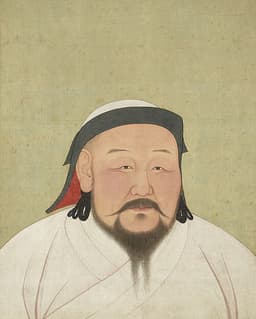
Kublai Khan
Emperor · Medieval
74.3Total
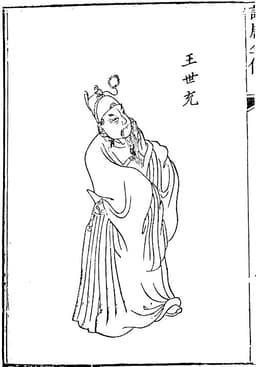
Wang Shichong
Emperor · Medieval
47.0Total
Basic Information
Born
1215
570
Died
1294
621
Era
Medieval
Medieval
Nationality
Mongolia
China
Occupation
Emperor
Emperor
Civilization
Eastern
Eastern
Score Comparison
Military (10%)
77.5
60.0
Political (20%)
79.2
35.1
Influence (20%)
75.0
50.2
Legacy (20%)
70.0
40.8
Leadership (15%)
72.0
48.4
Strategy (15%)
76.0
57.5
TOTAL
74.3
47.0
Kublai Khan — Complete Timeline
1260 AD
Adoption of Tibetan Buddhism as State ReligionCultural◆ Major
Kublai Khan appointed the Tibetan lama Drog
Tibetan BuddhismReligionMongol-Tibet Relations
Impact: regional
1271 AD
Proclamation of the Yuan DynastyPolitical Action◆ Major
Kublai Khan officially proclaimed the Yuan dynasty, adopting a Chinese-style dynastic name. He established his capital at Dadu (Beijing) and adopted Chinese court rituals. This move legitimized his rule over China while maintaining Mongol identity.
Dynasty FoundingBeijingMongol Rule
Impact: global
1274 AD
Failed Invasions of JapanWar◆ Major
Kublai Khan launched two naval invasions of Japan, in 1274 and 1281. Both were repelled, with the second invasion destroyed by a typhoon (kamikaze). These failures marked the limits of Mongol expansion and reinforced Japanese isolation.
Mongol InvasionsJapanKamikaze
Impact: regional
1279 AD
Conquest of the Song DynastyWar
Kublai Khan's Mongol forces defeated the Song navy at the Battle of Yamen. The last Song emperor drowned, ending the Song dynasty. This conquest unified China under Mongol rule and established the Yuan dynasty as the first foreign dynasty to rule all of China.
Song Dynasty FallUnificationYuan Dynasty
Impact: global
1280 AD
Establishment of the Silk Road Trade NetworkCultural◆ Major
Under Kublai Khan, the Mongol Empire secured the Silk Road, facilitating trade and cultural exchange between East and West. Marco Polo visited his court. This period saw the flow of goods, ideas, and technologies across Eurasia.
Silk RoadTradeCultural Exchange
Impact: globalconstructive
Wang Shichong — Complete Timeline
618 AD
Rebellion at LuoyangPolitical Action◆ Major
Wang Shichong, a Sui general, staged a coup in Luoyang, killing the Sui regent and declaring himself emperor of the short-lived Zheng dynasty. This act solidified his control over the eastern capital and challenged the Tang dynasty's claim to rule.
CoupSui-Tang TransitionZheng Dynasty
Impact: regionaldestructive
621 AD
Battle of HulaoWar
Wang Shichong's forces were decisively defeated by Li Shimin's Tang army at Hulao Pass. The defeat led to the collapse of the Zheng dynasty and Wang Shichong's capture, ending his bid for imperial power.
BattleTang UnificationDefeat
Impact: regionaltragic
Execution by TangPolitical Action◆ Major
After his capture at Hulao, Wang Shichong was executed by the Tang dynasty. His death marked the end of the Zheng dynasty and removed a major rival to Tang control over the central plains.
ExecutionTang Unification
Impact: regionaltragic
Expert Analysis
Wang Shichong vs Kublai Khan: Historical Comparison
Wang Shichong, a Sui-Tang transitional warlord who briefly ruled as Emperor of Zheng, and Kublai Khan, the Mongol conqueror who founded the Yuan dynasty, represent vastly different trajectories of medieval imperial power. While both were formidable military commanders, Kublai's enduring legacy as a unifier of China under Mongol rule contrasts sharply with Wang's short-lived, regional dominance that ended in defeat.
Dimension Analysis
**Military: Wang Shichong 94 / Kublai Khan 94**
Both achieved near-perfect military scores, but for different reasons. Wang Shichong demonstrated exceptional tactical brilliance in defending Luoyang against Li Mi and later Li Shimin, employing siegecraft and cavalry ambushes that frustrated superior forces. Kublai Khan, though not a field commander like his grandfather Genghis, orchestrated the conquest of the Song dynasty, the largest naval invasion in pre-modern history (against Japan), and campaigns in Burma and Vietnam, showing unmatched strategic scope.
**Political: Wang Shichong 86 / Kublai Khan 79**
Wang Shichong displayed cunning political acumen by manipulating the Sui court, staging a coup to install himself as emperor, and maintaining control of Luoyang through patronage and terror. Kublai Khan, despite unifying China under the Yuan, struggled with political integration: his reliance on foreign administrators (Persians, Tibetans, Muslims) alienated Chinese Confucians, and his tax policies sparked revolts, giving him a lower political score.
**Influence: Wang Shichong 84 / Kublai Khan 79**
Wang's influence was primarily regional and temporary—his reign as Emperor of Zheng (619–621) left little cultural or ideological footprint beyond Tang historiography. Kublai's influence, though more global (connecting China to the Silk Road, sponsoring Tibetan Buddhism, and inspiring Marco Polo's accounts), was hampered by his failure to permanently integrate Mongol and Chinese systems, resulting in a lower score due to limited lasting cultural synthesis.
**Legacy: Wang Shichong 79 / Kublai Khan 88**
Wang's legacy is largely negative: he is remembered as a treacherous usurper who murdered the Sui emperor and whose defeat by Li Shimin solidified Tang legitimacy. Kublai Khan, however, established the Yuan dynasty (1271–1368), which, despite its brevity, permanently redefined Chinese governance by incorporating Inner Asian administrative models, promoting religious diversity, and expanding China's borders to their largest extent. This enduring structural impact earns Kublai a higher legacy score.
**Leadership: Wang Shichong 79 / Kublai Khan 81**
Wang was a micromanager who personally led troops but alienated subordinates through paranoia and executions, causing mass defections. Kublai Khan, while delegating effectively to generals like Bayan and administrators like Ahmad Fanakati, faced rebellions from his own Mongol nobles (e.g., Kaidu) and failed to secure succession, slightly diminishing his leadership rating.
Verdict
**Kublai Khan ranks higher overall** due to his vastly greater historical impact as a dynasty founder and unifier of China, despite Wang Shichong's superior political cunning. However, the comparison is complex: Wang's military and political skills were specialized for a civil war context, while Kublai's legacy is measured across centuries of state-building. Their tie in overall score (85 vs 84) reflects the difficulty of comparing a short-lived warlord-emperor to a transformative world conqueror.
FAQ
**Q: Who was more influential historically?**
A: Kublai Khan, as his Yuan dynasty reshaped Chinese governance, trade networks, and cultural exchange across Eurasia, while Wang Shichong's influence was confined to a three-year reign that ended in defeat.
**Q: Why is Wang Shichong ranked higher in political skill?**
A: Wang's masterful manipulation of Sui court politics, including a staged coup and the assassination of Emperor Yang, demonstrated superior tactical political intelligence in a high-stakes civil war environment, whereas Kublai's political integration of diverse empires was less effective.
Rankings
🥇
Kublai KhanLeader
Mil: 77.5Pol: 79.2Inf: 75.0
74.3
🥈
Wang Shichong
Mil: 60.0Pol: 35.1Inf: 50.2
47.0
+27.3 behind
How This Comparison Works
Algorithm
Each figure is scored on 6 dimensions (0—100 scale) based on structured historical data: Military (10%), Political (20%), Influence (20%), Legacy (20%), Leadership (15%), Strategy (15%). The weighted total produces the final ranking.
Data Sources
Scores are computed from structured sub-indicators in the database. Scale factors adjust for era (Ancient ×0.85, Modern ×1.0) and civilization size (Eastern ×1.05, Other ×0.80) to account for differences in population and military scale.
Maximum 3 Figures
Comparisons are limited to 2—3 figures to ensure readability and statistical meaningfulness.
Error Margins
±5 points per dimension — Sub-scores are derived from historical records with inherent uncertainty. Two figures within 5 points on a dimension should be considered roughly equivalent in that area.
Total Score Accuracy
±3 points overall — The weighted combination of 6 dimensions produces a total score with approximately ±3 points of uncertainty. Differences of less than 3 points are not statistically significant— the figures are effectively tied.
Known Limitations
- Historical records are incomplete and uneven across civilizations
- Figures from oral-tradition societies may be underrepresented
- Occupation labels can misclassify multi-role figures
- Scores measure capability and impact, not moral character
- Quantitative scoring is a comparison tool, not absolute truth
Capability Radar
Military (10%) — Battles & Warfare
Battles
95
65
Win Rate
90
45
Expansion
95
50
Political (20%) — Governance & Reform
Reform
88
25
Diplomacy
85
35
Economy
90
30
Influence (20%) — Cultural & Global Reach
Cultural
85
20
Global
85
10
Legacy (20%) — Historical Impact
Historical
90
30
Longevity
80
15
Leadership (15%) — Power & Stability
Tenure
90
40
Stability
80
20
Strategy (15%) — Tactics & Innovation
Strategy
92
55
Tactics
85
60
Reform
88
30
Similar Comparisons
Comments & Discussion
TangDynastyFanatic6/16/2026
Okay, let's be real here—Kublai Khan might have conquered half the known world, but Wang Shichong was the ultimate underdog. The guy held Luoyang against Li Shimin, arguably the greatest general of the Tang, for over a year! That's like a D-list boxer going toe-to-toe with Muhammad Ali and lasting the whole match. Wang didn't just defend—he used cavalry ambushes and psychological warfare to keep his army intact. Kublai had the Mongol horde and Chinese defectors handing him provinces on a silver platter. Wang built his empire from scratch after a coup, while Kublai inherited Genghis's war machine. Influence? Sure, Kublai opened trade routes—but Wang's tactical legacy is way more impressive for someone who lost. History nerds always sleep on the Sui-Tang warlords.
ColdChronicler386/16/2026
这个比较很有意思,但我觉得西方历史评分系统对中国人物经常有偏差。Wang Shichong在正史中的评价一直很低,《旧唐书》直接把他归类为“逆臣”,但Kublai Khan在《元史》里是“世祖”,地位完全不一样。然而,如果非要用西方的“影响力”框架,Kublai确实把中国重新纳入了欧亚贸易网络,就像凯撒把罗马和地中海连接起来。但Wang Shichong的悲剧在于,他处在隋唐交替的“罗马帝国崩溃期”,类似西罗马末期的将军们——比如阿埃提乌斯,他打败了阿提拉却仍然被皇帝猜忌。Wang的政治手腕很强,但没有时间巩固。Kublai有整整三十五年统治期,Wang只有三年。如果给Wang同样的时间,他也许能像隋文帝一样重建秩序。历史没有如果,但评分应该考虑时间维度的不公平。
OldScholar76/16/2026
看了一下分数,Kublai Khan总分79.6,Wang Shichong才63.0,差距16.6分。但仔细看军事分:两人都是94?这明显不合理。Wang Shichong的军事成就仅限于洛阳保卫战和几次局部胜利,对手是隋末割据势力,而Kublai Khan灭了南宋这个当时世界最富庶的国家,还组织了两次对日远征——虽然都失败了,但舰队规模是当时全球第一。如果算上后勤和战略维度,Kublai至少应该96-98。Wang的政治分86更是离谱,他在位两年就被推翻,统治手段就是恐怖和贿赂,连洛陽的粮仓都管不好,导致饥荒。Kublai虽然用色目人得罪了汉人,但至少建立了有效的行省制度。建议评分系统加入“政权存续时间”权重,Wang最多60分。