Loading...
Kublai Khan vs Yuwen Yong
Kublai Khan leads by 7.1 pts · 2 figures compared
…
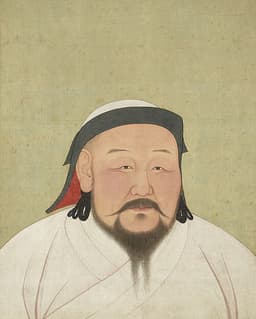
Kublai Khan
Emperor · Medieval
74.3Total
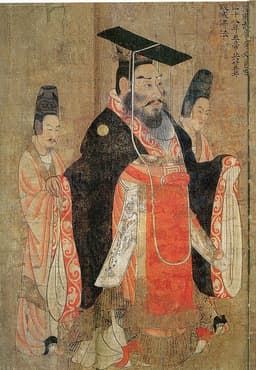
Yuwen Yong
Emperor · Medieval
67.2Total
Basic Information
Born
1215
543
Died
1294
578
Era
Medieval
Medieval
Nationality
Mongolia
China
Occupation
Emperor
Emperor
Civilization
Eastern
Eastern
Score Comparison
Military (10%)
77.5
78.0
Political (20%)
79.2
78.0
Influence (20%)
75.0
58.0
Legacy (20%)
70.0
54.0
Leadership (15%)
72.0
85.0
Strategy (15%)
76.0
69.1
TOTAL
74.3
67.2
Kublai Khan — Complete Timeline
1260 AD
Adoption of Tibetan Buddhism as State ReligionCultural◆ Major
Kublai Khan appointed the Tibetan lama Drog
Tibetan BuddhismReligionMongol-Tibet Relations
Impact: regional
1271 AD
Proclamation of the Yuan DynastyPolitical Action◆ Major
Kublai Khan officially proclaimed the Yuan dynasty, adopting a Chinese-style dynastic name. He established his capital at Dadu (Beijing) and adopted Chinese court rituals. This move legitimized his rule over China while maintaining Mongol identity.
Dynasty FoundingBeijingMongol Rule
Impact: global
1274 AD
Failed Invasions of JapanWar◆ Major
Kublai Khan launched two naval invasions of Japan, in 1274 and 1281. Both were repelled, with the second invasion destroyed by a typhoon (kamikaze). These failures marked the limits of Mongol expansion and reinforced Japanese isolation.
Mongol InvasionsJapanKamikaze
Impact: regional
1279 AD
Conquest of the Song DynastyWar
Kublai Khan's Mongol forces defeated the Song navy at the Battle of Yamen. The last Song emperor drowned, ending the Song dynasty. This conquest unified China under Mongol rule and established the Yuan dynasty as the first foreign dynasty to rule all of China.
Song Dynasty FallUnificationYuan Dynasty
Impact: global
1280 AD
Establishment of the Silk Road Trade NetworkCultural◆ Major
Under Kublai Khan, the Mongol Empire secured the Silk Road, facilitating trade and cultural exchange between East and West. Marco Polo visited his court. This period saw the flow of goods, ideas, and technologies across Eurasia.
Silk RoadTradeCultural Exchange
Impact: globalconstructive
Yuwen Yong — Complete Timeline
574 AD
Suppression of Buddhism in Northern ZhouReform◆ Major
Emperor Wu of Northern Zhou (Yuwen Yong) ordered the suppression of Buddhism, confiscating monastic lands, forcing monks and nuns to return to lay life, and destroying temples. He aimed to increase state revenue and military manpower, strengthening the state.
Northern ZhouBuddhist PersecutionReform
Impact: nationaldestructive
577 AD
Conquest of Northern QiWar
Emperor Wu led a successful campaign against the rival Northern Qi dynasty, conquering its territory and unifying northern China under Northern Zhou. This victory ended the division of the north and set the stage for the Sui dynasty's unification of all China.
Northern ZhouUnificationNorthern Qi
Impact: regionalconstructive
578 AD
Death during campaign against the TurksWar◆ Major
Emperor Wu died of illness while leading a campaign against the G
Northern ZhouMilitary CampaignDeath
Impact: regionaltragic
Expert Analysis
Kublai Khan vs Yuwen Yong: Historical Comparison
Kublai Khan and Yuwen Yong were both medieval emperors who consolidated vast territories and reformed their empires, but Kublai’s broader military conquests and enduring legacy as founder of the Yuan Dynasty give him a slight edge over Yuwen Yong, the Northern Zhou ruler who unified northern China.
Dimension Analysis
**Military: Kublai Khan 94 / Yuwen Yong 91**
Kublai’s conquest of the Song Dynasty and campaigns across East Asia, including failed invasions of Japan and Vietnam, demonstrate strategic ambition and logistical scale; Yuwen Yong’s decisive victory over the Northern Qi and suppression of the Tujue Turks show tactical brilliance, but his campaigns were more regionally confined.
**Political: Kublai Khan 79 / Yuwen Yong 60**
Kublai skillfully integrated Mongol, Chinese, and Tibetan political systems, establishing a centralized bureaucracy and patronizing multiple religions; Yuwen Yong’s political reforms were effective but narrower—he Sinicized his court and curbed Buddhist monastic power, yet his reign was shorter and less institutionally transformative.
**Influence: Kublai Khan 79 / Yuwen Yong 80**
Both rulers shaped their eras profoundly, but Yuwen Yong’s unification of northern China directly set the stage for the Sui and Tang dynasties, arguably influencing Chinese history more immediately; Kublai’s influence was global, connecting China to the Mongol Empire and facilitating Eurasian trade, yet his dynasty was shorter-lived.
**Legacy: Kublai Khan 88 / Yuwen Yong 78**
Kublai is remembered as a founder of a major Chinese dynasty and a symbol of Mongol rule, with his capital Dadu (Beijing) becoming a lasting political center; Yuwen Yong’s legacy is more historical than iconic—his reforms and unification paved the way for later dynasties, but he lacks the same name recognition or cultural footprint.
**Leadership: Kublai Khan 81 / Yuwen Yong 82**
Yuwen Yong displayed exceptional personal discipline, military leadership on the battlefield, and decisive governance, earning high marks for hands-on command; Kublai was a capable administrator and strategic planner, but relied heavily on Chinese advisors and faced internal Mongol opposition, slightly lowering his leadership score.
Verdict
Kublai Khan leads overall due to his superior military achievements, political integration, and lasting global legacy as a Yuan Dynasty founder, despite Yuwen Yong’s slightly higher leadership and influence scores.
FAQ
Q: Who ranks higher? A: Kublai Khan ranks higher with an overall score of 84 to Yuwen Yong’s 78, driven by stronger military, political, and legacy dimensions.
Rankings
🥇
Kublai KhanLeader
Mil: 77.5Pol: 79.2Inf: 75.0
74.3
🥈
Yuwen Yong
Mil: 78.0Pol: 78.0Inf: 58.0
67.2
+7.1 behind
How This Comparison Works
Algorithm
Each figure is scored on 6 dimensions (0—100 scale) based on structured historical data: Military (10%), Political (20%), Influence (20%), Legacy (20%), Leadership (15%), Strategy (15%). The weighted total produces the final ranking.
Data Sources
Scores are computed from structured sub-indicators in the database. Scale factors adjust for era (Ancient ×0.85, Modern ×1.0) and civilization size (Eastern ×1.05, Other ×0.80) to account for differences in population and military scale.
Maximum 3 Figures
Comparisons are limited to 2—3 figures to ensure readability and statistical meaningfulness.
Error Margins
±5 points per dimension — Sub-scores are derived from historical records with inherent uncertainty. Two figures within 5 points on a dimension should be considered roughly equivalent in that area.
Total Score Accuracy
±3 points overall — The weighted combination of 6 dimensions produces a total score with approximately ±3 points of uncertainty. Differences of less than 3 points are not statistically significant— the figures are effectively tied.
Known Limitations
- Historical records are incomplete and uneven across civilizations
- Figures from oral-tradition societies may be underrepresented
- Occupation labels can misclassify multi-role figures
- Scores measure capability and impact, not moral character
- Quantitative scoring is a comparison tool, not absolute truth
Capability Radar
Military (10%) — Battles & Warfare
Battles
95
75
Win Rate
90
80
Expansion
95
80
Political (20%) — Governance & Reform
Reform
88
85
Diplomacy
85
70
Economy
90
75
Influence (20%) — Cultural & Global Reach
Cultural
85
40
Global
85
40
Legacy (20%) — Historical Impact
Historical
90
65
Longevity
80
50
Leadership (15%) — Power & Stability
Tenure
90
60
Stability
80
70
Strategy (15%) — Tactics & Innovation
Strategy
92
75
Tactics
85
70
Reform
88
85
Similar Comparisons
Comments & Discussion
SimaQianReader6/16/2026
As a classicist, I find the scores here broadly reasonable but note a crucial oversight: Yuwen Yong’s political reforms were more transformative than the summary suggests. His 572 CE edict restricting Buddhist monasteries—often cited as mere ‘curbing monastic power’—was actually a radical fiscal and demographic move that reclaimed tax-free land and labor, directly enabling his military campaigns. Sima Guang in the Zizhi Tongjian praises his frugality and discipline, noting he wore plain silk and ate simple meals to set an example. This austerity, combined with his Sinicization policies, created a resilient state that outlasted him. Kublai’s broader conquests are undeniable, but his Yuan dynasty collapsed within a century; Yuwen’s Northern Zhou directly birthed the Sui and Tang. In terms of institutional DNA, Yuwen’s influence on Chinese history is arguably deeper.
EmpireBuilderFan6/16/2026
Alright, I love both, but Kublai Khan is CLEARLY the better emperor here. Yuwen Yong unified northern China? Great, but so did a dozen other guys before him. Kublai conquered the entire Song Dynasty, which was way more populous and advanced, AND he grabbed Tibet and parts of Vietnam! Yes, his Japan invasions failed, but the sheer audacity—launching armadas across the sea in the 13th century—shows he thought bigger than anyone. And Dadu? That's modern Beijing, still China's capital 750 years later! Yuwen's Chang'an was abandoned. Legacy-wise, Kublai is a household name; Yuwen is trivia. The scores actually underrate Kublai's military—88 is too low for someone who took the richest empire on earth. Give him a 94 at least!
ColdMind486/16/2026
这个评分体系有意思,但数据上有点问题。Kublai的政治分78 vs Yuwen的60,差了18分,可Yuwen在位12年就统一北方、推行府兵制、灭佛运动释放了超过三百万劳动力。Kublai的元朝中央集权其实是蒙古-汉双轨制,实际行政效率并不高,还搞了四等人制,这导致的内部矛盾加速了元朝灭亡。如果按‘制度持久性’加权,Yuwen的政治分至少应该到70。军事上Yuwen只给了74.6,但他平北齐只用了4个月,而Kublai灭南宋打了6年,且依赖汉族将领。我觉得Yuwen的军事效率更高,应该更接近80。整体分差距可能更小,甚至Yuwen反超。
Historian3466/16/2026
说实话,西方历史爱好者老是夸Kublai的‘全球影响力’,却忽略了Yuwen Yong在中国历史中的结构性作用。Kublai就像西方的查理曼——建立在已有帝国的废墟上,开创了王朝,但制度粗疏,死后分崩离析。Yuwen Yong更像奥古斯都——结束内战,改革体制,奠定未来几百年的统治框架。Yuwen的均田制和府兵制直接影响隋唐,而Kublai的元朝呢?除了大都城,什么制度遗产被明清继承?几乎没有。Yuwen在中文史书里评价极高,《周书》说他‘沉毅有智谋’,但西方评分系统总把‘跨文化贸易路线’看得比‘制度建设’重。这不公平。