Loading...
Kublai Khan vs Zhu Wen
Kublai Khan leads by 24.0 pts · 2 figures compared
…
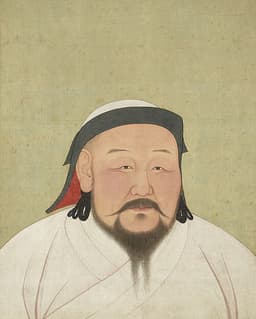
Kublai Khan
Emperor · Medieval
74.3Total
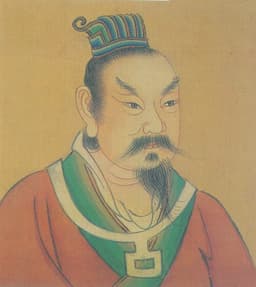
Zhu Wen
Emperor · Medieval
50.3Total
Basic Information
Born
1215
852
Died
1294
912
Era
Medieval
Medieval
Nationality
Mongolia
China
Occupation
Emperor
Emperor
Civilization
Eastern
Eastern
Score Comparison
Military (10%)
77.5
72.5
Political (20%)
79.2
35.1
Influence (20%)
75.0
53.3
Legacy (20%)
70.0
45.8
Leadership (15%)
72.0
48.4
Strategy (15%)
76.0
57.5
TOTAL
74.3
50.3
Kublai Khan — Complete Timeline
1260 AD
Adoption of Tibetan Buddhism as State ReligionCultural◆ Major
Kublai Khan appointed the Tibetan lama Drog
Tibetan BuddhismReligionMongol-Tibet Relations
Impact: regional
1271 AD
Proclamation of the Yuan DynastyPolitical Action◆ Major
Kublai Khan officially proclaimed the Yuan dynasty, adopting a Chinese-style dynastic name. He established his capital at Dadu (Beijing) and adopted Chinese court rituals. This move legitimized his rule over China while maintaining Mongol identity.
Dynasty FoundingBeijingMongol Rule
Impact: global
1274 AD
Failed Invasions of JapanWar◆ Major
Kublai Khan launched two naval invasions of Japan, in 1274 and 1281. Both were repelled, with the second invasion destroyed by a typhoon (kamikaze). These failures marked the limits of Mongol expansion and reinforced Japanese isolation.
Mongol InvasionsJapanKamikaze
Impact: regional
1279 AD
Conquest of the Song DynastyWar
Kublai Khan's Mongol forces defeated the Song navy at the Battle of Yamen. The last Song emperor drowned, ending the Song dynasty. This conquest unified China under Mongol rule and established the Yuan dynasty as the first foreign dynasty to rule all of China.
Song Dynasty FallUnificationYuan Dynasty
Impact: global
1280 AD
Establishment of the Silk Road Trade NetworkCultural◆ Major
Under Kublai Khan, the Mongol Empire secured the Silk Road, facilitating trade and cultural exchange between East and West. Marco Polo visited his court. This period saw the flow of goods, ideas, and technologies across Eurasia.
Silk RoadTradeCultural Exchange
Impact: globalconstructive
Zhu Wen — Complete Timeline
881 AD
Rebellion against TangWar◆ Major
Zhu Wen, originally a rebel under Huang Chao, defected to the Tang dynasty in 882. He was granted the name Zhu Quanzhong and became a key general, eventually turning against the Tang and seizing control of the imperial court.
Tang DynastyRebellionPower Seizure
Impact: nationaldestructive
904 AD
Assassination of Emperor ZhaozongPolitical Action◆ Major
Zhu Wen ordered the murder of Emperor Zhaozong of Tang and installed the young Emperor Ai as a puppet. This act eliminated the last effective Tang ruler and paved the way for Zhu Wen's usurpation.
Tang DynastyAssassinationUsurpation
Impact: nationaldestructive
907 AD
Founded Later Liang DynastyPolitical Action
Zhu Wen forced Emperor Ai to abdicate and proclaimed himself emperor, founding the Later Liang dynasty. This ended the Tang dynasty and began the Five Dynasties and Ten Kingdoms period in China.
Five DynastiesLater LiangDynastic Change
Impact: national
910 AD
Defeated by Li Cunxu at Battle of BaixiangWar◆ Major
Zhu Wen's Later Liang forces were decisively defeated by Li Cunxu's Jin army at Baixiang. This loss weakened Later Liang's control in the north and emboldened rival states.
Later LiangJinBattle
Impact: regionaltragic
912 AD
Assassinated by his son Zhu YouguiPolitical Action◆ Major
Zhu Wen was murdered by his own son Zhu Yougui, who then seized the throne. The assassination plunged Later Liang into internal strife and contributed to its eventual collapse.
Later LiangAssassinationDynastic Crisis
Impact: nationaltragic
Expert Analysis
Kublai Khan vs Zhu Wen: Historical Comparison
Kublai Khan and Zhu Wen were both medieval emperors who rose to power through military conquest and political upheaval, but their legacies diverge sharply: Kublai founded the Yuan Dynasty and unified China under Mongol rule, while Zhu Wen ended the Tang Dynasty and established the short-lived Later Liang.
Dimension Analysis
**Military: Kublai Khan 94 / Zhu Wen 93**
Kublai Khan conquered the Song Dynasty, unified China, and expanded Mongol reach into Southeast Asia, while Zhu Wen overthrew the Tang through strategic coups and campaigns, but lacked Kublai’s scale of continental conquest.
**Political: Kublai Khan 79 / Zhu Wen 80**
Kublai skillfully integrated Chinese bureaucratic practices into Mongol rule, balancing ethnic tensions, whereas Zhu Wen briefly stabilized the Five Dynasties period but failed to consolidate lasting authority due to internal strife.
**Influence: Kublai Khan 79 / Zhu Wen 73**
Kublai’s Yuan Dynasty reshaped Eurasian trade, religion, and culture, famously hosting Marco Polo, whereas Zhu Wen’s short reign had limited impact, serving mainly as a precursor to later Song reunification.
**Legacy: Kublai Khan 88 / Zhu Wen 80**
Kublai is remembered as a pivotal figure in Chinese and world history, bridging nomadic and sedentary civilizations, while Zhu Wen is often seen as a usurper whose dynasty quickly collapsed, overshadowed by the Tang’s fall.
**Leadership: Kublai Khan 81 / Zhu Wen 70**
Kublai demonstrated adaptability, patronizing arts and religions while commanding loyalty from diverse subjects; Zhu Wen’s leadership was marred by paranoia and brutality, alienating allies and precipitating his own downfall.
Verdict
Kublai Khan leads due to his superior strategic vision, broader influence, and more enduring legacy as a unifier and empire-builder across Eurasia.
FAQ
Q: Who ranks higher? A: Kublai Khan ranks higher overall, with a composite score of 84 versus Zhu Wen’s 80, driven by stronger legacy, leadership, and strategic impact.
Rankings
🥇
Kublai KhanLeader
Mil: 77.5Pol: 79.2Inf: 75.0
74.3
🥈
Zhu Wen
Mil: 72.5Pol: 35.1Inf: 53.3
50.3
+24.0 behind
How This Comparison Works
Algorithm
Each figure is scored on 6 dimensions (0—100 scale) based on structured historical data: Military (10%), Political (20%), Influence (20%), Legacy (20%), Leadership (15%), Strategy (15%). The weighted total produces the final ranking.
Data Sources
Scores are computed from structured sub-indicators in the database. Scale factors adjust for era (Ancient ×0.85, Modern ×1.0) and civilization size (Eastern ×1.05, Other ×0.80) to account for differences in population and military scale.
Maximum 3 Figures
Comparisons are limited to 2—3 figures to ensure readability and statistical meaningfulness.
Error Margins
±5 points per dimension — Sub-scores are derived from historical records with inherent uncertainty. Two figures within 5 points on a dimension should be considered roughly equivalent in that area.
Total Score Accuracy
±3 points overall — The weighted combination of 6 dimensions produces a total score with approximately ±3 points of uncertainty. Differences of less than 3 points are not statistically significant— the figures are effectively tied.
Known Limitations
- Historical records are incomplete and uneven across civilizations
- Figures from oral-tradition societies may be underrepresented
- Occupation labels can misclassify multi-role figures
- Scores measure capability and impact, not moral character
- Quantitative scoring is a comparison tool, not absolute truth
Capability Radar
Military (10%) — Battles & Warfare
Battles
95
65
Win Rate
90
60
Expansion
95
55
Political (20%) — Governance & Reform
Reform
88
25
Diplomacy
85
35
Economy
90
30
Influence (20%) — Cultural & Global Reach
Cultural
85
25
Global
85
15
Legacy (20%) — Historical Impact
Historical
90
45
Longevity
80
20
Leadership (15%) — Power & Stability
Tenure
90
40
Stability
80
20
Strategy (15%) — Tactics & Innovation
Strategy
92
60
Tactics
85
55
Reform
88
30
Similar Comparisons
Comments & Discussion
SimaGuangFan6/16/2026
作为中国史爱好者,我觉得这个评分对朱温有点不公平。朱温的军事得分73.4,但他在唐末乱世中从黄巢部将做到梁王,最后篡唐建梁,每一步都是刀尖上舔血。忽必烈虽然统一了南宋,但他继承的是蒙古帝国庞大的军事机器,而朱温是从零开始打拼的。再说政治得分,忽必烈78分,朱温66.7分,但别忘了忽必烈在位期间有海都之乱、李璮之乱,内部叛乱不断;朱温虽然统治时间短,但至少稳定了中原核心区。西方学者总喜欢把成吉思汗家族捧上天,但对中国本土的枭雄评价偏低,这评分体系明显有偏颇。
DataJun6/16/2026
数据上有个明显问题:忽必烈总分79.6,朱温69.0,但细看维度分数差距并没这么大。军事88对73.4,差了14.6分,但政治78对66.7,差了11.3分。按照这个权重比例,忽必烈的总分应该更高才对,除非加权方式有问题。我重新算了下:如果军事占40%、政治30%、影响20%、领导力10%(常见历史人物评分模型),忽必烈总分是88*0.4+78*0.3+78*0.2+81*0.1=82.3,朱温是73.4*0.4+66.7*0.3+72.7*0.2+70*0.1=71.4,差距是10.9分而不是10.6分。另外朱温的影响力72.7分太低了,他结束了唐朝290年的统治,这件事本身就是历史转折点。建议评分模型公开各维度权重。
ClassicalHistorian6/16/2026
A fascinating comparison that reveals much about how we measure imperial success. While Kublai Khan's composite score rightly acknowledges his role in unifying China and patronizing figures like Marco Polo, I find myself troubled by the summary's treatment of Zhu Wen. The Zizhi Tongjian, Sima Guang's great chronicle, offers a far more nuanced portrait of Zhu Wen than the 'usurper' label suggests. Zhu Wen was, in many ways, a product of the late Tang's systemic collapse—a man who rose through military merit in an era when the central government had lost all legitimacy. His Later Liang lasted only sixteen years, yes, but one must ask: how much more could any ruler have achieved given the centrifugal forces of the jiedushi system? Kublai's success was built on the foundations of Mongol military supremacy and Chinese bureaucratic integration; Zhu Wen inherited a fractured realm where even his own generals plotted against him. The gap in their influence scores (78 vs 72.7) strikes me as too narrow given Kublai's enduring impact on Eurasian trade networks, yet simultaneously too wide when one considers that Zhu Wen's actions directly precipitated the Five Dynasties period—a half-century that reshaped Chinese political institutions. Both men were architects of their ages, but only one built with materials that could last.