Loading...
This comparison has not been analyzed yet.
One-time AI generation (~1 minute). Scores and timeline are already available below.
Liu Bocheng vs Max Hoffmann
Liu Bocheng leads by 7.1 pts · 2 figures compared
…
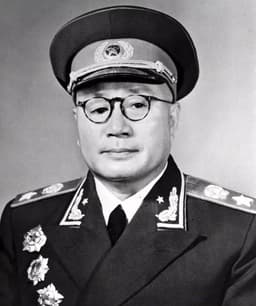
Liu Bocheng
General · Modern
62.8Total
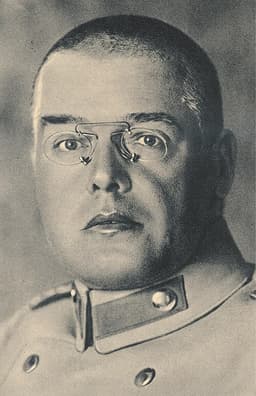
Max Hoffmann
General · Modern
55.7Total
Basic Information
Born
1892
1869
Died
1986
1927
Era
Modern
Modern
Nationality
China
Germany
Occupation
General
General
Civilization
Eastern
Western
Score Comparison
Military (10%)
74.0
82.0
Political (20%)
72.0
42.2
Influence (20%)
55.0
58.0
Legacy (20%)
55.0
54.0
Leadership (15%)
68.0
43.8
Strategy (15%)
69.2
66.3
TOTAL
62.8
55.7
Liu Bocheng — Complete Timeline
1916 AD
Lost an Eye in BattleWar
Liu Bocheng was shot in the eye during a battle against warlord forces. The injury required surgery without anesthesia, earning him the nickname 'One-eyed Dragon.' He continued to serve as a commander despite the injury.
InjuryWarlord Era
Impact: nationaltragic
1940 AD
Commander of the 129th Division in the Hundred Regiments OffensiveWar◆ Major
Liu Bocheng commanded the 129th Division of the Eighth Route Army in the Hundred Regiments Offensive against Japanese forces. The campaign involved large-scale guerrilla attacks on Japanese supply lines and positions.
Second Sino-Japanese WarGuerrilla Warfare
Impact: regional
1945 AD
Co-commander of the Second Field Army in the Chinese Civil WarWar◆ Major
Liu Bocheng co-commanded the Second Field Army with Deng Xiaoping. They led campaigns that captured key cities in central and southwestern China, including the Battle of Huaihai, a decisive Communist victory.
Chinese Civil WarMilitary Campaign
Impact: nationaldestructive
1951 AD
President of the Military Academy of the People's Liberation ArmyPolitical Action◆ Major
Liu Bocheng was appointed president of the newly established Military Academy of the PLA. He modernized military education, introducing Soviet-style training and emphasizing professional military science.
Military EducationModernization
Impact: nationalconstructive
Max Hoffmann — Complete Timeline
1914 AD
Battle of TannenbergWar
As Chief of Operations for the German Eighth Army, Hoffmann played a key role in planning the encirclement of the Russian Second Army at Tannenberg. The battle resulted in the destruction of the Russian army and the capture of its commander, Samsonov. This victory established Hindenburg and Ludendorff's reputations.
World War IEastern FrontBattle
Impact: regional
Battle of the Masurian LakesWar◆ Major
Hoffmann helped plan the follow-up battle to Tannenberg, the First Battle of the Masurian Lakes. German forces drove the Russian First Army out of East Prussia, inflicting heavy casualties. This cleared German territory of Russian troops and secured the eastern border for the remainder of 1914.
World War IEastern FrontBattle
Impact: regional
1918 AD
Treaty of Brest-LitovskPolitical Action
Hoffmann was the chief German military negotiator at Brest-Litovsk. He dictated harsh terms to Soviet Russia, forcing the cession of vast territories including Poland, the Baltic states, and Ukraine. The treaty ended the war on the Eastern Front but was later annulled by the Armistice.
World War IPeace TreatyEastern Europe
Impact: globaldestructive
This comparison has not been analyzed yet.
One-time AI generation (~1 minute). Scores and timeline are already available below.
Rankings
🥇
Liu BochengLeader
Mil: 74.0Pol: 72.0Inf: 55.0
62.8
🥈
Max Hoffmann
Mil: 82.0Pol: 42.2Inf: 58.0
55.7
+7.1 behind
How This Comparison Works
Algorithm
Each figure is scored on 6 dimensions (0—100 scale) based on structured historical data: Military (10%), Political (20%), Influence (20%), Legacy (20%), Leadership (15%), Strategy (15%). The weighted total produces the final ranking.
Data Sources
Scores are computed from structured sub-indicators in the database. Scale factors adjust for era (Ancient ×0.85, Modern ×1.0) and civilization size (Eastern ×1.05, Other ×0.80) to account for differences in population and military scale.
Maximum 3 Figures
Comparisons are limited to 2—3 figures to ensure readability and statistical meaningfulness.
Error Margins
±5 points per dimension — Sub-scores are derived from historical records with inherent uncertainty. Two figures within 5 points on a dimension should be considered roughly equivalent in that area.
Total Score Accuracy
±3 points overall — The weighted combination of 6 dimensions produces a total score with approximately ±3 points of uncertainty. Differences of less than 3 points are not statistically significant— the figures are effectively tied.
Known Limitations
- Historical records are incomplete and uneven across civilizations
- Figures from oral-tradition societies may be underrepresented
- Occupation labels can misclassify multi-role figures
- Scores measure capability and impact, not moral character
- Quantitative scoring is a comparison tool, not absolute truth
Capability Radar
Military (10%) — Battles & Warfare
Battles
85
75
Win Rate
80
80
Expansion
70
60
Political (20%) — Governance & Reform
Reform
55
20
Diplomacy
65
50
Economy
50
15
Influence (20%) — Cultural & Global Reach
Cultural
55
30
Global
50
50
Legacy (20%) — Historical Impact
Historical
70
65
Longevity
60
40
Leadership (15%) — Power & Stability
Tenure
60
30
Stability
60
10
Strategy (15%) — Tactics & Innovation
Strategy
88
90
Tactics
90
85
Reform
75
40
Similar Comparisons
Comments & Discussion
No comments yet. Be the first to share your thoughts!